What 24V Children's Electric Cars Actually Deliver
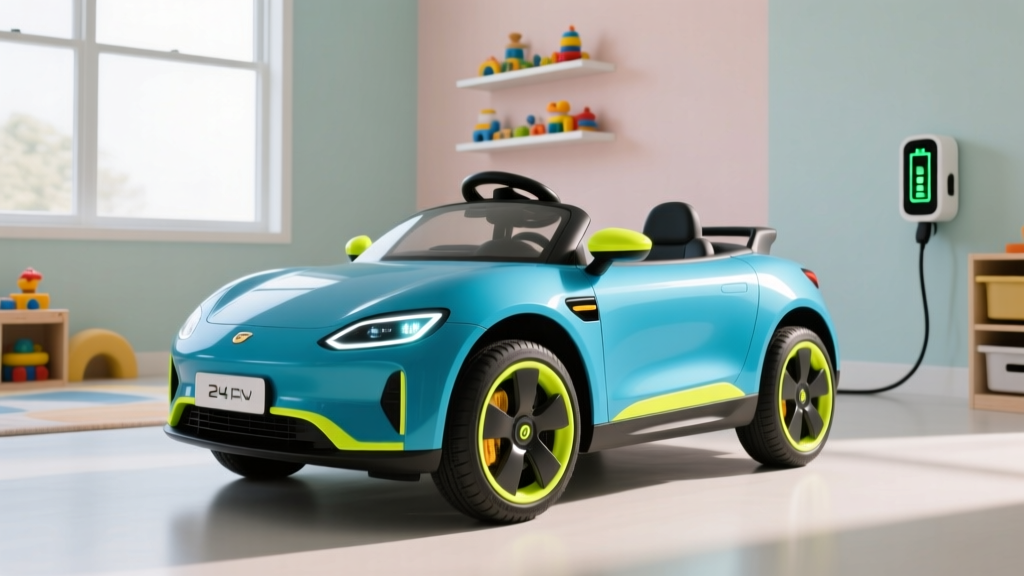
Quick answer: A 24-volt kids' ride-on car typically delivers 45–90 minutes of continuous run time on a full charge, reaches top speeds of 4–8 mph, and costs $250–$600 at retail. The 24V platform provides roughly double the power of a 12V model, enabling better hill-climbing, higher payload capacity (up to 130 lbs in some two-seaters), and smoother acceleration — but it also means longer charge times (8–12 hours) and a heavier unit (55–90 lbs assembled).
If you're shopping for a battery-powered ride-on for a child aged 3–8, the voltage rating is the single most important spec to understand. It determines the motor output, the speed envelope, and the type of terrain the vehicle can handle. While 6V models suit toddlers on flat driveways and 12V models cover most suburban yards, 24V children's electric cars are the choice for grass, gravel, mild inclines, and older kids who want a more realistic driving experience.
This guide breaks down the real numbers behind 24V ride-ons — battery capacity in amp-hours (Ah), actual run time under load, charge duration, operating cost, and how they compare to 12V alternatives. We'll also cover what to expect from the two dominant battery chemistries in 2026: sealed lead-acid (SLA) and the newer lithium iron phosphate (LiFePO₄) packs appearing in premium models.
Understanding the 24V Platform: Battery Capacity and Motor Output
Voltage alone doesn't tell the full story. A 24V system's real capability depends on the battery's amp-hour (Ah) rating and the motor wattage. Think of it this way: voltage is the "pressure" pushing current through the motors, while Ah is the "fuel tank size." Multiply them together and you get watt-hours (Wh), the actual energy stored.
| Configuration | Voltage | Capacity (Ah) | Energy (Wh) | Motor Wattage | Typical Price |
|---|---|---|---|---|---|
| Entry-level 24V | 24V | 7 Ah (2× 12V 7Ah in series) | 168 Wh | 2× 45W (90W total) | $250–$350 |
| Mid-range 24V | 24V | 12 Ah (2× 12V 12Ah) | 288 Wh | 2× 70W (140W total) | $350–$475 |
| Premium 24V | 24V | 20 Ah LiFePO₄ | 480 Wh | 4× 55W (220W total, AWD) | $500–$750 |
A 288 Wh battery pushing 140W of motor output theoretically runs for about 2 hours — but real-world conditions rarely match that math. Soft grass, inclines, heavier riders, and stop-start driving increase current draw substantially. In practice, expect 45–70 minutes of mixed-terrain use from a mid-range 24V 12Ah model, and up to 90 minutes from a 20Ah LiFePO₄ pack under moderate load.
24V vs. 12V: Real-World Comparison for Buyers
The most common question from parents is whether the 24V premium is justified. Here's a data-driven comparison using typical specs from current 2026 ride-on models:
| Specification | 12V Model (typical) | 24V Model (typical) | Real-World Impact |
|---|---|---|---|
| Battery Energy | 144 Wh (12V 12Ah) | 288 Wh (24V 12Ah) | 2× the stored energy |
| Motor Output | 2× 35W (70W total) | 2× 70W (140W total) | Stronger hill climbing, better grass traction |
| Top Speed | 3–5 mph | 5–8 mph | More thrilling for ages 5+; parental remote essential |
| Run Time (grass) | 30–45 min | 50–70 min | Less mid-play frustration |
| Max Payload | 65–85 lbs | 100–130 lbs | Accommodates older/larger kids or two riders |
| Charge Time | 8–10 hours | 8–12 hours | Both require overnight charging |
| Unit Weight | 35–55 lbs | 55–90 lbs | 24V is harder to move/store; look for built-in handles |
| Average Price | $180–$350 | $300–$600 | ~60–80% price premium for 24V |
The 24V platform earns its cost premium if your child will drive on grass or gravel, weighs over 55 lbs, or is aged 5+ and wants a faster experience. If your driving surface is a flat paved driveway and the rider is under 4, a 12V model is adequate and lighter to manage.
Charging Costs and Battery Longevity
One of the biggest advantages of any battery-powered ride-on over a gas-powered mini-vehicle is the operating cost. Here's the math for a typical 24V 12Ah (288 Wh) system:
| Factor | Value |
|---|---|
| Battery Capacity | 288 Wh (0.288 kWh) |
| Charger Efficiency (typical) | ~80% |
| Wall Energy per Full Charge | ~0.36 kWh |
| US Avg. Electricity Rate (2026) | $0.17/kWh |
| Cost per Full Charge | $0.06 |
| Cost per 30-Min Session | ~$0.03 |
| Annual Cost (150 sessions) | ~$4.50 |
At roughly six cents per full charge, the electricity cost is negligible. Over a year of regular use, you'll spend less than five dollars on electricity. Compare this to even the smallest gas-powered kids' ATV, which might consume $3–$5 per tank of fuel.
Battery Chemistry Matters: SLA vs. LiFePO₄
Most 24V ride-ons in 2026 still ship with sealed lead-acid (SLA) batteries — they're inexpensive and proven, but they have a limited lifespan of 200–300 charge cycles before capacity drops below 70%. At regular use (3 sessions/week), that means a replacement battery every 1.5–2 years, costing $35–$60 for a matched pair of 12V 12Ah SLA cells.
Premium models now offer lithium iron phosphate (LiFePO₄) packs. These cost 2–3× more upfront but deliver 1,500–2,000+ cycles, weigh roughly 60% less, and maintain a flatter voltage curve (meaning consistent speed until the battery is nearly empty, rather than the gradual power fade you get with SLA). If you plan to keep the ride-on for 4+ years or pass it down to a sibling, LiFePO₄ is the better long-term value.
Real-World Ownership: What First-Time Buyers Should Know
Beyond the spec sheet, here are the practical ownership realities that rarely appear in product listings:
Charge before first use and after every session. SLA batteries degrade rapidly if stored in a partially discharged state. A 24V SLA pack left at 30% state-of-charge for a month can lose 15–20% of its total capacity permanently. Plug in after every play session, even if the battery isn't fully depleted.
Cold weather reduces run time by 20–35%. Just like full-size EVs, ride-on batteries deliver less capacity in cold temperatures. A 24V SLA battery rated for 60 minutes at 70°F may deliver only 40 minutes at 40°F. Store and charge the unit indoors when possible.
The included charger is usually a slow trickle charger. Most 24V ride-ons ship with a 0.5A–1.0A charger, which takes 10–14 hours for a full charge on a 12Ah pack. Third-party smart chargers (1.5A–2.0A with automatic shutoff) can cut this to 6–8 hours and are worth the $25–$40 investment to reduce overnight charging time and protect battery health.
Weight and storage. A fully assembled 24V two-seater can weigh 80–90 lbs. If you need to move it in and out of a garage, look for models with built-in carry handles or a detachable battery pack that can be charged separately indoors.
Common Misconceptions About 24V Kids' Ride-Ons
| Myth | Fact |
|---|---|
| "24V means twice the speed of 12V" | Speed depends on motor gearing and electronic limiters. Most 24V models are 2–4 mph faster than 12V, not double. Many include a parental speed lock (low/high) limiting top speed to ~3 mph for beginners. |
| "Higher Ah always means longer run time" | Ah matters, but motor wattage, rider weight, and terrain determine actual draw. A 20Ah pack powering four 55W motors under heavy load may run shorter than a 12Ah pack with two 45W motors on pavement. |
| "You can upgrade a 12V car to 24V by swapping batteries" | Doing so without upgrading motors, wiring, and the controller will burn out the electronics and void any warranty. Purpose-built 24V models use heavier-gauge wiring and matched components. |
| "These are self-driving or have real safety systems" | Ride-ons have no ADAS, collision avoidance, or autonomous capability. The parental remote (2.4 GHz) allows a parent to steer and brake, but this is a manual radio-control feature, not automation. |
| "All 24V batteries are interchangeable" | Connector types (T-plug, XT60, proprietary harness), physical dimensions, and series/parallel wiring vary by manufacturer. Always match the replacement battery to the OEM specification. |
Decision Framework: Which 24V Ride-On Is Right for Your Situation?
Use this if-then framework to narrow your purchase:
- If your child is 3–4 years old and drives on flat pavement: Choose a 12V model instead. A 24V car's higher top speed is unnecessary and the extra weight makes it harder for you to manage. Save $150–$250.
- If your child is 5–8 and you have grass, gravel, or mild slopes: A mid-range 24V (12Ah, 140W motors) is the sweet spot. Budget $350–$475. Look for rubber traction-band tires rather than plastic wheels for grass grip.
- If you want a two-seater or your child is above 65 lbs: Go 24V premium (20Ah LiFePO₄, 4-wheel-drive). The higher Ah capacity supports the extra weight, and LiFePO₄'s longer lifespan justifies the $550–$750 price over multiple children. Models like the Best Choice Products 24V Two-Seater or the Bentley-style licensed replicas in this tier include EVA foam tires, Bluetooth audio, and adjustable seat belts.
- If you have no covered storage and must leave the car outdoors: Prioritize a model with a removable battery pack you can bring inside. SLA batteries stored below 32°F for extended periods suffer accelerated capacity loss. Budget for a $30 insulated battery storage bag.
- If you want minimal maintenance and plan to keep the car 4+ years: Choose LiFePO₄ chemistry. You'll pay $100–$200 more upfront but avoid 2–3 SLA battery replacements ($35–$60 each) over that period.
Total Cost of Ownership: 3-Year Projection
Here's what owning a mid-range 24V SLA ride-on actually costs over three years of regular use (approximately 150 sessions per year):
| Cost Category | Year 1 | Year 2 | Year 3 | 3-Year Total |
|---|---|---|---|---|
| Vehicle Purchase | $400 | — | — | $400 |
| Electricity (150 sessions/yr) | $4.50 | $4.50 | $4.50 | $13.50 |
| Battery Replacement | — | $50 | — | $50 |
| Smart Charger Upgrade | $35 | — | — | $35 |
| Tire/Wear Part Replacement | — | — | $20 | $20 |
| Total | $439.50 | $54.50 | $24.50 | $519.00 |
Compare this to a gas-powered kids' off-road vehicle in the same size class, which might cost $800–$1,200 to purchase and $60–$100 per year in fuel and engine maintenance. The electric ride-on wins decisively on operating cost, though it trades off the extended range and quick refueling of a gas model.
Frequently Asked Questions
How long does a 24V children's electric car battery last on a single charge?
On mixed terrain (grass and pavement) with a 50-lb rider, expect 45–70 minutes from a 24V 12Ah SLA pack and 70–90 minutes from a 24V 20Ah LiFePO₄ pack. Continuous high-speed driving on grass can reduce this by 20–30%.
Can I charge a 24V ride-on car with a 12V charger?
No. A 12V charger cannot fully charge a 24V battery system and may damage the charger. Always use a charger rated for the correct voltage. A 24V smart charger with automatic shutoff (available for $25–$40) is the safest option.
What age range is a 24V ride-on car appropriate for?
Most manufacturers rate 24V models for ages 3–8, but the higher speeds (5–8 mph) are best suited for children aged 5 and up. For younger children, use the parental remote control and the low-speed lock (typically limited to ~3 mph).
How do I maximize the lifespan of a 24V SLA battery?
Charge after every use, never let the battery sit below 50% state-of-charge for more than a few days, store and charge at room temperature when possible, and use a smart charger that stops charging at full capacity rather than trickle-charging indefinitely. Following these steps, an SLA pack should deliver 250–300 cycles over 1.5–2.5 years.
Are 24V ride-on cars safe for use near roads?
These are toy vehicles with no crash protection, no lights visible in traffic, and no braking systems designed for road use. They should only be operated in enclosed yards, parks, or driveways under direct adult supervision — never on or adjacent to public roads.