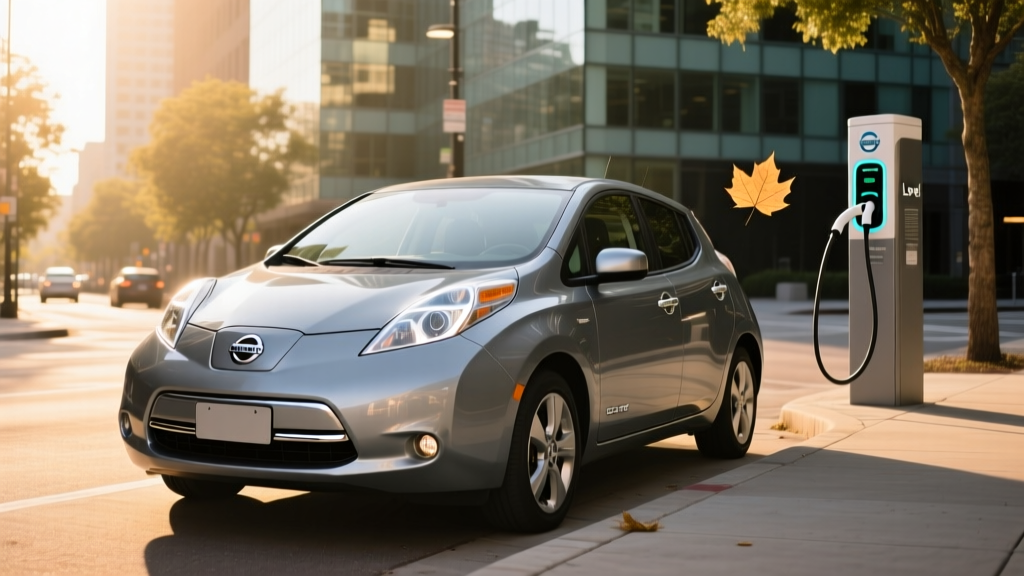
The EV That Started It All: 2011 Nissan Leaf at a Glance
When the 2011 Nissan Leaf launched in December 2010, it became the first mass-market, purpose-built battery electric vehicle sold in the United States. Over a decade later, this pioneering hatchback remains a fixture on the used EV market — often priced between $4,000 and $8,000 — making it one of the cheapest entry points into electric driving available today. But buying a 15-year-old EV requires clear-eyed analysis of battery health, degraded range, and charging limitations that modern EV buyers rarely face.
This review breaks down exactly what you get with the 2011 Nissan Leaf electric, from its original 24 kWh battery pack to its CHAdeMO DC fast-charging capability, and helps you decide whether this early EV pioneer still makes sense as a budget commuter in 2026.
| Specification | Value |
|---|---|
| EPA Range (Original) | 73 miles |
| Battery Capacity | 24 kWh (lithium-ion, NMC chemistry) |
| Usable Battery Capacity | ~21-22 kWh (with buffer) |
| Motor Output | 80 kW (107 hp), 207 lb-ft torque |
| 0-60 mph | ~9.9 seconds |
| Drivetrain | FWD (single front motor) |
| DC Fast Charge (CHAdeMO) | ~50 kW peak |
| Level 2 Charge Rate | 3.3 kW (240V, ~12-15 mi/hr) |
| Level 1 Charge Rate | 1.4 kW (120V, ~4-5 mi/hr) |
| EPA Efficiency | 99 MPGe combined (34 kWh/100 mi) |
| Cargo Volume | 14.5 cu ft (rear seats up) |
| Original Base MSRP | $32,780 (before incentives) |
| Battery Warranty (Original) | 8 years / 100,000 miles (capacity loss) |
Real-World Range: What 73 EPA Miles Means in 2026
The EPA rated the 2011 Nissan Leaf at 73 miles of range when new. That figure was modest even by 2011 standards, and it becomes significantly more complicated when you factor in battery degradation over 15 years of use and real-world driving conditions.
EPA sticker (new): 73 miles
Expected used range (moderate degradation, ~15-20% loss): 55-62 miles
Expected used range (heavy degradation, ~30%+ loss): 45-52 miles
Cold-weather impact (below 40°F): Subtract 25-40% from current degraded range
Highway driving at 70+ mph: Subtract 15-20% from current degraded range
The 2011 Leaf's battery uses NMC (nickel manganese cobalt) lithium-ion chemistry in a passively air-cooled pack. This is the critical detail every prospective used buyer must understand: unlike modern EVs with active liquid thermal management, the Leaf's battery relies on ambient airflow for temperature regulation. This design choice makes the pack highly susceptible to heat-driven degradation in hot climates (Arizona, Texas, Southern California) and contributes to the infamous "capacity bar loss" visible on the dashboard.
Nissan's battery health indicator uses a 12-bar scale displayed on the instrument cluster. A brand-new 2011 Leaf showed 12 bars. In 2026, finding a 2011 Leaf with more than 9-10 bars is uncommon. Many examples sit at 7-9 bars, representing 25-40% capacity loss. Before purchasing, check this bar count — it's the single most important data point for a used Leaf.
According to fueleconomy.gov, the 2011 Leaf achieves 99 MPGe combined (106 city / 92 highway). In practice, city driving with frequent regenerative braking opportunities tends to yield better range than highway cruising, where aerodynamic drag and sustained speed drain the small battery quickly.
Charging Speed: CHAdeMO in an NACS World
The 2011 Nissan Leaf supports three charging levels, but its charging profile reflects early-EV-era limitations that feel significant in 2026's fast-charging landscape.
| Charging Level | Power | Connector | Speed | Notes |
|---|---|---|---|---|
| Level 1 (120V) | 1.4 kW | J1772 | ~4-5 mi/hr | Standard household outlet; ~15-18 hrs for full charge |
| Level 2 (240V) | 3.3 kW | J1772 | ~12-15 mi/hr | Requires home EVSE; ~7 hrs for full charge |
| DC Fast Charge | ~50 kW peak | CHAdeMO | ~2 mi/min to 80% | 30 min to 80% (new battery); CHAdeMO stations declining |
The onboard charger in the 2011 Leaf maxes out at 3.3 kW on Level 2 — meaning even if you plug into a 7.2 kW or 11.5 kW home charger, the car can only accept 3.3 kW. A full charge from empty takes roughly 7 hours on Level 2, which is manageable for overnight home charging but means you cannot "top up" quickly during the day.
DC fast charging uses the CHAdeMO connector standard, which Nissan adopted alongside Mitsubishi. The 2011 Leaf can accept up to approximately 50 kW from a CHAdeMO station, reaching 80% state of charge in about 30 minutes under ideal conditions. However, there are two major caveats:
- Charging curve taper: The Leaf's charge rate drops significantly above 80% SoC to protect the battery. The 80-100% portion can take nearly as long as the 10-80% portion.
- CHAdeMO infrastructure decline: As of 2026, the North American charging network has overwhelmingly standardized on NACS (Tesla's connector, now adopted by Ford, GM, Rivian, Hyundai, and others) and CCS1. CHAdeMO stations are increasingly rare. Electrify America and most major networks have phased out CHAdeMO connectors at new installations. If you rely on public fast charging, verify CHAdeMO availability in your area using apps like PlugShare before committing to a Leaf purchase.
For most used Leaf owners in 2026, home Level 2 charging is the primary strategy. The 73-mile (or degraded ~55-mile) range makes public fast charging impractical for anything beyond emergency top-ups, and the CHAdeMO connector further limits your options.
Performance, Efficiency, and Daily Drivability
The 2011 Leaf's 80 kW (107 horsepower) AC synchronous electric motor delivers 207 lb-ft of torque to the front wheels through a single-speed reduction gear. That instant torque delivery makes the Leaf feel surprisingly responsive in stop-and-go city traffic — the 0-30 mph dash is brisk, and the car merges onto highways without drama.
However, the 0-60 mph time of approximately 9.9 seconds reflects the car's 3,300+ lb curb weight and modest power output. Highway passing above 65 mph requires planning, and the Leaf's top speed is electronically limited to approximately 90 mph. This is a commuter appliance, not a performance vehicle — and that's fine for its intended use case.
Efficiency remains a strong point. The EPA's 34 kWh per 100 miles rating means the Leaf sips electricity. At the national average residential electricity rate of approximately $0.17/kWh (as of late 2025), driving 100 miles costs roughly $5.78 — dramatically cheaper than a comparable 25 MPG gasoline car at $3.20/gallon ($12.80 per 100 miles).
The regenerative braking system offers two modes: standard "D" mode with mild regen, and "Eco" mode with stronger regenerative capture that enables semi-one-pedal driving in city traffic. The brake feel is adequate, though the transition between regen and friction braking can be slightly abrupt — a common trait of early EVs.
Interior, Cargo, and Technology
The 2011 Leaf's interior is spacious for a compact hatchback, with seating for five and surprisingly comfortable front seats. Rear legroom measures approximately 33.3 inches — adequate for adults on shorter trips. The elevated floor (to accommodate the battery pack beneath) creates a slightly "knees-up" seating position in the rear.
Cargo volume behind the rear seats is 14.5 cubic feet, expanding to approximately 30 cubic feet with the 60/40 rear seats folded. The hatchback design makes loading bulky items practical, though the space is less generous than a modern crossover EV like the Hyundai Kona Electric or Chevrolet Bolt EUV.
Technology was forward-looking for 2011 but feels dated in 2026:
- Infotainment: A 7-inch touchscreen with navigation, Bluetooth phone/audio, and USB input. No Apple CarPlay, Android Auto, or modern smartphone integration.
- Instrument cluster: Digital display showing power consumption, battery capacity bars, estimated range, and driving efficiency "trees" (a gamified eco-driving indicator).
- Connected services: The original CARWINGS telematics system (now NissanConnect EV) allowed remote charging status checks and climate control pre-conditioning via smartphone. Service availability for 2011 models may be limited or discontinued in 2026.
- Driver assists: Basic ABS, stability control, and six airbags. No adaptive cruise control, lane-keeping, or modern ADAS features.
One standout feature was the available solar panel rear spoiler, which trickle-charged the 12V auxiliary battery (not the traction battery). It's a charming quirk, though its practical impact is minimal.
Pricing, Tax Credits, and the Used EV Equation
The 2011 Nissan Leaf originally started at $32,780 MSRP (before the $7,500 federal tax credit and any state incentives that were available at the time). The SL trim added approximately $1,500 for features like a quick-charge port (CHAdeMO), rear spoiler with solar panel, and upgraded interior trim.
In 2026's used market, the 2011 Leaf typically sells for $4,000 to $8,000 depending on mileage, battery health (capacity bar count), and regional demand. Examples with battery replacements or low-degradation packs from cool climates command premiums.
| Rule | Requirement | 2011 Leaf Status |
|---|---|---|
| Credit Amount | 30% of sale price, max $4,000 | Eligible (if other criteria met) |
| Vehicle Age | At least 2 model years old | ✓ Qualifies |
| Sale Price Cap | Must sell for $25,000 or less | ✓ Qualifies (~$4K-$8K) |
| Buyer Income Cap (AGI) | $75K single / $112.5K HoH / $150K MFJ | Varies by buyer |
| Dealer Requirement | Sold by licensed dealer (not private party) | Must use dealer |
| Battery Sourcing | No sourcing requirement for used credit | ✓ Not applicable |
Source: IRS §25E Used Clean Vehicle Credit. Verify eligibility with a tax professional before purchase.
The used EV tax credit (IRS §25E, not §30D which applies to new vehicles) can reduce your effective cost by up to $4,000 — potentially covering a significant percentage of a $5,000-$7,000 Leaf purchase. However, the income caps and dealer-sale requirement mean not every buyer qualifies, and many used Leafs are sold through private-party transactions that do not qualify.
Battery Warranty, Degradation, and Replacement Costs
Nissan's original battery warranty for the 2011 Leaf covered 8 years / 100,000 miles against capacity loss below 9 of 12 bars (approximately 75% of original capacity). This warranty has now expired for all 2011 models — meaning any battery failure or excessive degradation is the owner's financial responsibility.
Battery replacement options in 2026 include:
- Nissan dealer replacement: A new OEM 24 kWh pack typically costs $6,500-$8,500 installed — often exceeding the vehicle's market value.
- Refurbished/upgraded packs: Third-party suppliers offer remanufactured packs or upgraded 30 kWh or 40 kWh packs (from later Leaf models) for $4,000-$7,000. Compatibility and installation quality vary.
- Used packs: Salvage-yard packs from wrecked Leafs cost $1,500-$3,500 but carry unknown degradation history.
The lack of active thermal management in the 2011 Leaf's battery is the root cause of its degradation reputation. Owners in hot climates routinely report faster capacity loss than those in temperate Pacific Northwest or Northern European climates. If you're buying a used 2011 Leaf, prioritize examples from cooler regions and verify the capacity bar count before purchase.
2011 Nissan Leaf: Pros and Cons in 2026
- Extremely low purchase price ($4K-$8K used)
- Cheap to operate — ~$5.78 per 100 miles on electricity
- Reliable drivetrain with minimal maintenance (no oil, spark plugs, or transmission fluid)
- Spacious hatchback cargo area for its footprint
- Smooth, quiet, and responsive in city driving
- May qualify for up to $4,000 used EV tax credit
- Severely degraded range — often 45-62 miles real-world
- Passive air-cooled battery accelerates degradation in heat
- CHAdeMO fast-charging connector is increasingly unsupported
- Slow 3.3 kW Level 2 onboard charger limits flexibility
- No modern infotainment (no CarPlay/Android Auto)
- Expired battery warranty — replacement costs exceed car value
- No active safety tech or driver-assist features
Who Should (and Shouldn't) Buy a 2011 Nissan Leaf in 2026?
Buy the 2011 Leaf if:
- You need the cheapest possible EV for a short, predictable commute (under 30 miles round-trip)
- You have reliable home Level 2 charging and never need public fast charging
- You live in a temperate climate where battery degradation is slower
- You understand the battery may need replacement and budget accordingly
- You want an EV as a secondary car for errands and local trips
Look elsewhere if:
- Your commute exceeds 40 miles round-trip or involves highway driving
- You live in a hot climate (Arizona, Texas, Florida, Southern California)
- You need public fast-charging access for road trips or apartment living
- You want modern connectivity, safety tech, or a warranty
- You need more than 60-70 miles of reliable daily range
Key competitors on the used EV market in 2026 include the 2013-2017 Chevrolet Spark EV (82-mile range, better thermal management, CCS connector), the 2016-2019 Chevrolet Bolt EV (238-mile range, liquid-cooled battery, much more versatile), and the 2012-2018 Ford Focus Electric (76-100 mile range, liquid-cooled). The Bolt EV in particular has seen used prices drop to $8,000-$12,000 and offers dramatically more range and a modern CCS charging standard — making it a substantially more capable used EV for only slightly more money.
Frequently Asked Questions
What is the real-world range of the 2011 Nissan Leaf?
The EPA rated the 2011 Leaf at 73 miles when new. In 2026, expect a used example with moderate battery degradation (15-25% loss) to deliver 55-62 miles in mixed city/highway driving at moderate temperatures. Cold weather (below 40°F) can reduce that by an additional 25-40%, potentially dropping range to 35-45 miles. Always check the battery capacity bars before purchase.
How fast does the 2011 Nissan Leaf charge?
On Level 2 (240V), the Leaf charges at a maximum of 3.3 kW, adding approximately 12-15 miles of range per hour — a full charge takes about 7 hours. On DC fast charge (CHAdeMO), it peaks at approximately 50 kW and can reach 80% in about 30 minutes when new, though degraded batteries charge more slowly and CHAdeMO stations are increasingly scarce.
Does the 2011 Nissan Leaf qualify for a federal tax credit?
The 2011 Leaf no longer qualifies for the new-vehicle §30D credit. However, it may qualify for the IRS §25E Used Clean Vehicle Credit, which provides 30% of the sale price (up to $4,000) if the vehicle is purchased from a licensed dealer for $25,000 or less, and the buyer's AGI falls under the income caps ($75K single, $150K married filing jointly). Consult a tax professional and review IRS guidelines before relying on this credit.
Is the 2011 Nissan Leaf worth buying vs. other used EVs?
At $4,000-$8,000, the Leaf is the cheapest EV you can buy — but the degraded range, CHAdeMO connector, and expired battery warranty are significant drawbacks. If your budget can stretch to $8,000-$12,000, a used 2017-2019 Chevrolet Bolt EV offers 238 miles of EPA range, liquid-cooled battery management, and CCS fast-charging — a dramatically more capable and future-proof EV. The Leaf makes sense only as an ultra-budget, short-commute, home-charging-only vehicle.
What are the biggest problems with the 2011 Nissan Leaf?
The most significant issue is battery degradation due to the passive air-cooled thermal management system, particularly in hot climates. The CHAdeMO charging connector is becoming unsupported at newer public stations. The 3.3 kW onboard charger is slow by modern standards. The original battery warranty has expired, and replacement costs ($6,500-$8,500) often exceed the car's value.
Can I replace the battery in a 2011 Nissan Leaf?
Yes. Nissan dealers offer OEM replacement packs for approximately $6,500-$8,500 installed. Third-party shops and suppliers offer refurbished or upgraded packs (30 kWh or 40 kWh from later Leaf models) for $4,000-$7,000. However, given the vehicle's low market value, a battery replacement often doesn't make financial sense unless you plan to keep the car for many additional years.
Is the 2011 Nissan Leaf safe?
The 2011 Leaf earned an IIHS Top Safety Pick rating with Good scores in moderate overlap front, side, roof strength, and rear crash tests. It includes six airbags, ABS, and stability control. However, it lacks any modern active safety features — no automatic emergency braking, lane departure warning, blind-spot monitoring, or adaptive cruise control. NHTSA rated it 5 stars overall.