So, What Make Is a Rivian — And Why Does It Matter?
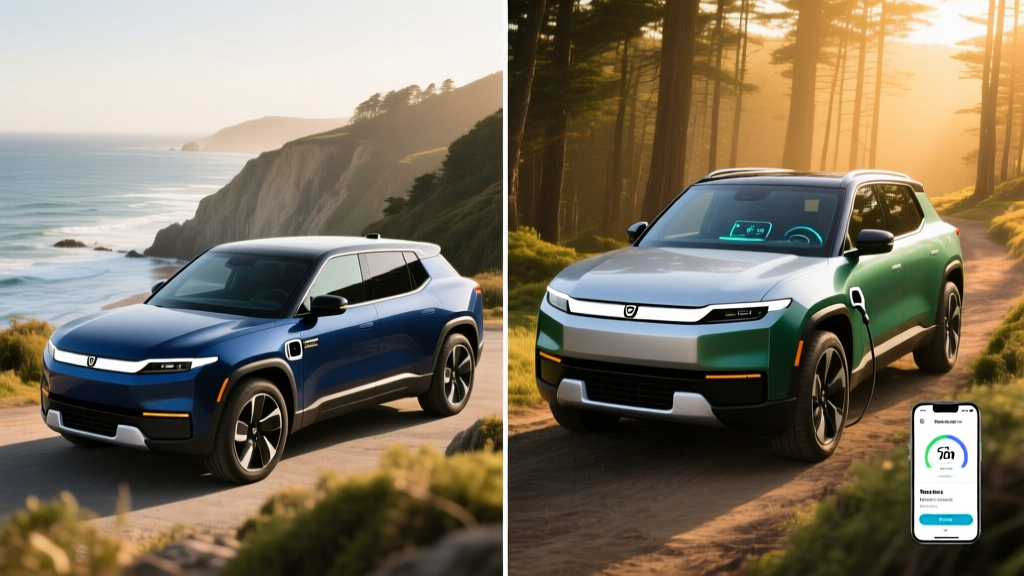
Rivian is an independent American electric-vehicle manufacturer headquartered in Irvine, California. Founded in 2009 by MIT graduate RJ Scaringe, the company originally operated under the name Mainstream Motors before rebranding to Rivian Automotive. Unlike legacy automakers that retrofitted gas-car platforms with batteries, Rivian engineered its vehicles from the ground up on a dedicated "skateboard" EV architecture — a flat chassis housing the battery pack, motors, and suspension beneath the cabin.
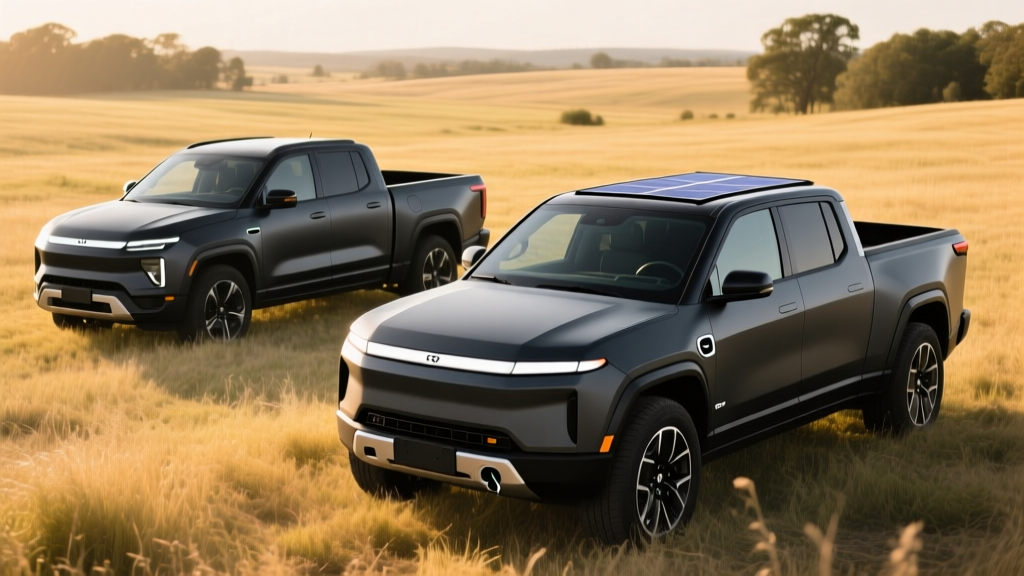
Rivian went public in November 2021 and began delivering its first consumer vehicles — the R1T electric pickup and R1S electric SUV — later that year. The brand positions itself in the premium adventure-EV segment, competing directly with the Tesla Model X, BMW iX, Mercedes EQS SUV, and electric trucks like the Ford F-150 Lightning and GMC Sierra EV. As of 2026, Rivian also operates the R2 platform (compact SUV and pickup) aimed at a broader price bracket, but the R1 lineup remains the brand's flagship and its most recognizable product.
What separates Rivian from other EV makes is its emphasis on off-road capability combined with long-range efficiency and a vertically integrated software stack. Rivian designs its own battery packs, electric drive units, and driver-assistance systems in-house — a level of integration more commonly associated with Tesla than with traditional OEMs.
Rivian R1S and R1T: 2026 Lineup at a Glance
Both the R1S (three-row SUV) and R1T (crew-cab pickup) share the same underlying platform, battery options, and powertrain configurations. Here's a consolidated spec table for the current-generation R1 Dual-Motor and Tri-Motor builds on the Standard and Max battery packs.
| Spec | R1 Dual-Motor (Standard) | R1 Dual-Motor (Max) | R1 Tri-Motor (Max) |
|---|---|---|---|
| Battery Capacity (usable) | 92 kWh | 129 kWh | 129 kWh |
| Battery Chemistry | NMC (Nickel Manganese Cobalt) | NMC (2170 cylindrical cells) | NMC (2170 cylindrical cells) |
| EPA Est. Range | 270 mi (R1S) / 270 mi (R1T) | 352 mi (R1S) / 352 mi (R1T) | 328 mi (R1S) / 328 mi (R1T) |
| Horsepower | 533 hp | 533 hp | 850 hp |
| 0–60 mph | 4.5 sec | 4.5 sec | 2.9 sec |
| Drivetrain | AWD (dual motor) | AWD (dual motor) | AWD (tri motor) |
| Max DC Fast Charge | 200 kW | 200 kW | 200 kW |
| 10–80% DCFC Time | ~28 min | ~41 min | ~41 min |
| Level 2 Home Charge | 11.5 kW (~25 mi/hr) | 11.5 kW (~25 mi/hr) | 11.5 kW (~25 mi/hr) |
| Towing Capacity | 7,700 lb | 7,700 lb | 7,700 lb |
| Base MSRP (R1S) | $79,900 | $89,900 | $104,900 |
| Base MSRP (R1T) | $74,800 | $84,800 | $99,800 |
Source: Rivian R1S specs and fueleconomy.gov. Specs reflect current model-year configurations and may vary by build date.
Real-World Range: What the EPA Sticker Doesn't Tell You
EPA Estimate: 352 miles (R1S/R1T Dual-Motor Max)
Real-World Highway (70–75 mph): Expect 280–310 miles
Cold Weather (below 32°F): Expect 230–270 miles depending on cabin heat usage
Towing (5,000+ lb trailer): Expect 150–180 miles
Rivian's R1 vehicles are large, heavy, and boxy — all of which work against highway efficiency. The Dual-Motor Max achieves an EPA-rated 73 MPGe combined (roughly 46 kWh/100 mi), which is competitive for the segment but well below sleeker crossovers like the Hyundai Ioniq 5 or Tesla Model Y.
In real-world highway driving at sustained speeds above 70 mph, aerodynamic drag dominates energy consumption. Owners consistently report 10–18% below EPA range on long interstate trips. Cold weather compounds this: the R1 uses a resistive heater in earlier builds (heat pump introduced in later production runs), which can draw 3–5 kW continuously in freezing temperatures. If you live in a northern climate and commute more than 50 miles daily in winter, the Max pack is the prudent choice.
Towing is where range drops most dramatically. Pulling a 6,000-pound camper at highway speeds can cut effective range nearly in half. Rivian's built-in tow planning software accounts for this, but you should plan charging stops every 150 miles when towing heavy loads.
Charging Speeds: DC Fast Charging and Home Setup
| Charging Level | Power | Miles Added per Hour | Notes |
|---|---|---|---|
| Level 1 (120V household) | 1.4 kW | ~3 mi/hr | Emergency/trickle only |
| Level 2 (240V home) | 11.5 kW | ~25 mi/hr | Full charge in ~11 hrs (Max pack) |
| DC Fast Charge | Up to 200 kW | ~140 mi in 20 min | Peak rate; tapers above 80% SoC |
| Tesla Supercharger (NACS adapter) | Up to 250 kW (V3 stalls) | Varies by stall | Requires Rivian-provided NACS adapter |
Rivian's DC fast-charging curve peaks at 200 kW around 20–40% State of Charge, then progressively tapers. A 10–80% session on the Max pack takes approximately 41 minutes at a capable charger (Electrify America 350 kW stall, Tesla V3 Supercharger with adapter). The Standard pack charges faster in absolute time (~28 min, 10–80%) because there are fewer cells to fill, though the peak rate is the same.
For home charging, Rivian supports up to 11.5 kW on a Level 2 Wall Connector or equivalent NACS/J1772 unit on a 60-amp circuit. This adds roughly 25 miles of range per hour and will fully replenish the Max pack overnight. If your home electrical panel is limited to 200 amps, a licensed electrician may need to evaluate whether a panel upgrade is necessary before installing a dedicated 60-amp EV circuit.
As of 2025, Rivian transitioned to the NACS (North American Charging Standard) connector on new-production vehicles, replacing the previous CCS1 port. Existing CCS-equipped Rivians can access the Tesla Supercharger network using a Rivian-supplied NACS adapter, which unlocks over 17,000 additional fast-charging stalls nationwide.
Interior, Cargo, and Practicality
The R1S is a genuine three-row SUV with seating for up to seven passengers. Second-row captain's chairs are available as a six-passenger configuration. Cargo volume behind the third row is limited to approximately 10.4 cu ft, but folding the third row opens up 46.7 cu ft, and folding both rear rows yields a maximum of 104.7 cu ft.
The R1T crew-cab pickup offers a 4.5-foot bed with a unique Gear Tunnel — a lockable, pass-through storage compartment running the full width of the vehicle between the cab and bed, providing 11.7 cu ft of sealed cargo space. The R1T also features a front trunk (frunk) with 11.0 cu ft of capacity, large enough for groceries or charging cables.
Legroom is generous in both vehicles: front-row legroom measures 41.3 inches, and second-row passengers get 38.6 inches. The R1S third row is best suited for children or short trips, with 30.4 inches of legroom.
Pricing, Trim Levels, and Federal Tax Credit Eligibility
| Configuration | Base MSRP | Est. As-Tested* | Potential §30D Credit | Effective Price |
|---|---|---|---|---|
| R1T Dual-Motor Standard | $74,800 | $80,000–$85,000 | Up to $7,500 | ~$67,300–$77,500 |
| R1S Dual-Motor Standard | $79,900 | $85,000–$92,000 | Up to $7,500 | ~$72,400–$84,500 |
| R1T Dual-Motor Max | $84,800 | $90,000–$98,000 | Up to $7,500 | ~$82,500–$90,500 |
| R1S Tri-Motor Max | $104,900 | $110,000–$120,000 | $0 (MSRP cap exceeded) | $110,000–$120,000 |
*As-tested prices vary based on options (paint, wheels, interior, software packages). Destination charges may apply.
Federal tax credit (§30D) eligibility is not automatic. Under current IRS rules, the credit has three critical constraints:
- MSRP Cap: Vans, SUVs, and pickup trucks must have an MSRP at or below $80,000. This means the R1S and R1T Dual-Motor Standard configurations may qualify, but Max and Tri-Motor builds priced above $80,000 do not.
- Income Cap: Buyer adjusted gross income must not exceed $150,000 (single), $225,000 (head of household), or $300,000 (married filing jointly).
- Battery Sourcing: A percentage of critical minerals and battery components must be sourced from the U.S. or free-trade-agreement countries. Rivian has been working to localize its supply chain, but eligibility varies by production batch. Always verify current sourcing compliance on the IRS eligible vehicle list before purchase.
As of 2024, the §30D credit can be transferred to the dealer at the point of sale, reducing your out-of-pocket cost at purchase rather than waiting for a tax refund. Consult a tax professional to confirm your individual eligibility.
Driver Assistance and Standout Technology
Rivian's driver-assistance systems — including Highway Assist and the newer Rivian Autonomy Platform — are SAE Level 2. This means the vehicle can manage steering, acceleration, and braking under certain conditions, but the driver must remain fully engaged and supervise at all times. This is not self-driving.
Rivian's infotainment system runs on a custom 15.6-inch center touchscreen with no Apple CarPlay or Android Auto — a deliberate choice to maintain full software control. The interface is clean and responsive, with over-the-air (OTA) updates that have meaningfully improved the vehicle since launch (adding features like enhanced camp mode, improved navigation routing, and refined regenerative braking profiles).
Standout tech features include:
- Electric All-Wheel Drive: Independent motor control at each axle (or each wheel on Tri-Motor) enables torque vectoring, tank turns (on Tri-Motor), and precise traction management off-road.
- Driver+: Adaptive cruise, lane centering, and automatic lane changes on divided highways (Level 2).
- Camp Mode: Maintains climate control and powers accessories while parked, using the large battery as a generator.
- Gear Guard: Integrated cable lock system for securing rooftop or bed cargo.
- Powered tonneau cover (R1T): Motorized bed cover that integrates with the tailgate for weather-sealed storage.
Notable drawbacks:
- No Apple CarPlay or Android Auto — a dealbreaker for some buyers.
- Panel gaps and early-build quality inconsistencies have improved but are still occasionally noted in owner forums.
- Service center network remains limited outside major metro areas; mobile service covers many regions but cannot handle all repairs.
- The Tri-Motor's performance comes at a significant price premium and sacrifices some range due to the additional motor's weight and drag.
Warranty and Long-Term Ownership
Rivian provides a 5-year/60,000-mile bumper-to-bumper warranty and an 8-year/175,000-mile battery and drive-unit warranty. The battery warranty guarantees that the pack will retain at least 70% of its original capacity during the coverage period. This is competitive with industry standards — Tesla offers 8 years/150,000 miles on the Model X battery, while Ford offers 8 years/100,000 miles on the F-150 Lightning.
Rivian uses NMC (nickel manganese cobalt) chemistry in its current packs, which offers higher energy density than LFP (lithium iron phosphate) but is more sensitive to sustained high or low states of charge. For daily driving, Rivian recommends charging to 80–90% and only charging to 100% before long trips. NMC degradation data from early R1 owners (2022–2024 builds) suggests roughly 3–5% capacity loss after 50,000 miles — within normal expectations for the chemistry.
Battery replacement costs remain high. While Rivian has not published official out-of-warranty replacement pricing, industry estimates for a 129 kWh NMC pack place the cost in the $18,000–$25,000 range if needed beyond the warranty period. This is a consideration for second-hand buyers or those planning to keep the vehicle beyond 150,000 miles.
Who Should Buy a Rivian — And Who Shouldn't?
Choose a Rivian R1S if:
- You need three-row seating with genuine off-road capability
- You want 300+ miles of range for road trips with family and gear
- You value OTA software improvements and adventure-oriented design
- You need a pickup bed for work or recreation but want EV running costs
- The Gear Tunnel appeals as unique lockable storage
- You tow moderately (under 7,700 lb) and can plan charging stops
- You need Apple CarPlay/Android Auto
- You live far from a Rivian service center and cannot rely on mobile service
- Your budget is under $70,000 — consider the R2 platform when it reaches volume production
- You tow heavy loads long distances daily — range while towing remains a real constraint
Pros, Cons, and the Competition
- Genuine off-road capability (ground clearance up to 14.4 in, wading depth 36 in)
- Up to 352 miles EPA range on Max pack
- Tri-Motor performance (0–60 in 2.9 sec) rivals sports cars
- Unique Gear Tunnel and thoughtful storage solutions
- Active OTA development — the vehicle improves over time
- NACS compatibility unlocks Tesla Supercharger network
- No Apple CarPlay or Android Auto
- High starting price; many trims exceed §30D MSRP cap
- Service center coverage still expanding
- Efficiency (46 kWh/100 mi) trails lower-profile EVs
- Range drops significantly when towing or in extreme cold
- Panel fit and early-build quality still maturing
Versus key competitors: The Tesla Model X offers more Supercharger-native range and a larger service network but lacks Rivian's off-road credentials and adventure design. The Ford F-150 Lightning is more affordable and practical for fleet/commercial use but doesn't match the R1T's performance or range. The BMW iX is a luxury-focused alternative with a more refined interior but no truck utility. Rivian occupies a distinct niche — premium adventure EV — and has minimal direct rivals at this intersection.
Frequently Asked Questions
What is the real-world range of a Rivian R1?
The EPA rates the R1S/R1T Dual-Motor Max at 352 miles. In real-world highway driving at 70–75 mph, expect 280–310 miles. In cold weather below freezing, plan for 230–270 miles. The Standard pack (270 mi EPA) delivers roughly 220–245 miles on the highway.
How fast does a Rivian charge at home and on the road?
At home on a Level 2 (240V, 60A) charger, Rivian charges at up to 11.5 kW, adding about 25 miles per hour. A full charge of the Max pack takes roughly 11 hours. On DC fast chargers, the peak rate is 200 kW, with a 10–80% session taking approximately 28 minutes (Standard pack) or 41 minutes (Max pack).
Does Rivian qualify for the $7,500 federal EV tax credit?
It depends on the configuration. The §30D credit requires the vehicle MSRP to be at or below $80,000 for SUVs and pickups. The R1T and R1S Dual-Motor Standard configurations may qualify, but Max and Tri-Motor builds generally exceed the cap. Buyer income limits and battery-sourcing requirements also apply. Verify eligibility on the IRS eligible vehicles page and consult a tax professional.
Is a Rivian worth buying vs. a Tesla or Ford electric truck?
If you prioritize off-road capability, unique storage (Gear Tunnel), and adventure-oriented design, Rivian has no direct equal. If your priority is the lowest cost per mile, maximum charging infrastructure access, or Apple CarPlay integration, Tesla or Ford may serve you better. The decision hinges on use case: Rivian excels for outdoor-active owners who need versatility; Tesla leads for efficiency and network coverage; Ford leads for work-truck affordability.
What is Rivian's battery warranty?
Rivian covers the battery and drive unit for 8 years or 175,000 miles, whichever comes first, with a guaranteed minimum of 70% capacity retention during that period. The bumper-to-bumper warranty is 5 years/60,000 miles.
Does Rivian use NACS or CCS for charging?
New-production Rivians (2025 onward) use the NACS connector natively. Earlier vehicles were built with CCS1 and can access Tesla Superchargers using a Rivian-supplied NACS adapter. Both configurations can charge at home on any standard Level 2 EVSE.