The 2011 Acura ZDX Meets the Electric Era
If you've been searching for "2011 Acura ZDX" in the context of electric vehicles, you've likely encountered a fascinating intersection of automotive history and modern EV curiosity. The 2011 Acura ZDX was a bold, polarizing luxury crossover that blended coupe-like styling with SUV practicality — but it was never produced as a battery-electric vehicle. Acura's electrification journey didn't begin in earnest until the 2023 ZDX EV (based on GM's Ultium platform), leaving the original 2011 model as a gasoline-powered artifact with a cult following.
So why are EV enthusiasts and prospective buyers searching for a 2011 Acura ZDX electric review in 2026? The answer lies in the growing EV conversion market, the ZDX's distinctive platform (shared with the Honda Pilot and MDX), and a desire to understand whether this 4,500-pound luxury crossover can be reborn as a battery-electric vehicle. Let's dissect what the 2011 ZDX offers, what an EV conversion would entail, and whether it's a practical path compared to buying a modern EV outright.
2011 Acura ZDX: Original Gasoline Specifications
Before evaluating electrification potential, it's critical to understand the baseline vehicle. The 2011 Acura ZDX shipped with Honda's 3.7-liter V6 (J37A) producing 300 horsepower and 275 lb-ft of torque, paired with a 6-speed automatic transmission and Acura's SH-AWD (Super Handling All-Wheel Drive) system. The EPA rated it at 16 mpg city / 23 mpg highway / 19 mpg combined — thirsty by 2026 standards.
| Specification | Value |
|---|---|
| Engine | 3.7L V6 (J37A) |
| Horsepower | 300 hp @ 6,300 rpm |
| Torque | 275 lb-ft @ 5,000 rpm |
| Transmission | 6-speed automatic |
| Drivetrain | SH-AWD (all-wheel drive) |
| EPA Fuel Economy | 16 city / 23 hwy / 19 combined mpg |
| Curb Weight | 4,564 lbs |
| Cargo Volume (rear seats up) | 26.3 cu ft |
| Cargo Volume (rear seats folded) | 55.8 cu ft |
| Original MSRP (2011) | $46,155 (base) – $56,155 (Advance Pkg) |
| 2026 Used Market Price (est.) | $6,500 – $12,000 |
The ZDX's curb weight and SH-AWD system are double-edged swords for electrification: the heavy platform demands a large battery for meaningful range, but the mechanical AWD complexity can be simplified with a dual-motor EV conversion, eliminating the driveshaft, transfer case, and rear differential entirely.
EV Conversion Feasibility: Can the 2011 ZDX Go Electric?
Converting a 2011 Acura ZDX to battery-electric propulsion is technically possible but economically challenging. Unlike lighter vehicles (the VW Golf, Honda Civic, or Mazda Miata — popular EV swap candidates), the ZDX's 4,564-pound curb weight requires a substantial battery pack to achieve even modest range. Here's what a realistic conversion looks like in 2026:
Battery Pack Sizing and Chemistry
To achieve approximately 150 miles of real-world range in a vehicle this heavy and aerodynamically challenged (the ZDX's sloped roofline creates significant drag), you'd need a 60–75 kWh usable battery pack. Most conversion shops in 2026 use NMC (nickel manganese cobalt) modules from salvaged EVs — typically Tesla Model S modules, Chevy Bolt modules, or LG Chem packs — because LFP (lithium iron phosphate) cells, while more durable, are heavier per kWh and worsen the weight penalty.
At roughly 3.5–4.0 miles per kWh for a 4,500+ lb crossover (accounting for the ZDX's 0.35 Cd drag coefficient and rolling resistance), a 70 kWh pack yields an estimated 210–245 miles under ideal conditions. Real-world highway driving at 70 mph, cold-weather operation, or aggressive acceleration drops this to 150–180 miles — a critical limitation for a vehicle without access to modern DC fast-charging architecture.
Motor and Drivetrain Options
Most ZDX conversions use a single rear-mounted motor (such as a salvaged Tesla large drive unit or a NetGain Hyper9 AC motor) producing 200–300 hp, replacing the V6 and transmission while retaining the rear differential. A dual-motor setup (front and rear) is possible but adds cost, weight, and wiring complexity. Expect 0–60 mph times of 6.5–8.0 seconds with a single-motor conversion — adequate for daily driving but not sporty.
Charging: The Conversion Achilles' Heel
Here's where the 2011 ZDX EV conversion faces its steepest challenge. Most conversion shops install a Level 2 onboard charger rated at 6.6 kW or 7.2 kW (using an Elcon or TC Charger unit), which adds roughly 20–25 miles of range per hour of charging. DC fast charging is rarely integrated into conversions due to the cost of CCS or NACS-compliant high-voltage charge controllers (typically $3,000–$5,000 additional) and the complexity of battery management system (BMS) integration.
Without DC fast charging, a depleted 70 kWh pack takes 10–11 hours on Level 2 — making road trips impractical and limiting the ZDX EV to commuter and local-errand duty.
| Charging Method | Power (kW) | Miles Added/Hour | 10–80% Time |
|---|---|---|---|
| Level 1 (120V outlet) | 1.4 kW | ~4 mi/hr | ~35 hours |
| Level 2 (240V, 30A) | 6.6 kW | ~22 mi/hr | ~7.5 hours |
| DC Fast Charge (if equipped) | 50 kW (est.) | ~150 mi/hr | ~55 minutes |
Cost Breakdown: Conversion vs. Buying a Modern EV
The financial case for converting a 2011 ZDX is difficult to justify against the backdrop of 2026's new and used EV market. Here's a realistic cost breakdown:
| Component | Cost Range |
|---|---|
| Used 2011 ZDX (donor vehicle) | $6,500 – $12,000 |
| Battery pack (60–75 kWh, salvaged NMC) | $8,000 – $14,000 |
| Electric motor + controller | $3,500 – $6,000 |
| BMS, wiring, thermal management | $2,500 – $4,000 |
| Onboard charger (Level 2) | $1,500 – $2,500 |
| Labor (professional conversion shop) | $12,000 – $25,000 |
| Engineering, registration, inspection | $2,000 – $4,000 |
| Total Estimated Conversion Cost | $36,000 – $67,500 |
For context, a 2026 Hyundai Ioniq 5 (310 miles EPA range, 800V DC fast charging, full warranty) starts at approximately $42,000 before incentives. A used 2023 Tesla Model Y Long Range (330 miles EPA) trades for $28,000–$35,000 in 2026. Even the 2024+ Acura ZDX EV (GM Ultium platform, 313 miles EPA, starting ~$65,000) offers vastly more capability, safety, and reliability than any conversion — and may qualify for the federal §30D tax credit.
Federal Tax Credit: Does a Converted ZDX Qualify?
No. Under IRS §30D rules, the federal clean vehicle credit applies only to new, qualifying battery-electric or plug-in hybrid vehicles purchased from a licensed dealer. A custom EV conversion of a 2011 gasoline vehicle does not meet the definition of a "new clean vehicle" and is ineligible for the up-to-$7,500 credit, regardless of battery sourcing or buyer income.
Additionally, the used EV credit (up to $4,000 under §25E) applies only to qualifying pre-owned EVs sold through a dealer for $25,000 or less — a converted ZDX would not appear on any manufacturer's certified EV list and would not qualify.
- §30D New EV Credit: Not eligible (conversion is not a new qualifying vehicle)
- §25E Used EV Credit: Not eligible (not a recognized production EV)
- State incentives: Vary by jurisdiction — some states (CA, CO, NY) offer rebates for EV conversions, but amounts are typically $1,000–$3,000 and require documentation
- Registration: Many states require a special "converted EV" title and inspection, adding cost and complexity
Who Should Consider a 2011 ZDX EV Conversion?
The honest answer: very few buyers. The 2011 ZDX EV conversion makes sense only for a narrow profile:
- Hobbyists and fabricators who value the process as much as the result and have access to a home shop
- ZDX enthusiasts who love the platform's styling and want a one-of-a-kind vehicle with zero tailpipe emissions
- Fleet or campus vehicles where limited range is acceptable and overnight Level 2 charging is guaranteed
For everyone else — commuters, families, road-trippers, and budget-conscious EV adopters — a production EV (new or used) offers more range, faster charging, full warranties, modern safety features (AEB, lane-keep, blind-spot monitoring), and access to the federal tax credit. The ZDX's aging chassis, lack of modern crash structures, and 2011-era electronics make it a poor foundation for daily-driver electrification.
The Modern Alternative: 2024–2026 Acura ZDX EV
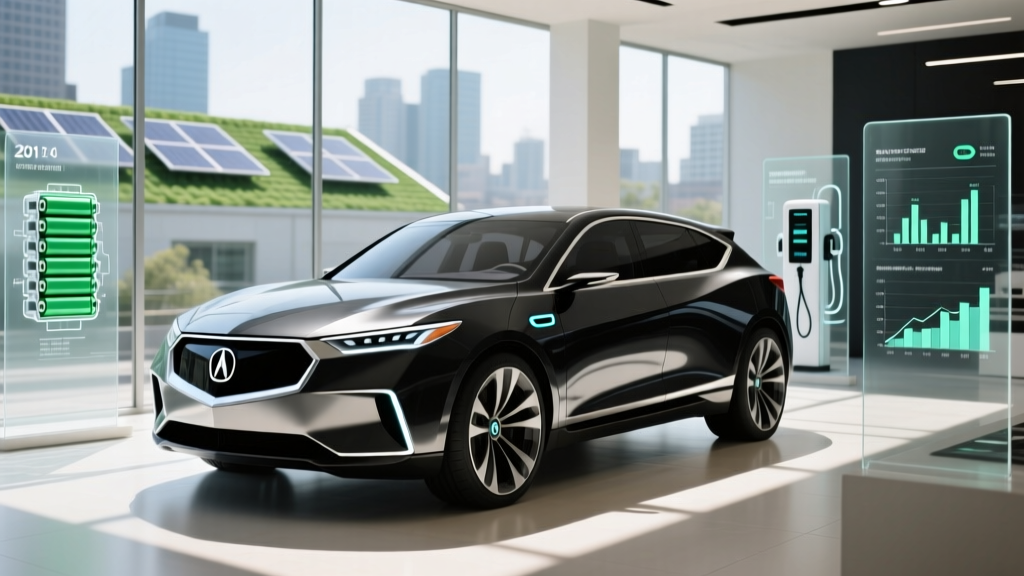
If the Acura ZDX nameplate is what drew you here, the 2024–2026 Acura ZDX EV is a fundamentally different vehicle — built on GM's Ultium platform with an 85 kWh (usable) NMC battery, up to 313 miles of EPA range, and DC fast charging at up to 190 kW (10–80% in approximately 28 minutes). The 2026 ZDX Type S starts at approximately $69,900 (MSRP), while the base ZDX A-Spec begins around $65,500. Depending on battery sourcing and your income, the ZDX EV may qualify for partial or full §30D credit — consult the IRS qualifying vehicle list before purchasing.
The modern ZDX EV offers 355–500 hp (depending on trim), a 0–60 mph time of 5.0–5.7 seconds, Google Built-In infotainment, Super Cruise (Level 2 hands-free driving on compatible highways), and a full 6-year/70,000-mile powertrain warranty plus 8-year/100,000-mile battery coverage. It is, in every measurable way, a more capable vehicle than any 2011 ZDX conversion could achieve.
Frequently Asked Questions
Was the 2011 Acura ZDX ever sold as an electric vehicle?
No. The 2011 Acura ZDX was produced exclusively with a 3.7L gasoline V6 engine. Acura did not introduce an electric ZDX until the 2024 model year, which is an entirely new vehicle on GM's Ultium platform.
How much does it cost to convert a 2011 ZDX to electric?
A professional EV conversion of a 2011 ZDX typically costs $36,000–$67,500, including the donor vehicle, battery pack, motor, labor, and registration. This exceeds the cost of many new and used production EVs available in 2026.
What range can I expect from a converted 2011 ZDX?
With a 70 kWh battery pack, expect approximately 150–180 miles of real-world range (highway, mixed driving). Ideal conditions may yield 210–245 miles, but the ZDX's weight (4,500+ lbs) and aerodynamic drag limit efficiency to roughly 3.5–4.0 miles per kWh.
Can a converted 2011 ZDX use DC fast chargers?
Technically yes, but DC fast-charging integration adds $3,000–$5,000 to the conversion cost and requires a compatible BMS. Most conversions are limited to Level 2 (6.6 kW) charging, which takes 7–11 hours for a full charge.
Is a 2011 ZDX EV conversion worth it vs. buying a modern EV?
For 95% of buyers, no. A 2026 Hyundai Ioniq 5, Tesla Model Y, or even the modern Acura ZDX EV offers more range, faster charging, full warranties, modern safety tech, and tax credit eligibility — often at a lower total cost than a conversion. The 2011 ZDX conversion is a passion project, not a practical transportation decision.
Does the 2011 ZDX qualify for any EV tax credits after conversion?
No. The federal §30D and §25E credits apply only to qualifying production EVs. Some states may offer small rebates for conversions, but these are typically $1,000–$3,000 and require special documentation. Consult your state's energy office for current programs.