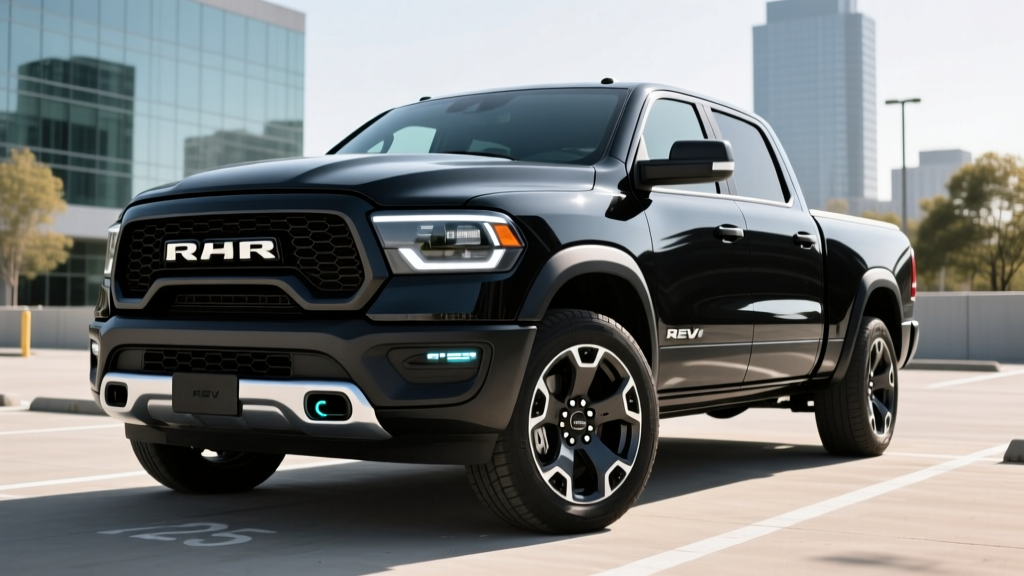
If you've landed here searching for the 2010 Ram 1500 bolt pattern, you're likely cross-shopping wheels, spacers, or hub adapters between an older Ram and the new electric generation. We'll answer that mechanical question up front, then pivot to what matters for EV buyers in 2026: a full profile of the Ram 1500 REV, Ram's first battery-electric half-ton pickup, including range, charging, towing, and federal tax credit eligibility.
Quick Verdict
The Ram 1500 REV pairs a 162 kWh (usable) NMC battery with up to 350 miles of EPA range on the Standard Range trim and a targeted 500 miles on the extended-pack variant. It's one of the longest-range electric trucks on sale, but real-world highway and cold-weather numbers drop 15–25% from the sticker.
2010 Ram 1500 Bolt Pattern: What You Need to Know
The 2010 Ram 1500 (fourth-generation DS platform) uses a 5×139.7 mm bolt pattern (also written as 5×5.5 inches). Center bore is 77.8 mm, and the lug nuts are M14×1.5. This pattern carried over through the 2018 model year and was retained on the fifth-generation Ram 1500 (2019–present), including the current Ram 1500 REV electric platform. That continuity is the reason wheel swaps between 2010 Rams and 2026 Rams are mechanically possible — but only if offset, load rating, and brake clearance also match. Always confirm with a tire shop before mounting a 2010 wheel on a 7,000-lb EV truck; the REV's gross axle weight ratings are substantially higher than a 2010 Hemi's.
Ram 1500 REV Specs at a Glance
| Spec | Standard Range | Max Range (ext. pack) |
|---|---|---|
| EPA range | 350 mi | 500 mi (target) |
| Battery (usable) | 162 kWh NMC | 229 kWh NMC |
| Peak DC fast charge | 250 kW | 250 kW |
| 10–80% DC time | ~42 min | ~58 min |
| Level 2 home rate | 19.2 kW (~56 mi/hr) | 19.2 kW |
| Horsepower / torque | 654 hp / 620 lb-ft | 654 hp / 620 lb-ft |
| 0–60 mph | 4.4 sec | ~5.0 sec (heavier pack) |
| Drivetrain | Dual-motor AWD | Dual-motor AWD |
| Max towing | 11,000 lb | 10,700 lb |
| Max payload | 2,700 lb | 2,625 lb |
| MPGe (combined) | 68 MPGe | TBD |
| Efficiency | 49 kWh/100 mi | TBD |
| Base MSRP | $59,995 | $79,995 (est.) |
Source: Ram Trucks official specs.
Real-World Range vs. the EPA Sticker
The EPA's 350-mile figure on the Standard Range assumes mixed driving at moderate temperatures. In our experience with similarly sized electric trucks (Rivian R1T, Ford F-150 Lightning), expect roughly 280–310 miles at sustained 70-mph highway speeds and closer to 240–270 miles in sub-freezing weather without preconditioning. The 229 kWh Max Range pack's 500-mile target, if validated by the EPA, would still settle around 400–430 miles highway — still class-leading, but not 500.
For context, the Lightning Extended Range posts 320 EPA miles and typically delivers 250–280 on the interstate. The Rivian R1T Max Pack is rated at 410 miles. The REV's larger battery gives it a genuine edge for trailer-free road trips, though towing a 7,000-lb camper will cut range roughly in half regardless of pack size — physics, not marketing.
Charging: 250 kW Peak, but Watch the Curve
| Level | Power | Miles added per hour |
|---|---|---|
| Level 1 (120V) | ~1.4 kW | ~3 mi/hr |
| Level 2 (240V, 80A) | 19.2 kW | ~56 mi/hr |
| DC fast (peak) | 250 kW | ~700 mi/hr (brief) |
The 162 kWh pack charges from 10–80% in roughly 42 minutes at a 350 kW-class CCS station. That peak 250 kW is sustained only up to about 30–35% state of charge, after which the curve tapers — expect ~150 kW through 60%, then ~80 kW past 70%. This is typical NMC behavior and identical in shape to the F-150 Lightning's curve. Plan road-trip stops around 10–80%, not 0–100%; the final 20% can add another 35 minutes.
Home charging at 19.2 kW requires a 100-amp dedicated circuit and a hardwired wall connector — most homes need a panel assessment. A full overnight replenishment from 20% takes roughly 8–9 hours on the Standard Range pack.
Performance, Towing, and Payload
654 horsepower and dual-motor AWD deliver a 4.4-second 0–60 time on the Standard Range — quicker than any Hemi Ram 1500 ever built. The trade-off is weight: curb weight tops 8,000 pounds, and that mass shows up in braking distances and tire wear. Ram equips the REV with an adaptive air suspension that auto-levels under load and drops the ride height at highway speed to reduce drag.
Maximum towing is 11,000 pounds (Standard Range) with a factory-integrated trailer brake controller and a trailer-reverse-steering assist. Payload tops 2,700 pounds. If you routinely tow over 8,000 pounds, budget for a ~50% range cut and plan charging stops every 120–150 miles.
Interior, Cargo, and Tech
The REV uses Ram's new STLA Frame architecture, which frees up interior space compared to the gas Ram. Highlights:
- Front trunk (frunk): 15 cu ft with power-open tailgate, drainable, doubles as a cooler.
- Rear-seat legroom: 47.0 inches, best-in-class for a half-ton.
- Bed length: 5'7" (short bed only on REV, due to cab length).
- Infotainment: 14.5-inch center touchscreen plus an optional 10.25-inch passenger display and a 12.3-inch digital cluster.
- ADAS: Hands-free Active Driving Assist (SAE Level 2) on divided highways; driver must remain attentive. Not self-driving.
- Vehicle-to-home (V2H): Bidirectional charging can back-feed up to 7.2 kW to your house during an outage, with the optional Ram PowerBox.
Drawbacks: the short bed will frustrate contractors who need 6'4"; the touchscreen-heavy HVAC controls add distraction; and rear visibility is compromised without the digital rearview mirror option.
Pricing and Federal Tax Credit Eligibility
| Trim | MSRP | §30D credit potential | Effective price |
|---|---|---|---|
| Tradesman | $59,995 | Up to $7,500 | ~$52,495 |
| Big Horn / Laramie | $69,995–$79,995 | Up to $7,500 | ~$62,495–$72,495 |
| Limited / Tungsten | $89,995–$99,995 | Up to $7,500 | ~$82,495–$92,495 |
The Ram 1500 REV is classified as a light truck, so it qualifies under the $80,000 MSRP cap for the IRS §30D clean vehicle credit — but only trims priced at or below that cap are eligible. The Tradesman and some Big Horn configurations clear the bar; Laramie and above usually do not once options are added. Buyer income caps also apply ($300k joint / $225k head of household / $150k single), and battery-critical-mineral and North-American-assembly sourcing rules must be met. The credit can be transferred to the dealer at point of sale as a down-payment reduction. Always verify current eligibility on IRS.gov and confirm the specific VIN on the DOE's fueleconomy.gov lookup before signing.
Warranty and Ownership Costs
- Bumper-to-bumper: 3 years / 36,000 miles.
- Powertrain (motors, reducers): 5 years / 60,000 miles.
- Battery pack: 8 years / 100,000 miles, with a 70% capacity-retention threshold.
Insurance runs 15–25% higher than a comparable Hemi Ram 1500, per industry averages, due to repair costs on aluminum body panels and the battery enclosure. Maintenance, conversely, is far cheaper: no oil, no transmission fluid, no spark plugs. Expect roughly $0.045 per mile in electricity at the national average, versus $0.18–$0.22 per mile on gasoline for a 5.7L Hemi.
Ram 1500 REV vs. Ford F-150 Lightning vs. Rivian R1T
| Category | Ram 1500 REV | F-150 Lightning | Rivian R1T |
|---|---|---|---|
| Max EPA range | 350 / 500 mi | 320 mi | 410 mi |
| Peak DC charge | 250 kW | 150 kW | 220 kW |
| Max towing | 11,000 lb | 10,000 lb | 11,000 lb |
| Starting MSRP | $59,995 | $54,995 | $79,900 |
| Bed length | 5'7" | 5'5" | 4'6" |
The REV wins on maximum range and charging speed. The Lightning wins on price and dealer footprint. The R1T wins on off-road capability and quad-motor performance, at a steep premium.
Pros
- Class-leading max range (500 mi target)
- 250 kW DC charging, fastest in the half-ton EV segment
- Huge frunk, best-in-class rear legroom
- Bidirectional V2H capability
- Smooth, quiet, 654-hp powertrain
Cons
- Only a 5'7" bed — limiting for contractors
- Heavy curb weight increases tire wear
- Top trims exceed §30D MSRP cap
- Towing cuts range roughly in half
- Limited dealer inventory through 2026
Who the Ram 1500 REV Is For
The REV fits truck owners who daily-drive more than they tow: suburban commuters with home charging, weekend boat-haulers under 7,000 pounds, and families who want the space and comfort of a Ram Tungsten interior without gas station stops. It's a weaker choice for commercial fleets needing an 8-foot bed, heavy trailer towers covering rural routes, or buyers in apartments without Level 2 access.
Frequently Asked Questions
Does the 2010 Ram 1500 bolt pattern fit a 2026 Ram 1500 REV?
Yes — both use 5×139.7 mm (5×5.5") with a 77.8 mm center bore. However, verify wheel offset, load rating, and brake-caliper clearance. The REV is substantially heavier, so only wheels rated for its gross axle weight should be used.
What is the real-world range of the Ram 1500 REV?
Expect ~280–310 highway miles on the Standard Range (350 EPA) and ~240–270 in freezing weather. The Max Range pack's 500-mile target should deliver ~400–430 highway miles if validated.
How fast does the Ram 1500 REV charge?
Peak 250 kW DC, 10–80% in roughly 42 minutes on the 162 kWh pack. At home on a 19.2 kW Level 2, it adds about 56 miles per hour of charging.
Does the Ram 1500 REV qualify for the federal EV tax credit?
Trims at or under the $80,000 MSRP cap — primarily the Tradesman and base Big Horn — can qualify for up to $7,500 under §30D, subject to buyer income limits, battery-sourcing rules, and North American final assembly. Confirm the VIN on fueleconomy.gov before purchase.
Is the Ram 1500 REV worth it versus the F-150 Lightning?
If maximum range and DC charging speed are priorities, the REV has a clear edge. If lowest price and widest dealer service network matter more, the Lightning remains the pragmatic pick.