Why F-150 Owners Are Researching Bolt Patterns and Going Electric
If you've ever swapped wheels on a Ford F-150, you already know the 2010 F-150 bolt pattern is 6x135 mm (six lug nuts arranged on a 135-millimeter circle). That pattern has been a Ford truck staple since the late 1990s, carrying through the 2021 F-150 Lightning. But for owners researching wheel compatibility, there's a bigger question emerging: should your next F-150 be electric?
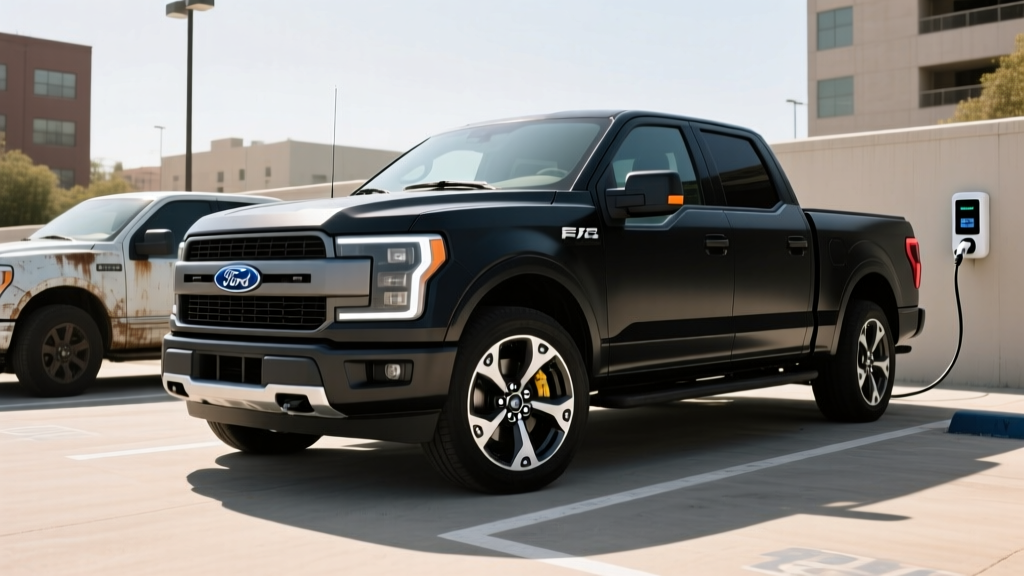
The 2026 Ford F-150 Lightning keeps the same 6x135 bolt pattern your aftermarket wheels already fit, but it replaces the V6 or V8 with a dual-motor electric powertrain producing up to 580 horsepower. This review breaks down everything a truck buyer needs to know — from EPA range and real-world charging speeds to tax credit eligibility and how the Lightning stacks up against the Chevrolet Silverado EV and Rivian R1T.
2026 Ford F-150 Lightning: Full Specification Table
| Spec | Standard Range | Extended Range |
|---|---|---|
| EPA Range | 240 miles | 320 miles |
| Battery Capacity (usable) | 98 kWh (LFP) | 131 kWh (NMC) |
| Drivetrain | Dual-motor AWD | Dual-motor AWD |
| Horsepower | 563 hp | 580 hp |
| Torque | 775 lb-ft | 775 lb-ft |
| 0–60 mph | ~4.5 sec | ~3.8 sec |
| Max DC Fast Charge | 150 kW | 150 kW |
| 10–80% DCFC Time | ~44 min | ~41 min |
| Level 2 Home Charge Rate | 11.3 kW (30 mi/hr) | 11.3 kW (30 mi/hr) |
| MPGe (combined) | 68 MPGe | 66 MPGe |
| Towing Capacity (max) | 7,700 lb | 10,000 lb |
| Payload | 2,235 lb | 1,800 lb |
| Bed Length | 5.5 ft | 5.5 ft |
| Frunk Volume | 14.1 cu ft | 14.1 cu ft |
| Bolt Pattern | 6x135 mm | 6x135 mm |
| Base MSRP (Pro) | $54,995 | $69,995 (Lariat) |
| Battery/Powertrain Warranty | 8 yr / 100,000 mi | |
Source: fueleconomy.gov and Ford Motor Company 2026 spec sheets.
Real-World Range: What the EPA Sticker Doesn't Tell You
Expect ~260–280 miles on the highway at 70 mph in mild weather. In freezing temperatures (below 30°F), plan for 200–230 miles due to battery chemistry limitations and cabin heating load. Standard Range models drop to ~190–210 miles real-world highway in cold conditions.
The Extended Range Lightning uses an NMC (nickel manganese cobalt) battery pack with 131 kWh of usable capacity. NMC chemistry delivers higher energy density than LFP, which is how Ford fits more range into the same physical pack. However, NMC cells are more sensitive to sustained high states of charge — Ford recommends daily charging to 80–90% and only charging to 100% before long trips.
The Standard Range model switched to an LFP (lithium iron phosphate) battery for 2026. LFP sacrifices some energy density (hence 240 miles from 98 kWh) but gains major longevity advantages: you can charge to 100% daily without accelerated degradation, and LFP cells tolerate heat better over thousands of cycles. If you're a commuter who charges at home every night and rarely road-trips, the Standard Range LFP pack may actually outlast the Extended Range NMC pack over a decade of ownership.
For towing, range compresses dramatically. Pulling a 6,000-pound trailer at highway speeds cuts range roughly in half — expect 140–160 miles from the Extended Range pack before needing a charge. This is physics, not a Ford flaw: every EV truck experiences 40–55% range loss under heavy tow.
Charging Speed: DC Fast Charging and Home Setup
| Charging Level | Power | Miles Added per Hour | Best Use Case |
|---|---|---|---|
| Level 1 (120V outlet) | ~1.4 kW | ~3–4 mi/hr | Emergency / overnight trickle |
| Level 2 (240V, 48A) | 11.3 kW | ~30 mi/hr | Daily home charging |
| DC Fast Charge | 150 kW peak | ~185 mi in 30 min | Road trips |
The Lightning's 150 kW peak DC fast-charge rate is its most debated spec. Competitors like the Chevrolet Silverado EV and GMC Sierra EV offer up to 350 kW on 800-volt architectures. Ford stuck with a 400-volt system, which means charging sessions take longer on road trips. Here's the real-world charging curve:
- 10–40%: Sustains near 150 kW peak
- 40–60%: Tapers to ~120 kW
- 60–80%: Drops to ~80–90 kW
- 80–100%: Trickle charges below 30 kW (always skip this on road trips)
At home, the Ford Charge Station Pro delivers 11.3 kW on a 240V/48A circuit, adding roughly 30 miles of range per hour. A full Standard Range charge takes about 9 hours; Extended Range takes roughly 12 hours. Most owners plug in overnight and wake up full. Installation typically requires a 60A breaker and 4-gauge wire — budget $800–$2,000 for professional electrician installation depending on your panel's proximity to the garage. If your home has a 100A electrical panel, you may need a $1,500–$3,000 panel upgrade to 200A to support Level 2 charging alongside other household loads.
Performance, Towing, and Cargo: Does It Work Like a Truck?
The dual-motor AWD powertrain produces 580 hp and 775 lb-ft of torque in Extended Range trim. That torque is available instantly from 0 rpm — no turbo spool, no transmission downshift. The result is a 3.8-second 0–60 mph time in a truck that weighs over 6,500 pounds. For context, the 2010 F-150 with the 5.4L V8 did 0–60 in about 8 seconds.
Maximum towing capacity is 10,000 pounds with the Extended Range pack and the Max Trailer Tow Package. The Standard Range model is limited to 7,700 pounds. Payload maxes at 2,235 pounds on the Standard Range (the lighter battery helps here) and drops to 1,800 pounds on the Extended Range.
The 5.5-foot bed is shorter than the 6.5-foot and 8-foot beds available on gas F-150s — a genuine trade-off for anyone hauling lumber or ATVs. But the 14.1-cubic-foot front trunk (frunk) is where the Lightning shines. It's lockable, weatherproof, and has a 400-pound payload capacity. That's more secure, enclosed storage than any tonneau-covered bed. The frunk also includes a drain plug, making it functional as a cooler for tailgating.
Cargo volume behind the rear seats is 52.8 cu ft (with seats folded), and rear legroom measures 43.6 inches — comparable to the gas F-150 SuperCrew. The flat floor (no transmission tunnel hump) makes the middle rear seat actually usable for adults.
Pricing, Trims, and Federal Tax Credit Eligibility
| Trim | MSRP | Est. After §30D Credit |
|---|---|---|
| Pro (Standard Range) | $54,995 | $47,495* |
| XLT (Standard Range) | $59,995 | $52,495* |
| Lariat (Extended Range) | $69,995 | $62,495* |
| Platinum (Extended Range) | $84,995 | $77,495* |
*Tax credit estimates assume full eligibility. Actual credit depends on IRS §30D rules.
The F-150 Lightning is assembled in Michigan and has historically qualified for the full $7,500 federal tax credit under IRS §30D. However, eligibility is not automatic. Current-year rules require:
- MSRP cap: Trucks must be under $80,000 (Platinum trim at $84,995 exceeds this — confirm with your dealer)
- Income cap: Buyer AGI must be ≤$150,000 (single), $225,000 (head of household), or $300,000 (joint)
- Battery sourcing: Critical minerals and battery components must meet phased-in domestic/free-trade sourcing thresholds (Ford has largely complied, but verify for your model year)
- Point-of-sale transfer: As of 2024, you can transfer the credit to the dealer at purchase, reducing your out-of-pocket cost immediately rather than waiting for tax filing
Consult a tax professional before relying on credit eligibility. Rules change annually, and the IRS maintains a qualified vehicle list that updates periodically.
Technology, Driver Assistance, and the Big Screen
The Lariat and Platinum trims feature a 15.5-inch vertical touchscreen running Ford's SYNC 4A system. It's responsive, supports wireless Apple CarPlay and Android Auto, and integrates with Ford's BlueCruise hands-free driving system on pre-mapped divided highways.
BlueCruise is an SAE Level 2 driver-assistance system — not self-driving. You must keep your eyes on the road, and the cabin camera monitors your attention. It handles steering, acceleration, and braking on compatible highways (over 130,000 miles of mapped roads in the US and Canada). It's excellent for reducing fatigue on long hauls, but it does not navigate city streets, construction zones, or unmapped routes autonomously.
BlueCruise, Tesla Autopilot, GM Super Cruise, and all current consumer ADAS systems are Level 2. The driver is responsible at all times. True Level 4 driverless operation currently exists only in commercial robotaxi services like Waymo.
Other standout tech includes Pro Power Onboard — up to 9.6 kW of exportable power through bed-mounted 120V and 240V outlets. That's enough to run a job site's power tools, power your home during an outage (with the proper transfer switch), or run a camper's AC unit without a generator. This single feature has convinced many contractors and RV owners to switch from gas to electric.
Notable drawbacks: the 5.5-foot bed limits utility for some truck buyers; the 150 kW DC charge rate is slow by 2026 standards; and the Lightning's curb weight (6,500–6,800 lb) increases tire wear and reduces efficiency compared to lighter EVs. Insurance premiums also run 15–25% higher than comparable gas F-150s due to repair costs.
Pros, Cons, and Who Should Buy the Lightning
- Same 6x135 bolt pattern as your existing F-150 wheels
- 775 lb-ft instant torque; 3.8-sec 0–60
- Pro Power Onboard (up to 9.6 kW exportable)
- 14.1 cu ft lockable, weatherproof frunk
- LFP battery option for daily-charge longevity
- Eligible for $7,500 §30D credit (with caveats)
- BlueCruise hands-free highway driving
- 150 kW DCFC is slow vs. 350 kW competitors
- Only 5.5-foot bed — no 6.5 or 8 ft option
- Range halves under heavy towing (~150 mi)
- Extended Range trims push past $80K MSRP cap
- Cold weather cuts range 25–35%
- Higher insurance premiums than gas F-150
- Home-charging homeowners who commute under 100 miles daily and want zero fuel stops
- Contractors and job-site workers who benefit from Pro Power Onboard to replace portable generators
- Truck owners who already own 6x135 wheels and want continuity in their aftermarket setup
- Towing-light users (boat trailers, small campers under 7,000 lb) who tow within range of home
- Heavy towers who regularly pull 8,000+ lb over long distances — range loss makes this impractical
- Apartment dwellers without home charging — public DCFC at 150 kW is too slow for truck-sized batteries
- Long-bed utility buyers who need 6.5 or 8 ft beds for cargo
How the Lightning Compares to Key Competitors
The 2026 truck EV market gives buyers real alternatives:
- Chevrolet Silverado EV (4WT / RST): Offers up to 440 miles EPA range and 350 kW DCFC on its Ultium 800V platform. But it starts higher and has a smaller dealer network for commercial fleet support. The Silverado EV also uses a different bolt pattern (6x139.7 mm), so your F-150 wheels won't swap over.
- Rivian R1T (Dual-Motor): More adventurous off-road with quad-motor options, a gear tunnel for cross-truck storage, and 350+ miles on the Max Pack. But it's pricier (starting ~$75,000), has a smaller bed, and doesn't qualify for the §30D credit due to MSRP caps.
- Tesla Cybertruck: Stainless steel body and 48-volt architecture are unique, but polarizing design, limited service centers, and build-quality inconsistencies remain concerns. Bolt pattern is 6x139.7 mm.
The Lightning's advantage is familiarity. It drives, looks, and feels like an F-150. The controls are where you expect them. The dealer network is massive. And the 6x135 bolt pattern means your wheel investment carries forward.
Frequently Asked Questions
What is the 2010 F-150 bolt pattern, and does the Lightning use the same one?
The 2010 F-150 bolt pattern is 6x135 mm (six lug nuts on a 135 mm circle). The 2026 Ford F-150 Lightning uses the identical 6x135 mm pattern, so most aftermarket wheels from your gas F-150 will fit. Always verify offset and load rating — the Lightning is heavier (6,500+ lb curb weight), so wheels must be rated for the increased load.
What is the real-world range of the F-150 Lightning?
The Extended Range EPA estimate is 320 miles. Real-world highway driving at 70 mph yields ~260–280 miles in mild weather and ~200–230 miles in freezing temperatures. Standard Range (EPA 240 mi) delivers ~190–210 miles on the highway in cold weather. Towing cuts range roughly in half regardless of weather.
How fast does the F-150 Lightning charge?
On a DC fast charger, the Lightning peaks at 150 kW and charges from 10–80% in approximately 41–44 minutes. At home on a Level 2 Ford Charge Station Pro (11.3 kW), it adds ~30 miles of range per hour, taking 9–12 hours for a full charge depending on pack size.
Does the F-150 Lightning qualify for the $7,500 federal tax credit?
The Lightning has historically qualified for the full $7,500 §30D credit, but eligibility depends on your income (≤$300,000 joint AGI), the trim's MSRP (must be under $80,000 for trucks), and battery-sourcing compliance. The Platinum trim at $84,995 may exceed the MSRP cap. Always verify on the fueleconomy.gov qualified vehicle list and consult a tax professional.
Is the F-150 Lightning worth buying over a gas F-150?
If you charge at home, drive under 200 miles daily, and value instant torque, Pro Power Onboard, and lower per-mile fuel costs (~$0.04–0.06/mile vs. $0.15–0.20/mile on gas), the Lightning saves money over 5 years despite a higher purchase price. If you tow heavy trailers long distances, live without home charging, or need a long bed, the gas F-150 remains the better tool.
What's the battery warranty on the F-150 Lightning?
Ford covers the battery and electric powertrain for 8 years or 100,000 miles, whichever comes first. The warranty guarantees the battery will retain at least 70% of its original capacity during that period. Real-world data from 2022–2025 Lightning owners suggests degradation of 5–8% over the first 60,000 miles — well within warranty tolerance.