Why the 2010 Chevy Malibu Wheel Bolt Pattern Matters for EV Builders
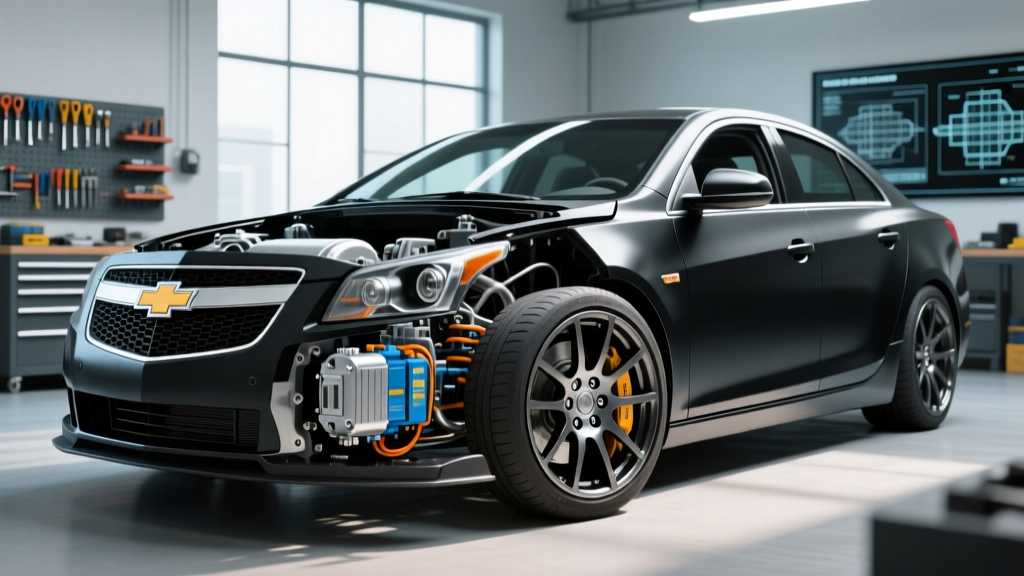
If you're researching the 2010 Chevy Malibu wheel bolt pattern, you're likely either replacing wheels on the original midsize sedan or — more interestingly for our readers — evaluating a donor chassis for an electric vehicle conversion project. The Malibu's platform, wheel specs, and suspension geometry have made it a surprisingly common candidate for DIY EV swaps, and understanding its bolt pattern is step one in ensuring your wheels, hubs, and brake rotors align correctly after a powertrain transplant.
This guide covers the exact bolt pattern, related wheel dimensions, and how this knowledge applies whether you're keeping the Malibu stock, converting it to electric, or comparing its rolling stock to modern factory EVs.
| Specification | Value |
|---|---|
| Bolt Pattern (PCD) | 5 x 115 mm (5-lug, 115 mm circle) |
| Center Bore | 70.3 mm |
| Lug Nut Thread Size | M12 x 1.5 |
| Stock Wheel Sizes | 16", 17", 18" (depending on trim) |
| Stock Tire Size (Base) | P215/60R16 |
| Offset Range (OEM) | +38 mm to +44 mm |
| Original Drivetrain | FWD, 2.4L I4 or 3.6L V6 |
| Curb Weight (approx.) | 3,400–3,600 lbs |
The Exact Bolt Pattern: 5x115 Explained
The 2010 Chevrolet Malibu uses a 5x115 mm bolt pattern — five lug bolts arranged on a 115-millimeter pitch circle diameter (PCD). This is a General Motors-standard pattern shared across many GM sedans and crossovers from the 2000s and 2010s, including the Chevrolet Impala, Buick LaCrosse, Cadillac XTS, and several Pontiac models produced before that brand's discontinuation.
A common point of confusion: 5x115 is dimensionally very close to 5x4.5 inches (5x114.3 mm), which is a Ford, Honda, Toyota, and Nissan standard. The 0.7 mm difference per stud may seem trivial, but forcing a 5x114.3 wheel onto a 5x115 hub (or vice versa) creates uneven clamping force that can warp rotors, fatigue studs, and cause vibration at speed. Always match the exact PCD or use hub-centric adapter rings engineered for the specific conversion.
EV Conversion Relevance: What Changes When You Swap the Powertrain
When converting a 2010 Malibu to electric drive, the bolt pattern itself doesn't change — the hubs, knuckles, and bearings remain stock GM Epsilon-platform components. What does change is the load profile on those components.
Battery packs add significant mass. A typical DIY EV conversion using a NetGain Hyper9 motor and a 30–40 kWh battery pack (often salvaged from a Nissan Leaf or Chevrolet Bolt) can add 400–800 lbs over the original engine and fuel tank. That extra weight shifts load to the front or rear axle depending on battery placement, and the stock 5x115 hubs must handle the increased static and dynamic forces.
Key EV Conversion Considerations for the Malibu's Rolling Stock
- Hub load rating: OEM Malibu hubs are rated for the original curb weight plus payload. Adding 600+ lbs of battery may push them toward their fatigue limit over time. Many converters upgrade to heavier-duty hub assemblies from the Cadillac XTS (same 5x115 pattern, higher load rating).
- Wheel strength: Lightweight aftermarket alloy wheels rated only for original-equipment loads can crack under the added mass. Look for wheels rated at minimum 1,500 lbs per corner for a conversion vehicle.
- Regenerative braking torque: Regen braking applies reverse torque through the hub and studs. Ensure lug nuts are torqued to the factory spec of 100 lb-ft and rechecked after the first 500 miles.
- Tire load index: The stock P215/60R16 tires carry a load index of 94 (1,477 lbs each). For a heavier EV-converted Malibu, upgrade to a tire with a load index of 98 or higher — many EV-specific tires (like the Hankook iON evo) offer higher load ratings with low rolling resistance.
Modern EVs That Share the 5x115 Bolt Pattern
One advantage of the 5x115 pattern is that it's shared by at least one modern factory EV, which opens up options for sourcing wheels, hub assemblies, and brake components from the EV aftermarket:
| Vehicle | Years | Type | Notes |
|---|---|---|---|
| Chevrolet Bolt EV / EUV | 2017–2025 | BEV | Same 5x115 pattern; wheels are a direct fit (offset differs slightly) |
| Chevrolet Malibu (all trims) | 2008–2024 | ICE | Donor chassis for conversions |
| Chevrolet Impala | 2014–2020 | ICE | Heavier-duty hubs available |
| Buick LaCrosse | 2010–2019 | ICE | Same Epsilon platform |
| Cadillac XTS | 2013–2019 | ICE | Upgraded hub/bearing assemblies; higher load rating |
The Chevrolet Bolt EV is the most relevant crossover here. Its 5x115 wheels can physically mount on a 2010 Malibu hub, though the offset (+38 to +42 mm on the Bolt vs. +38 to +44 mm on the Malibu) means the wheels sit nearly identically. Bolt EV alloy wheels are a popular, affordable upgrade for Malibu EV conversions because they're designed for the higher curb weight of a battery-electric vehicle (the Bolt EV weighs about 3,560 lbs — close to a converted Malibu).
Comparing the Malibu Donor Platform to Purpose-Built EVs
If you're weighing a Malibu EV conversion against buying a factory EV, here's how the numbers compare. For the conversion column, we're assuming a typical DIY build with a 35 kWh usable battery pack and a 100 kW (134 hp) AC motor:
| Specification | Malibu EV Conversion (typical) | 2025 Chevy Bolt EV | 2026 Hyundai Ioniq 6 SE |
|---|---|---|---|
| EPA Range | N/A (estimated 90–120 mi) | 259 mi | 361 mi |
| Battery Capacity | ~35 kWh usable (salvaged NMC) | 65 kWh (NMC) | 77.4 kWh (NMC) |
| DC Fast Charge (peak kW) | Not typically equipped | 55 kW (CCS) | 240 kW (NACS/CCS) |
| 10–80% Charge Time | N/A (Level 2 only, typically) | ~70 min | ~18 min |
| Level 2 Charge Rate | 3.3–6.6 kW (varies) | 11.5 kW | 10.9 kW |
| 0–60 mph | ~9–12 sec (varies widely) | 6.5 sec | 5.1 sec |
| Horsepower | ~100–150 hp | 200 hp | 225 hp |
| Cost to Build / Buy | $12,000–$25,000 (parts + donor) | ~$28,995 MSRP | ~$38,650 MSRP |
| Federal Tax Credit (§30D) | Not eligible (conversion) | Up to $7,500 (if eligible) | Up to $7,500 (if eligible) |
| Warranty | None (DIY) | 8 yr / 100,000 mi battery | 10 yr / 100,000 mi battery |
Real-World Range Note for Conversions: A DIY Malibu EV conversion with a 35 kWh pack and stock aerodynamics typically achieves 3.0–3.5 miles per kWh in mixed driving, yielding roughly 105–122 miles of range. Highway driving at 70+ mph drops this to approximately 80–95 miles due to the Malibu's 0.31 Cd drag coefficient and added battery weight. Cold weather (below 32°F) can reduce range by 20–35% because most conversions lack the sophisticated battery thermal management systems found in factory EVs. Plan for 70–80 miles of reliable winter range with a 35 kWh pack.
Wheel and Tire Upgrade Paths for a Malibu EV Conversion
Choosing the right wheels and tires for your converted Malibu has an outsized effect on range, efficiency, and safety. Here's what experienced converters recommend:
Wheels
- Stick with 16" or 17": Larger wheels (18"+) add unsprung weight and rolling resistance, cutting range by 5–10%. The stock 16" size offers the best efficiency.
- Weight matters: Every pound of unsprung weight (wheels, tires, brake rotors) is worth roughly 2–4 lbs of sprung weight in terms of energy consumption. Lightweight flow-formed wheels in 5x115 can save 3–5 lbs per corner versus stock alloys.
- Chevy Bolt EV wheels as a direct donor: At approximately 22 lbs each for the 17" alloy, they're competitive with aftermarket options and available used for $80–$150 per wheel.
Tires
- Low rolling resistance (LRR): Tires like the Michelin Energy Saver A/S or Continental EcoContact 6 can improve range by 5–8% over standard all-season tires.
- Load rating upgrade: With a conversion adding 400–800 lbs, select tires with a load index of 98 (1,653 lbs) or higher. The sidewall must handle the increased static load plus dynamic forces from regen braking.
- Pressure monitoring: Install a TPMS if the conversion removed the original system. Running tires 3–5 psi above the door-jamb sticker (to account for added weight) is common practice, but stay within the tire's max pressure rating.
Federal Tax Credits, Costs, and the Conversion Economics
Here's a critical distinction: EV conversions are not eligible for the federal §30D new clean vehicle tax credit. The IRS §30D credit applies only to new vehicles purchased from a manufacturer with a qualifying VIN and battery sourcing. A converted 2010 Malibu doesn't meet any of these criteria.
However, the used EV tax credit (§25E, up to $4,000 or 30% of the sale price, whichever is less) also does not apply to conversions — it requires the vehicle to have been originally manufactured as an EV or plug-in hybrid.
§30D Federal Tax Credit Requirements (2026 rules):
- Vehicle must be new, purchased from a licensed dealer
- MSRP cap: $55,000 (sedans), $80,000 (SUVs/trucks/vans)
- Buyer income cap: $150,000 single / $225,000 HOH / $300,000 joint (modified AGI)
- Battery components and critical minerals must meet escalating domestic-content thresholds
- Credit can be transferred to the dealer at point of sale for an immediate price reduction
- EV conversions and kit cars do not qualify under any provision
This means a Malibu EV conversion is purely an out-of-pocket enthusiast project. Budget realistically:
| Component | Cost Range |
|---|---|
| Donor vehicle (2010 Malibu, running) | $2,000 – $5,000 |
| Electric motor + controller (e.g., NetGain Hyper9) | $3,000 – $5,500 |
| Battery pack (salvaged Leaf/Bolt, 30–40 kWh) | $3,500 – $7,000 |
| BMS + wiring + contactors | $1,500 – $3,000 |
| Charger (Level 2 onboard, 3.3–6.6 kW) | $800 – $2,000 |
| DC-DC converter, power steering, brake vacuum pump | $1,000 – $2,500 |
| Fabrication, adapter plate, motor mounts | $1,500 – $4,000 |
| Wheels/tires (upgraded for load, 5x115) | $600 – $1,600 |
| Registration, inspection, titling (varies by state) | $200 – $800 |
| Total Estimated Build Cost | $14,100 – $31,400 |
Pros and Cons of a Malibu EV Conversion
Pros
- Abundant, cheap donor vehicles ($2,000–$5,000)
- 5x115 bolt pattern shared with Chevy Bolt EV — parts compatibility
- Spacious sedan platform with room for battery placement
- FWD layout simplifies motor mounting (no rear driveshaft)
- Satisfying DIY project with strong enthusiast community support
- Low operating cost once built (~$0.04–$0.06 per mile on home electricity)
Cons
- No federal or state EV tax credits — full out-of-pocket cost
- Range limited to ~90–120 miles (no DC fast charging in most builds)
- No factory warranty on any EV component
- Insurance can be difficult and expensive (specialty EV conversion policies)
- Resale value is highly uncertain; conversion adds cost but not proportional value
- Safety systems (ABS, stability control) may not function correctly after conversion
- Registration and inspection hurdles vary significantly by state
Who Should Consider a Malibu EV Conversion?
A 2010 Malibu EV conversion makes sense for a narrow but enthusiastic audience:
- DIY enthusiasts who want hands-on EV engineering experience without risking a $40,000+ donor vehicle
- Short-commute drivers with a round trip under 60 miles who can charge at home overnight on a standard 120V or 240V outlet
- Students and educators using the build as a learning platform for electric drivetrains, battery management, and power electronics
- Budget-conscious EV adopters who can source a cheap donor and salvaged battery pack, keeping total build cost under $18,000
If you need reliable range over 150 miles, DC fast charging for road trips, modern ADAS features, or a vehicle with warranty coverage, a factory EV like the Chevrolet Bolt EV or a used Tesla Model 3 will serve you far better — and both may qualify for the used EV tax credit of up to $4,000.
Frequently Asked Questions
What is the exact bolt pattern on a 2010 Chevy Malibu?
The 2010 Chevy Malibu uses a 5x115 mm bolt pattern (5 lug bolts on a 115 mm pitch circle diameter). The center bore is 70.3 mm and the lug nuts are M12 x 1.5 thread. Do not confuse this with 5x114.3 mm (5x4.5") — the 0.7 mm difference can cause hub and stud damage.
Will Chevy Bolt EV wheels fit a 2010 Malibu?
Yes. The Chevy Bolt EV shares the same 5x115 mm bolt pattern and a similar center bore. Bolt EV 17" alloy wheels will physically mount on a 2010 Malibu hub, though you should verify offset (Bolt: approximately +38 mm; Malibu OEM: +38 to +44 mm) to ensure proper clearance with brake calipers and fender liners. Hub-centric rings may be needed if the center bore differs slightly.
Can I use 5x114.3 wheels on my 2010 Malibu?
It is not recommended. While 5x114.3 (5x4.5") wheels may physically slip over the studs, the 0.7 mm PCD mismatch means the lug nuts cannot seat concentrically. This creates uneven clamping force, potential stud fatigue, rotor warping, and vibration. Use only 5x115 mm wheels or install a properly engineered adapter plate.
How much does a 2010 Malibu EV conversion cost?
A typical DIY EV conversion on a 2010 Malibu costs between $14,000 and $31,000 depending on motor choice, battery source (new vs. salvaged), and fabrication complexity. This does not include any tax credits, as conversions are ineligible for the federal §30D or §25E credits.
What range can I expect from a Malibu EV conversion?
With a 35 kWh usable battery pack, expect approximately 105–122 miles in mixed driving, 80–95 miles at sustained highway speeds, and as low as 70–80 miles in cold weather (below 32°F). These estimates assume 3.0–3.5 mi/kWh efficiency, which is typical for a converted midsize sedan without active battery thermal management.
Is a Malibu EV conversion street-legal?
It depends on your state. Most states allow EV conversions to be registered, but the process varies widely. Some states require a special inspection, a "converted" title brand, or proof that emissions equipment removal was done legally. Check with your local DMV and state emissions authority before beginning the build. The NHTSA does not regulate aftermarket conversions directly, but your vehicle must still meet applicable state safety inspection requirements.
What is the lug nut torque spec for a 2010 Malibu?
The factory lug nut torque specification for the 2010 Chevrolet Malibu is 100 lb-ft (135 Nm). After an EV conversion, re-torque the lug nuts after the first 100 miles and again at 500 miles, as the altered weight distribution and regenerative braking forces can cause initial settling.