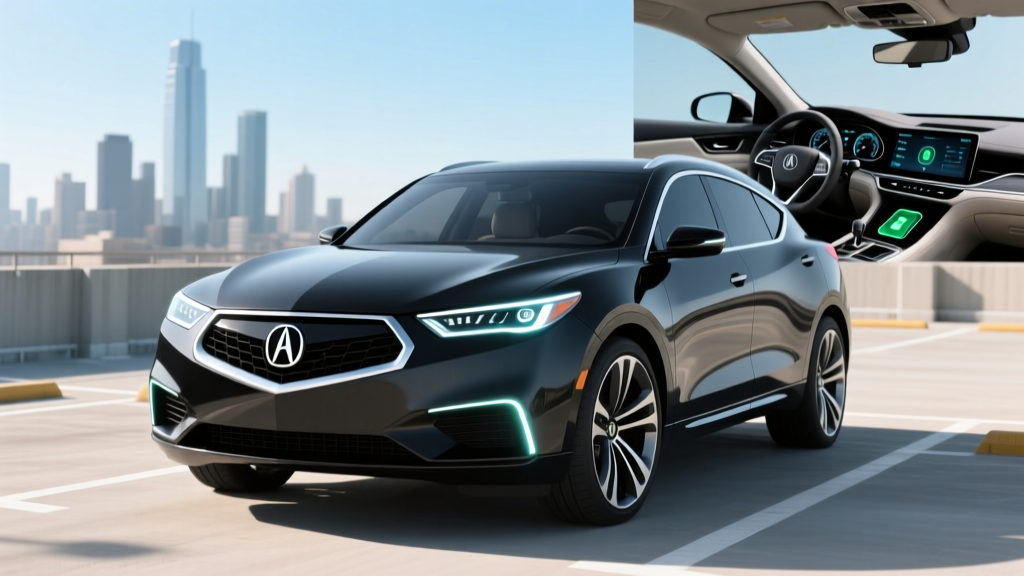
The 2010 Acura ZDX was one of the most polarizing vehicles of its era — a "coupe-SUV" with a sloping roofline, a 3.7-liter V6, and a polarizing rear design that sold fewer than 7,000 units across its four-year run. Discontinued after 2013, it became a cult classic for its audacity. Now, Acura is bringing the ZDX nameplate back as a fully electric luxury SUV, built on Honda's new EV architecture and sharing significant DNA with the Acura ZDX (2024–present) and the Chevrolet Blazer EV platform through the now-dissolved GM-Honda EV partnership.
If you've been searching for information on the 2010 Acura ZDX and stumbled into the modern EV conversation, you're not alone. The original ZDX's distinctive silhouette has directly inspired the new electric ZDX's design language. This review covers the modern Acura ZDX EV — its range, charging, pricing, and how it compares to luxury electric SUV rivals — while paying homage to the 2010 original that started it all.
Range and Efficiency: EPA Estimates vs. Real-World Driving
The current-generation Acura ZDX is offered with two battery and drivetrain configurations, each with meaningfully different range outcomes. Acura equips the ZDX with a large lithium-ion pack using NMC (nickel-manganese-cobalt) chemistry, prioritizing energy density over the LFP chemistry found in some budget-oriented EVs.
| Trim / Drivetrain | Battery (usable kWh) | EPA Range | MPGe (combined) | kWh/100 mi |
|---|---|---|---|---|
| ZDX A-Spec (RWD) | ~102 kWh | 313 mi | 96 MPGe | 35 |
| ZDX A-Spec (AWD) | ~102 kWh | 278 mi | 89 MPGe | 38 |
| ZDX Type S (AWD, perf tune) | ~102 kWh | 261 mi | 84 MPGe | 40 |
Charging Speed: DC Fast Charge and Home Level 2
Charging capability is where the ZDX's GM-sourced Ultium platform shows its strengths — and its limitations. The ZDX supports DC fast charging at up to 190 kW on a CCS1 connector (with NACS adapter compatibility expanding access to Tesla Superchargers as of late 2024 onward).
| Charging Level | Power / Rate | Time or Miles Added |
|---|---|---|
| Level 1 (120V household) | ~1.4 kW | ~4 miles per hour |
| Level 2 (240V, 48A home charger) | 11.5 kW | ~30 miles per hour; full charge in ~9.5 hours |
| DC Fast Charge (peak) | 190 kW | 10–80% in approximately 32 minutes |
| DC Fast Charge (sustained avg.) | ~120 kW | Expect tapering above 80% SoC; 80–100% adds ~15+ extra minutes |
The 190 kW peak is competitive but trails rivals like the Hyundai Ioniq 5 (which peaks at 240 kW on its 800V architecture) and the BMW iX (up to 200 kW). The ZDX's charge curve holds strong between 10–50% SoC but tapers noticeably past 60%, which is typical for NMC cells on a 400V architecture. For road trips, plan your stops around 10–80% sessions rather than topping off to full.
At home, the 11.5 kW onboard charger is a strong point — it's among the faster Level 2 acceptance rates in the luxury EV SUV segment, meaning a depleted battery recovers fully overnight on a properly installed 48-amp Level 2 circuit.
Performance: 0–60, Horsepower, and Drivetrain
The ZDX lineup spans comfortable luxury cruiser to genuine performance SUV, depending on trim:
- ZDX A-Spec (single-motor RWD): ~340 hp, 324 lb-ft torque, 0–60 mph in approximately 6.2 seconds.
- ZDX A-Spec (dual-motor AWD): ~340 hp (combined), 0–60 mph in approximately 5.7 seconds.
- ZDX Type S (dual-motor AWD, performance tune): ~500 hp, 540 lb-ft torque, 0–60 mph in approximately 4.5 seconds.
The Type S is the spiritual successor to the original 2010 ZDX's sporting aspirations, though with vastly more power. It features a sport-tuned air suspension, Brembo brakes, and a limited-slip rear differential. All trims use a single-speed reduction gear — no multi-speed transmission as found in the Porsche Taycan.
Pricing, Trims, and Federal Tax Credit Eligibility
The Acura ZDX is positioned as an entry-luxury electric SUV, undercutting German rivals while competing with the Genesis GV60, Cadillac Lyriq, and BMW iX.
| Trim | Base MSRP | As-Tested (typical options) | §30D Credit Eligibility |
|---|---|---|---|
| A-Spec RWD | ~$65,850 | ~$67,500 | Varies — see below |
| A-Spec AWD | ~$68,850 | ~$71,000 | Varies — see below |
| Type S | ~$74,850 | ~$78,000 | Varies — see below |
- MSRP cap: SUVs must be under $80,000 MSRP. All ZDX trims currently qualify on MSRP alone.
- Buyer income cap: AGI must not exceed $150,000 (single), $225,000 (head of household), or $300,000 (joint). Source: IRS.gov §30D.
- Battery sourcing: The ZDX uses GM's Ultium platform with battery cell sourcing that has been in flux. Critical-mineral and battery-component requirements phase in more strictly each year through 2030. Confirm current-year compliance with your dealer before purchase.
- Point-of-sale transfer: As of 2024+, buyers can transfer the credit to the dealer for an immediate price reduction at purchase, rather than waiting to claim it on their tax return.
Interior, Cargo, and Technology
The ZDX's cabin marks a significant departure from Honda/Acura's traditional interiors, leaning heavily on the GM-sourced infotainment architecture:
- Infotainment: 11.3-inch touchscreen with Google Built-In (Google Maps, Google Assistant, Play Store). Wireless Apple CarPlay and Android Auto are standard.
- Instrument cluster: 11.0-inch digital driver display with configurable range and navigation overlays.
- Driver assistance: AcuraWatch suite includes adaptive cruise control with stop-and-go, lane-keeping assist, blind-spot monitoring, and rear cross-traffic braking. This is an SAE Level 2 system — the driver must remain engaged with hands on the wheel at all times. It is not autonomous or "self-driving."
- Unique feature: Available Bang & Olsen premium audio with up to 18 speakers, and a panoramic fixed glass roof.
Cargo and passenger space:
- Cargo behind rear seats: ~28 cu ft
- Cargo with rear seats folded: ~56 cu ft
- Front legroom: ~41.7 inches
- Rear legroom: ~38.2 inches
- No front trunk (frunk) — the Ultium platform packaging in the ZDX does not include a frunk, unlike the Ford Mustang Mach-E or Rivian R1S.
The sloping roofline — a direct callback to the 2010 ZDX's coupe-SUV silhouette — slightly compromises rear headroom and cargo stacking height compared to boxier rivals like the Cadillac Lyriq.
Battery Warranty and Longevity
Acura backs the ZDX's high-voltage battery pack with an 8-year/100,000-mile warranty (10 years/150,000 miles in California and states that follow CARB emissions standards). The warranty covers capacity loss below 70% of original capacity — meaning if your 102 kWh pack degrades to less than ~71 kWh usable within the warranty period, Acura will repair or replace it.
NMC chemistry in the Ultium platform has shown competitive degradation curves in GM's Bolt EV and Cadillac Lyriq data — expect approximately 8–12% capacity loss over the first 100,000 miles under normal use. The ZDX's active liquid thermal management system helps mitigate extreme-temperature degradation, but frequent DC fast charging to 100% and regular deep discharges below 10% will accelerate wear. Best practice: daily charge to 80–90%, use DC fast charging for road trips only.
Pros, Cons, and Who Should Buy the Acura ZDX
- Strong Level 2 home charging (11.5 kW) for fast overnight recovery
- Type S offers genuine performance-SUV acceleration (4.5s 0–60)
- Google Built-In infotainment is responsive and well-integrated
- Competitive MSRP under $80K keeps all trims within §30D tax credit MSRP cap
- Distinctive design with 2010 ZDX heritage cues
- Air suspension on Type S delivers excellent ride quality
- DC fast charging peaks at 190 kW — slower than 800V rivals (Ioniq 5, EV6, Taycan)
- No frunk — missed utility opportunity
- Sloping roofline cuts into rear cargo practicality
- GM-sourced infotainment lacks Acura's traditional precision haptic controls
- AWD range drops significantly (278 mi EPA vs. 313 mi RWD)
- Charging port on driver-side rear — awkward for some parking configurations
- Luxury commuters who want a premium badge, Google-integrated navigation, and strong home-charging speeds for daily use.
- Performance-oriented buyers drawn to the Type S's sub-5-second 0–60 and air suspension, who don't need maximum range.
- Design-conscious shoppers who appreciate the coupe-SUV silhouette and the heritage callback to the 2010 original.
- Road-trip families who need maximum range and the fastest possible DC charging — consider the Hyundai Ioniq 5, Kia EV9, or Tesla Model X.
- Cargo-first buyers who need maximum utility — the Rivian R1S or Cadillac Lyriq offer more usable cargo volume.
How the Acura ZDX Compares to Key Competitors
| Spec | Acura ZDX A-Spec AWD | Cadillac Lyriq AWD | BMW iX xDrive50 | Genesis GV60 Perf. |
|---|---|---|---|---|
| EPA Range | 278 mi | 307 mi | 324 mi | 235 mi |
| Battery (kWh) | ~102 | ~102 | ~111 | ~77 |
| Peak DC Charge | 190 kW | 190 kW | 200 kW | 240 kW (800V) |
| 0–60 mph | 5.7s | 6.0s | 4.6s | 4.0s |
| Base MSRP | ~$68,850 | ~$66,000 | ~$87,000 | ~$65,000 |
| Cargo (rear seats up) | 28 cu ft | 28 cu ft | 35 cu ft | 24 cu ft |
The ZDX slots between the Lyriq (its platform sibling) and the German competition. It offers more power than the Lyriq in Type S guise but trails the BMW iX in range and cargo. The Genesis GV60 charges faster on 800V architecture but carries a smaller battery and less range.
Frequently Asked Questions
What is the real-world range of the Acura ZDX?
The RWD A-Spec achieves up to 313 miles EPA, but expect 260–280 miles on highway trips and 220–250 miles in cold weather. The AWD A-Spec (278 mi EPA) delivers roughly 230–250 real-world highway miles. The Type S, with its performance tuning, averages 210–230 miles in mixed real-world driving.
How fast does the ZDX charge at home and on the road?
At home on a 48-amp Level 2 charger (240V), the ZDX charges at 11.5 kW, adding roughly 30 miles of range per hour and achieving a full charge in about 9.5 hours. On DC fast chargers, it peaks at 190 kW, reaching 10–80% in approximately 32 minutes. Expect slower rates above 80% due to charge-curve tapering.
Does the Acura ZDX qualify for the $7,500 federal EV tax credit?
All ZDX trims fall under the $80,000 SUV MSRP cap for §30D eligibility. However, your personal eligibility depends on income limits ($150K single / $300K joint AGI) and the vehicle's battery-component and critical-mineral sourcing, which changes yearly. The point-of-sale transfer option lets you apply the credit as an upfront discount at the dealership. Confirm current-year sourcing compliance with your dealer and consult a tax professional. See IRS §30D guidelines.
Is the Acura ZDX worth buying over the Cadillac Lyriq or BMW iX?
Choose the ZDX if you want Acura's design language, the Type S performance variant, and Google Built-In infotainment at a sub-$75K price point. Choose the Lyriq if you prioritize maximum range on the same Ultium platform at a slightly lower price. Choose the BMW iX if range, cargo space, and driving dynamics are paramount and budget is flexible above $85K.
What happened to the original 2010 Acura ZDX?
The 2010–2013 Acura ZDX was a gas-powered, V6 "coupe-SUV" built on the Honda MDX platform. It was discontinued due to low sales (under 7,000 total units) but has since gained a cult following. Acura revived the ZDX nameplate for its 2024+ electric SUV, using the original's distinctive sloping-roof design as direct inspiration.
Is the ZDX's driver-assist system self-driving?
No. The AcuraWatch suite is an SAE Level 2 driver-assistance system. It provides adaptive cruise, lane centering, and automated emergency braking, but the driver must keep hands on the wheel and eyes on the road at all times. It is not comparable to Level 4 autonomous systems like Waymo's driverless robotaxi service.