The Car That Proved Electric Performance Was Possible
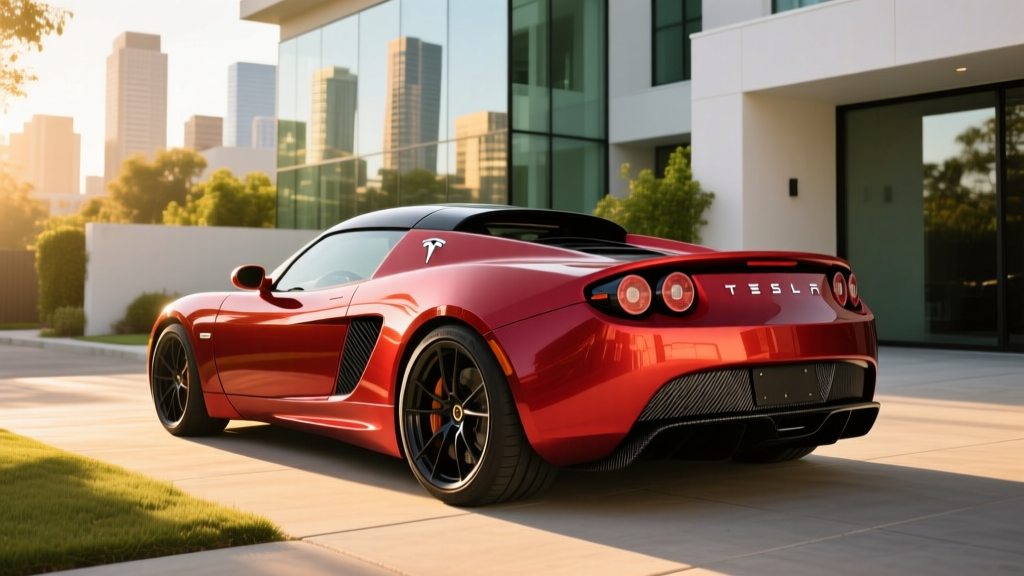
Before the Model S redefined the luxury sedan, before the Model 3 brought EVs to the masses, there was the 2009 Tesla Roadster — a converted Lotus Elise chassis stuffed with 6,831 laptop-grade lithium-ion cells and a 3-phase, 4-pole AC induction motor. It was the first highway-capable production EV to use lithium-ion batteries, and it obliterated the assumption that electric cars had to be slow, short-ranged, or boring.
Writing about the 2009 Tesla Roadster in 2026 requires a specific frame: this is not a new-car review. Tesla built approximately 2,450 Roadsters between 2008 and 2012 (the original Roadster generation). You cannot order one from a dealership today. What you can do is evaluate it as a used collector EV, understand its real-world capabilities, and appreciate how its engineering DNA persists in every Tesla on the road.
| Spec | Value |
|---|---|
| EPA Range (original) | 244 miles |
| Battery Capacity (usable) | ~53 kWh (ESS, NMC chemistry) |
| Motor | 3-phase, 4-pole AC induction (RWD) |
| Horsepower | 288 hp (215 kW) |
| Torque | 295 lb-ft (Sport: 317 lb-ft) |
| 0–60 mph | 3.7 seconds (Sport: 3.7s) |
| Top Speed | 125 mph (electronically limited) |
| Curb Weight | 2,690 lbs |
| Original MSRP | $109,000 (base) / $129,000 (Sport) |
| Production Years | 2008–2012 (~2,450 units) |
Range and Efficiency: 244 Miles EPA, But What About Today?
The original EPA-rated range for the 2009 Tesla Roadster was 244 miles on a full charge — a figure that stunned the automotive world in 2008, when most EVs (like the Th!nk City or GEM neighborhood vehicles) managed under 50 miles. The Roadster achieved this through a combination of low weight (2,690 lbs), exceptional aerodynamics for a sports car (Cd 0.36), and a then-massive 53 kWh usable battery pack.
EPA sticker: 244 miles. Real-world expectation for a 2009 Roadster today: 160–200 miles depending on battery health. Most 15-year-old Roadster packs have degraded 15–30% from original capacity. Highway driving at 70+ mph reduces range further to roughly 140–170 miles. Cold weather (below 40°F) can knock off an additional 15–20%, bringing winter range to 120–150 miles for a pack with significant degradation.
The Roadster has no active battery thermal management system comparable to modern Tesla packs — it uses passive cooling with a glycol loop, meaning extreme heat accelerates degradation and extreme cold suppresses available capacity more aggressively than in a 2026 Model 3 or Model Y.
Efficiency was rated at approximately 135 MPGe combined (roughly 25 kWh/100 miles), which remains respectable even by 2026 standards. For context, the 2026 Tesla Model 3 Long Range achieves 132 MPGe combined with a far heavier vehicle — a testament to the Roadster's featherweight Lotus underpinnings.
Battery Chemistry and Longevity: NMC Cells, 17 Years Later
The Roadster's Energy Storage System (ESS) contains 6,831 individual 18650-format lithium-ion cells arranged in 11 modules. These are NMC (nickel-manganese-cobalt) cells supplied primarily by Panasonic — the same form factor (though vastly improved chemistry) that Tesla used through the Model S and Model 3 Long Range until transitioning to LFP for standard-range vehicles and 4680 cells for newer production.
The original battery warranty was 5 years / 100,000 miles with a guarantee of 70% capacity retention. That warranty expired over a decade ago for every Roadster on the road. Here's what ownership data shows:
- Average degradation at 10 years: 15–25% capacity loss (per Tesla Roadster community forums and Tesla's own fleet data published in 2019)
- Worst-case packs: Some early 2008–2009 units experienced module imbalances requiring full ESS replacement
- Replacement cost: Tesla offered a battery replacement program at approximately $29,000 (2015 pricing); third-party specialists like Gruber Motors and Electrified Garage quote $22,000–$35,000 in 2026 depending on cell availability and labor
- Upgraded 3.0 battery: Tesla announced a Roadster 3.0 battery upgrade in 2015 (80 kWh, ~340-mile range) priced at ~$29,000, but availability was extremely limited and the program is effectively closed
If you're evaluating a used 2009 Roadster, request a battery health diagnostic showing individual module voltage spread and total usable capacity in kWh. A pack reading above 42 kWh usable (~80% State of Health) is considered excellent for the age.
Charging: Slow by Modern Standards
This is where the 2009 Roadster most clearly shows its age. The car predates the CCS and CHAdeMO fast-charging standards and was designed for an era when DC fast-charging infrastructure barely existed.
| Charging Method | Power | Time (0–Full) | Rate |
|---|---|---|---|
| Level 1 (120V, included Mobile Connector) | ~1.4 kW | ~44 hours | ~5 miles/hour |
| Level 2 (240V, High Power Wall Connector) | 16.8 kW (70A) | ~3.5 hours | ~56 miles/hour |
| Level 2 (240V, standard 40A) | 9.6 kW | ~5.5 hours | ~35 miles/hour |
| DC Fast Charging | Not natively supported | N/A | N/A |
No DC fast charging. The Roadster's proprietary charge port (a round connector unique to the original Roadster — not the J1772 or Tesla's later NACS connector) accepts only AC power. The onboard charger can accept up to 16.8 kW via Tesla's High Power Wall Connector (HPWC), which was remarkable in 2009 but means you're tethered to a dedicated home charger for any practical use.
Third-party J1772 adapters exist (from vendors like Quick Charge Power), allowing you to use public Level 2 stations at up to 6.6–7.2 kW. But you will not find DC fast-charging compatibility without significant aftermarket modification, and even then, the battery's thermal management is not designed for repeated high-power DC sessions.
Practical charging reality: Plan to charge at home, overnight, on a dedicated 240V/70A circuit. A full recharge from 10% takes roughly 3.5 hours on the HPWC. Public charging is possible but slow and requires an adapter.
Performance: Still Thrilling After 17 Years
The 2009 Tesla Roadster's 3.7-second 0–60 mph time was supercar territory in 2009 — comparable to a Porsche 911 Turbo of the era. In 2026, it's merely quick by EV standards (a Model S Plaid hits 60 in 1.99 seconds), but the experience remains visceral because of the car's 2,690-pound curb weight and the instantaneous torque delivery characteristic of an AC induction motor.
The single-speed BorgWarner transmission (a 2-speed unit was originally planned but abandoned due to reliability issues) means power delivery is linear and uninterrupted. There's no shift shock, no turbo lag — just a seamless wave of 295 lb-ft from 0 rpm.
Handling benefits enormously from the Lotus Elise bonded aluminum chassis. The mid-rear battery placement gives a weight distribution of approximately 45/55 front/rear, and the low center of gravity (the ESS sits behind the seats) produces flat, confidence-inspiring cornering. The unassisted steering is heavy at parking speeds but communicative in a way that modern electric power steering systems rarely replicate.
Drawbacks: The ride is firm — this is a sports car with minimal sound insulation, no power steering, and a cabin designed for two occupants with minimal storage. The original infotainment system is a basic LCD touchscreen with no Apple CarPlay, no Android Auto, no over-the-air updates, and no modern driver-assistance features. There is no Autopilot, no adaptive cruise control, no lane-keeping — this is a pure analog driving experience with an electric heart.
Pricing, Collector Value, and Tax Credit Reality
You cannot buy a new 2009 Tesla Roadster, and the IRS §30D federal EV tax credit applies only to new vehicles purchased from a licensed dealer. The used-EV credit (§25E) caps at $4,000 for vehicles under $25,000 — and no Roadster qualifies at that price point.
Collector market pricing (2026):
| Condition | Mileage | Approximate Price |
|---|---|---|
| Concours / Low-Mile Collector | Under 10,000 mi | $150,000–$200,000+ |
| Excellent Driver | 10,000–40,000 mi | $100,000–$140,000 |
| Good / Needs Battery Service | 40,000–80,000 mi | $65,000–$95,000 |
| Project / Non-Running ESS | 80,000+ mi or damaged | $35,000–$60,000 |
Original MSRP was $109,000 for the base model and $129,000 for the Sport package (upgraded motor winding, higher torque, sport suspension). Well-preserved examples have appreciated beyond original MSRP, driven by the car's historical significance as the first viable production EV sports car and its limited production run of ~2,450 units.
No federal tax credit applies to this purchase. Budget for the full transaction price plus potential battery service ($22,000–$35,000 if the ESS needs replacement). Insurance through specialty collectors' carriers (Hagerty, Grundy) typically runs $1,500–$3,000 annually for agreed-value coverage.
Cargo, Interior, and Daily Usability
The 2009 Tesla Roadster is a two-seat roadster with a mid-rear battery and a front trunk (frunk) that holds approximately 5.0 cubic feet — enough for a weekend bag or a small grocery run. There is no rear seat, no rear cargo area, and minimal interior storage beyond a small center console bin and door pockets.
The cabin is essentially a Lotus Elise interior: tight, low-slung, with manually adjusted sport seats, minimal sound deadening, and a removable hardtop or optional soft top. Legroom is adequate for drivers up to about 6'2", but ingress and egress require the same athletic maneuver as any mid-engine sports car — you sit low and swing your legs over a wide sill.
The 7-inch touchscreen controlled HVAC, audio, and vehicle settings, but by 2026 standards it is slow, low-resolution, and lacks any smartphone integration. Bluetooth audio was available; navigation was an optional add-on. There are no USB-C ports, no wireless charging pad, and no OTA software updates.
Who Should Buy a 2009 Tesla Roadster?
Buy a 2009 Tesla Roadster if:
- You want a historically significant collector EV — the car that proved lithium-ion EVs were viable
- You have a dedicated garage with 240V/70A charging and don't need DC fast charging
- You value driving dynamics (lightweight, communicative steering, mid-engine balance) over tech features
- You're prepared for $22,000–$35,000 in potential battery service within the next 5 years
- You want a weekend/fair-weather sports car, not a daily commuter
Look elsewhere if:
- You need a daily driver with modern safety features, driver assists, or infotainment
- You want DC fast charging for road trips
- You need more than two seats or meaningful cargo space
- You're looking for a tax-credit-eligible EV purchase
- You want low-maintenance ownership — parts and service require Tesla legacy support or specialist shops
- Historic significance — the first production lithium-ion EV
- Lightweight (2,690 lbs) with Lotus handling dynamics
- Strong collector appreciation potential
- 3.7s 0–60 remains thrilling
- 244-mile EPA range was groundbreaking and still adequate for local drives
- No DC fast charging — AC only, max 16.8 kW
- Battery degradation is real; replacement costs $22K–$35K
- No modern driver assists, no Autopilot, no OTA updates
- Tight cabin, minimal cargo, no back seat
- Proprietary charge port requires adapters for public L2 stations
- No federal tax credit eligibility
- Limited service network — requires Tesla legacy or specialist support
Frequently Asked Questions
What is the real-world range of a 2009 Tesla Roadster today?
Expect 160–200 miles from a Roadster with an average-degraded battery (80–85% State of Health). Highway driving at 70+ mph drops this to 140–170 miles. Cold weather (below 40°F) can reduce range further to 120–150 miles. The original 244-mile EPA rating assumed a new, fully healthy pack.
How fast does the 2009 Tesla Roadster charge?
The Roadster supports AC charging only — no DC fast charging. On a dedicated 240V/70A High Power Wall Connector, it charges at up to 16.8 kW, adding roughly 56 miles of range per hour and reaching a full charge in about 3.5 hours. On a standard 240V/40A circuit, expect 9.6 kW and ~5.5 hours for a full charge. Level 1 (120V) takes approximately 44 hours.
Does the 2009 Tesla Roadster qualify for any federal EV tax credit?
No. The IRS §30D new clean vehicle credit applies only to new vehicles. The §25E used-EV credit requires a sale price under $25,000, and no Roadster sells at that price. You will pay the full market price with no federal tax offset.
Is the 2009 Tesla Roadster worth buying vs. a modern EV?
As a daily driver: no. A 2026 Tesla Model 3, Hyundai Ioniq 6, or BMW i4 offers more range, DC fast charging, modern safety, driver assists, and infotainment for less money. As a collector car and piece of automotive history: absolutely. The Roadster's significance is comparable to the Toyota Prius or the original Honda Insight, but with sports-car performance and far greater rarity (~2,450 built).
What is the battery replacement cost for a 2009 Tesla Roadster?
Third-party EV specialists quote $22,000–$35,000 for a full ESS replacement, depending on cell sourcing and labor. Tesla's own legacy support for Roadster battery service is limited. Budget for this expense if purchasing a high-mileage example or one with documented module imbalance.
Can I use Tesla Superchargers with a 2009 Roadster?
No. The original Roadster uses a proprietary round charge connector that is physically incompatible with Tesla's Supercharger network (which requires the NACS connector introduced with the Model S). The Roadster accepts AC power only; Superchargers deliver DC. There is no adapter solution.
How does the 2009 Roadster compare to the announced Roadster 2?
Tesla announced the next-generation Roadster in 2017 with claims of 620-mile range, 1.9s 0–60, and a ~$200,000 price. As of 2026, the Roadster 2 remains unreleased and is not available for purchase. The 2009 Roadster is a proven, deliverable, drivable car; the Roadster 2 is a reservation placeholder with unverified specs. For current information, check Tesla's official Roadster page.