The Original EV That Started It All: A 2026 Retrospective
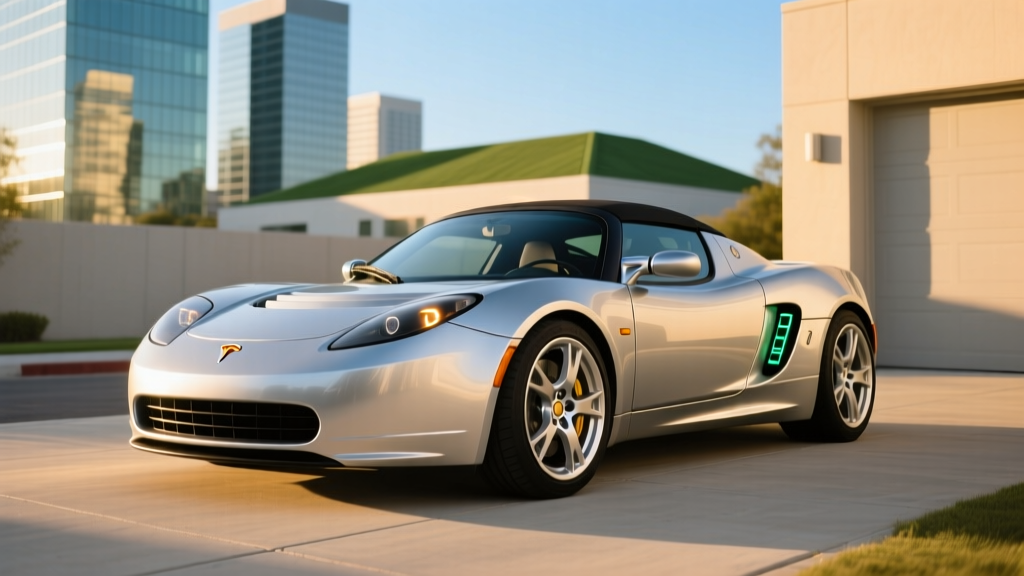
If you are researching the 08 Tesla Roadster in 2026, you are likely either a collector evaluating a classic EV, a prospective buyer browsing the used market, or an enthusiast tracing the lineage of modern electric performance cars. The first-generation Tesla Roadster — produced from 2008 through 2012 — was the vehicle that proved lithium-ion battery packs could deliver serious performance and usable range in a production automobile. Fewer than 2,450 units were built, and today they occupy a unique space: part collector car, part cautionary tale about early battery degradation.
This guide covers everything a 2026 buyer or owner needs to know about the original Roadster's real-world range, charging capabilities, battery health considerations, and what ownership actually looks like nearly two decades after the first delivery.
Specs at a Glance: 2008 Tesla Roadster
| Specification | 2008 Tesla Roadster (Sport) |
|---|---|
| EPA-Estimated Range (Original) | 244 miles (ideal); ~220 mi EPA adjusted |
| Battery Capacity | 53 kWh (usable ~50 kWh), NMC lithium-ion |
| Motor Output | 248 hp (185 kW) / Sport: 288 hp (215 kW) |
| Torque | 200 lb-ft (270 Nm) / Sport: 295 lb-ft (400 Nm) |
| 0–60 mph | 3.7 seconds (Sport: 3.2 seconds) |
| Top Speed | 125 mph (electronically limited) |
| Drivetrain | Rear-wheel drive, single-speed gearbox |
| Curb Weight | 2,690 lbs (1,220 kg) |
| Original Base MSRP | $109,000 (2008); Sport: $129,000 |
| 2026 Collector Market Value | $150,000 – $250,000+ depending on condition and battery |
| Battery Warranty (Original) | 5 years / 100,000 miles (expired) |
Real-World Range: What to Expect in 2026
Original EPA/Ideal Rating: 244 miles (Tesla's "ideal" cycle) / ~220 miles EPA adjusted
2026 Real-World Expectation: 140–180 miles on a well-maintained original pack; 190–220 miles with a replacement ESS (Energy Storage System)
The 08 Tesla Roadster's range story in 2026 is inseparable from battery age. The original 53 kWh NMC (nickel-manganese-cobalt) battery pack — assembled from 6,831 individual 18650-format cells — was cutting-edge in 2008 but is now 14 to 18 years old. Even the best-maintained original packs have experienced measurable degradation.
Original pack condition (2026): Expect 60–75% state of health (SoH) on an original, never-replaced battery. That translates to roughly 140–180 miles of real-world range under mixed driving conditions. Highway driving at 70+ mph will push consumption higher — anticipate 150–170 miles before needing a charge. Cold-weather driving (below 40°F) can reduce that further by 15–25%, meaning winter range on an aged pack could dip to 110–140 miles.
Replacement ESS: Tesla offered a battery replacement program (the ESS, or Energy Storage System upgrade) that restored capacity closer to original specs. Units that received this service — or had a third-party pack refurbishment — can achieve 190–220 miles. Verify battery replacement history before purchasing; documentation is critical.
The Roadster lacks a heat pump (standard on 2008-era EVs), so cabin heating draws directly from the traction battery, compounding cold-weather range loss. Plan trips conservatively in winter months.
Charging: DC Fast Charge, Level 2, and the Adapter Reality
| Charging Method | Power (kW) | Charge Time | Notes |
|---|---|---|---|
| Level 1 (120V outlet) | ~1.4 kW | ~36 hours (0–100%) | Emergency/trickle only |
| Level 2 (240V, HPWC) | ~16.8 kW (70A) | ~3.5 hours (0–100%) | Tesla High Power Wall Connector |
| Level 2 (240V, standard J1772 adapter) | ~6.6 kW (28A) | ~8 hours (0–100%) | Via included adapter |
| DC Fast Charging | N/A — not supported natively | N/A | No CCS or CHAdeMO capability |
This is the 08 Tesla Roadster's biggest practical limitation in 2026: it has no DC fast-charging capability. The vehicle predates the CCS and CHAdeMO standards, and Tesla's Supercharger network was never designed for the original Roadster's proprietary charge port.
Your charging options are exclusively AC Level 1 and Level 2. The best-case scenario is Tesla's High Power Wall Connector (HPWC), which can deliver up to 16.8 kW via the Roadster's 70-amp onboard charger — adding roughly 45–50 miles of range per hour of charging. However, finding a 70-amp HPWC in the wild is unlikely; most public Level 2 stations deliver 6.6–7.2 kW, adding roughly 18–22 miles per hour.
Practical implication: This is a vehicle you charge overnight at home. Road trips require meticulous planning around Level 2 destinations — hotels, restaurants, or workplaces where you can park for 3–4 hours. The absence of DC fast charging makes the Roadster unsuitable as a primary vehicle for anyone who regularly drives more than 150 miles in a day.
The Roadster uses a proprietary Tesla connector that predates both the J1772 standard and the current NACS (North American Charging Standard). Tesla included a J1772 adapter with the vehicle, which you will need for any public Level 2 station. Verify the adapter is present and functional if purchasing a used example — replacements are scarce.
Performance: Still Thrilling, Even by 2026 Standards
The 08 Tesla Roadster was built on a modified Lotus Elise chassis, and its performance credentials remain genuinely impressive. The rear-mounted AC induction motor delivers instant torque with zero lag — a characteristic that was revelatory in 2008 and still feels punchy today.
Standard Roadster: 248 hp, 200 lb-ft of torque, 0–60 mph in 3.7 seconds. The single-speed gearbox (initially a two-speed was planned but abandoned) means smooth, uninterrupted acceleration from standstill to top speed.
Roadster Sport: 288 hp, 295 lb-ft, 0–60 mph in 3.2 seconds. The Sport variant received a hand-wound motor and upgraded power electronics that sharpened throttle response and improved mid-range pull.
By 2026 standards, a Tesla Model 3 Performance hits 0–60 in 2.9 seconds and a Lucid Air Sapphire does it in under 2.0 seconds. But the Roadster's 2,690-pound curb weight — roughly 1,300 pounds lighter than a Model 3 — gives it a nimbleness that heavier modern EVs cannot replicate. The steering is unassisted and direct. The chassis communicates every imperfection in the road. It is an analog driving experience wrapped in an electric powertrain, and that combination is irreplicable.
Regenerative braking is present but less aggressive than modern Teslas. One-pedal driving is possible but requires more forward planning than in a 2026 Model 3 or Model Y. The friction brakes are Lotus-sourced and adequate for the vehicle's weight and speed envelope.
Battery Health, Replacement Costs, and Longevity
The battery is the single most important — and most expensive — consideration when evaluating an 08 Tesla Roadster in 2026. Here is what you need to know:
Original battery chemistry: NMC (nickel-manganese-cobalt) using 18650 cylindrical cells. This chemistry offered excellent energy density for 2008 but is more susceptible to calendar degradation than the LFP (lithium iron phosphate) packs used in some modern EVs.
Expected degradation: NMC cells from this era typically lose 1.5–3% capacity per year under normal conditions. After 14–18 years, an original pack sitting at 60–75% SoH is typical. Vehicles stored in hot climates (Arizona, Texas, Southern California) may show greater degradation due to thermal stress on the cells.
Replacement cost: Tesla's official battery replacement program for the Roadster is effectively discontinued as of 2026, though some vintage service support may be available on a case-by-case basis. Third-party EV shops specializing in pack rebuilding (such as Electrified Garage or independent Tesla specialists) can refurbish the ESS for approximately $30,000 to $45,000, depending on cell availability and labor. Some owners have sourced replacement cells and performed DIY rebuilds, but this requires significant high-voltage expertise.
State of Health (SoH) monitoring: The Roadster's touchscreen displays battery health information, including estimated range at full charge and cycle count. Before purchasing, request a screenshot of the battery health screen and cross-reference the estimated range with the vehicle's odometer and service history.
Interior, Cargo, and Daily Practicality
The Roadster's cabin is essentially a Lotus Elise interior with Tesla-specific instrumentation. That means:
- Seating: Two seats only, with fixed-back sport buckets. Entry and exit require genuine athleticism — the door sills are wide and the roofline is low.
- Legroom: Adequate for drivers up to about 6'2", though taller drivers may find the pedal box tight.
- Cargo space: Effectively zero. There is a small shelf behind the seats that can hold a soft bag or laptop case (~2–3 cubic feet at best). The "frunk" space where an engine would sit in a mid-engine Lotus houses power electronics and is not usable for storage.
- Infotainment: A basic touchscreen controls climate, audio, and vehicle settings. There is no navigation, no Bluetooth audio streaming, no Apple CarPlay or Android Auto. The audio system is a basic Alpine unit. Many owners have aftermarket-upgraded the head unit.
- Climate control: Electric cabin heater and A/C. The heater draws significant battery power (up to 4–5 kW), which is another reason cold-weather range drops sharply.
Driver assistance: None. The 08 Tesla Roadster predates Autopilot, lane-keeping, adaptive cruise control, and every modern ADAS feature. This is an unassisted, fully manual driving experience — no forward collision warning, no blind-spot monitoring, no automatic emergency braking.
Pricing, Collector Value, and Tax Credit Eligibility
The 08 Tesla Roadster is no longer a new-vehicle purchase, so federal tax credit eligibility is moot for new-car buyers. However, used-EV buyers should understand the rules:
- Federal used-EV credit (§25E): Up to $4,000 or 30% of the sale price (whichever is lower) for qualifying used EVs purchased from a dealer. However, the vehicle must be under $25,000 to qualify — and no 2008 Roadster sells anywhere near that price in 2026.
- Federal new-EV credit (§30D): Not applicable; the vehicle is out of production.
- State incentives: Vary by jurisdiction. Some states offer classic/collector vehicle exemptions from emissions testing, which may simplify registration.
2026 Market Pricing:
| Condition | Estimated Value (2026) |
|---|---|
| Driver-quality, original battery (degraded) | $130,000 – $160,000 |
| Excellent condition, original battery | $160,000 – $200,000 |
| Concours/collector, replacement battery | $200,000 – $275,000+ |
| Low-mileage, single-owner, full history | $250,000 – $350,000+ |
Values have appreciated significantly since the car's original MSRP, driven by collector demand, historical significance, and extreme scarcity. The Roadster is increasingly treated as a blue-chip collector car — comparable to early Porsche 911s or air-cooled BMWs in terms of market trajectory.
Who Should (and Shouldn't) Buy the 08 Tesla Roadster
- You want a historically significant, appreciating collector car that also delivers genuine driving thrills
- You have garage access with a 240V Level 2 charger and drive fewer than 100 miles per day
- You value analog driving dynamics (light weight, unassisted steering, manual everything) over tech features
- You understand and budget for $30,000–$45,000 in potential battery replacement costs
- You need DC fast charging for road trips or daily commutes over 150 miles
- You need more than two seats or any meaningful cargo space
- You want modern driver-assistance features, infotainment, or over-the-air updates
- You are buying your first or only EV — this is a specialist vehicle, not a daily driver
Frequently Asked Questions
What is the real-world range of the 2008 Tesla Roadster in 2026?
With an original, never-replaced battery, expect 140–180 miles under mixed driving conditions. Highway driving and cold weather reduce this further. Units with a replacement or refurbished ESS can achieve 190–220 miles. Always verify the battery's state of health before purchase.
How fast does the 08 Tesla Roadster charge?
The Roadster does not support DC fast charging at all. On a 240V Level 2 connection at its maximum 70A/16.8 kW rate, a full charge takes approximately 3.5 hours. On a typical 32A public Level 2 station (6.6 kW), expect about 8 hours for a full charge. Plan accordingly — this is an overnight home-charging vehicle.
Does the 2008 Tesla Roadster qualify for any federal EV tax credit?
No. The federal used-EV credit (§25E) caps qualifying vehicles at a $25,000 sale price, and the Roadster's collector value far exceeds that. The new-vehicle §30D credit is not applicable since the car is out of production. Consult the IRS clean vehicle credits page for current rules.
Is the 08 Tesla Roadster worth buying versus a modern EV?
They serve entirely different purposes. A 2026 Tesla Model 3 Performance offers more range (340+ miles EPA), DC fast charging (250 kW), Autopilot, and daily practicality for under $55,000. The Roadster is a collector car — you buy it for its historical significance, analog driving experience, scarcity, and potential appreciation. Comparing it to a modern EV on specs alone misses the point entirely.
What are the biggest pros and cons?
- Historically significant — the car that launched Tesla and the modern EV movement
- Thrilling performance: 3.2–3.7 sec 0–60, 2,690-lb curb weight
- Analog driving feel: unassisted steering, Lotus chassis, no electronic nannies
- Appreciating collector value — increasingly rare
- Zero tailpipe emissions with genuine sports-car performance
- No DC fast charging — road trips require Level 2 planning
- Severe battery degradation risk; $30K–$45K replacement cost
- Two seats, virtually no cargo space
- No driver-assistance features whatsoever
- Dated infotainment and no OTA updates
- Proprietary charge connector; adapter scarcity
Can I still get the 08 Tesla Roadster serviced?
Tesla's official support for the original Roadster is extremely limited as of 2026, though the company has occasionally offered vintage service programs. Most owners rely on independent EV specialists, Lotus mechanics (for chassis and suspension components shared with the Elise), and third-party battery rebuilders. Joining the Tesla Roadster owner community is strongly recommended for parts sourcing and service referrals.
What should I check before buying a used 2008 Tesla Roadster?
Prioritize these five items: (1) battery state of health and replacement history, (2) PEM (Power Electronics Module) condition — failures were common and replacements cost $5,000–$10,000, (3) the proprietary J1772 charge adapter is included and functional, (4) complete service records from Lotus or Tesla, and (5) underbody and chassis condition, as the bonded aluminum Lotus tub can suffer from corrosion if stored improperly.