The 2003 F150 Lightning: A Supercharged V8, Not an Electric Truck
If you've been searching for a 2003 F150 Lightning, you may be in for a surprise. The 2003 Ford F-150 Lightning was never an electric vehicle. It was a high-performance, internal-combustion pickup powered by a supercharged 5.4-liter Triton V8 producing 380 horsepower and 470 lb-ft of torque — routed exclusively through a 4-speed automatic to the rear wheels. Ford built the Lightning nameplate as a street-performance truck, not an efficiency play, and the 2003 model year was part of the second-generation Lightning run (1999–2004).
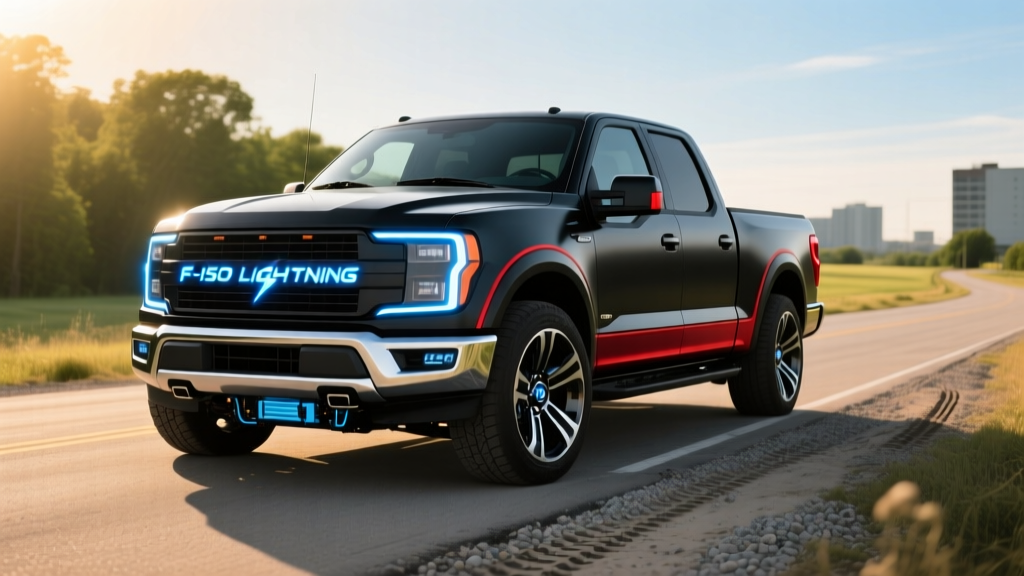
The confusion is understandable. When Ford revived the Lightning badge for its all-electric F-150 in 2022, it created one of the most recognized nameplate crossovers in automotive history. So if you're here wondering whether the 2003 F150 Lightning is an EV worth buying, the short answer is: it isn't one. But the full story — and how today's F-150 Lightning EV stacks up against the legacy performance truck — is worth exploring for any truck buyer weighing electrification.
2003 F-150 Lightning vs. 2026 F-150 Lightning EV: Side-by-Side Specs
To settle the comparison once and for all, here's how Ford's two Lightning eras compare on paper. The numbers tell two very different stories about what "performance truck" meant in 2003 versus 2026.
| Specification | 2003 F-150 SVT Lightning | 2026 F-150 Lightning Platinum AWD |
|---|---|---|
| Powertrain | 5.4L Supercharged V8 (ICE) | Dual-motor AWD (BEV) |
| Horsepower | 380 hp | 580 hp |
| Torque | 470 lb-ft | 775 lb-ft |
| 0–60 mph | ~5.2 sec | ~3.8 sec |
| EPA Range / Fuel Economy | ~12 MPG combined | 320 mi EPA / 70 MPGe combined |
| Drivetrain | RWD | AWD (dual-motor) |
| Towing Capacity | ~5,000 lbs | 7,700 lbs (Platinum) / 10,000 lbs (XLT/Lariat ext. range) |
| Cargo Bed Length | 6.5 ft (Styleside short box) | 5.5 ft (crew cab only) |
| Original MSRP | ~$36,000 (2003) | $59,990 (2026 Platinum base) |
| Federal EV Tax Credit | N/A | Up to $7,500 (§30D, subject to eligibility) |
The 2003 Lightning was a tire-shredding, supercharger-whining muscle truck that sacrificed fuel economy, towing, and practicality for straight-line speed. The 2026 Lightning EV delivers more power, more torque, faster acceleration, four-wheel traction, a usable back seat, and a frunk — while returning the equivalent of 70 MPGe. The performance gap is enormous, and it's not close.
2026 F-150 Lightning EV: Full Specs, Range, and Charging
If the 2003 Lightning brought you here but the electric version is what you actually want, here's a complete breakdown of what Ford is selling for the 2026 model year. Data below reflects the Extended Range battery with dual-motor AWD, the most popular configuration.
| Category | Value |
|---|---|
| EPA Range | 320 miles |
| Battery Capacity (Usable) | ~131 kWh (NMC chemistry, liquid-cooled) |
| Max DC Fast Charge Rate | 150 kW peak |
| 10–80% DC Fast Charge Time | ~41 minutes |
| Level 2 Home Charge Rate | 19.2 kW (80A Ford Charge Station Pro) / ~30 mi/hr |
| Level 2 (Standard 48A Mobile Charger) | 11.5 kW / ~18 mi/hr |
| Efficiency | 70 MPGe combined / 48 kWh per 100 mi |
| Horsepower | 580 hp |
| Torque | 775 lb-ft |
| 0–60 mph | ~3.8 seconds |
| Drivetrain | Dual-motor AWD |
| Towing (Platinum trim) | 7,700 lbs |
| Payload | ~1,800 lbs |
| Battery/Powertrain Warranty | 8 years / 100,000 miles (≥70% capacity retention) |
| Charge Port | NACS (native Tesla Supercharger access) |
Charging Speed and Infrastructure: What Lightning Owners Need to Know
Charging speed is the F-150 Lightning's most debated spec. The Extended Range battery peaks at 150 kW on a DC fast charger — adequate but noticeably behind competitors like the Rivian R1T (200+ kW) and the Hyundai Ioniq 5 (240 kW). Ford's large NMC battery pack has a conservative charge curve to protect long-term cell health, which means the 10–80% session takes roughly 41 minutes.
| Charging Level | Power (kW) | Miles Added Per Hour | Notes |
|---|---|---|---|
| Level 1 (120V household) | ~1.4 kW | ~2–3 mi/hr | Emergency/top-off only; full charge takes days |
| Level 2 (240V, 48A mobile) | 11.5 kW | ~18 mi/hr | Overnight charge: ~18 hours 0–100% |
| Level 2 (240V, 80A Wall Connector) | 19.2 kW | ~30 mi/hr | Overnight charge: ~10 hours 0–100%; requires 100A circuit |
| DC Fast Charge | 150 kW peak | ~190 mi in 30 min (10–55%) | Tapers significantly above 80% SoC |
The 80A Ford Charge Station Pro requires a dedicated 100-amp circuit and a 200-amp (minimum) home electrical panel. Many older homes will need a panel upgrade, which typically costs $1,500–$3,000 on top of the $500–$1,200 for the charger unit and $800–$2,000 for licensed electrician installation. Budget $3,000–$5,500 total for a full home Level 2 setup — a one-time investment that makes daily EV ownership effortless. Per fueleconomy.gov, charging at home on the national average electricity rate ($0.16/kWh) costs roughly $0.05 per mile, compared to $0.15–$0.20 per mile for a gas truck at 15 MPG.
On the road, Ford's switch to the NACS charge port for 2025+ models means Lightning owners now have native access to the Tesla Supercharger network — over 20,000 stalls nationwide — without an adapter. This is a significant practical advantage over CCS-port vehicles still reliant on Electrify America or EVgo for highway travel.
2026 Pricing, Trim Levels, and Federal Tax Credit Eligibility
Here's where the rubber meets the road for buyers. The 2026 F-150 Lightning lineup starts under $55K for the work-oriented Pro trim and climbs past $96K for a fully loaded Platinum. Federal tax credit eligibility under IRS §30D adds complexity.
| Trim | Base MSRP | MSRP Under $80K Cap? | Potential §30D Credit | Effective Price (Est.) |
|---|---|---|---|---|
| Pro (Standard Range) | $54,990 | Yes | Up to $7,500 | ~$47,490 |
| XLT (Standard Range) | $59,990 | Yes | Up to $7,500 | ~$52,490 |
| Lariat (Extended Range) | $69,990 | Yes | Up to $7,500 | ~$62,490 |
| Platinum (Extended Range) | $84,990 | No (exceeds $80K cap) | $0 | $84,990 |
- MSRP cap: Trucks/vans/SUVs must have an MSRP at or below $80,000. The Platinum trim exceeds this and is ineligible.
- Buyer income cap: Modified AGI must not exceed $150,000 (single), $225,000 (head of household), or $300,000 (joint filing).
- Battery sourcing: The $7,500 credit splits into two halves — $3,750 for critical-mineral sourcing and $3,750 for battery-component assembly. Ford's supply chain has shifted significantly; check the latest IRS qualified vehicle list at time of purchase, as eligibility can change quarterly.
- Point-of-sale transfer: As of 2024, buyers can transfer the credit to the dealer at purchase, reducing the sale price directly rather than waiting for a tax refund.
- VIN verification: Always confirm the specific vehicle's eligibility on fueleconomy.gov before signing paperwork.
Performance, Utility, and Daily Ownership: How the Lightning EV Actually Drives
The 2003 Lightning could smoke its rear tires and hit 140 mph — thrilling for a quarter-mile, useless for a Tuesday commute. The 2026 Lightning EV is a fundamentally different kind of performance truck: 580 hp and 775 lb-ft of instant torque delivered to all four wheels, a 3.8-second 0–60 that embarrasses most sports sedans, and a center of gravity lowered by the under-floor battery pack that makes it handle better than any F-150 has a right to.
Utility is where the EV Lightning genuinely surpasses its predecessor. The front trunk (frunk) offers 14.1 cubic feet of lockable, weatherproof storage — roughly the volume of a mid-size sedan's trunk. The 5.5-foot bed is shorter than the 2003's 6.5-foot box, but the crew-cab configuration provides full-size rear seating with 43.6 inches of rear legroom (vs. the 2003 regular cab's nonexistent back seat). Total interior passenger volume is 141.3 cu ft.
Pro Power Onboard is the Lightning's killer feature for tradespeople and campers: up to 9.6 kW of vehicle-to-load (V2L) power through 120V and 240V outlets in the bed and frunk. That's enough to run a welder, power a job site for a full day, or back up essential home circuits during an outage (with the Ford Intelligent Backup Power system and a compatible home transfer switch).
On the tech front, the Lightning runs Ford's SYNC 4A system on a 15.5-inch vertical touchscreen (Lariat and above), with wireless Apple CarPlay and Android Auto, over-the-air updates, and Ford's BlueCruise hands-free highway driving assist. BlueCruise is an SAE Level 2 system — it handles steering, acceleration, and braking on pre-mapped divided highways, but the driver must remain attentive and keep eyes on the road at all times. This is not autonomous driving.
F-150 Lightning vs. Rivian R1T and Chevy Silverado EV: Which Electric Truck Wins?
The 2003 Lightning had no real competitor — the Dodge Ram SRT-10 arrived a year later and was a different animal entirely. The 2026 Lightning EV faces serious rivals. Here's how they stack up.
- You need a full crew cab with a real back seat and 14-cu-ft frunk
- Pro Power Onboard / V2L is essential for work or camping
- You want native NACS / Supercharger access without adapters
- You prioritize a familiar F-150 driving experience and dealer network
- Your budget targets the $55K–$70K range (before credits)
- Off-road capability is a priority (quad-motor, 44° approach angle)
- You want faster DC charging (200+ kW) and longer range options (up to 420 mi Max pack)
- Unique features like the Gear Tunnel and Camp Kitchen appeal to you
- Budget is $75K–$100K+ and tax credit is less of a factor
- You need maximum range (up to 440 mi on 4WT Extended Range)
- A longer bed is critical (available 5'11" bed + Midgate for extended load floor)
- 4-wheel steering (crab walk) helps in tight job sites or trails
- You prefer GM's Ultium platform and dealer network
The Lightning's advantage is breadth: it's the most well-rounded electric truck for the broadest set of buyers, particularly those already in the Ford ecosystem. The Rivian is a better off-roader and the Silverado EV has more range, but neither matches the Lightning's combination of frunk volume, Pro Power Onboard, crew-cab comfort, and Supercharger access at a sub-$70K price point.
The Verdict: Is the Lightning Nameplate Better as an EV?
The 2003 F-150 SVT Lightning is a collector's item — a supercharged, RWD, regular-cab truck that represents a specific era of American performance. It gets 12 MPG, has no back seat, and its supercharger Eaton M112 is a maintenance item. Current used values range from $15,000 to $35,000+ depending on condition and mileage, and you'll never see a fuel pump again without wincing.
The 2026 F-150 Lightning EV is objectively superior as a daily vehicle: faster, more capable, vastly more practical, cheaper per mile to operate, and eligible for up to $7,500 in federal tax credits on qualifying trims. The Lightning nameplate's transition from supercharged V8 to dual-motor EV is one of the most successful reinventions in truck history. If you came here searching for a 2003 Lightning and left considering the electric version — that's exactly the journey Ford is counting on.
Frequently Asked Questions
Was the 2003 F-150 Lightning an electric vehicle?
No. The 2003 Ford F-150 SVT Lightning was a gasoline-powered performance truck with a supercharged 5.4L V8 (380 hp). Ford did not produce an electric F-150 until the 2022 F-150 Lightning EV. The nameplate was reused for the electric model as a branding decision.
What is the real-world range of the 2026 F-150 Lightning?
The EPA rates the Extended Range model at 320 miles. Real-world highway driving typically yields 260–285 miles. Cold weather (below 30°F) reduces range to approximately 210–240 miles. Towing a 5,000-lb trailer cuts range to roughly 150–180 miles.
How fast does the F-150 Lightning charge?
On a DC fast charger, the Extended Range battery peaks at 150 kW, reaching 10–80% in approximately 41 minutes. At home on a Level 2 charger (80A / 19.2 kW), it adds about 30 miles of range per hour, fully charging overnight in roughly 10 hours.
Does the 2026 F-150 Lightning qualify for the federal EV tax credit?
It depends on trim and buyer eligibility. Trims with an MSRP at or below $80,000 (Pro, XLT, Lariat) can qualify for up to $7,500 under IRS §30D, provided the buyer's income is within limits ($150K single / $300K joint) and the vehicle's battery meets critical-mineral and component-sourcing requirements. The Platinum trim exceeds the $80K MSRP cap and is ineligible. Always verify current eligibility on fueleconomy.gov before purchase.
Is the F-150 Lightning worth buying over the Rivian R1T or Chevy Silverado EV?
The Lightning is the best all-around electric truck for most buyers — crew-cab comfort, massive frunk, Pro Power Onboard, and NACS Supercharger access at a competitive price. Choose the Rivian R1T for serious off-road capability and faster charging, or the Silverado EV for maximum range and a longer bed. All three are strong; the right choice depends on your specific use case.
What are the biggest pros and cons of the F-150 Lightning?
Pros: 580 hp / 3.8-sec 0–60, 14.1-cu-ft frunk, Pro Power Onboard (up to 9.6 kW V2L), NACS Supercharger access, comfortable crew cab, strong dealer network, available BlueCruise.
Cons: 150 kW peak DC charging is slower than rivals, 320-mi max range trails Silverado EV and Rivian Max pack, 5.5-ft bed is shorter than some competitors, Platinum trim priced above tax-credit cap, highway and cold-weather range loss is significant, heavy vehicle weight affects tire wear.
How long will the F-150 Lightning battery last?
Ford warranties the battery pack for 8 years or 100,000 miles, guaranteeing at least 70% capacity retention. Industry data on NMC packs of this size suggests 80–85% capacity retention at 150,000 miles with normal use (avoiding frequent 100% charges and extreme-heat DC fast charging). A full battery replacement, if ever needed, is estimated at $15,000–$25,000 out of warranty based on current pricing for packs of this capacity.