The Quick Answer: Are There Any 2 Seater Electric Cars in 2026?
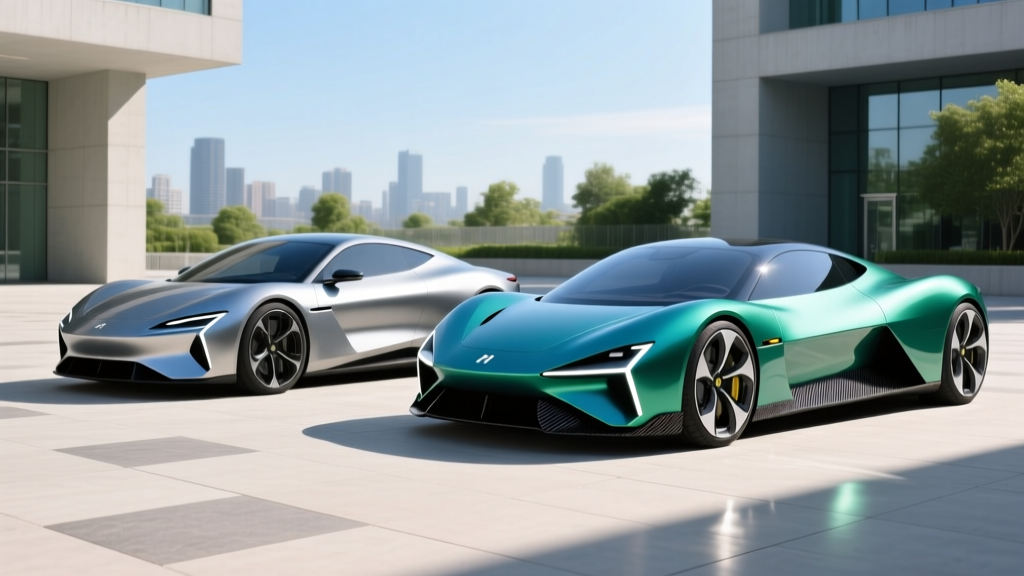
True two-seat electric cars remain a niche in 2026. The most accessible options include the Smart EQ Fortwo (if available in your market), the Renault Twizy (a quadricycle, not highway-legal everywhere), and micro-EVs like the Citroën Ami. For highway-capable performance, most buyers end up considering "2+2" coupes like the Fiat 500e, Mini Cooper SE, or compact roadsters. Expect EPA ranges between 60–150 miles for true micro-EVs, with prices starting around $12,000–$38,000 before incentives. Charging is predominantly Level 2 AC (7–22 kW), with limited DC fast-charging capability on the smallest models.
What Defines a 2 Seater Electric Car?
A 2 seater electric car is a battery-electric vehicle (BEV) designed to carry a driver and one passenger, with no rear seating. These vehicles prioritize compact dimensions, urban maneuverability, and low running costs over cargo space or long-distance touring. In the EV space, they fall into two categories:
- Highway-capable micro-EVs: Full-featured battery-electric cars with standard safety equipment, HVAC, and speed capabilities above 70 mph. Examples: Smart EQ Fortwo, certain Chinese-market models entering Europe.
- Neighborhood Electric Vehicles (NEVs) / quadricycles: Low-speed vehicles (LSVs) limited to 25 mph or 35 mph depending on jurisdiction. Examples: Renault Twizy, Citroën Ami, Arcimoto FUV. These are not legal on highways and often lack airbags or crash-test ratings.
For US buyers, the highway-capable segment is extremely thin in 2026. The Smart EQ Fortwo was discontinued for the North American market after 2019, leaving a gap that imports and specialty manufacturers have only partially filled.
2026 2 Seater Electric Cars: Spec Comparison
| Model | Type | Battery (kWh) | EPA / Est. Range | Max Charge (kW) | 0–60 mph | Base MSRP (USD) |
|---|---|---|---|---|---|---|
| Smart EQ Fortwo (EU only) | Micro-EV | 17.6 | ~58 mi (WLTP) | 22 kW AC | 11.6 sec | ~$28,000 (import) |
| Citroën Ami | Quadricycle | 5.5 | ~47 mi | ~3 kW AC (outlet) | N/A (28 mph top) | ~$10,000 (gray import) |
| Renault Twizy | Quadricycle | 6.1 | ~62 mi | ~3.5 kW AC | N/A (50 mph top) | ~$13,000 (import) |
| Mini Cooper SE (2+2) | Subcompact EV | 54.2 (2026) | ~230 mi EPA | 95 kW DC | 6.7 sec | ~$38,000 |
| Fiat 500e (2+2) | Subcompact EV | 42 | ~149 mi EPA | 85 kW DC | 9.0 sec | ~$36,500 |
Note: Smart EQ Fortwo, Citroën Ami, and Renault Twizy are not officially sold in the US as of 2026. Import pricing is estimated and may not include compliance modifications. The Mini Cooper SE and Fiat 500e are technically 2+2 configurations with small rear seats.
EV vs Gas: What Does a 2 Seater Actually Cost to Run?
One of the strongest arguments for a 2 seater electric car is operating cost — especially in urban driving where these vehicles spend most of their miles. Here's how the numbers stack up against a comparable gas-powered micro-car:
| Cost Factor | 2 Seater EV (est. avg) | Gas Micro-Car (e.g., Smart Gas Fortwo) |
|---|---|---|
| Fuel / Energy per mile | $0.04–$0.06 (home charging at $0.15/kWh) | $0.12–$0.16 (at 36 MPG, $3.80/gal) |
| Annual fuel (10,000 mi) | $400–$600 | $1,200–$1,600 |
| Maintenance (annual) | $200–$400 (no oil, fewer brakes) | $600–$900 (oil, filters, spark plugs) |
| Insurance (annual avg) | $1,400–$2,000 | $1,100–$1,600 |
| 5-year total operating cost | ~$10,000–$15,000 | ~$15,000–$20,000 |
Key takeaway: Over five years and 50,000 miles, a 2 seater EV can save $5,000–$8,000 in fuel and maintenance compared to a gas equivalent. However, insurance premiums for EVs tend to run 15–25% higher due to repair complexity and battery replacement risk. Always get a quote before buying.
Real-World Ownership: Charging, Climate, and Practical Limits
Before committing to a 2 seater electric car, evaluate your specific driving context. These vehicles have distinct strengths and real limitations:
Home Charging Access
Most 2 seater EVs charge on standard Level 1 (120V) or Level 2 (240V) AC. The Smart EQ Fortwo, for example, charges at up to 22 kW on a 3-phase AC supply (common in Europe, rare in US homes). On a typical US Level 2 home charger (7.2–11.5 kW), a full charge takes 3–5 hours. If you lack home or workplace charging, relying on public infrastructure for a micro-EV with a small battery is manageable but requires discipline — a 17 kWh battery depletes quickly on highway-adjacent errands.
Cold-Weather Range Loss
Small batteries suffer proportionally more in cold weather. Expect 20–35% range reduction in freezing temperatures (below 32°F / 0°C). A 2 seater EV rated at 60 miles EPA may deliver only 40–48 miles in a Midwest winter. Cabin heating draws directly from the traction battery, and most micro-EVs lack a heat pump — they use resistive heating, which is energy-intensive. If you live in a cold climate, plan for a real-world range buffer of at least 30%.
Driving Patterns
A 2 seater electric car excels in stop-and-go urban commuting under 40 mph, where regenerative braking recovers energy and low speeds maximize efficiency. Highway driving at 70+ mph dramatically cuts range — aerodynamic drag is the enemy of small, light vehicles. If your commute includes 30+ miles of highway, a micro-EV with a 60-mile range will feel tight, especially with HVAC running.
Federal Tax Credits and Incentives
Under the IRS §30D Clean Vehicle Credit, eligible new EVs can qualify for up to $7,500 in federal tax credits. However, the rules are restrictive in 2026:
- MSRP cap: Cars must be under $55,000 (most 2 seaters qualify easily)
- Income cap: Modified AGI must not exceed $150,000 (single) / $300,000 (joint)
- Battery sourcing: Critical minerals and battery components must meet phased-in percentages from US or FTA-partner countries — this disqualifies many imported micro-EVs
- Point-of-sale transfer: You can transfer the credit to the dealer for an upfront price reduction, but only if the vehicle is on the IRS eligible list
- Assembly: Final assembly must occur in North America — this eliminates the Citroën Ami, Renault Twizy, and EU-market Smart EQ Fortwo from federal credit eligibility
Bottom line: Most true 2 seater electric cars available via import or as quadricycles will not qualify for the federal credit due to foreign assembly. The Mini Cooper SE (assembled in the UK) also does not qualify. Check the official fueleconomy.gov tax credit list before assuming eligibility.
Common Misconceptions About 2 Seater EVs
| Myth | Fact |
|---|---|
| "A small battery means I'll charge every day." | If your daily driving is under 30 miles, a 17 kWh battery charged overnight on Level 1 (1.4 kW) adds ~40 miles in 10 hours — enough for most commutes. |
| "These cars are unsafe because they're small." | Highway-capable micro-EVs like the Smart EQ Fortwo have a reinforced Tridion safety cell and standard airbags. However, they have not been crash-tested by IIHS or NHTSA in recent years. Quadricycles (Ami, Twizy) have no crash-test ratings and should not be considered highway-safe. |
| "I can take a 2 seater EV on a road trip." | Technically possible with DC fast charging, but a 60-mile range and 22 kW max charge rate means 30+ minute stops every hour on the highway. These are urban vehicles by design. |
| "Electric means zero maintenance." | No oil changes, but tires wear faster on EVs (instant torque), cabin air filters need replacement, brake fluid degrades, and the 12V auxiliary battery still needs periodic replacement. |
Decision Framework: Should You Buy a 2 Seater Electric Car?
Choose a 2 seater EV if:
- Your daily driving is under 40 miles, mostly urban
- You have reliable home or workplace Level 2 charging
- You live in a mild climate (or accept cold-weather range loss)
- You want the lowest possible per-mile operating cost
- Parking is tight and you value a sub-10-foot vehicle
Choose a 2+2 subcompact EV (Mini Cooper SE, Fiat 500e) if:
- You need 150+ miles of EPA range for occasional longer trips
- You want DC fast charging (85–95 kW) for road-trip flexibility
- You need highway-capable comfort and safety ratings
- You want a vehicle with established US dealer support and warranty service
Choose a gas or hybrid micro-car if:
- You lack home charging and public infrastructure is sparse in your area
- You regularly drive in sub-freezing temperatures and cannot tolerate range loss
- You need a vehicle for long-distance or rural driving
Battery Longevity and Warranty Considerations
Small batteries in 2 seater EVs typically use NMC (nickel-manganese-cobalt) chemistry. Degradation data from European-market Smart EQ Fortwo owners shows an average capacity loss of 8–12% over 5 years / 50,000 miles, which is within industry norms. Federal law mandates that EV batteries carry a warranty of at least 8 years / 100,000 miles (in CARB states like California, it's 10 years / 150,000 miles). However, for imported or gray-market vehicles (Ami, Twizy), warranty enforcement in the US is essentially nonexistent — you're on your own for battery replacement, which can cost $3,000–$6,000 for a small pack.
Frequently Asked Questions
Are there any 2 seater electric cars sold officially in the US in 2026?
No major manufacturer currently sells a true 2 seater EV through US dealer networks. The Smart EQ Fortwo was pulled from the US market after 2019. Buyers must look to 2+2 subcompacts (Mini Cooper SE, Fiat 500e) or import a quadricycle/micro-EV at their own risk and cost.
How much does it cost to charge a 2 seater EV at home?
A full charge of a 17 kWh battery at the US average residential rate of ~$0.16/kWh costs about $2.72. That's roughly $0.045 per mile for a vehicle achieving 3.8 mi/kWh. Over a year of 10,000 miles, expect to spend $400–$500 on electricity.
Can a 2 seater electric car handle winter driving?
It can, but with significant range reduction. Expect 20–35% less range in freezing temperatures. A 60-mile EPA rating becomes 40–48 real-world miles. If your round-trip commute exceeds 35 miles in winter, a micro-EV will feel risky without mid-day charging access.
Do 2 seater EVs qualify for the $7,500 federal tax credit?
Almost certainly not, if imported. The §30D credit requires North American final assembly, which eliminates the Smart EQ Fortwo (EU), Citroën Ami (EU), and Renault Twizy (EU). Always verify on fueleconomy.gov before purchasing.
What's the difference between kW and kWh on these cars?
kW (kilowatts) measures power — how fast the car can charge or accelerate. kWh (kilowatt-hours) measures energy — the total capacity of the battery, like gallons in a gas tank. A 17 kWh battery charged at 7.2 kW takes about 2.4 hours to fill from empty.
Is a neighborhood electric vehicle (NEV) a good alternative?
If you live in a planned community, retirement village, or small town with low-speed roads, a NEV like the Citroën Ami can work as a second vehicle for errands. However, NEVs are not legal on roads with speed limits above 35 mph (varies by state), lack crash protection, and have no highway capability. Treat them as glorified golf carts, not car replacements.