Quick Verdict: The Entry-Level i4 That Punches Above Its Price
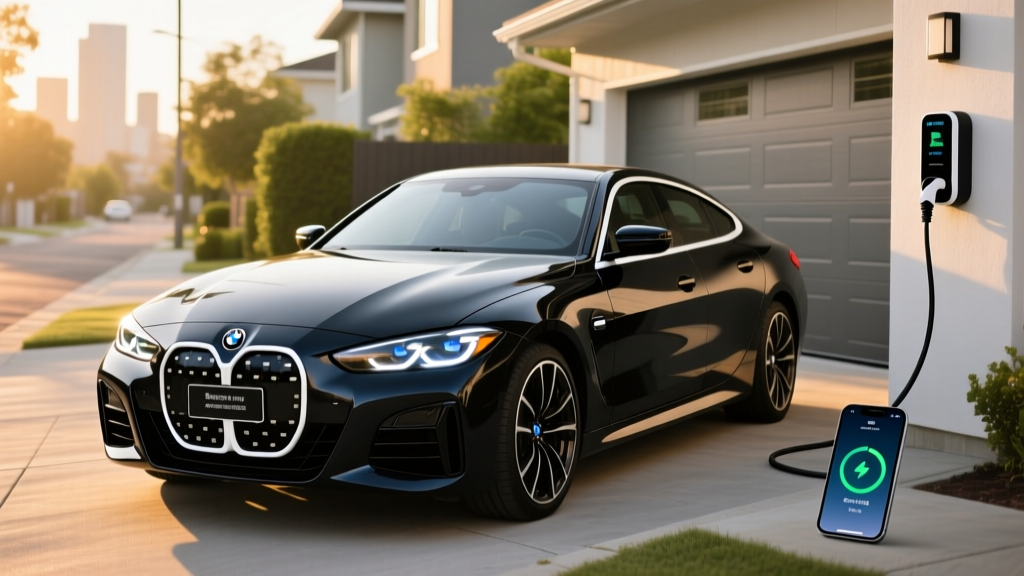
The 2025 BMW i4 eDrive35 is the gateway into BMW's electric Gran Coupe lineup, and it makes a compelling case for itself as a premium EV sedan that doesn't demand M50 money. With 281 horsepower, a usable 81 kWh NMC battery, and an EPA-estimated 301 miles of range on the rear-wheel-drive eDrive35, this is the i4 variant that delivers the best efficiency-to-price ratio in the lineup. After a 2025 refresh that brought updated styling, the latest iDrive 8.5 software, and slightly revised equipment, the eDrive35 starts at $53,975 (including destination) and undercuts the dual-motor xDrive40 by over $6,000 while sacrificing only all-wheel drive and some acceleration.
For buyers who want BMW build quality, a usable back seat, and legitimate 250+ mile real-world highway range without stepping into six-figure EV territory, the i4 eDrive35 deserves a serious look. But it's not without trade-offs — cargo space is modest, DC fast charging isn't class-leading, and the federal tax credit situation requires careful eligibility checking.
Range and Efficiency: EPA Numbers vs. the Real World
Real-World Expectation: ~250–270 miles on highway trips at 70–75 mph; ~220–240 miles in freezing temperatures with cabin heat running.
Efficiency: 110 MPGe combined (EPA) / approximately 30 kWh per 100 miles
The eDrive35's single rear-mounted motor and 81 kWh usable battery capacity (from a gross pack rated around 83.9 kWh) give it an efficiency advantage over the heavier xDrive40 and M50 variants. On the EPA test cycle, the i4 eDrive35 on 19-inch wheels returns 110 MPGe combined, which translates to roughly 30 kWh consumed per 100 miles of mixed driving — competitive with the Tesla Model 3 Long Range and Hyundai Ioniq 6.
In real-world testing, highway efficiency drops noticeably. Sustained 70–75 mph driving typically yields 3.0–3.3 miles per kWh, putting realistic highway range between 250 and 270 miles before you need to find a charger. That's still comfortable for most inter-city trips with one DC fast-charge stop, but it's meaningfully less than the 301-mile sticker suggests.
Cold weather is the great equalizer for all EVs. In sub-freezing conditions (20°F and below), expect a 15–25% range reduction due to cabin heating demands and reduced battery efficiency. The i4 does include a heat pump as standard equipment, which helps mitigate winter losses compared to resistance-heated EVs, but plan for roughly 220–240 miles of real range in deep winter highway driving. BMW's battery preconditioning system warms the pack when navigation routes to a DC fast charger, which is critical for achieving advertised charge speeds in cold weather.
| Metric | Value |
|---|---|
| EPA Range (19-in wheels) | 301 miles |
| EPA Range (18-in wheels) | 282 miles |
| Battery (Usable / Gross) | 81 kWh / 83.9 kWh |
| Battery Chemistry | NMC (Nickel Manganese Cobalt) |
| MPGe Combined | 110 MPGe |
| kWh per 100 mi | ~30 kWh |
| Heat Pump | Standard |
Source: EPA / fueleconomy.gov
Charging: DC Fast, Level 2, and What You'll Actually Experience
The i4 eDrive35 supports DC fast charging at a peak rate of 180 kW via its CCS1 connector (or NACS with BMW's adapter, which became standard on 2025 models for Tesla Supercharger access). On paper, BMW quotes a 10–80% charge time of approximately 31 minutes. In practice, that number holds up reasonably well — but only if you arrive at the charger with a preconditioned battery and the ambient temperature is cooperative.
The charging curve is where real-world nuance matters. The i4 eDrive35 hits its 180 kW peak only in a narrow state-of-charge window (roughly 10–25% SoC). From there, the curve tapers progressively: expect roughly 150 kW through the mid-30s, dropping to around 100–110 kW by 50% SoC, and falling further to 50–60 kW above 70%. This is typical for NMC batteries in this class, but it means the average charging power across a 10–80% session is closer to 110–120 kW, not the 180 kW headline figure. Plan your road-trip stops for 30–35 minutes, not 20.
| Charging Level | Power | Speed / Time |
|---|---|---|
| Level 1 (120V household) | ~1.4 kW | ~3–4 miles per hour |
| Level 2 (240V home, 48A) | 11 kW (onboard charger max) | ~30 miles per hour; full charge in ~8.5 hours |
| DC Fast Charge (peak) | 180 kW | 10–80% in ~31 minutes |
| DC Fast (average 10–80%) | ~115 kW avg | ~175 miles added in 30 min |
For home Level 2 charging, the i4's 11 kW onboard charger is a strong point. On a 48-amp, 240-volt circuit (the most common home EVSE setup), you'll add roughly 30 miles of range per hour of charging. An overnight session from 10 PM to 7 AM will fully replenish the battery from near-empty. If your home electrical panel supports a 60-amp circuit for the charger, installation costs typically range from $800–$2,000 for a quality hardwired Level 2 unit, depending on panel proximity and local permit requirements. Always get a quote from a licensed electrician — panel upgrades can add $1,500–$3,000 if your existing service is maxed out.
The 2025 i4's inclusion of NACS adapter compatibility is a practical win. BMW now supports access to Tesla's Supercharger network (over 20,000 stalls in North America), which significantly expands reliable fast-charging options for road trips. The adapter plugs into the i4's CCS port and communicates with the Supercharger stall — no modifications needed.
Performance and Drivetrain
The eDrive35 uses a single electrically excited synchronous motor (EESM) on the rear axle, producing 281 horsepower and 295 lb-ft of torque. Unlike the permanent-magnet motors in many competitors, BMW's EESM design uses no rare-earth magnets — a deliberate engineering choice that slightly reduces peak efficiency but avoids supply-chain dependencies on rare-earth materials.
The 0–60 mph time lands at 5.8 seconds (BMW's official figure), which is brisk but not thrilling by EV standards. For context, the dual-motor i4 xDrive40 hits 60 in 4.9 seconds, and the i4 M50 does it in 3.7 seconds. But the eDrive35's rear-wheel-drive layout gives it a sportier, more traditional BMW feel in corners — the car rotates willingly, and the weight distribution (slightly rear-biased thanks to the floor-mounted battery) rewards spirited driving more than the AWD variants do.
Regenerative braking is adjustable through three levels via steering-wheel paddles, plus an adaptive mode that uses radar and navigation data to modulate regen based on traffic and upcoming intersections. One-pedal driving is possible in the highest regen setting, though BMW doesn't offer a true one-pedal mode that holds the car at a complete stop without brake application — a quirk that some EV veterans find annoying.
| Spec | Value |
|---|---|
| Motor Type | Single EESM (rear) |
| Drivetrain | Rear-wheel drive |
| Horsepower | 281 hp |
| Torque | 295 lb-ft |
| 0–60 mph | 5.8 seconds |
| Top Speed | 118 mph (electronically limited) |
| Curb Weight | ~4,682 lbs |
Interior, Cargo, and Technology
The i4 shares its CLAR platform with the 4 Series Gran Coupe, which means you get a genuine four-door sedan with a hatchback-style liftgate — a practicality advantage over conventional sedans. Interior materials and build quality are what you'd expect from BMW at this price point: soft-touch surfaces, well-damped switches, and tight panel gaps.
The centerpiece is BMW's Curved Display, which merges a 12.3-inch digital instrument cluster with a 14.9-inch touchscreen running iDrive 8.5. The system is responsive, supports wireless Apple CarPlay and Android Auto, and includes a natural-language voice assistant. The iDrive 8.5 update (introduced for the 2024 model year and carried forward) added a more intuitive home screen layout and QuickSelect shortcuts that reduce the menu-diving that plagued earlier iDrive 8 versions.
Cargo space is the i4's most notable practicality limitation. With 16.6 cubic feet behind the rear seats (and 45.8 cu ft with the 40/20/40 split rear seats folded), it trails the Hyundai Ioniq 6 (12.3 cu ft trunk but more usable hatch area) and significantly trails SUV-shaped EVs. Rear legroom measures 34.5 inches — adequate for adults on shorter trips but snug for anyone over six feet tall behind a similarly tall driver. Headroom is compromised by the sloping roofline; taller passengers will notice.
Driver-assistance technology includes BMW's Driving Assistant as standard, which provides forward collision warning, automatic emergency braking, lane departure warning, and blind-spot monitoring. The available Driving Assistant Professional ($1,700) adds adaptive cruise control with stop-and-go, lane centering, and evasive steering assist. This is a solid SAE Level 2 system — it requires continuous driver supervision and does not constitute autonomous or "self-driving" capability. BMW also offers a Parking Assistant Plus with a 360-degree camera and automated parking maneuvers.
Pricing, Trims, and Federal Tax Credit Eligibility
The 2025 BMW i4 eDrive35 has a single trim level (there are no sub-trims — you spec options à la carte). The base MSRP is $53,975 including the $995 destination charge. A well-equipped example with the Premium Package ($1,850), Driving Assistant Professional ($1,700), and 19-inch wheels ($600) lands around $58,000–$60,000 before any incentives.
| Item | Cost |
|---|---|
| Base MSRP (incl. destination) | $53,975 |
| As-tested (typical well-equipped) | $58,000–$60,000 |
| Federal Tax Credit (§30D) — max potential | Up to $7,500 (see eligibility below) |
| Estimated after-credit price | $46,475–$52,500 |
Federal tax credit eligibility for the i4 eDrive35 is where things get complicated — and where you need to do your homework before signing a purchase agreement. Under current IRS §30D rules, the full $7,500 credit splits into two halves:
- $3,750 — Battery Components Requirement: A percentage of battery components must be manufactured or assembled in North America. BMW's battery supply chain for the i4 (cells sourced from CATL and Samsung SDI, with pack assembly varying by production batch) has historically struggled to meet this threshold consistently.
- $3,750 — Critical Minerals Requirement: A percentage of critical minerals must be sourced from the U.S. or free-trade-agreement countries. NMC batteries require nickel, manganese, and cobalt — supply chains that are still transitioning to FTA-compliant sources.
Additionally, buyer eligibility requires:
- Modified adjusted gross income (MAGI) below $150,000 (single) / $300,000 (joint filing)
- Vehicle MSRP below the $55,000 cap for sedans (the i4 eDrive35 at $53,975 base just clears this — but options can push it over)
- The vehicle must be new, purchased for personal use, and primarily used in the U.S.
The point-of-sale transfer option (available since January 2024) allows you to apply the credit as an instant rebate at the dealership rather than waiting to claim it on your tax return. Confirm current eligibility with your dealer and the IRS clean vehicle manufacturer list before purchasing, as battery-sourcing compliance can change quarterly.
Warranty and Long-Term Ownership
BMW covers the i4 eDrive35 with a 4-year/50,000-mile limited vehicle warranty and an 8-year/100,000-mile battery warranty that guarantees the high-voltage battery will retain at least 70% of its original capacity. If degradation drops below that threshold within the warranty period, BMW will repair or replace the battery at no cost.
NMC batteries in BMW's fifth-generation eDrive system have shown strong durability in early data. Industry-wide, NMC packs from this generation (2021 onward) are averaging roughly 5–8% capacity loss over the first 100,000 miles, well within the 70% warranty floor. The i4's thermal management system — which includes active liquid cooling and heating — plays a significant role in preserving battery health, particularly for owners in hot climates who DC fast-charge frequently.
Maintenance costs are low relative to ICE BMWs: no oil changes, no transmission fluid, no spark plugs. Brake pad life is extended significantly by regenerative braking (many EV owners report 80,000+ miles on original pads). Budget for tire replacement every 30,000–40,000 miles — EVs tend to wear tires faster due to instant torque and heavier curb weight. BMW includes 3 years/36,000 miles of complimentary scheduled maintenance.
How It Compares: i4 eDrive35 vs. Key Competitors
The i4 eDrive35 competes in a crowded segment of premium electric sedans. Here's how it stacks up against the most direct rivals:
| Spec | BMW i4 eDrive35 | Tesla Model 3 LR | Hyundai Ioniq 6 SEL | Polestar 2 SM |
|---|---|---|---|---|
| EPA Range | 301 mi | 363 mi | 361 mi | 276 mi |
| Base MSRP | $53,975 | $44,130 | $42,450 | $49,900 |
| 0–60 mph | 5.8s | 4.2s | 5.1s | 5.9s |
| Peak DC Charge | 180 kW | 250 kW | 350 kW | 205 kW |
| Drivetrain | RWD | AWD | RWD | FWD |
| Cargo (cu ft) | 16.6 | 23.0 | 12.3 | 14.4 |
The Tesla Model 3 Long Range offers more range, faster charging, AWD, and a lower price — but the i4 counters with superior build quality, a quieter cabin, more traditional luxury materials, and BMW's dealer service network. The Hyundai Ioniq 6 dominates on range and DC charge speed (350 kW on 800V architecture is remarkable) but feels less premium inside and has a smaller trunk. The Polestar 2 is the closest in spirit to the i4 — Scandinavian luxury with solid dynamics — but trails on range and charges slower.
The i4's value proposition is clear: you're paying a premium for the BMW badge, build quality, driving dynamics, and dealership experience. If those matter to you, the price delta over a Model 3 or Ioniq 6 is justifiable. If you're optimizing purely for range-per-dollar or charge speed, look elsewhere.
Pros
- 301-mile EPA range is practical for road trips
- Premium interior quality and quiet cabin
- RWD dynamics feel engaging and sporty
- Heat pump standard (helps winter range)
- iDrive 8.5 is a strong infotainment system
- NACS adapter included for Supercharger access
- Hatchback liftgate adds versatility
Cons
- 180 kW peak DC charging trails competitors
- Base MSRP near $55K sedan cap risks credit loss with options
- Rear headroom tight for tall passengers
- 16.6 cu ft cargo is modest for the class
- No true one-pedal stop mode
- Driver assist requires $1,700 upgrade for adaptive cruise
- Full $7,500 tax credit not guaranteed (battery sourcing)
Who Should Buy the 2025 BMW i4 eDrive35?
Best for: Premium-sedan buyers who want BMW driving dynamics and build quality in an EV, commute 30–80 miles daily, have access to home Level 2 charging, and take occasional road trips under 300 miles between stops. Ideal if you value cabin refinement and brand cachet over maximizing range-per-dollar.
Look elsewhere if: You need maximum cargo space (consider the iX or Model Y), you want the fastest possible DC charging (Ioniq 6's 800V system is faster), you regularly drive in deep snow and need AWD (step up to the i4 xDrive40), or your budget is strictly under $45,000 (Model 3 RWD or Ioniq 6).
Frequently Asked Questions
What is the real-world range of the 2025 BMW i4 eDrive35?
Expect 250–270 miles on highway trips at 70–75 mph in mild weather, and 220–240 miles in freezing conditions. The EPA's 301-mile estimate reflects mixed driving with a significant city component, where regenerative braking recovers more energy. Pure highway driving is always less efficient for any EV.
Does the 2025 BMW i4 eDrive35 qualify for the $7,500 federal tax credit?
It may qualify for the full $7,500, a partial $3,750, or nothing — depending on current battery-sourcing compliance, which changes periodically. The base MSRP of $53,975 is under the $55,000 sedan cap, but adding options can push the sticker above that threshold and eliminate eligibility entirely. Your income must also be under $150,000 (single) or $300,000 (joint). Verify with the IRS clean vehicle list and your dealer before purchase.
How fast does the i4 eDrive35 charge at home?
On a 48-amp, 240-volt Level 2 charger, the i4's 11 kW onboard charger adds approximately 30 miles of range per hour. A full charge from near-empty takes about 8.5 hours — easily achievable overnight. Level 1 (standard 120V outlet) adds only 3–4 miles per hour and is practical only for emergency top-ups or very low-mileage drivers.
Is the BMW i4 eDrive35 better than the Tesla Model 3 Long Range?
It depends on your priorities. The Model 3 LR offers more range (363 vs. 301 miles), faster DC charging (250 kW vs. 180 kW), AWD, more cargo space, and a lower starting price. The i4 eDrive35 counters with superior interior materials, a quieter cabin, more traditional luxury ergonomics, BMW's dealer network for service, and a hatchback design. If specs-per-dollar drive your decision, the Model 3 wins. If premium feel and brand experience matter, the i4 has the edge.
What is the battery warranty on the 2025 BMW i4?
BMW provides an 8-year/100,000-mile high-voltage battery warranty that guarantees at least 70% capacity retention. If the battery degrades below 70% of its original capacity within that period, BMW will repair or replace it. The general vehicle warranty is 4 years/50,000 miles.
Can I use Tesla Superchargers with the i4 eDrive35?
Yes. The 2025 i4 ships with a NACS adapter that allows you to plug into Tesla Supercharger stalls (V2 and V3). You initiate and pay for sessions through the BMW app or Tesla app. Supercharger access dramatically expands your fast-charging options on road trips, particularly in rural areas where Electrify America and other networks have sparser coverage.