The Original Disruptor: Why the 1st Gen Tesla Still Matters
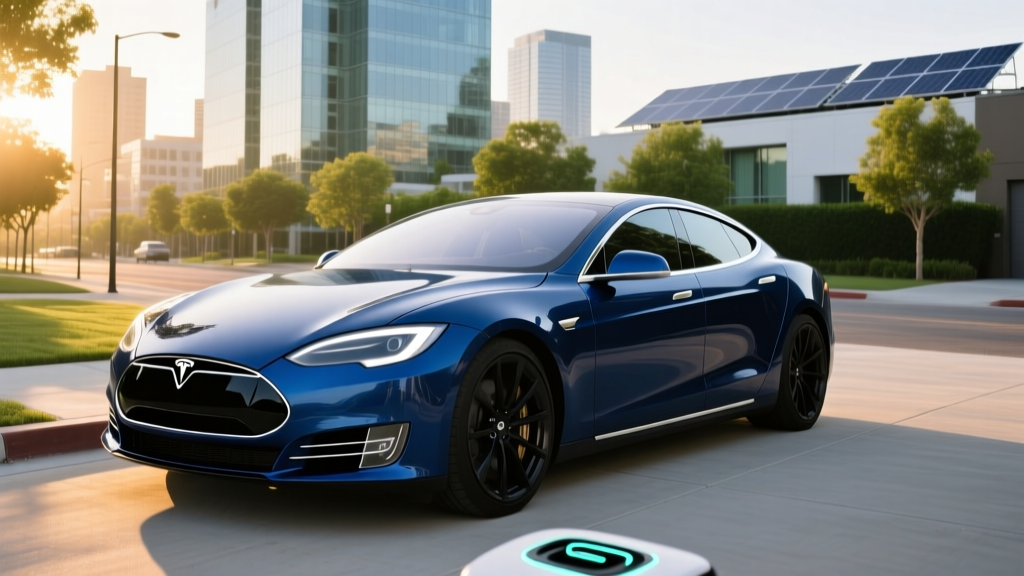
When the first Tesla Model S rolled off the Fremont production line in June 2012, it wasn't just launching a car—it was proving that electric vehicles could be desirable, practical, and technologically superior to internal combustion alternatives. Over eight years of production through 2020, the 1st gen Tesla Model S evolved from a niche luxury sedan into the benchmark that every automaker chased.
In 2026, these vehicles populate the used EV market at prices ranging from $15,000 to $45,000 depending on year, mileage, and battery condition. For buyers considering a used Model S, understanding the generational differences, battery health implications, and real-world ownership costs is critical. This review covers what you need to know before purchasing a 1st gen Tesla Model S today.
Real-World Range: EPA Numbers vs. What You'll Actually Get
The 1st gen Model S was offered with multiple battery configurations across its production run. EPA range varied significantly by model year and battery size:
| Model/Year | Battery (kWh usable) | EPA Range | 0-60 mph | Drivetrain |
|---|---|---|---|---|
| Model S 60 (2012-2016) | 60 kWh | 208 miles | 5.5 sec | RWD |
| Model S 75 (2016-2017) | 75 kWh | 249 miles | 4.2 sec | RWD/AWD |
| Model S 85 (2012-2016) | 85 kWh | 265 miles | 5.4 sec | RWD |
| Model S 90D (2015-2017) | 90 kWh | 294 miles | 4.2 sec | AWD |
| Model S 100D (2017-2019) | 100 kWh | 335 miles | 4.1 sec | AWD |
| Model S P100D (2016-2019) | 100 kWh | 315 miles | 2.5 sec | AWD |
| Model S Long Range (2019-2020) | 100 kWh | 370 miles | 4.2 sec | AWD |
| Model S Performance (2019-2020) | 100 kWh | 348 miles | 2.4 sec | AWD |
The 1st gen Model S uses NMC (nickel-manganese-cobalt) lithium-ion battery chemistry across all variants. Tesla's battery management system was industry-leading for its time, but degradation is inevitable. Most 1st gen vehicles show 10-20% capacity loss after 100,000-150,000 miles, with early 85 kWh models experiencing higher degradation rates than later 100 kWh packs.
Charging Speed: DC Fast Charging and Home Setup
Charging infrastructure has evolved dramatically since 2012, but the 1st gen Model S hardware limits how fast these vehicles can accept power:
| Charging Method | Power (kW) | Charging Speed | 10-80% Time |
|---|---|---|---|
| Level 1 (120V household) | 1.4 kW | 3-4 miles/hour | 20-30 hours |
| Level 2 (240V home/public) | 11.5 kW (48A) | 29-34 miles/hour | 8-10 hours |
| DC Fast (CHAdeMO adapter) | 50 kW max | 120-150 miles/hour | 60-75 minutes |
| Tesla Supercharger V2 | 120-145 kW | 200-300 miles/hour | 35-45 minutes |
| Tesla Supercharger V3 | 150 kW (capped) | 200-300 miles/hour | 35-45 minutes |
The 1st gen Model S uses Tesla's proprietary connector (now called NACS - North American Charging Standard). While newer Teslas can charge at 250 kW on V3 Superchargers, the 1st gen hardware maxes out around 145-150 kW due to battery thermal management limitations.
Home charging setup: A Level 2 home charger (Tesla Wall Connector or third-party J1772 with adapter) is essential for practical ownership. Installation typically costs $500-2,000 depending on electrical panel capacity and distance from panel to parking location. The onboard charger accepts up to 11.5 kW (48 amps), requiring a 60-amp circuit.
Performance and Driving Dynamics
The Model S redefined what an electric sedan could deliver. Even base models feel quick by conventional standards, while Performance variants remain brutally fast by 2026 metrics:
- Base RWD models (60/75/85 kWh): 315-362 hp, 5.4-5.8 sec 0-60 mph
- Dual-motor AWD (90D/100D): 417-518 hp, 4.1-4.4 sec 0-60 mph
- Performance (P85D/P90D/P100D): 691-762 hp, 2.4-3.2 sec 0-60 mph with Ludicrous mode
- Long Range/Performance (2019-2020): 469-778 hp, 2.4-4.2 sec 0-60 mph
All variants feature single-speed transmissions with instant torque delivery. The air suspension (standard on most trims) provides adjustable ride height and comfort settings. Steering is precise but artificially weighted—lacking the feedback of hydraulic systems but suitable for a luxury grand tourer.
Pricing, Tax Credits, and Ownership Costs
The federal EV tax credit (§30D) no longer applies to used 1st gen Model S purchases unless buying from a dealer with specific credit transfer arrangements. For new EV purchases in 2026, the credit remains up to $7,500 subject to MSRP caps ($55,000 for sedans), buyer income limits ($150,000 single/$300,000 joint), and battery sourcing requirements.
| Model Year/Trim | Original MSRP | 2026 Used Price Range | Federal Credit (Used) |
|---|---|---|---|
| 2012-2015 Model S 60/85 | $59,900-$87,900 | $15,000-$25,000 | Up to $4,000* |
| 2016-2017 Model S 75/90D | $68,000-$105,000 | $20,000-$32,000 | Up to $4,000* |
| 2017-2019 Model S 100D/P100D | $94,000-$145,000 | $28,000-$45,000 | Up to $4,000* |
| 2019-2020 Long Range/Performance | $79,990-$135,000 | $35,000-$50,000 | Up to $4,000* |
*Used EV credit: 30% of sale price up to $4,000, subject to income limits and dealer participation. Verify eligibility at IRS.gov.
Insurance costs: Expect $1,800-3,500 annually depending on trim, driving record, and location. Performance variants command higher premiums.
Maintenance: Minimal compared to ICE vehicles—no oil changes, transmission fluid, or spark plugs. Budget $800-1,500 annually for tires (heavy vehicle wear), cabin air filters, and wiper fluid. Brake pads last 100,000+ miles thanks to regenerative braking.
Interior Space, Cargo, and Practicality
The Model S remains one of the most spacious luxury sedans ever produced:
- Front legroom: 42.7 inches
- Rear legroom: 35.4 inches
- Cargo volume (rear seats up): 26.3 cubic feet
- Cargo volume (rear seats folded): 58.1 cubic feet
- Frunk (front trunk): 5.3 cubic feet
- Optional third-row seating: Two rear-facing child seats (2012-2017 models)
The flat floor and absence of a transmission tunnel create exceptional interior volume. However, the minimalist dashboard (17-inch touchscreen controls nearly all functions) divides opinion—some love the simplicity, others miss physical buttons for climate and audio controls.
Technology and Driver Assistance
The 1st gen Model S introduced features that became industry standards:
- Autopilot (2014+): SAE Level 2 driver assistance with adaptive cruise control, lane-keeping, and automatic emergency braking. Requires continuous driver supervision.
- Enhanced Autopilot (2016+): Adds automatic lane changes, Navigate on Autopilot (highway interchanges), and Smart Summon (parking lot navigation).
- Full Self-Driving capability (2019+): Traffic light/stop sign control, city street steering assistance. Still Level 2—driver must remain engaged.
- Over-the-air updates: Continuous feature additions and performance improvements throughout ownership.
The 17-inch touchscreen runs Tesla's proprietary infotainment system with navigation, streaming media, and vehicle controls. 2016+ models received Hardware 2.0/2.5 for enhanced Autopilot capabilities; 2019+ models feature Hardware 3.0 with improved processing power.
Pros and Cons: Is a 1st Gen Model S Right for You?
Strengths
- Spacious interior with class-leading cargo capacity
- Access to Tesla Supercharger network (20,000+ stations globally)
- Over-the-air updates add features years after purchase
- Instant torque and smooth, silent acceleration
- Low operating costs (electricity vs. gasoline, minimal maintenance)
- Strong safety ratings (5-star NHTSA, IIHS Top Safety Pick)
Weaknesses
- Battery degradation reduces range over time (10-20% typical)
- Slower DC fast charging vs. modern EVs (150 kW vs. 250-350 kW)
- Outdated infotainment hardware in 2012-2015 models
- Expensive out-of-warranty battery replacement ($12,000-20,000)
- Minimal physical controls—everything through touchscreen
- Early Autopilot hardware (pre-2016) lacks modern capabilities
Who Should Buy a 1st Gen Tesla Model S?
Ideal for:
- Daily commuters with home charging access (sub-100-mile round trips)
- Families needing spacious, quiet transportation
- Tech enthusiasts who value software updates and smartphone integration
- Buyers seeking luxury sedan comfort at used-market prices
Consider alternatives if:
- You regularly drive 300+ miles without overnight stops (range/charging limitations)
- You live in extreme cold climates (significant winter range loss)
- You prefer traditional luxury materials and physical controls
- You need the latest driver-assistance technology (2020+ models superior)
Battery Warranty and Longevity
Tesla's original battery warranty provided 8 years/unlimited miles (60 kWh) or 8 years/150,000 miles (85+ kWh) with minimum 70% capacity retention. For used buyers, this warranty transfers to subsequent owners but expires based on original in-service date.
Battery replacement costs $12,000-20,000 depending on capacity and labor. Third-party refurbishment services offer alternatives at $8,000-15,000. Pre-purchase battery health checks (via Tesla service centers or independent EV specialists) are essential for used buyers.
According to fueleconomy.gov, modern lithium-ion batteries typically retain 80-90% capacity after 100,000 miles under normal use conditions.
Frequently Asked Questions
What is the real-world range of a 1st gen Tesla Model S?
Expect 180-280 miles depending on battery size, model year, degradation, and driving conditions. Highway driving at 75+ mph reduces range 10-15% below EPA estimates. Cold weather (below freezing) can drop range 20-30%. A 2017 Model S 100D with 335 miles EPA typically delivers 250-270 miles in mixed real-world use.
How fast does the 1st gen Model S charge?
On Tesla Superchargers, peak rates reach 145-150 kW, adding 200-300 miles of range per hour. A 10-80% charge takes 35-45 minutes. Home Level 2 charging (11.5 kW) adds 29-34 miles per hour, requiring 8-10 hours for a full charge. The 1st gen cannot access 250 kW V3 Supercharger speeds due to hardware limitations.
Does a used 1st gen Model S qualify for tax credits?
Used EVs may qualify for up to $4,000 (30% of sale price) under the §30D used clean vehicle credit, subject to income limits ($75,000 single/$150,000 joint), dealer participation, and vehicle price caps ($25,000). Verify eligibility through the IRS and confirm with your tax professional.
Is the 1st gen Model S worth buying vs. newer EVs?
For buyers prioritizing value, space, and Supercharger access, a well-maintained 1st gen Model S offers compelling luxury at $20,000-40,000. However, modern EVs (2022+) offer faster charging, better range, updated safety tech, and remaining factory warranties. Compare total ownership costs, not just purchase price.
What are the biggest maintenance concerns?
Battery degradation is the primary long-term cost. Budget $12,000-20,000 for potential replacement after 150,000-200,000 miles. Other wear items include tires (heavy vehicle, replace every 20,000-30,000 miles), suspension components (air suspension failures $1,500-3,000 per corner), and touchscreen/display issues ($2,000-4,000 replacement).
Can I use non-Tesla charging networks?
Yes, with adapters. The Model S uses Tesla's NACS connector. Adapters are available for CHAdeMO DC fast charging ($400-600) and J1772 Level 2 charging (included with vehicle). As of 2024, Tesla opened Supercharger access to other brands, but 1st gen Model S vehicles retain exclusive access to the full network.
For official safety ratings and crash test data, consult the National Highway Traffic Safety Administration and Insurance Institute for Highway Safety.