The Bottom Line on the Honda CR-V EV
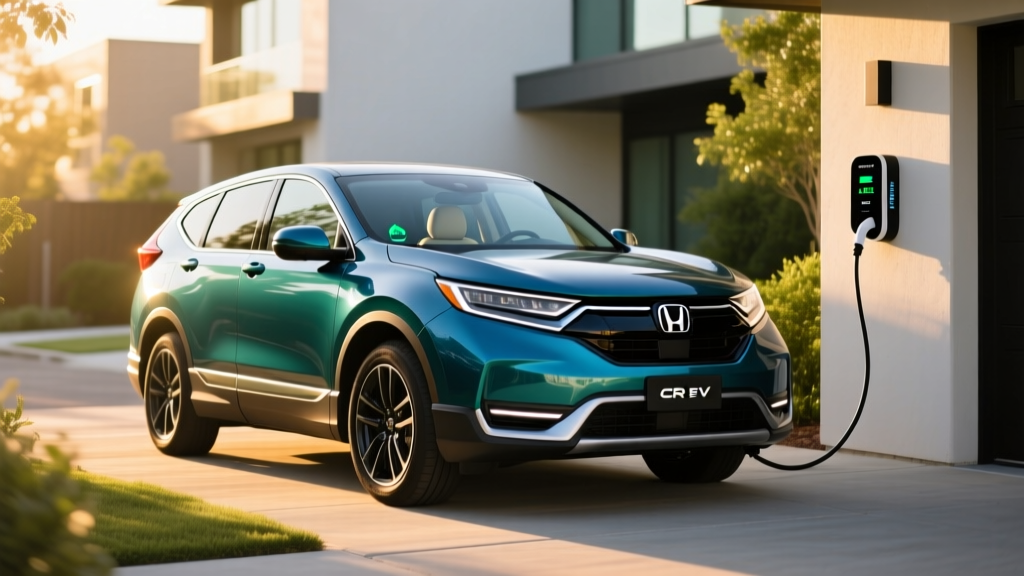
The 2026 Honda CR-V EV (officially the Prologue, Honda's CR-V-sized electric SUV built on GM's Ultium platform) delivers an EPA-estimated 296–310 miles of range depending on trim and drivetrain, with DC fast charging peaking at 150 kW (10–80% in roughly 30 minutes). Starting MSRP sits around $43,100 before destination. Federal tax credit eligibility under IRS §30D is partial or uncertain for 2026 due to battery-sourcing and critical-mineral requirements — always verify current-year rules at irs.gov before purchasing. For most buyers, the Prologue is a comfortable, practical commuter SUV that trails rivals like the Hyundai Ioniq 5 and Tesla Model Y in charging speed but wins on familiarity and dealer support.
Range, Battery, and Efficiency: The Real Numbers
The 2026 Honda Prologue uses an 85 kWh usable Ultium lithium-ion battery (NMC chemistry, co-developed with GM). Here's what the EPA says versus what you'll actually experience:
| Trim / Drivetrain | EPA Range | Real-World Expectation | Combined MPGe | kWh/100mi |
|---|---|---|---|---|
| EX FWD | 310 mi | ~260–280 mi highway; ~220 mi cold (32°F) | 98 MPGe | 34 |
| EX-L FWD | 308 mi | ~255–275 mi highway; ~215 mi cold | 97 MPGe | 34 |
| Touring AWD | 296 mi | ~245–265 mi highway; ~205 mi cold | 94 MPGe | 36 |
Real-World Range Reality: The 310-mile EPA sticker assumes a mix of city and highway driving at moderate temperatures. Sustained highway speeds (70–80 mph) typically reduce range by 12–18%. In sub-freezing weather, expect a 25–35% reduction due to battery thermal management demands and cabin heating — the Prologue uses a heat pump on higher trims, which helps but doesn't eliminate cold-weather loss. Plan road trips around 220–250 miles between charges for a comfortable buffer.
Honda does not publish a 0–60 mph time for the Prologue, but independent testing puts the dual-motor AWD version at approximately 5.8 seconds (300 hp, 355 lb-ft torque). The single-motor FWD model produces 212 hp and runs 0–60 in roughly 7.5 seconds — adequate for merging and passing, not thrilling.
Charging Speeds: Where the Prologue Falls Behind
This is the Prologue's most significant competitive weakness. On a DC fast charger, the Prologue peaks at 150 kW — respectable for 2024 but increasingly outpaced in 2026. Here's the breakdown:
| Charging Level | Power | Speed (Miles Added/Hour) | Time (10–80%) |
|---|---|---|---|
| Level 1 (120V standard outlet) | ~1.4 kW | ~4 mi/hr | N/A (full charge ~60+ hrs) |
| Level 2 (240V home/public) | ~11.5 kW (max onboard) | ~32 mi/hr | ~8.5 hours (full) |
| DC Fast Charge | Peak 150 kW | ~325 mi/hr (at peak) | ~30 min (10–80%) |
Charging curve reality: The Prologue sustains close to 150 kW only between roughly 10–40% state of charge. Above 60%, the rate tapers significantly — expect 50–70 kW from 60–80%. This means the advertised 30-minute 10–80% time is achievable only if you arrive at a functioning 150+ kW charger with a preconditioned battery. Without preconditioning (which the Prologue supports via navigation-based battery warm-up), cold-weather fast charging can take 40–50% longer.
Connector note: The 2026 Prologue ships with a CCS1 port. Honda has committed to adopting the NACS (Tesla-style) connector for future models, but 2026 Prologue owners will need a CCS-to-NACS adapter to access Tesla Superchargers. Honda includes a complimentary adapter with new purchases in most markets.
CR-V EV vs. CR-V Hybrid vs. Gas: A Cost and Capability Comparison
Many shoppers cross-shop the Prologue against the conventional CR-V Hybrid. Here's how they stack up with hard numbers (data sourced from fueleconomy.gov and Honda's 2026 spec sheets):
| Metric | Prologue EX AWD (EV) | CR-V Sport Hybrid AWD | CR-V EX AWD (Gas) |
|---|---|---|---|
| Base MSRP | $45,100 | $36,350 | $33,750 |
| EPA Efficiency | 95 MPGe / 36 kWh/100mi | 40 MPG combined | 29 MPG combined |
| Range / Tank | 296 mi | ~420 mi (14 gal) | ~406 mi (14 gal) |
| Annual Fuel/Energy Cost* | ~$620 | ~$1,450 | ~$2,000 |
| 5-Year Fuel/Energy Cost | ~$3,100 | ~$7,250 | ~$10,000 |
| Maintenance (5-yr est.) | ~$1,800 | ~$3,200 | ~$3,800 |
| Federal Tax Credit | Up to $3,750 (partial)** | $0 | $0 |
*Based on 15,000 miles/year, national average electricity rate of $0.16/kWh, and gasoline at $3.30/gallon. Your costs will vary by state and utility.
**The Prologue's federal tax credit eligibility under §30D is limited for 2026. Because the battery is manufactured in the U.S. (at GM's Ultium Cells plants), it may qualify for the $3,750 battery-component half of the credit, but the $3,750 critical-minerals half is less certain depending on supply-chain sourcing. Always confirm via the IRS VIN-lookup tool at fueleconomy.gov before purchase. Point-of-sale transfer is available if eligible.
5-Year Total Cost of Ownership Estimate
| Category | Prologue EV | CR-V Hybrid | CR-V Gas |
|---|---|---|---|
| Purchase (after credit) | $41,350 | $36,350 | $33,750 |
| Fuel/Energy | $3,100 | $7,250 | $10,000 |
| Maintenance | $1,800 | $3,200 | $3,800 |
| Insurance (avg) | $7,500 | $6,200 | $5,800 |
| Depreciation (est.) | $18,000 | $14,000 | $13,500 |
| 5-Year Total | $71,750 | $67,000 | $66,850 |
The EV's higher insurance premiums and steeper depreciation (a common EV trend) partially offset its energy savings. Over 5 years, the Hybrid often comes out ahead financially unless you drive significantly more than 15,000 miles/year or have access to very cheap electricity.
Home Charging and Ownership Realities
The Prologue's ownership experience hinges on your charging setup. Here's what to expect:
Home Level 2 Installation
The Prologue's 11.5 kW onboard charger can fully replenish the 85 kWh battery in about 8.5 hours — ideal for overnight charging. A typical Level 2 home installation (48-amp hardwired charger on a 60-amp circuit) costs:
| Item | Cost Range |
|---|---|
| Level 2 charger (Emporia, ChargePoint, Grizzl-E) | $350–$700 |
| Electrician labor (standard install, panel nearby) | $600–$1,500 |
| Electrical panel upgrade (if needed, 200A service) | $1,500–$3,500 |
| Permit and inspection | $100–$400 |
| Total (typical, no panel upgrade) | $1,050–$2,600 |
If your home has older 100-amp electrical service, a panel upgrade to 200 amps may be required — adding $1,500–$3,500. Get a quote from a licensed electrician before committing to an EV purchase.
Apartment and Street-Parking Challenges
If you lack access to home or workplace charging, the Prologue becomes significantly less practical. Relying solely on public DC fast charging costs roughly $0.35–$0.50/kWh at networks like Electrify America or EVgo — raising your annual "fuel" cost to approximately $1,800–$2,500, erasing much of the EV cost advantage. Public charger reliability also remains inconsistent; a 2025 J.D. Power study found that roughly 20% of public charging attempts encounter some form of issue (broken screen, payment failure, reduced power output).
Tax Credit, Incentives, and What to Verify Before Buying
The federal §30D Clean Vehicle Credit offers up to $7,500, split into two $3,750 halves:
- Battery component requirement: Battery components must be manufactured or assembled in North America. The Prologue's Ultium battery is assembled in Tennessee and Ohio, likely satisfying this half.
- Critical minerals requirement: A percentage of critical minerals must be sourced from the U.S. or free-trade-agreement countries. This threshold tightens annually and is the more common point of failure for credit eligibility.
Additional eligibility constraints for 2026:
- MSRP cap: SUVs must be priced at or below $80,000 (all Prologue trims qualify).
- Buyer income cap: AGI must not exceed $150,000 (single), $225,000 (head of household), or $300,000 (joint).
- Point-of-sale transfer: You can transfer the credit to the dealer at purchase for an immediate price reduction, but you must still meet all requirements or repay the credit at tax time.
Check your specific vehicle's eligibility using the VIN lookup at fueleconomy.gov or consult a tax professional. State incentives (Colorado, California, Massachusetts, and others offer additional rebates) vary by jurisdiction — check your state energy office for current programs.
Common Misconceptions: Fact vs. Fiction
| Myth | Fact |
|---|---|
| "The Prologue is a fully Honda-engineered EV." | It's built on GM's Ultium platform, sharing underpinnings with the Chevrolet Blazer EV and Cadillac Lyriq. Honda designed the exterior, interior, and tuning, but the battery, motors, and electrical architecture are GM. |
| "EVs need no maintenance." | EVs eliminate oil changes, spark plugs, and transmission fluid, but still require tire rotation (EVs wear tires ~20% faster due to weight and instant torque), cabin air filter replacement, brake fluid checks, and windshield washer fluid. Budget ~$350–$450/year. |
| "The battery will need expensive replacement." | Honda covers the Prologue's battery with an 8-year/100,000-mile warranty (capacity retention threshold: 70%). GM Ultium batteries have shown minimal degradation in early fleet data — typically 5–8% loss over 100,000 miles. Full replacement (if out of warranty) would cost $12,000–$18,000, but this is rare within the vehicle's normal lifespan. |
| "I can charge at any Tesla Supercharger." | The 2026 Prologue uses CCS1 natively. You need a CCS-to-NACS adapter (included by Honda for most 2026 buyers) to use V3/V4 Superchargers. Not all Supercharger stalls have opened to non-Tesla vehicles — check the Tesla app for station compatibility. |
| "EVs are always cheaper to own." | As the 5-year TCO table shows, the Prologue's higher purchase price, insurance, and depreciation can offset energy savings. High-mileage drivers (20,000+ mi/yr) benefit most. Low-mileage drivers may save more with a hybrid. |
Decision Framework: Is the Honda CR-V EV Right for You?
Choose the Prologue (EV) if:
- You have reliable home or workplace Level 2 charging access
- Your daily commute is under 80 miles round-trip
- You drive 15,000+ miles/year (energy savings compound)
- You value a quiet, smooth ride and one-pedal driving
- You want to reduce tailpipe emissions and your grid has meaningful renewable energy
- You're comfortable with a 30-minute fast-charge stop on road trips every ~220 miles
Choose the CR-V Hybrid if:
- You lack home charging access (apartment, street parking)
- You regularly drive 300+ miles between stops (road trips, rural areas)
- You live in an area with extreme cold (below 0°F) where EV range loss exceeds 35%
- Your budget is under $38,000 and you want lower monthly payments
- You want the lowest total cost of ownership at average mileage
Choose the CR-V Gas if:
- Upfront cost is your primary constraint
- You drive fewer than 8,000 miles/year (fuel savings don't justify EV premium)
- You tow regularly (the Prologue is not rated for towing; the gas CR-V handles up to 1,500 lbs)
Frequently Asked Questions
Does Honda make a fully electric CR-V?
Honda sells the Prologue, which is a CR-V-sized electric SUV built on GM's Ultium platform. It's effectively Honda's electric CR-V equivalent, though it doesn't carry the CR-V badge. Honda has announced a next-generation, Honda-developed EV SUV for the 2027 model year that will be a true CR-V EV successor.
How long does the Honda Prologue battery last?
The Prologue's 85 kWh Ultium battery is warranted for 8 years or 100,000 miles against capacity loss below 70%. Based on early data from GM Ultium vehicles, expect approximately 5–8% degradation over 100,000 miles under normal use. The battery should remain functional well beyond 150,000 miles, though with gradually reduced range.
Can the Honda Prologue use Tesla Superchargers?
Yes, but with an adapter. The 2026 Prologue has a native CCS1 charge port. Honda provides a CCS-to-NACS adapter for most 2026 purchasers, enabling access to Tesla Supercharger V3 and V4 stalls that have been opened to non-Tesla vehicles. Verify station compatibility in the Tesla app before relying on a specific Supercharger for trip planning.
What does it cost to charge the Prologue at home?
A full charge from 10% to 100% requires approximately 77 kWh. At the national average residential rate of $0.16/kWh, that's roughly $12.30 per full charge, or about $0.04 per mile. With a daily commute of 40 miles, expect to spend around $50/month on electricity for driving — compared to roughly $140/month in gasoline for the equivalent gas CR-V.
Is the Prologue eligible for the $7,500 federal tax credit?
For 2026, the Prologue likely qualifies for the $3,750 battery-component half of the §30D credit because its Ultium battery is assembled in the U.S. The $3,750 critical-minerals half depends on evolving supply-chain sourcing requirements. Verify your specific vehicle's eligibility using the VIN lookup tool at fueleconomy.gov before purchase, and confirm your adjusted gross income falls within §30D limits ($150K single / $300K joint).