Not an EV — But the Name That Started It All
If you've landed here searching for the 1995 Ford F-150 SVT Lightning, you should know upfront: this truck was never electric. The original SVT Lightning, produced from 1993 to 1995 (first generation) and again from 1999 to 2004 (second generation), was a gas-powered, supercharged V8 performance pickup built by Ford's Special Vehicle Team. It had zero kilowatt-hours, no charge port, and no regenerative braking.
But the SVT Lightning's legacy matters to EV buyers today. Ford deliberately resurrected the "Lightning" nameplate for its all-electric F-150 Lightning — a move that bridges three decades of performance-truck heritage. Understanding the original helps contextualize what the electric Lightning delivers (and where it diverges) in 2026.
This article breaks down the 1995 SVT Lightning's specs, explains why it's a collector piece rather than a daily driver, and compares it head-to-head with the current F-150 Lightning EV for anyone weighing a modern electric truck against the classic's spirit.
1995 SVT Lightning: The Gas-Powered Original
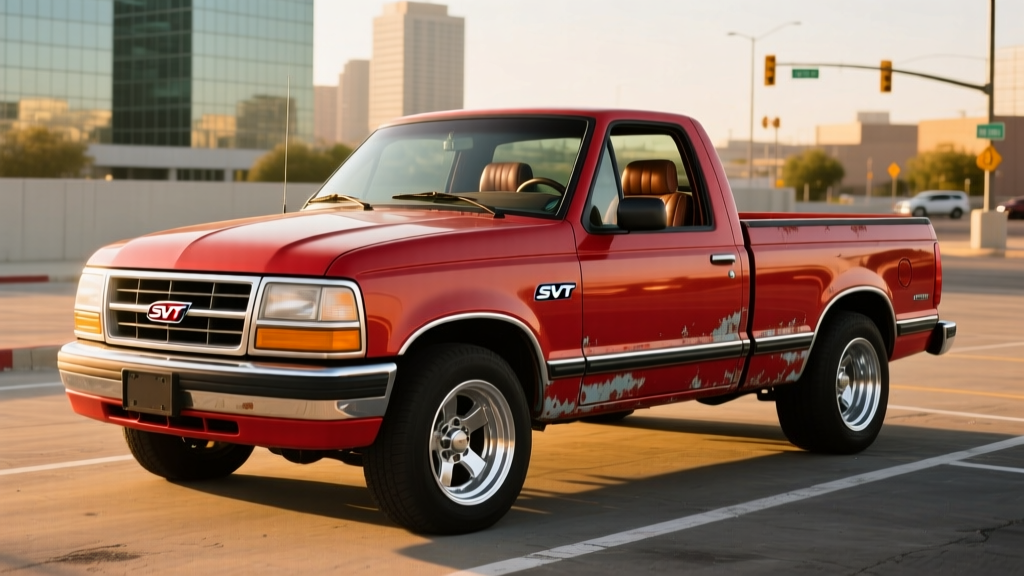
The first-generation SVT Lightning (1993–1995) was a single-cab, short-bed F-150 with a 5.8L (351 cubic-inch) Windsor V8 producing 240 horsepower and 340 lb-ft of torque. It was rear-wheel drive only, mated to a 4-speed automatic transmission, and came exclusively in black or white with a monochrome exterior treatment.
By 1995, Ford had produced roughly 11,500 first-gen Lightnings total. The truck was a low-volume halo product — not a mass-market vehicle. Today, clean examples trade in the $25,000–$60,000+ collector market depending on mileage and condition, far above the original ~$19,000 MSRP.
| Spec | Value |
|---|---|
| Engine | 5.8L Windsor V8 |
| Horsepower | 240 hp |
| Torque | 340 lb-ft |
| Drivetrain | RWD |
| Transmission | 4-speed automatic |
| 0–60 mph | ~7.2 seconds (est.) |
| Fuel Economy | ~12 city / 16 highway mpg |
| Original MSRP | ~$19,000 |
| Current Collector Value | $25,000–$60,000+ |
This was a straight-line muscle truck. It didn't have advanced driver assists, a touchscreen, or any form of electrification. Its appeal was raw: a sport-tuned suspension, limited-slip differential, and that 351 V8 rumble.
The 2026 F-150 Lightning EV: What Ford Built on the Name
The current F-150 Lightning is an entirely different animal — a battery-electric, dual-motor, all-wheel-drive full-size pickup that shares almost nothing mechanically with its 1995 predecessor except the badge. Here's the full spec breakdown for the 2026 model year.
| Spec | Standard Range | Extended Range |
|---|---|---|
| EPA Range | 240 miles | 320 miles |
| Battery Capacity (usable) | 98 kWh (LFP) | 131 kWh (NMC) |
| Drivetrain | Dual-motor AWD | Dual-motor AWD |
| Horsepower | 563 hp | 563 hp |
| Torque | 775 lb-ft | 775 lb-ft |
| 0–60 mph | ~4.5 seconds | ~3.8 seconds |
| Max DC Fast Charge | 150 kW | 150 kW |
| 10–80% DC Fast Charge | ~44 minutes | ~41 minutes |
| Level 2 Home Charge (80A) | ~30 mi/hr | ~30 mi/hr |
| MPGe (combined) | 68 MPGe | 70 MPGe |
| Efficiency | 49 kWh/100mi | 48 kWh/100mi |
| Max Towing | 7,700 lbs | 10,000 lbs |
| Payload | 2,235 lbs | 1,952 lbs |
| Frunk Volume | 14.1 cu ft | 14.1 cu ft |
| Bed Volume | 52.8 cu ft (5.5-ft bed) | 52.8 cu ft (5.5-ft bed) |
| Rear Legroom | 40.4 in | 40.4 in |
| Battery Warranty | 8 years / 100,000 miles (70% retention) | |
Source: fueleconomy.gov and Ford Motor Company.
Real-World Range: What the EPA Sticker Doesn't Tell You
EPA Estimated Range: 240 miles (Standard Range) / 320 miles (Extended Range)
Real-World Expectation:
- City/suburban driving: Close to EPA sticker — regenerative braking recovers energy in stop-and-go traffic.
- Sustained highway (70–80 mph): Expect 15–20% less — roughly 195–205 miles (Standard) or 255–275 miles (Extended). Aerodynamic drag on a full-size truck is brutal at speed.
- Cold weather (below 32°F): Add another 15–30% reduction. The F-150 Lightning's battery thermal management helps, but winter highway range on the Standard pack can dip below 170 miles.
- Towing: Range roughly halves. Ford's own testing showed ~100–130 miles at highway speeds towing a 5,000-lb trailer on the Extended Range pack.
The Extended Range's 131 kWh NMC pack gives meaningful buffer for road trips, but the Standard Range's LFP chemistry offers a longevity advantage — LFP cells tolerate frequent 100% charging and degrade more slowly over thousands of cycles. If your daily driving stays under 150 miles round-trip, the Standard Range with LFP is arguably the smarter long-term ownership play.
Charging: Home and DC Fast Charging Breakdown
Charging speed is where the F-150 Lightning is competent but not class-leading. The truck peaks at 150 kW on DC fast chargers — adequate for road trips but slower than rivals like the Rivian R1T (which supports up to 220 kW on newer packs) or the Hyundai Ioniq 5 (240 kW peak).
| Charging Level | Power | Miles Added per Hour | Notes |
|---|---|---|---|
| Level 1 (120V household) | ~1.4 kW | ~3–4 mi/hr | Emergency/trickle only; full recharge takes days |
| Level 2 (240V, 32A) | 7.7 kW | ~19 mi/hr | Standard mobile charger; overnight for most commutes |
| Level 2 (240V, 48A) | 11.5 kW | ~28 mi/hr | Common wall-box setup (e.g., ChargePoint Home Flex) |
| Level 2 (240V, 80A) | 19.2 kW | ~30 mi/hr | Ford Charge Station Pro; requires 100A circuit, full overnight charge in ~8–10 hrs |
| DC Fast Charge | 150 kW peak | — | 10–80% in ~41–44 min; tapers significantly above 80% |
Charge curve reality: The Lightning sustains close to peak kW only between roughly 15–40% State of Charge (SoC). Above 60%, the rate drops progressively. A 10–80% session takes about 41–44 minutes, but 80–100% can add another 30+ minutes. Plan road-trip stops around the 10–80% window for efficiency.
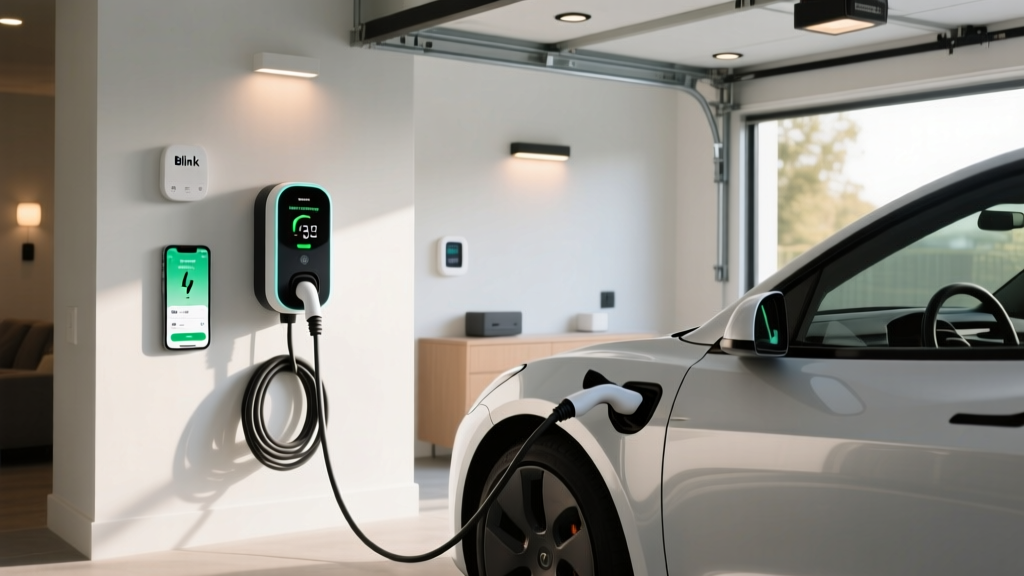
Home charging note: The Ford Charge Station Pro (80A) requires a dedicated 100-amp circuit. Many homes need a panel upgrade (200A service minimum recommended), which adds $1,500–$4,000+ to installation costs. Budget accordingly — consult a licensed electrician for your specific setup. The IRS §30D credit does not cover home charger installation, but the separate §30C alternative fuel infrastructure credit may offset up to $1,000 of equipment costs (subject to income and census-tract eligibility).
Pricing, Trims, and Federal Tax Credit Eligibility
| Trim | Battery | Est. MSRP | §30D Credit Eligible? | Effective Price (if eligible) |
|---|---|---|---|---|
| Pro (fleet/base) | Standard Range | ~$52,000 | Yes (if sourcing rules met) | ~$44,500 |
| XLT | Standard Range | ~$57,000 | Yes | ~$49,500 |
| XLT | Extended Range | ~$67,000 | Yes (truck MSRP cap: $80,000) | ~$59,500 |
| Lariat | Extended Range | ~$75,000 | Yes | ~$67,500 |
| Platinum | Extended Range | ~$86,000 | Yes (under $80K truck cap) | ~$78,500 |
Federal EV tax credit (§30D) rules for 2026:
- Credit amount: Up to $7,500, split into two halves — $3,750 for meeting critical-minerals sourcing requirements and $3,750 for battery-component sourcing. Ford's North American battery assembly generally qualifies, but critical-mineral sourcing rules tighten annually. Verify current-year eligibility on irs.gov.
- MSRP cap: Trucks and vans must be under $80,000 MSRP. Most Lightning trims qualify; a fully loaded Platinum may push against this cap.
- Buyer income cap: Modified AGI must not exceed $300,000 (joint), $225,000 (head of household), or $150,000 (single).
- Point-of-sale transfer: As of 2024+, you can transfer the credit to the dealer at purchase, reducing your out-of-pocket cost immediately rather than waiting for tax filing.
- Lease loophole: Commercial clean vehicle credit (§45W) may apply to leases regardless of sourcing/income rules — consult a tax professional.
Pros and Cons: The Honest Assessment
Pros
- Massive torque: 775 lb-ft instant electric torque makes the Lightning quicker (3.8s 0–60 Extended) than any SVT Lightning ever was.
- Frunk utility: 14.1 cu ft front trunk with 400-lb payload capacity — lockable, drainable, and genuinely useful for job-site storage or groceries.
- Pro Power Onboard: Available 9.6 kW onboard generator turns the truck into a mobile power source for tools, tailgating, or home backup during outages.
- Low running costs: At $0.13/kWh national average, "fueling" costs roughly $0.06–0.07/mile vs. $0.18–0.22/mile for a gas F-150 at $3.50/gal.
- Quiet, smooth daily driving: Zero engine noise, no transmission shifts, strong regenerative braking for one-pedal city driving.
- LFP longevity (Standard Range): LFP chemistry degrades more slowly and tolerates daily 100% charges — ideal for fleet and commuter use.
Cons
- Charging speed is middling: 150 kW peak is slower than Rivian R1T, GMC Sierra EV, and Hyundai/Kia E-GMP trucks. Road-trip stops take longer.
- Highway range loss: Full-size truck aerodynamics mean real-world highway range drops 15–20% below EPA — towing cuts it in half.
- Heavy: Curb weight exceeds 6,500 lbs (Extended Range), which increases tire wear and reduces efficiency at speed.
- Upfront cost: Even after the $7,500 credit, entry pricing is above $44,000 — significantly more than a base gas F-150 XL.
- Panel upgrade may be required: The 80A Ford Charge Station Pro needs a 100A dedicated circuit; older homes may need a $2,000–$4,000 electrical panel upgrade.
- Insurance premiums: EV truck insurance tends to run 15–25% higher than comparable gas trucks due to repair costs and battery replacement risk.
Who Should Buy the F-150 Lightning — And Who Shouldn't
Best for:
- Homeowners with garage charging: If you can install a Level 2 charger and your daily round-trip is under 150 miles, the Lightning is an exceptional daily driver with near-zero fuel stops.
- Job-site workers needing mobile power: Pro Power Onboard is a genuine differentiator — no separate generator needed.
- Families wanting a quiet, spacious truck: SuperCrew cab with 40.4 inches of rear legroom, and the frunk adds secure, weatherproof storage.
- Tech-forward buyers: Ford's SYNC 4 with 15.5-inch touchscreen (Lariat/Platinum), BlueCruise hands-free highway driving (SAE Level 2 — driver must remain attentive), and over-the-air updates.
Not ideal for:
- Frequent long-distance towers: Towing range of ~100–130 miles means multiple charging stops on a 400-mile haul. A diesel or gas truck is still more practical here.
- Apartment dwellers without charging access: Relying on public DC fast charging adds time and cost; the Lightning's 150 kW peak isn't fast enough for daily public-charging convenience.
- Budget-first buyers: If your priority is the lowest possible truck payment, a gas F-150 XL (~$37,000) or a used EV may fit better.
BlueCruise Note: Ford's BlueCruise is an SAE Level 2 driver-assistance system. It allows hands-free driving on pre-mapped divided highways, but you must remain attentive and ready to take over immediately. It is not self-driving. Only Level 4 services like Waymo operate without a human driver — and those are limited robotaxi services, not consumer vehicles.
1995 SVT Lightning vs. 2026 F-150 Lightning: Heritage Compared
| Attribute | 1995 SVT Lightning | 2026 F-150 Lightning (Extended Range) |
|---|---|---|
| Powertrain | 5.8L V8, RWD | Dual-motor electric, AWD |
| Horsepower | 240 hp | 563 hp |
| Torque | 340 lb-ft | 775 lb-ft |
| 0–60 mph | ~7.2 sec | ~3.8 sec |
| Energy/Fuel | Gasoline (~14 mpg) | Electricity (~48 kWh/100mi) |
| Range | ~280 mi (20-gal tank) | 320 mi EPA (real-world ~260–275 mi hwy) |
| Refuel/Recharge Time | ~5 min (gas station) | ~41 min (10–80% DCFC) |
| Original MSRP | ~$19,000 | ~$67,000+ |
| Driver Assists | None | BlueCruise, AEB, lane-keeping |
| Collector/Resale Status | $25K–$60K+ (collector) | Depreciating new vehicle |
The 1995 SVT Lightning was a analog muscle truck — visceral, simple, and rare. The 2026 F-150 Lightning is a technology platform that happens to be a truck. They share a name and a philosophy (make the F-150 unexpectedly quick), but little else. If you want the 1995 original, you're shopping the collector-car market, not an EV dealership.
Frequently Asked Questions
Was the 1995 Ford F-150 SVT Lightning an electric vehicle?
No. The 1995 SVT Lightning was a gas-powered performance truck with a 5.8L V8 engine producing 240 hp. Ford's electric truck, the F-150 Lightning, launched for the 2022 model year and is a completely different vehicle that shares only the nameplate.
What is the real-world range of the 2026 F-150 Lightning?
The EPA rates the Extended Range at 320 miles and the Standard Range at 240 miles. In real-world highway driving at 70–80 mph, expect roughly 255–275 miles (Extended) and 195–210 miles (Standard). Cold weather and towing reduce range further — towing can cut it roughly in half.
How fast does the F-150 Lightning charge?
On a DC fast charger, the Lightning peaks at 150 kW and charges from 10–80% in approximately 41–44 minutes. At home on a Level 2 charger (80A/19.2 kW), it adds roughly 30 miles of range per hour, fully recharging overnight in 8–10 hours. A standard 32A Level 2 adds about 19 mi/hr.
Does the F-150 Lightning qualify for the federal EV tax credit?
Most trims qualify for up to $7,500 under IRS §30D, provided the buyer meets income caps ($150K single / $300K joint) and the truck's MSRP stays under the $80,000 cap for trucks. Battery sourcing requirements also apply and tighten annually. The credit can be transferred to the dealer at point of sale. Always verify current eligibility on irs.gov and consult a tax professional.
Is the F-150 Lightning worth buying over a gas F-150 or Rivian R1T?
It depends on your use case. For homeowners with Level 2 charging and daily commutes under 150 miles, the Lightning offers dramatically lower fuel and maintenance costs, Pro Power Onboard, and a spacious frunk. If you tow frequently over long distances, a gas or diesel F-150 remains more practical. The Rivian R1T offers faster charging, a more car-like driving experience, and better off-road capability, but at a higher price point and smaller bed. The Lightning wins on value, utility, and familiarity for traditional truck buyers going electric.
What battery chemistry does the F-150 Lightning use?
The Standard Range pack uses LFP (lithium iron phosphate) chemistry, which offers longer cycle life and tolerance for daily 100% charging at the cost of lower energy density. The Extended Range pack uses NMC (nickel manganese cobalt), which provides higher energy density for longer range but degrades slightly faster and benefits from staying between 20–80% SoC for daily use.
What is the battery warranty on the F-150 Lightning?
Ford covers the Lightning's battery for 8 years or 100,000 miles, whichever comes first, against defects and capacity loss below 70% of original capacity. This is consistent with industry standards and meets the minimum threshold required for federal tax credit eligibility.
Sources: fueleconomy.gov, Ford Motor Company, IRS.gov — Clean Vehicle Credits.