The Classic Muscle Car Meets Electric Powertrain Reality
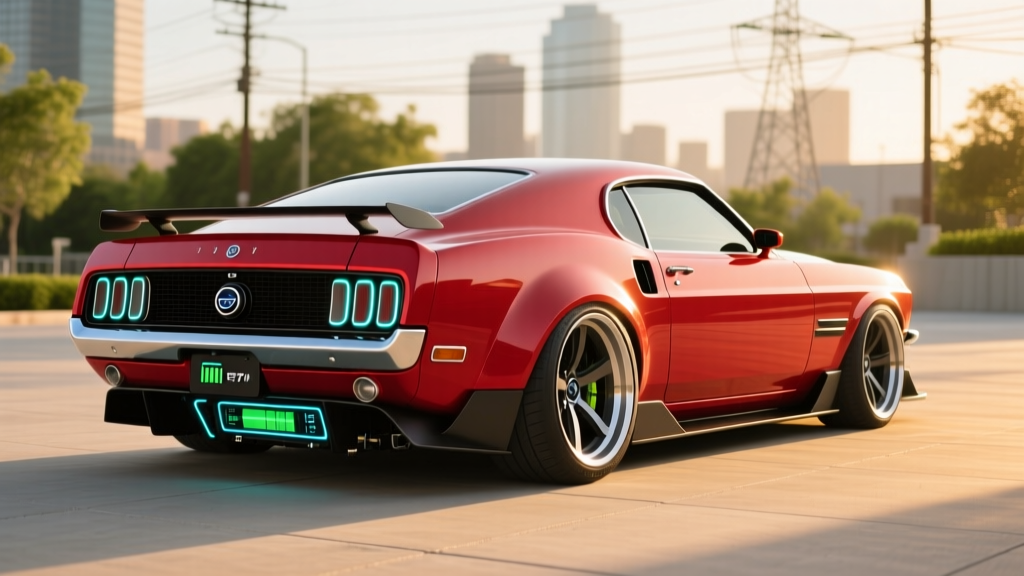
The 1971 Ford Mustang Mach 1 is one of the most iconic American muscle cars ever built — a long-hood, aggressive-styling pony car that defined an era. But for a growing segment of enthusiasts, keeping a 50-year-old V8 on the road means contending with carburetor rebuilds, $4/gallon fuel bills, and zero modern safety tech. The answer? The Ford Mustang Mach 1 1971 EV conversion — a restomod approach that swaps the original 351 or 429 cubic-inch V8 for a battery-electric powertrain while preserving the car's unmistakable silhouette.
This isn't a factory product. Ford does not sell an electric 1971 Mustang. Instead, specialty shops like Icon EV, Zelectric Motors, EV West, and boutique builders such as Kindred Studios and Charge Cars (UK-based, known for their 1960s Mustang conversions) offer turnkey or semi-custom EV restomods based on donor 1967–1973 Mustang chassis. The 1971 Mach 1, with its wider body and larger engine bay, is a particularly popular candidate because it can accommodate bigger battery packs and more powerful motors than earlier, narrower first-generation shells.
Below, we break down what a professionally built 1971 Mustang Mach 1 EV conversion actually delivers in 2026 — range, charging, performance, pricing, and whether it makes sense versus buying a modern EV with classic styling cues (like the Ford Mustang Mach-E, which borrows the name but none of the sheetmetal).
Spec Table: 1971 Mach 1 EV Restomod at a Glance
Because every conversion is semi-custom, specs vary by builder and budget. The table below represents a typical mid-to-high-tier build using commonly available components in 2026 — a Cascadia Motion or NetGain motor, a Tesla-derived or custom NMC battery pack, and CCS/NACS charging hardware.
| Spec | Value |
|---|---|
| Battery Capacity (Usable) | 60–85 kWh (NMC) |
| Battery Chemistry | NMC (Nickel Manganese Cobalt) |
| EPA-Equivalent Range | Not EPA-rated; builder-estimated 150–220 mi |
| Real-World Range (Mixed) | 120–180 mi (highway/cold weather reduces 20–35%) |
| Motor Type | Single AC induction or PMAC (rear-mounted) |
| Horsepower | 300–500 HP (builder-dependent) |
| Torque | 400–650 lb-ft |
| 0–60 mph | 3.8–5.5 seconds |
| Drivetrain | RWD (single motor, rear axle) |
| DC Fast Charge (Peak) | 50–125 kW (CCS or NACS) |
| 10–80% DC Charge Time | 30–50 minutes (varies by pack size & peak kW) |
| Level 2 Home Charge | 7.2–11.5 kW (~25–40 mi/hr added) |
| Efficiency | ~35–50 kWh/100 mi (MPGe ~65–95) |
| Cargo (Trunk) | ~6–8 cu ft (battery encroachment reduces stock 14 cu ft) |
| Passenger Space | 2+2 seating; rear legroom ~27 in (stock) |
| Curb Weight (Converted) | 3,800–4,200 lbs (stock was ~3,400 lbs) |
| Federal EV Tax Credit (§30D) | Not eligible (conversion / used vehicle) |
| Build Time | 6–14 months (shop backlog dependent) |
Range: What You Actually Get on a Full Charge
Let's be direct: a converted 1971 Mach 1 is not going to rival a Tesla Model 3 Long Range (EPA 341 mi) or even a base Mustang Mach-E Select (EPA 250 mi). The aerodynamics of a 1971 fastback — flat windshield, bluff front end, no underbody panels — create drag coefficients around 0.45–0.50 Cd, compared to 0.29 Cd for a modern Mach-E. That drag, combined with bias-ply or vintage-style radial tires and heavier curb weight from the battery, eats range at highway speeds.
A 75 kWh NMC pack in a 1971 Mach 1 conversion typically delivers 150–180 miles in mixed city/highway driving at 65–70°F. On the highway at 75 mph, expect that to drop to 110–140 miles. In cold weather (below 40°F) without an active battery thermal management system (most conversions lack one), range loss of 25–40% is common, putting winter range at 90–130 miles. This is a weekend cruiser and commuter, not a road-trip vehicle.
Most builders use NMC (Nickel Manganese Cobalt) cells sourced from salvaged Tesla Model S/X modules, LG Chem pouches, or CATL prismatic cells. LFP (Lithium Iron Phosphate) chemistry is rarely used in restomod conversions because it is heavier per kWh and space is at a premium in a vintage chassis. NMC offers better energy density (~250 Wh/kg at the cell level), which matters when you're trying to fit 75+ kWh into a trunk and engine bay designed for a 30-gallon fuel tank and a cast-iron V8.
The tradeoff: NMC degrades faster than LFP over time, especially if routinely charged to 100% or exposed to high temperatures. Expect 8–12% capacity loss over 5 years / 50,000 miles if you follow best practices (charge to 80% daily, avoid DC fast charging exclusively, store in moderate temperatures). Most builders offer a 3-year/36,000-mile warranty on the battery pack, far below the 8-year/100,000-mile federal mandate for new EVs.
Charging Speed: DC Fast Charge and Home Level 2
Charging infrastructure compatibility is one of the most overlooked aspects of an EV conversion. A 1971 Mach 1 restomod built in 2026 will typically include either a CCS1 or NACS (Tesla-style) charge port, depending on the builder and your regional charging network preference.
| Charging Level | Power (kW) | Miles Added per Hour | Notes |
|---|---|---|---|
| Level 1 (120V household) | 1.4 kW | ~3–4 mi/hr | Full charge in ~50+ hours; impractical for daily use |
| Level 2 (240V, 32A) | 7.7 kW | ~22–28 mi/hr | Full charge overnight (~9–10 hours); most common home setup |
| Level 2 (240V, 48A) | 11.5 kW | ~35–40 mi/hr | Requires onboard charger upgrade; full charge in ~6.5 hours |
| DC Fast Charge (50 kW) | 50 kW | ~140–160 mi/hr | 10–80% in ~55 min; common on older CCS stations |
| DC Fast Charge (125 kW peak) | 125 kW (tapers) | ~250–300 mi/hr (peak) | 10–80% in ~30–35 min; requires upgraded BMS & cooling |
A critical detail: most EV conversions use a battery management system (BMS) and contactor setup that limits DC fast charging to 50–75 kW sustained, even if connected to a 150 or 350 kW station. The charge curve tapers aggressively above 60–70% State of Charge (SoC) to protect cells that lack active liquid cooling. A 125 kW peak is achievable on higher-end builds with liquid-cooled battery enclosures and advanced BMS (such as those using Thunderstruck or Orion BMS controllers), but this adds $5,000–$10,000 to the build cost.
For home charging, most owners install a Level 2, 240V / 48A hardwired station (such as a ChargePoint Home Flex or Wallbox Pulsar Plus), which adds roughly 35–40 miles of range per hour of charging. A full overnight charge from 10% to 100% takes about 6.5–7 hours. Installation costs for a Level 2 home charger typically run $800–$2,500 including the unit, electrician labor, and permits, depending on whether your electrical panel needs an upgrade to support a 60A circuit. (Always consult a licensed electrician for final specs — panel capacity varies by home.)
Performance: Electric Torque in a Vintage Chassis
This is where the EV conversion genuinely transforms the 1971 Mach 1. The stock 351 Cleveland V8 produced 240–285 HP (net, post-1971 SAE changes) and weighed the nose of the car down to roughly 57/43 front/rear weight distribution. An EV conversion with a rear-mounted AC motor and under-floor battery pack can achieve near 50/50 weight distribution and deliver instant torque with no power band to wait for.
A typical mid-tier build using a Cascadia Motion iDM-14 or equivalent permanent magnet AC (PMAC) motor produces 350–450 HP and 500–600 lb-ft of torque to the rear wheels. That translates to 0–60 mph times of 4.0–4.8 seconds — quicker than a stock 1971 Mach 1 with the 429 Cobra Jet (which ran ~5.5 seconds to 60 when new, per period road tests). Higher-end builds with dual-motor AWD setups or a single large-diameter motor (like a Tesla Large Drive Unit) can hit 3.5–3.8 seconds to 60, though this requires significant chassis reinforcement and upgraded brakes.
The catch: vintage Mustang chassis were not designed for 500+ lb-ft of instant torque. Any reputable builder will upgrade the following:
- Suspension: Tubular control arms, coil-over conversion, larger sway bars (Global West, TCP, or Detroit Speed components)
- Brakes: 4-wheel disc brake conversion (stock was front disc/rear drum); Wilwood or Baer kits with 13"+ front rotors
- Steering: Rack-and-pinion conversion replacing the vague recirculating-ball setup
- Tires: Modern performance radials (245/45R17 or wider) replacing the stock bias-ply or narrow radials
- Frame: Subframe connectors and torque boxes to handle the instant torque load without chassis flex
Without these upgrades, a 400+ HP EV conversion in a stock 1971 chassis is a handful — and potentially unsafe at speed. Budget at least $15,000–$25,000 in chassis and brake work on top of the powertrain cost.
Pricing: What a 1971 Mach 1 EV Conversion Actually Costs
There is no MSRP for a converted 1971 Mustang Mach 1 because every build is custom or semi-custom. However, based on 2026 market pricing from established conversion shops, here's what to expect:
| Build Tier | Battery | Motor / HP | Chassis Upgrades | Total Build Cost* |
|---|---|---|---|---|
| Budget / DIY-Assist | 40–50 kWh (salvaged) | 200–280 HP | Minimal (stock brakes/suspension) | $45,000–$75,000 |
| Mid-Tier (Shop Build) | 60–75 kWh (new NMC) | 350–450 HP | Full suspension, 4-wheel disc, rack steering | $100,000–$160,000 |
| High-End / Concours | 80–100 kWh (liquid-cooled) | 500–700 HP, AWD option | Full frame-off resto, custom interior, AC, power steering | $200,000–$350,000+ |
*Total build cost does not include the donor vehicle. A project-quality 1971 Mach 1 fastback in 2026 runs $15,000–$40,000 depending on condition, rust, and whether it's a matching-numbers car (which most EV conversions sacrifice).
For context, a fully restored, concours-quality 1971 Mach 1 with a numbers-matching 429 Cobra Jet can sell for $80,000–$150,000 at auction (source: Hagerty Valuation Tools). The EV conversion route is not about saving money — it's about creating a unique vehicle that combines classic aesthetics with modern drivability.
Federal EV Tax Credit: Does a Conversion Qualify?
No. Under current IRS §30D Clean Vehicle Credit rules, the federal EV tax credit applies only to new, factory-built qualified plug-in electric vehicles purchased from a licensed dealer. An aftermarket EV conversion of a 1971 vehicle does not qualify for the new-vehicle credit ($7,500) or the used-vehicle credit ($4,000 under §25E), because:
- The vehicle was not originally manufactured as a qualified clean vehicle
- The conversion is not performed by the original equipment manufacturer (OEM)
- The vehicle's MSRP and model year fall outside the program's parameters
- There is no dealer point-of-sale transfer mechanism for a custom conversion
Some states offer aftermarket conversion incentives — California's Clean Transportation Program has historically offered rebates for EV conversions, and Colorado provides a state tax credit for alternative fuel vehicle conversions. Check your state energy office or a tax professional for current eligibility, as these programs change annually.
Technology, Interior, and Daily Usability
A 1971 Mach 1 EV conversion is a blend of vintage aesthetics and modern (or semi-modern) technology. Most mid-to-high-tier builds include:
- Digital instrument cluster: Retro-styled gauges with EV readouts (SoC, kWh/mi, regen level) — companies like Classic Instruments offer EV-specific gauge sets
- Infotainment: Optional hidden touchscreen (typically 7–9 inch) with Apple CarPlay/Android Auto, mounted in the dash or concealed in the glovebox
- Climate control: Electric A/C compressor and electric heater (no engine-driven accessories); heat pumps are rare in conversions due to space constraints, so resistive heating is standard and draws 2–4 kW — a meaningful range hit in winter
- Power steering: Electric power steering (EPS) rack replaces the engine-driven hydraulic pump
- Regenerative braking: Configurable regen levels via a dashboard knob or steering-wheel paddle; most setups offer mild regen (not true one-pedal driving) to preserve the stock brake pedal feel
Notable drawbacks that owners consistently report:
- No crumple zones, airbags, or modern crash structure — the 1971 chassis was designed for 1971 safety standards
- Limited visibility (thick A-pillars, small rear window, no rear camera unless added)
- No ADAS features — no automatic emergency braking, lane-keep assist, or adaptive cruise (these require modern sensor suites that don't integrate with vintage wiring)
- Insurance challenges — specialty insurers like Hagerty or Grundy will cover EV conversions, but premiums are higher than stock classics due to the modified powertrain and increased value
- Trunk space is significantly reduced — the battery pack often occupies 40–60% of the original trunk volume, leaving 6–8 cu ft for luggage
Pros
- Iconic 1971 Mach 1 styling with zero tailpipe emissions
- Instant torque and 4.0–4.8 sec 0–60 (mid-tier builds)
- Near 50/50 weight distribution (better than stock)
- No carburetor tuning, oil changes, or exhaust repairs
- Quiet, vibration-free cruising
- Unique conversation piece — fewer than ~500 built nationwide
- Eligible for HOV lane stickers in some states (CA, CO)
Cons
- 150–180 mi real-world range; 90–130 mi in cold weather
- $100K–$350K+ total cost (donor car + conversion)
- No federal EV tax credit eligibility
- No modern safety features (airbags, crumple zones, ADAS)
- Limited trunk space (6–8 cu ft with battery)
- DC fast charging capped at 50–125 kW (30–50 min 10–80%)
- 6–14 month build time at most shops
- Matching-numbers collector value is destroyed
Who Should Consider a 1971 Mach 1 EV Conversion?
Choose the 1971 Mach 1 EV conversion if: You're a classic car enthusiast who wants vintage Mustang styling with daily-drivable reliability, zero emissions in your garage, and modern performance — and you have a $120K+ budget with no expectation of ROI. This is a passion project, not a rational purchase.
Choose a modern EV instead (Mustang Mach-E, Tesla Model 3, Hyundai Ioniq 5) if: You need 250+ miles of range, DC fast charging above 150 kW, modern safety (automatic emergency braking, airbags, lane-keep), federal tax credit eligibility, a warranty backed by a major manufacturer, and a vehicle you can finance through a traditional lender at competitive rates.
Choose a stock 1971 Mach 1 (V8) if: You value originality, numbers-matching collector appreciation, the sound and feel of a carbureted V8, and the established classic car infrastructure (parts, mechanics, shows, concours events).
The 1971 Mustang Mach 1 EV conversion is best suited for:
- Weekend cruisers and car-show attendees who drive 50–100 miles round trip and can charge at home overnight
- Short-distance commuters (under 60 miles round trip) who want a unique daily driver
- Collectors who want a "driver's car" — something they can actually use without worrying about putting miles on a $150K trailer queen
- Enthusiasts in emissions-restricted areas (California, CARB states) where registering a carbureted V8 is increasingly complicated
It is not well suited for road trips, families needing 4 doors and cargo space, buyers on a budget, or anyone who prioritizes safety technology and charging speed.
Frequently Asked Questions
What is the real-world range of a 1971 Mustang Mach 1 EV conversion?
With a 60–75 kWh NMC battery pack, expect 150–180 miles in mixed driving at moderate temperatures. Highway driving at 75 mph drops that to 110–140 miles. Cold weather (below 40°F) without active battery thermal management can reduce range by 25–40%, putting winter range at 90–130 miles. These are builder estimates — the vehicle is not EPA-rated and will not appear on fueleconomy.gov.
How fast does a 1971 Mach 1 EV conversion charge?
On DC fast charging, most conversions peak at 50–75 kW sustained, achieving a 10–80% charge in 35–50 minutes. Higher-end builds with liquid-cooled packs and upgraded BMS can peak at 125 kW, cutting 10–80% to roughly 30 minutes. At home on a Level 2 (240V, 48A) charger, expect a full charge in 6.5–7 hours, adding roughly 35–40 miles of range per hour.
How much does a 1971 Mach 1 EV conversion cost after incentives?
A mid-tier shop build typically costs $100,000–$160,000 (excluding the $15,000–$40,000 donor car). The federal §30D EV tax credit does not apply to aftermarket conversions. Some states (California, Colorado, others) offer conversion-specific incentives — check your state energy office. Total all-in cost for a road-ready mid-tier build is typically $130,000–$200,000.
Is a 1971 Mach 1 EV conversion worth it versus a modern EV?
Not on paper. A 2026 Mustang Mach-E GT ($59,995 MSRP, EPA 280 mi, 0–60 in 3.5 sec, full warranty, tax-credit eligible) outperforms the conversion on every measurable metric except uniqueness. The conversion is a passion purchase — you're paying for the 1971 styling, the one-of-a-kind nature, and the emotional connection to a classic car, not for practicality or value.
Does the 1971 Mach 1 EV conversion qualify for the federal EV tax credit?
No. IRS §30D credits apply only to new factory-built qualified vehicles. Aftermarket conversions of vintage vehicles are not eligible for the new-vehicle credit ($7,500) or the used-vehicle credit (§25E, up to $4,000). Consult a tax professional for state-specific incentives that may apply.
Can I do the conversion myself?
Technically yes, if you have advanced fabrication, electrical, and programming skills. DIY conversion kits (from EV West, NetGain, and others) start around $15,000–$30,000 for components. However, a safe, roadworthy conversion requires custom battery enclosures, high-voltage safety systems, BMS programming, DMV registration as a converted vehicle, and passing your state's safety inspection. Most DIY builds take 1,000–2,000+ hours and require a well-equipped shop. Professional builds are strongly recommended for anyone without significant EV engineering experience.