The Short Answer: Are Three-Wheel Electric Bicycles Worth It?
Three-wheel electric bicycles (e-trikes) fill a narrow but real niche: short urban commutes (5–15 miles), cargo hauling up to 150 lbs, and riders who want stability without a driver's license. A quality e-trike costs $2,500–$6,000 upfront, adds roughly 15–40 miles of range per charge, and costs about $0.005 per mile to "fuel." Compared to even the cheapest new EV (which starts around $28,000 after incentives), e-trikes eliminate parking fees, registration, and insurance in most states — but they cannot handle highway travel, cold-weather commutes beyond ~10 miles, or passenger transport. If your daily round-trip is under 20 miles and you have secure storage, an e-trike can replace a second car. If you need all-weather, all-season reliability or travel beyond city limits, a used EV or plug-in hybrid remains the practical choice.
What Three-Wheel Electric Bicycles Actually Are (And Aren't)
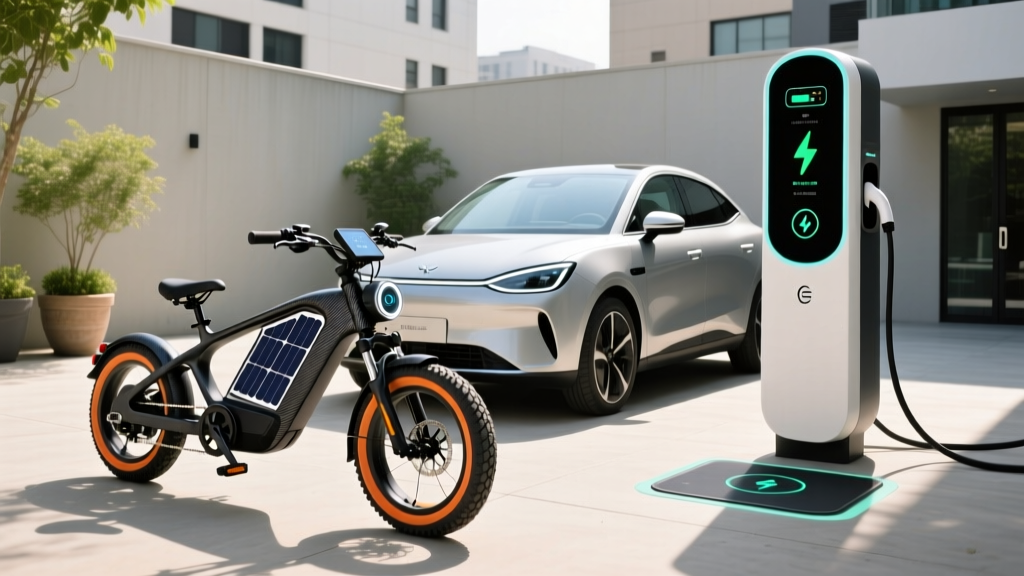
Before comparing costs, it's critical to define what we're evaluating. Three-wheel electric bicycles — commonly called e-trikes — are pedal-assist or throttle-operated cycles with two wheels in the rear (delta configuration) or two in the front (tadpole). They typically feature:
- Motor output: 250W–750W hub or mid-drive motors (750W is the US legal limit for classification as a bicycle under federal consumer product guidelines)
- Battery capacity: 0.4–1.0 kWh (lithium-ion, typically 48V systems)
- Top speed: 20–28 mph (Class 2/3 e-bike limits)
- Range: 20–45 miles on pedal-assist; 15–30 miles on throttle-only
- Cargo capacity: 100–300 lbs including rider
- Charge time: 3–6 hours on a standard 120V household outlet
These are not electric motorcycles, neighborhood electric vehicles (NEVs), or autocycles like the Arcimoto FUV. Those require registration, insurance, and a driver's license, and they operate under DOT/NHTSA vehicle safety standards. E-trikes fall under the Consumer Product Safety Commission's e-bike classification and are legal on most bike paths and lanes without licensing.
E-Trike vs. EV vs. Gas Car: The Real Numbers
Let's put a representative e-trike against the most affordable new EVs and a comparable gas commuter car. The comparison below uses a Lectric XPress 750 (a popular cargo e-trike), a 2026 Chevrolet Equinox EV LT (the current entry-level EV benchmark), and a 2026 Honda Civic sedan as the gas baseline.
| Metric | E-Trike (Lectric XPress 750) | 2026 Chevy Equinox EV LT | 2026 Honda Civic (Gas) |
|---|---|---|---|
| Purchase Price | $1,800–$2,200 | $33,600 MSRP | $25,400 MSRP |
| Federal Tax Credit (§30D) | $0 (not a motor vehicle) | Up to $7,500 (subject to IRS §30D sourcing rules) | $0 |
| Effective Purchase Price | ~$2,000 | ~$26,100 (with full credit) | $25,400 |
| Annual Fuel/Energy Cost | $12–$18/year ($0.005/mi) | $450–$600/year (home L2, $0.14/kWh) | $1,350–$1,600/year ($3.40/gal, 35 MPG) |
| 5-Year Fuel Total | $60–$90 | $2,250–$3,000 | $6,750–$8,000 |
| Insurance (Annual) | $0–$150 (optional) | $1,400–$2,000 | $1,100–$1,600 |
| 5-Year Insurance Total | $0–$750 | $7,000–$10,000 | $5,500–$8,000 |
| Maintenance (5-Year) | $200–$400 (tires, brakes, chain) | $600–$1,000 | $2,000–$3,500 |
| Registration/Taxes (Annual) | $0 | $150–$400 | $150–$400 |
| 5-Year Total Cost | $2,260–$3,440 | $35,950–$40,100 | $39,650–$44,900 |
The e-trike's cost advantage is enormous — but only if it actually replaces car trips. If you still need a car for highway travel, groceries in bad weather, or trips over 20 miles, you're adding an e-trike on top of existing car costs, not replacing them.
Range Reality: What the Sticker Doesn't Tell You
E-trike manufacturers advertise range figures like "up to 45 miles," but real-world conditions compress that number significantly. Here's what to actually expect from a 0.7 kWh (48V 14Ah) battery system:
| Condition | Advertised Range | Real-World Range | Why the Drop |
|---|---|---|---|
| Ideal (flat, 70°F, pedal-assist level 2, 150-lb rider) | 40–45 miles | 35–40 miles | Minimal — this is the test condition |
| Throttle-only, no pedaling | 25–30 miles | 18–25 miles | Motor draws peak wattage continuously |
| Cargo load (250 lbs total) | Not stated | 15–22 miles | Increased rolling resistance and motor load |
| Cold weather (35°F) | Not stated | 12–20 miles | Lithium-ion internal resistance increases ~30–40% below 40°F |
| Hilly terrain (5%+ grades) | Not stated | 10–18 miles | Climbing draws 2–3x the wattage of flat riding |
| High speed (28 mph, Class 3) | Not stated | 12–18 miles | Aerodynamic drag scales with velocity squared |
For context, a 2026 Chevy Equinox EV with its 85 kWh (usable) battery delivers an EPA-estimated 319 miles of range. Even with cold-weather losses of 20–30%, that's 220–255 real-world miles — enough for any daily commute and most road trips with one DC fast-charge stop (peak 150 kW, 10–80% in roughly 30 minutes).
Charging: Where E-Trikes Win on Simplicity
One area where three-wheel electric bicycles genuinely outperform EVs is charging infrastructure requirements. An e-trike charges from any standard 120V household outlet using an included charger (typically 2A–3A output). There is no need for:
- A Level 2 home charger installation ($500–$2,000 including electrician and panel work)
- A dedicated 240V circuit
- A garage or carport (though battery longevity improves with indoor storage)
- Public charging network apps or accounts
A full e-trike charge from a depleted 0.7 kWh battery takes approximately 4–5 hours on a 120V/2A charger. Because the battery is small and removable, many riders bring the battery pack indoors to charge at a desk or kitchen outlet — a practical solution for apartment dwellers who cannot install home EV charging.
However, this simplicity comes with trade-offs. E-trike batteries are not designed for DC fast charging. There is no equivalent to pulling up to an Electrify America station and adding 200 miles in 20 minutes. If you deplete your e-trike battery mid-ride, you're pedaling a 60–80 lb trike home or waiting hours.
What First-Time Buyers Get Wrong About E-Trikes
| Myth | Fact |
|---|---|
| "They qualify for the $7,500 federal EV tax credit" | E-trikes are classified as consumer bicycles, not motor vehicles. They do not qualify for IRS §30D clean vehicle credits. Some states and utilities offer $100–$500 e-bike rebates — check your local programs. |
| "The battery lasts forever" | Lithium-ion e-trike batteries degrade to ~80% capacity after 500–800 full charge cycles (roughly 2–4 years of daily use). Replacement batteries cost $300–$600. Store batteries between 20–80% state of charge and avoid extreme heat to extend life. |
| "Three wheels means no balance issues" | Delta-configured trikes (two rear wheels) can tip in sharp turns at speed because the inside rear wheel lifts. Tadpole trikes (two front wheels) handle better but cost more. Neither matches the lean-and-turn dynamics of a two-wheel e-bike. |
| "They're legal everywhere bikes are" | Class 3 e-trikes (28 mph) are banned from some multi-use paths. Local ordinances vary widely — check your city's e-bike classification rules before purchasing. |
| "No maintenance needed since it's electric" | E-trikes still have chains, brake pads, tires, and bearings that wear. Budget $40–$80/year for consumables. Motor and controller failures are rare but can cost $200–$400 to replace out of warranty. |
Decision Framework: Should You Buy an E-Trike, an EV, or Both?
Choose a Three-Wheel Electric Bicycle If:
- Your daily round-trip commute is under 20 miles on relatively flat terrain
- You have secure, weather-protected storage at home and at your destination
- You live in a climate with mild winters, or you accept seasonal limitations (March–November riding)
- You want to eliminate a second car and your household retains one vehicle for longer trips
- You cannot install Level 2 home charging (apartment, condo, street parking only)
- Cargo needs are modest: groceries, a child seat, or packages under 50 lbs
- Your budget is under $3,000 and you need transportation now
Choose a Plug-in Hybrid (PHEV) Instead If:
- You need all-weather, all-season capability year-round
- Your commute exceeds 25 miles one way
- You regularly carry passengers or cargo over 100 lbs
- You want electric-only driving for daily errands (20–40 miles EV range) with gas backup for road trips
- A 2026 Toyota RAV4 PHEV or Hyundai Tucson PHEV fits your budget ($35,000–$42,000 MSRP, eligible for up to $7,500 §30D credit)
Choose a Battery-Electric Vehicle (BEV) Instead If:
- You have home Level 2 charging access or can install it
- Your daily driving is under 250 miles and you can plan road-trip charging stops
- You want zero tailpipe emissions and minimal maintenance (no oil changes, fewer brake replacements due to regen braking)
- You qualify for federal and/or state incentives that bring effective cost below $25,000
- You need highway speeds, crash protection, and climate control as standard features
Real-World Ownership: The Questions Nobody Asks at the Bike Shop
Based on long-term e-trike ownership patterns and owner community data, here are the practical realities that rarely appear in marketing materials:
Theft risk is significant. E-trikes are high-value, easily resold targets. A U-lock is insufficient. Budget $100–$200 for a hardened chain lock and ground anchor, and consider GPS tracking ($5–$10/month via services like BikeTrac). Homeowner's or renter's insurance may cover theft, but verify your policy's bicycle coverage limits — many cap at $1,000–$2,000 per bike.
Weather exposure matters more than range. Riding an e-trike in rain, snow, or sub-40°F temperatures is physically uncomfortable and accelerates battery degradation. Most e-trike owners in northern US climates report riding 5–6 months per year, not 12. If you're counting on an e-trike to replace a car year-round in Minneapolis or Boston, you need a backup plan.
Battery replacement is inevitable. Unlike EV batteries, which are warrantied for 8 years/100,000 miles and typically retain 85–90% capacity over that period, e-trike batteries are smaller, cycled more deeply, and replaced more frequently. Plan for one battery replacement within 3–5 years at $300–$600. Factor this into your total cost calculation: a $2,000 e-trike with one battery swap is effectively a $2,400–$2,600 purchase over five years.
Resale value is low. Used e-trikes depreciate 40–60% within two years, partly due to battery degradation uncertainty and rapid model turnover. By comparison, a well-maintained EV like a Tesla Model Y or Hyundai Ioniq 5 retains roughly 50–60% of its value at the three-year mark according to industry depreciation data.
Frequently Asked Questions
Do three-wheel electric bicycles require a driver's license?
No. Under federal law, e-bikes with motors under 750W and top speeds under 20 mph (Class 1 and 2) or 28 mph with pedal assist (Class 3) are classified as bicycles, not motor vehicles. No license, registration, or insurance is required at the federal level. However, some states and municipalities impose age restrictions (typically 16+) for Class 3 e-bikes, and a few localities require helmets for all e-bike riders.
Can I ride an e-trike on sidewalks or bike paths?
It depends on your jurisdiction and the e-trike's class. Class 1 and 2 e-bikes (20 mph max) are generally permitted on bike paths and some sidewalks. Class 3 e-bikes (28 mph) are often restricted to roads and designated bike lanes only. Check your city's transportation department website before riding — fines for Class 3 violations range from $50–$250 in most municipalities.
How does e-trike charging cost compare to EV home charging?
An e-trike with a 0.7 kWh battery charged from empty costs roughly $0.10 at the national average residential rate of $0.14/kWh. A full EV charge (85 kWh battery) costs approximately $11.90 at the same rate. Per mile, the e-trike costs about $0.005 and the EV costs about $0.04 — both dramatically cheaper than gas at $0.10–$0.14/mile. The e-trike's advantage is smaller in absolute terms but proportionally significant over thousands of miles.
What happens when the e-trike battery dies mid-ride?
You can still pedal, but e-trikes weigh 60–90 lbs (compared to 25–35 lbs for a conventional bicycle), making unassisted pedaling strenuous, especially on hills or into headwinds. Most experienced e-trike riders plan routes conservatively, keeping 20–30% battery in reserve, and carry a phone for ride-share backup if needed.
Are there any tax incentives or rebates for buying an e-trike?
E-trikes do not qualify for the federal §30D clean vehicle tax credit, which applies only to four-wheeled motor vehicles meeting battery sourcing and MSRP requirements. However, several states and utilities offer e-bike purchase rebates: Colorado offers up to $450, California's CARB voucher program provides up to $1,000 for income-qualified residents, and various municipal programs (Denver, Boulder, Burlington VT) have offered $300–$1,200 rebates. Check your state energy office or utility provider for current programs, as these change frequently.