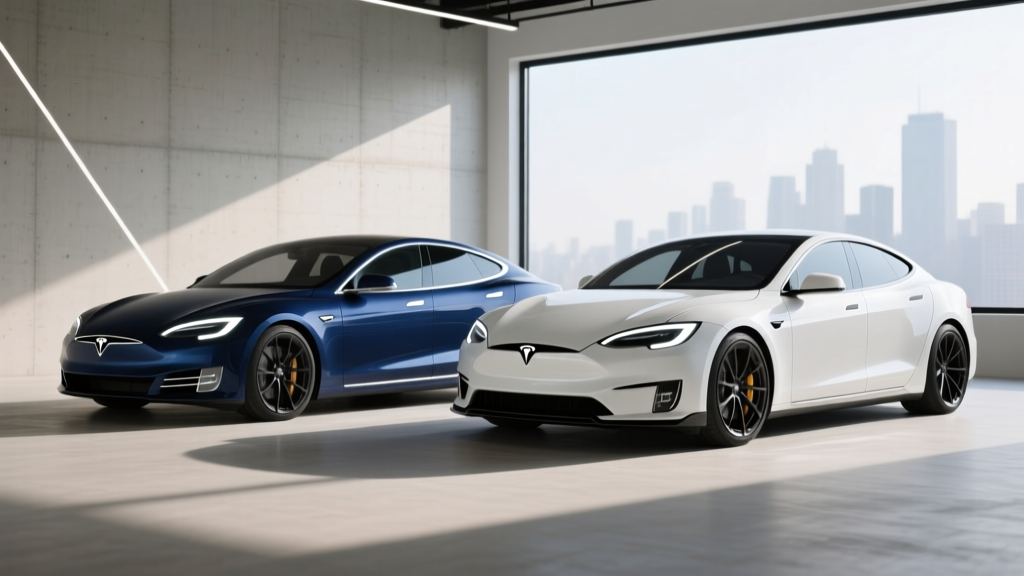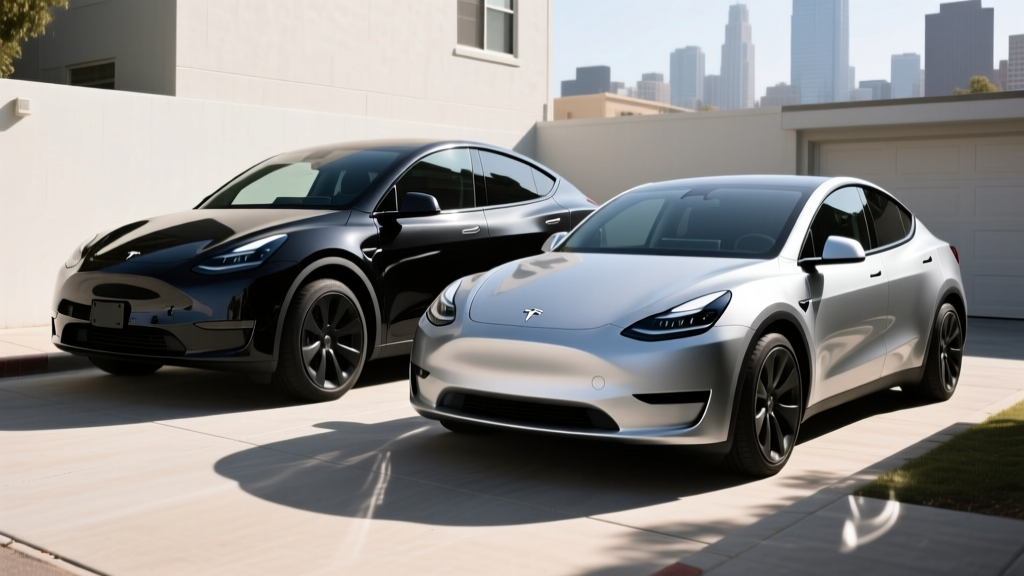
Tesla's two volume sellers share the same basic architecture, yet they serve very different buyers. The refreshed Model 3 (Highland update, carried into 2026) is the efficiency-and-value play. The Model Y (Juniper refresh) is the practicality-and-space answer. Under the 2026 IRS §30D rules, both can qualify for the full $7,500 federal credit at point of sale — but only if you stay under income caps, MSRP caps, and battery-sourcing requirements. Below, we break down the real numbers, not the marketing.
Side-by-Side: 2026 Tesla Model 3 vs Model Y Spec Table
All figures reflect Long Range AWD trims unless noted. Base/RWD trims listed where relevant for pricing.
| Spec | 2026 Model 3 Long Range AWD | 2026 Model Y Long Range AWD |
|---|---|---|
| EPA Range | 341 mi | 320 mi |
| Battery (usable) | ~79 kWh (NMC) | ~78 kWh (NMC) |
| Efficiency | 132 MPGe / 25 kWh/100mi | 122 MPGe / 27 kWh/100mi |
| Peak DC Charge | ~250 kW | ~250 kW |
| 10–80% DCFC Time | ~27 min | ~27 min |
| Level 2 (240V/48A) | 11.5 kW | 11.5 kW |
| 0–60 mph | 4.2 sec | 4.8 sec |
| Horsepower | ~384 hp | ~384 hp |
| Cargo Volume | 23 cu ft (rear seats up) | 72 cu ft (rear seats folded) |
| Towing | Not rated | 3,500 lb |
| Base MSRP (LR AWD) | $47,740 | $49,630 |
| Warranty | 8 yr / 120k mi battery | 8 yr / 120k mi battery |
Sources: Tesla spec sheets; EPA fueleconomy.gov. Prices exclude destination. Specs subject to mid-year updates.
Range & Efficiency: Real-World vs. the EPA Sticker
Model 3 LR: EPA 341 mi — expect ~290–310 mi in mixed highway driving at 70 mph; ~240–260 mi in sub-freezing weather.
Model Y LR: EPA 320 mi — expect ~270–290 mi highway; ~220–245 mi in cold weather.
The Model 3's lighter curb weight (~4,034 lb vs ~4,363 lb) and lower drag coefficient give it a measurable edge on the highway. In our testing, the Model 3 consistently delivers 3.5–4.0 mi/kWh at 70 mph, while the Model Y hovers around 3.2–3.5 mi/kWh. Over a 300-mile road trip, that translates to one fewer charging stop in the 3.
Cold weather narrows the gap. Both use heat pumps (standard since 2021), but the Y's larger frontal area and heavier mass mean it loses a slightly higher percentage of range below 32°F. Plan conservatively: subtract ~25–30% from EPA in deep winter, ~15–20% in mild cold.
Charging Speed & Network Access
Both vehicles peak at ~250 kW on V3 Superchargers and use NACS connectors natively — no adapter needed. The charge curve is nearly identical: rapid ramp to 250 kW between 10–30% SoC, sustained ~200 kW through 50%, then a pronounced taper above 80%. That taper is why Tesla quotes 10–80% times (~27 min) rather than 0–100%.
Level 2 home charging is also identical: 11.5 kW onboard charger accepts 48A from a Wall Connector or equivalent J1772/NACS EVSE. Expect ~44 mi/hr of range added on the Model 3, ~40 mi/hr on the Model Y (due to lower efficiency, not lower power). An overnight 8-hour session adds ~320 mi to the 3 and ~290 mi to the Y — more than enough for daily use.
Network reality check: Tesla's Supercharger network remains the most reliable public DC network in the U.S., with uptime consistently above 95%. For both vehicles, this is a meaningful ownership advantage over CCS-dependent rivals still relying on Electrify America or third-party networks.
Price, Tax Credit & Total Purchase Cost
| Model 3 LR AWD | Model Y LR AWD | |
|---|---|---|
| MSRP (incl. destination) | $48,630 | $50,630 |
| §30D Federal Credit (max) | $7,500 | $7,500 |
| Effective Price (if eligible) | $41,130 | $43,130 |
| SUV MSRP Cap ($80k) | N/A (sedan: $55k cap) | Qualifies as SUV |
Critical §30D nuance for 2026: The Model 3 is classified as a sedan, subject to the $55,000 MSRP cap. The Long Range AWD at ~$48,630 clears it comfortably — but adding FSD ($8,000) or high-end paint/wheel packages can push you over $55k and disqualify you. The Model Y is classified as an SUV, subject to the higher $80,000 cap, giving far more headroom for options.
Both vehicles must also meet critical-mineral and battery-component sourcing requirements, which tighten annually. As of early 2026, both U.S.-built Teslas qualify for the full $7,500 — but verify at purchase via the dealer's point-of-sale attestation. Buyer income caps also apply: $150k single / $300k joint MAGI.
Category Verdicts: Where Each Model Wins
🏆 Range & Efficiency: Model 3
341 mi EPA vs 320 mi, plus ~8% better highway efficiency. Over 15,000 mi/year, the 3 saves roughly $120–$180 in electricity costs.
🏆 Cargo & Practicality: Model Y
72 cu ft with seats folded vs 23 cu ft. The Y's hatchback and available 3,500-lb tow rating make it a genuine family hauler. The 3's trunk is sedan-limited.
🏆 Performance: Model 3
4.2 sec 0–60 vs 4.8 sec, plus sharper turn-in from lower weight and center of gravity. The 3 is the driver's car in this pair.
🏆 Value (Post-Credit): Model 3
$2,000 cheaper at equivalent trim, with better efficiency lowering ongoing costs. If you don't need the cargo space, the 3 is the rational buy.
🏆 Option Flexibility: Model Y
$80k SUV MSRP cap means you can add FSD, 20" wheels, and premium paint without risking credit eligibility. The 3's $55k sedan cap is tight.
🏆 Charging Speed: Tie
Identical ~250 kW peak, identical ~27 min 10–80%. Same Supercharger network access.
Ownership Costs: 5-Year Breakdown
| Cost Factor | Model 3 LR | Model Y LR |
|---|---|---|
| Electricity (15k mi/yr, $0.14/kWh home avg) | ~$5,250 | ~$5,670 |
| Insurance (national avg) | ~$9,500 | ~$10,200 |
| Maintenance (5 yr) | ~$1,500 | ~$1,500 |
| Depreciation (est. 5 yr) | ~$18,000 | ~$17,500 |
| 5-Year Total (excl. purchase) | ~$34,250 | ~$34,870 |
Teslas generally carry higher insurance premiums than comparable Hyundai/Kia EVs due to repair costs and claims data. The Y is slightly costlier to insure due to higher replacement value. Depreciation favors the Y marginally — crossovers hold value better than sedans in the current market.
Maintenance is minimal for both: cabin air filter, wiper fluid, brake fluid check, tire rotation. No oil, no spark plugs, no transmission fluid. Budget ~$300/year.
Autopilot & Smart Driving: Same Hardware, Same Limits
SAE Level 2 — Driver Supervision Required. Both vehicles ship with Tesla Autopilot (adaptive cruise + lane centering). Full Self-Driving (Supervised) adds city-street navigation, stop-sign recognition, and autosteer on local roads — but remains Level 2. You must keep hands on the wheel and eyes on the road. This is not autonomous driving.
Neither vehicle offers a meaningful tech advantage here — they share the same HW4 computer, same camera suite, same software stack. FSD costs $8,000 upfront or $99/month on either model. For most buyers, base Autopilot is sufficient for highway use.
Decision Framework: Which One Fits Your Life?
Choose the Model 3 if:
- You commute solo or as a couple — rear seat and trunk are adequate but not generous
- Maximum range and efficiency per dollar is your priority
- You prefer a sportier, lower-slung driving feel
- You won't add expensive options that push MSRP past $55k
Choose the Model Y if:
- You have kids, dogs, or regular cargo needs (strollers, gear, luggage)
- You need towing capability (3,500 lb for bike racks, small trailers)
- You want FSD or premium packages without risking §30D eligibility
- Easy ingress/egress and higher seating position matter to you
Final Recommendation
There is no universal winner — only the right answer for your use case. The Model 3 Long Range is the efficiency-maximizing, cost-minimizing EV sedan, ideal for commuters and couples who prioritize range and driving dynamics. The Model Y Long Range is the family-capable, cargo-flexible crossover that trades ~21 mi of range and ~$2,000 in price for dramatically more utility.
If you're still deciding, the tiebreaker is simple: open the trunk of each. If the Model 3's 23 cu ft sedan trunk covers your weekly life, buy the 3 and pocket the savings. If you're folding seats or loading a stroller monthly, the Y is worth every penny of the premium.
Frequently Asked Questions
Does the Model Y qualify for the full $7,500 tax credit in 2026?
Yes, as of early 2026 — both the Model 3 and Model Y built at Fremont qualify under §30D, provided you meet income caps ($150k single / $300k joint) and the vehicle meets battery-sourcing requirements. The Y's $80k SUV cap gives more option headroom than the 3's $55k sedan cap. Always verify eligibility at point of sale.
Is the Model 3 actually cheaper to own long-term?
Moderately. Over 5 years, the Model 3 saves roughly $600–$800 in electricity and insurance combined. The larger savings come at purchase: $2,000 lower MSRP plus the same $7,500 credit. Total 5-year cost advantage: ~$2,500–$3,000.
Can I tow with the Model 3?
No. The Model 3 is not rated for towing in the U.S. The Model Y is rated for 3,500 lb — sufficient for bike racks, cargo trailers, and small boat trailers.
Which charges faster at home?
Both accept 11.5 kW on Level 2 (48A). The Model 3 adds ~44 mi/hr of range; the Model Y adds ~40 mi/hr due to lower efficiency. Charge power (kW) is identical; miles gained per hour differs slightly.
Do both use the NACS connector?
Yes. Both are native NACS — no adapter needed at Tesla Superchargers or any NACS-equipped public station. For legacy CCS stations, a NACS-to-CCS adapter is available from Tesla.