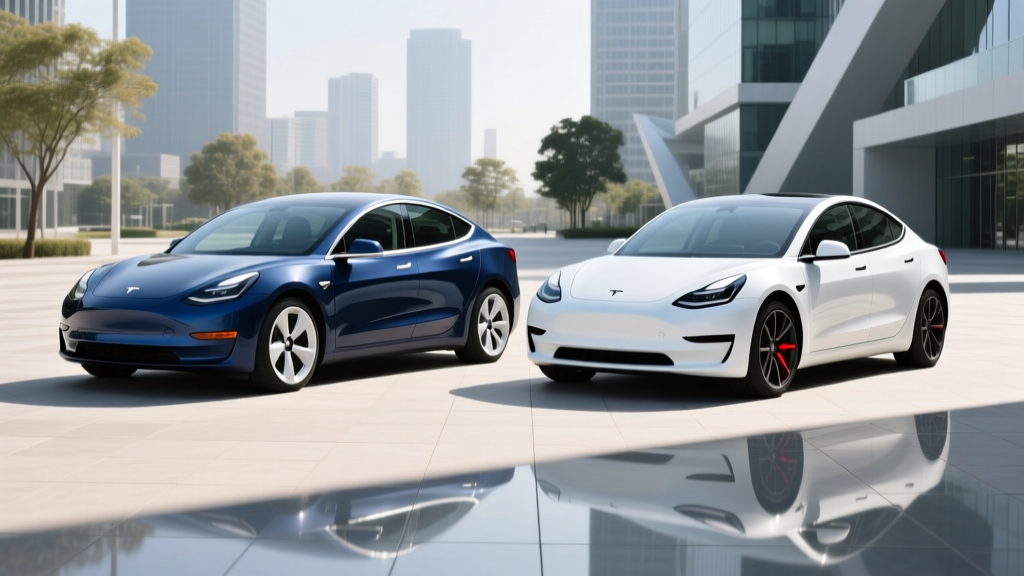
Two Teslas, two very different missions. The Model 3 is the volume-selling electric sedan that made EVs mainstream. The Model S is the flagship that proved electric cars could outperform supercars. For 2026, both have been refreshed, but the gap between them has narrowed in some areas and widened in others. This comparison breaks down every number that matters — range, charging curves, performance, cargo, pricing, and federal tax credit eligibility — so you can pick the one that actually fits your driving life and budget.
Side-by-Side Specs: Model 3 vs Model S at a Glance
Before we get into subjective impressions, here are the hard numbers for the most popular trims of each vehicle. All figures reflect 2026 model-year specifications. Battery chemistry is noted where confirmed by Tesla; usable capacity is the figure that matters for range calculations.
| Spec | 2026 Tesla Model 3 Long Range AWD | 2026 Tesla Model S Long Range |
|---|---|---|
| EPA Range | 363 mi | 402 mi |
| Battery (usable, chemistry) | ~79 kWh, NMC | ~95 kWh, NMC |
| Peak DC Fast Charge Rate | 250 kW | 250 kW |
| 10–80% DC Charge Time | ~25 min | ~28 min |
| Level 2 Charge Rate (max) | 11.5 kW | 11.5 kW |
| 0–60 mph | 4.2 sec | 3.1 sec |
| Horsepower | 346 hp | 670 hp |
| Efficiency (MPGe combined) | 134 MPGe | 120 MPGe |
| Cargo Volume (trunk + frunk) | 23 cu ft (trunk) + 3.1 cu ft (frunk) | 28 cu ft (trunk + hatch) + 3.1 cu ft (frunk) |
| Base MSRP | $47,740 | $79,990 |
| Federal §30D Tax Credit Eligibility | Potentially up to $7,500 (income & sourcing rules apply) | Not eligible (MSRP exceeds $55,000 sedan cap) |
| Drivetrain | Dual-motor AWD | Dual-motor AWD |
| Warranty (basic / battery) | 4 yr/50k mi / 8 yr/120k mi | 4 yr/50k mi / 8 yr/150k mi |
Sources: EPA / fueleconomy.gov, Tesla Model S specs, Tesla Model 3 specs.
Range and Efficiency: Real-World Expectations
On the EPA sticker, the Model S Long Range wins by 39 miles — 402 vs. 363. But EPA tests are conducted under controlled conditions that don't fully capture highway-speed driving, cold weather, or hilly terrain. Here's what to expect in practice:
Model 3 Long Range: EPA 363 mi → Expect ~290–310 mi at sustained 75 mph highway speeds; ~250–270 mi in freezing temperatures with cabin heat.
Model S Long Range: EPA 402 mi → Expect ~320–340 mi at sustained 75 mph; ~280–300 mi in freezing temperatures.
The Model S's larger battery gives it a bigger absolute buffer in adverse conditions, but the Model 3's lighter weight and smaller frontal area make it more efficient per mile (134 vs. 120 MPGe).
Efficiency matters beyond range. The Model 3 consumes roughly 25 kWh per 100 miles, while the Model S uses about 28 kWh per 100 miles. Over 15,000 annual miles and at a national average electricity rate of $0.17/kWh, the Model 3 costs roughly $638 per year to charge at home versus $714 for the Model S — a modest $76 annual gap. The difference grows if you rely heavily on DC fast charging, where rates average $0.35–$0.48/kWh on networks like Electrify America or Tesla Superchargers.
Charging Speed and Network Access
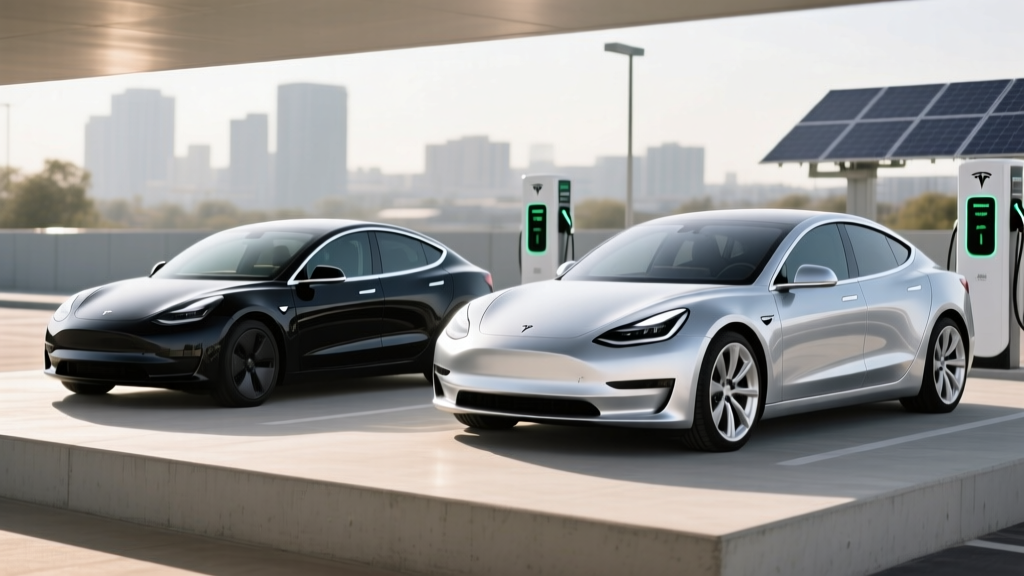
Both vehicles share Tesla's NACS (North American Charging Standard) connector and access to the Tesla Supercharger network — the most reliable and extensive DC fast-charging network in the U.S., with over 6,000 stalls nationally. Both also now access third-party networks (Electrify America, EVgo) via built-in NACS compatibility.
However, charging speed isn't identical despite sharing a 250 kW peak rate. The Model S's larger 95 kWh battery means it can sustain higher charge power longer before the battery management system tapers the curve. The Model 3's smaller 79 kWh pack hits its taper point sooner.
| Charging Scenario | Model 3 Long Range | Model S Long Range |
|---|---|---|
| Level 1 (120V, ~1.4 kW) | ~3–4 mi/hr | ~3–4 mi/hr |
| Level 2 (240V, 11.5 kW) | ~35 mi/hr, full charge ~7 hr | ~35 mi/hr, full charge ~9 hr |
| DC Fast (V3 Supercharger, 250 kW peak) | 10–80% in ~25 min | 10–80% in ~28 min |
| Miles added in 15 min (DC) | ~170 mi | ~185 mi |
The 3-minute difference in 10–80% charging is negligible for road trips. What matters more is preconditioning: both vehicles automatically warm the battery when you navigate to a Supercharger, which is essential for achieving peak charge rates. Without preconditioning (for example, if you pull into a charger without setting it as your navigation destination), expect charge speeds to be 30–50% slower until the pack warms up — especially in cold weather.
Performance and Driving Dynamics
This is where the Model S justifies a significant portion of its price premium. With 670 hp and a 3.1-second 0–60 time, the Model S Long Range accelerates like a sports car that happens to seat five. The Model 3 Long Range's 4.2-second sprint is genuinely quick by any normal standard, but it's a full second behind — a gap you feel merging onto highways or overtaking.
Beyond straight-line speed, the Model S rides on a more sophisticated adaptive air suspension that adjusts ride height and damping. It absorbs highway imperfections noticeably better than the Model 3's conventional coil springs. The Model S also has a longer wheelbase (116.5 in vs. 113.2 in), which translates to more stable high-speed cruising and a more planted feel.
The Model 3 compensates with lower weight (~3,890 lbs vs. ~4,560 lbs for the Model S). That makes it more nimble in city driving and tighter parking situations, and it contributes to the Model 3's superior efficiency. If your daily driving is mostly urban or suburban, the Model 3's agility may matter more than the Model S's raw power.
Interior, Tech, and Cargo
Both vehicles share Tesla's minimalist interior architecture centered on a 15.4-inch touchscreen (Model 3) or 17-inch touchscreen (Model S). Both run Tesla's latest software with access to streaming, gaming, and over-the-air updates. Both include Tesla's Basic Autopilot (a Level 2 driver-assist system — not self-driving; you must keep your hands on the wheel and eyes on the road at all times). Full Self-Driving (Supervised) is a $8,000 add-on for both, and it remains a Level 2 system despite its name.
Tesla Autopilot and FSD (Supervised) are SAE Level 2 driver-assistance systems. The driver must remain fully engaged and ready to take over at any moment. No Tesla vehicle currently offers Level 3 or higher autonomy. Only dedicated robotaxi services like Waymo (Level 4) operate without a human driver, and only in geofenced areas.
Where the Model S pulls ahead in the cabin:
- Second-row space: 3–4 inches more rear legroom, with available ventilated rear seats
- Cargo versatility: The Model S is a liftback/hatchback, so the rear opening is far larger for loading bulky items — 28 cu ft with seats up vs. the Model 3's 23 cu ft trunk
- Sound insulation: The Model S has noticeably quieter cabin noise at highway speeds
- Ventilated front seats: Standard on Model S; available on Model 3 but not standard on all trims
The Model 3's cabin is well-built for its price point after the 2024 Highland refresh, with ambient lighting, ventilated front seats, and a rear passenger screen. But the materials, sound deadening, and seat cushioning in the Model S reflect its premium positioning.
Pricing, Tax Credits, and Total Cost of Ownership
This is where the comparison gets complicated — and where the right answer depends entirely on your financial situation.
| Base MSRP | Model 3 LR: $47,740 | Model S LR: $79,990 |
| Federal §30D Credit | Potentially up to $7,500 (must meet income caps, battery sourcing, and critical mineral requirements) | $0 — MSRP exceeds the $55,000 sedan cap for §30D eligibility |
| Effective Starting Price (best case) | ~$40,240 (with full credit) | $79,990 (no federal credit available) |
| Price Gap (best case) | $39,750 | |
| Price Gap (no credit for either) | $32,250 | |
The §30D credit has strict rules: buyer AGI must not exceed $150k (single) / $300k (joint), the vehicle's MSRP must be ≤$55,000 for sedans, and battery components and critical minerals must meet domestic-sourcing thresholds that tighten annually. The credit can be applied as a point-of-sale rebate at the dealer. Always verify current eligibility on IRS.gov and consult a tax professional.
Five-year ownership cost considerations:
| Cost Factor (5 years, 75k mi) | Model 3 Long Range | Model S Long Range |
|---|---|---|
| Home charging (est. @ $0.17/kWh) | ~$3,188 | ~$3,570 |
| Insurance (national avg.) | ~$9,500 | ~$13,200 |
| Maintenance (tires, cabin filter, fluid top-offs) | ~$1,800 | ~$2,400 |
| Estimated depreciation (5 yr) | ~$18,000 | ~$32,000 |
| Total 5-yr operating cost (excl. purchase price) | ~$32,488 | ~$51,170 |
The Model S costs roughly $18,700 more to operate over five years, driven primarily by higher insurance premiums (the Model S's higher replacement value and repair costs push rates up ~35–40%), steeper depreciation on a higher purchase price, and slightly higher energy consumption. Combined with the ~$32,000–$40,000 purchase price gap, the Model 3 is dramatically cheaper to buy and own.
Category Winners: Where Each Tesla Excels
🏆 Range
Winner: Model S
402 mi EPA vs. 363 mi. The 39-mile advantage grows in cold weather thanks to the larger battery buffer. If you regularly drive 300+ miles between charges, the Model S gives you more margin.
🏆 Efficiency
Winner: Model 3
134 MPGe vs. 120 MPGe. The Model 3 goes further per kWh, saving money at every charge session and reducing your environmental footprint per mile.
🏆 Charging Speed
Winner: Tie
Both peak at 250 kW with similar 10–80% times (25 vs. 28 min). The Model 3's smaller battery fills slightly faster in absolute time, but the Model S adds slightly more range per minute thanks to its efficiency-to-capacity ratio.
🏆 Performance
Winner: Model S
670 hp and 3.1 seconds to 60 mph. The air suspension and longer wheelbase also deliver a more refined ride. This isn't close.
🏆 Value
Winner: Model 3
With a potential effective price of ~$40,240 after the federal credit, the Model 3 delivers 90% of the Tesla sedan experience for roughly half the cost. The five-year ownership gap exceeds $18,000.
🏆 Interior & Comfort
Winner: Model S
More rear legroom, hatchback cargo versatility, better sound insulation, and standard ventilated seats. The Model S is a genuine luxury sedan; the Model 3 is a well-equipped compact.
🏆 Tech & Software
Winner: Tie
Both run the same Tesla OS with identical features, OTA updates, Supercharger access, and Autopilot/FSD availability. The Model S has a slightly larger screen, but the software experience is the same.
🏆 Practicality / Daily Use
Winner: Model 3
Smaller footprint for city parking, lighter weight for tire wear, lower insurance, and the hatchback-like trunk is adequate for most daily cargo needs.
Decision Framework: Which Tesla Sedan Is Right for You?
Choose the Model 3 Long Range if:
- Your household income qualifies for the §30D credit (≤$150k single / $300k joint) and you want to maximize incentives
- Your typical daily driving is under 150 miles and you charge at home overnight
- You prioritize lowest total cost of ownership — purchase price, insurance, energy, and depreciation
- You live in a city or suburb where a smaller, nimbler sedan is easier to park and maneuver
- You don't regularly carry four adults on long trips (the Model 3's rear seat is adequate but not spacious)
Choose the Model S Long Range if:
- You regularly drive 300+ miles between charges and need the maximum range buffer, especially in cold climates
- You frequently carry rear-seat passengers who expect legroom and comfort
- You value performance (3.1-second 0–60) and adaptive air suspension ride quality
- You need hatchback cargo versatility for bulkier items (strollers, golf bags, luggage sets)
- The $80,000+ price and higher insurance costs fit your budget without strain, and the lack of a federal tax credit doesn't change the math for you
Final Recommendation
For most buyers, the Model 3 Long Range is the rational choice. It delivers 363 miles of EPA range, access to the full Supercharger network, Tesla's complete software suite, and brisk 4.2-second acceleration — all for an effective price that can dip below $41,000 with the federal credit. Its five-year operating costs are roughly $18,700 lower than the Model S, and it handles daily commuting, road trips, and family duty competently.
The Model S is the better car in isolation — more range, more power, more space, more refinement. But it's also nearly twice the price with no federal tax credit relief, and the real-world advantages over the Model 3 are incremental rather than transformational for most drivers. If you need the extra 39 miles of range, the hatchback cargo space, the rear-seat comfort, or the 670-hp thrill, the Model S earns its premium. If you don't, the Model 3 is the smarter allocation of your money.
One final note: if performance is your top priority and budget is less of a concern, consider the Model S Plaid ($89,990, 1,020 hp, 2.0-second 0–60, 359 mi EPA) — but understand that the Plaid sacrifices range and efficiency for its supercar-level speed, and it remains ineligible for the federal credit.
Frequently Asked Questions
Does the Tesla Model 3 qualify for the $7,500 federal tax credit?
The Model 3 Long Range may qualify for up to $7,500 under IRS §30D, but eligibility depends on three factors: (1) your adjusted gross income must not exceed $150,000 (single) or $300,000 (married filing jointly); (2) the vehicle's MSRP must be at or below the $55,000 sedan cap; and (3) the battery's critical minerals and components must meet domestic-sourcing thresholds that tighten each year. The credit can be transferred to the dealer as a point-of-sale rebate. Always verify your specific eligibility on IRS.gov and consult a tax professional before purchase.
Why doesn't the Model S qualify for the federal EV tax credit?
The §30D credit has an MSRP cap of $55,000 for sedans. The Model S starts at $79,990, which exceeds this cap. There is no workaround — even if your income qualifies and the battery sourcing meets requirements, the vehicle's price disqualifies it. The Model 3, with its sub-$55,000 MSRP, clears this threshold.
Is the Model S worth $32,000+ more than the Model 3?
Objectively, the Model S offers 39 more miles of EPA range, 324 more horsepower, adaptive air suspension, a hatchback, more rear-seat space, and better sound insulation. Whether that's "worth it" depends on your budget and priorities. For daily commuting and most road trips, the Model 3 covers the same ground with minimal compromise. The Model S premium buys luxury, performance, and range margin — valuable to some, unnecessary for others.
Which Tesla sedan charges faster on road trips?
Both peak at 250 kW on V3 Superchargers. The Model 3 completes a 10–80% charge about 3 minutes faster (~25 vs. ~28 minutes) due to its smaller battery. In practice, the difference is negligible — both add roughly 170–185 miles of range in a 15-minute stop. Remember to precondition the battery by navigating to the Supercharger in the car's navigation system; skipping this step can slow charge speeds significantly.
How does cold weather affect range on the Model 3 vs. Model S?
Both vehicles experience 20–30% range reduction in sustained freezing temperatures, primarily due to cabin heating demands and increased battery resistance. The Model S's larger battery provides a bigger absolute buffer (roughly 280–300 real-world miles in the cold vs. 250–270 for the Model 3). Both have heat pumps (standard), which significantly reduce the heating penalty compared to older resistive-heater EVs. Preconditioning the cabin and battery while still plugged in at home is the single most effective way to preserve range in cold weather.
Do both cars have the same Autopilot and self-driving features?
Yes. Both come standard with Tesla's Basic Autopilot (adaptive cruise control and lane-keeping — SAE Level 2). Both offer Full Self-Driving (Supervised) as an $8,000 option, which adds automatic lane changes, traffic light/stop sign recognition, and navigation-guided driving. Critically, FSD (Supervised) is still SAE Level 2 — you must remain fully attentive with hands on the wheel. Neither vehicle is self-driving. Tesla's hardware (HW4/AI4) is identical in both 2026 models.