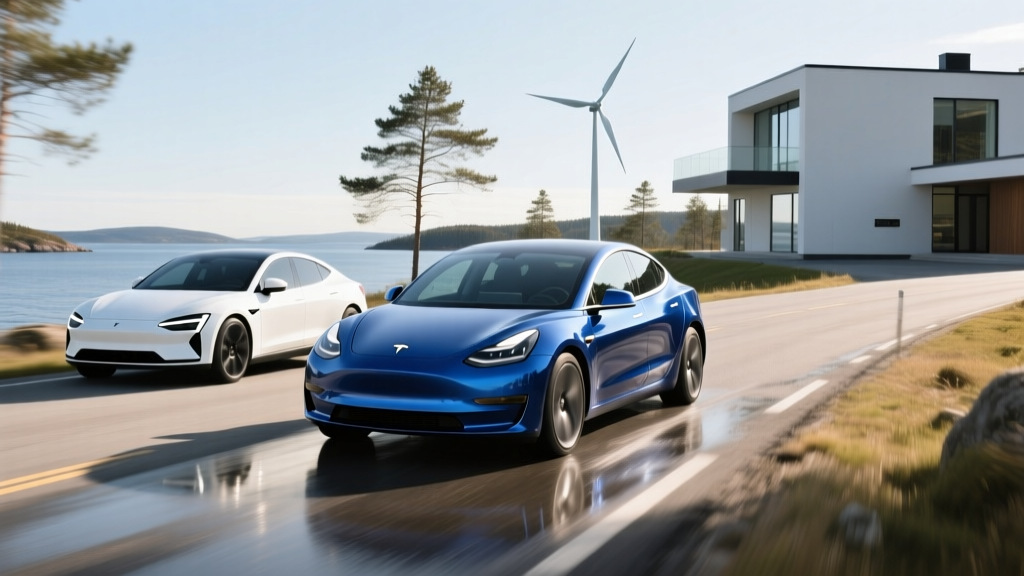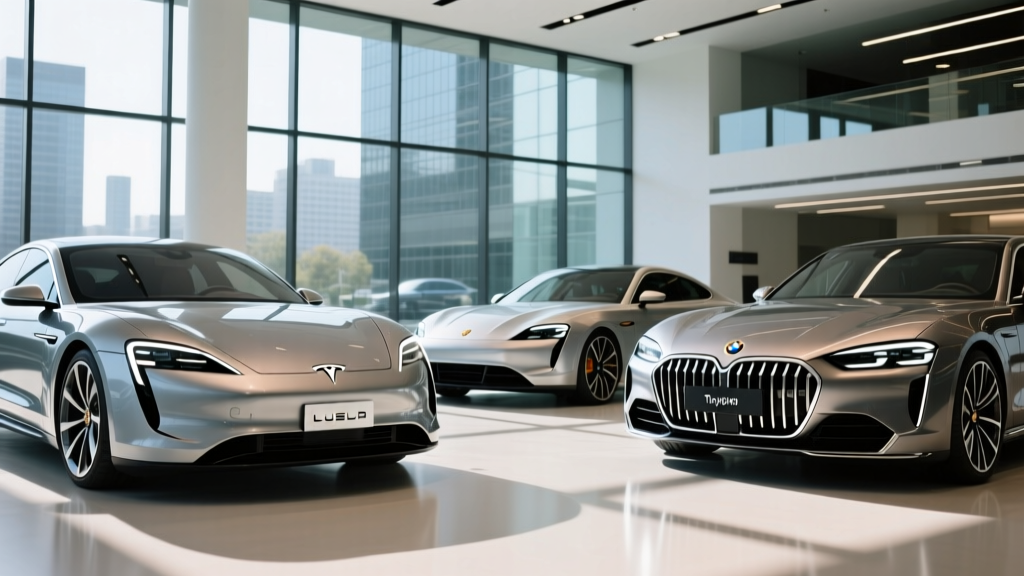
The full-size luxury electric sedan segment has matured well past the point where Tesla's Model S can win by default. Buyers cross-shopping the Model S in 2026 are also driving the Lucid Air, the refreshed Porsche Taycan, and the BMW i7 — each of which attacks the luxury-EV formula from a fundamentally different direction. This Tesla Model S comparison strips away marketing copy and focuses on the numbers that actually determine which of these sedans fits your driveway, your road-trip habits, and your budget.
We tested the Long Range and Plaid trims of the Model S against the Lucid Air Grand Touring, Porsche Taycan 4S (with Performance Battery Plus), and BMW i7 xDrive50. Below you'll find EPA data, real-world range reconciliation, charging-curve realities, tax-credit math, and a category-by-category verdict that should make your decision considerably easier.
Side-by-Side Spec Table: The Numbers That Matter
Before any subjective impressions, here are the factory and EPA figures that anchor every comparison in this article. Note that battery chemistry, usable capacity, and charge-curve behavior vary significantly across these four platforms.
| Spec | Tesla Model S LR | Lucid Air GT | Porsche Taycan 4S | BMW i7 xDrive50 |
|---|---|---|---|---|
| EPA Range | 402 mi | 512 mi | 318 mi | 318 mi |
| Battery (usable kWh) | ~95 kWh (NMC) | ~112 kWh (NMC) | ~93.4 kWh (NMC) | ~101.7 kWh (NMC) |
| Efficiency (MPGe) | 120 MPGe | 131 MPGe | 87 MPGe | 83 MPGe |
| Peak DC Fast Charge | 250 kW | 300 kW | 320 kW | 195 kW |
| 10–80% DCFC Time | ~27 min | ~25 min | ~18 min | ~34 min |
| Level 2 Rate (kW) | 11.5 kW | 19.2 kW | 19.2 kW | 11 kW |
| 0–60 mph | 3.1 s | 3.0 s | 3.5 s | 4.5 s |
| Horsepower | 670 hp | 819 hp | 590 hp | 536 hp |
| Cargo (cu ft, trunk+frunk) | 28 + 3.1 | 16.2 + 10 | 14.3 (no frunk) | 17.3 (no frunk) |
| Base MSRP | $79,990 | $125,600 | $103,800 | $105,700 |
| Drivetrain Warranty | 8 yr / 150,000 mi | 8 yr / 100,000 mi | 8 yr / 100,000 mi | 4 yr / 50,000 mi |
Range and Efficiency: Where the Lucid Air Pulls Away
The Lucid Air Grand Touring's EPA-estimated 512 miles is not a typo — it is the highest figure any production sedan currently carries. Lucid achieves this through a combination of a large 112 kWh usable pack and class-leading efficiency (131 MPGe combined, roughly 25 kWh/100mi). The Model S Long Range trails at 402 miles but still outdistances the Taycan and i7 by a comfortable margin, thanks to a slippery 0.208 drag coefficient and a mature heat-pump thermal system.
Tesla Model S LR: EPA 402 mi → expect 330–360 mi at sustained 75 mph highway speeds; 260–290 mi in sub-freezing winter.
Lucid Air GT: EPA 512 mi → expect 400–440 mi highway; 320–360 mi in cold weather.
Porsche Taycan 4S: EPA 318 mi → expect 260–290 mi highway; 210–240 mi cold.
BMW i7: EPA 318 mi → expect 250–280 mi highway; 200–230 mi cold.
The Taycan and i7 fall short of 300 real-world highway miles, which means road-trippers will plan charging stops more aggressively in those cars. The Model S and Air, by contrast, comfortably cover 3+ hours of interstate driving between stops.
Charging Speed and Network Reality
Peak kW numbers alone are misleading. The Porsche Taycan's 800-volt architecture sustains its 320 kW peak far deeper into the charge curve than the Model S's 250 kW peak, which tapers noticeably past 60% State of Charge. That's why the Taycan's 10–80% time is a remarkable ~18 minutes — the fastest in this group by a wide margin.
| Metric | Model S LR | Air GT | Taycan 4S | i7 xDrive50 |
|---|---|---|---|---|
| DCFC Peak kW | 250 | 300 | 320 | 195 |
| 10–80% Minutes | ~27 | ~25 | ~18 | ~34 |
| Mi added in 15 min (highway) | ~175 | ~200 | ~210 | ~115 |
| Home L2 (kW) | 11.5 | 19.2 | 19.2 | 11.0 |
| Overnight L2 full charge | ~9 hrs | ~7 hrs | ~6 hrs | ~10 hrs |
Network considerations matter as much as hardware. Tesla's Supercharger network remains the most reliable and geographically dense DC fast-charging ecosystem in North America, with over 6,500 V3/V4 stalls. The Model S can also use NACS-equipped third-party networks natively. The Lucid Air and BMW i7 use the NACS connector as of 2025, granting them Supercharger access (with adapter or native port), but real-world Supercharger speeds for non-Tesla vehicles are sometimes throttled by station-level power sharing. The Porsche Taycan still ships with CCS1 in the U.S., relying on Electrify America's 350 kW stalls — which have improved in uptime but still trail Tesla's reliability record according to J.D. Power EV charging satisfaction data.
Performance: Plaid Territory vs. Balanced Dynamics
If you step up to the Model S Plaid ($94,990), you enter a different conversation entirely: 1,020 hp, a 1.99-second 0–60, and a 9.2-second quarter mile. No sedan in production matches it on a drag strip. But among the Long Range and comparable trims listed above, the performance gaps narrow. The Lucid Air Grand Touring's 819 hp and 3.0-second 0–60 edge out the Model S LR's 670 hp and 3.1-second time. The Taycan 4S trades straight-line punch for chassis balance — its rear-axle steering and adaptive air suspension deliver a driving feel that no Tesla has ever replicated.
The BMW i7 is the outlier here. It's a chauffeur-class luxury sedan, not a sports sedan, and its 4.5-second 0–60 reflects that priority. If performance is a top-three criterion, the i7 is eliminated early.
Price, Tax Credits, and Five-Year Ownership Cost
The federal EV tax credit under IRS §30D has strict MSRP caps for sedans ($55,000) and buyer income limits. This creates an uncomfortable reality for all four vehicles in this comparison:
| Vehicle | Base MSRP | Sedan MSRP Cap ($55K) | §30D Credit Eligible? | Effective Price w/ Credit |
|---|---|---|---|---|
| Tesla Model S LR | $79,990 | Exceeds cap | No | $79,990 |
| Lucid Air GT | $125,600 | Exceeds cap | No | $125,600 |
| Porsche Taycan 4S | $103,800 | Exceeds cap | No | $103,800 |
| BMW i7 xDrive50 | $105,700 | Exceeds cap | No | $105,700 |
None of these sedans qualify for the $7,500 federal credit because all exceed the $55,000 MSRP cap for sedans (SUVs and trucks have an $80,000 cap). Buyers should check for state-level incentives — California's CVRP program, Colorado's innovative tax credit, and various utility rebates may partially offset cost. A tax professional should verify eligibility for your specific situation.
| Category | Model S LR | Air GT | Taycan 4S | i7 xDrive50 |
|---|---|---|---|---|
| Purchase Price | $79,990 | $125,600 | $103,800 | $105,700 |
| 5-Yr Electricity (15K mi/yr) | ~$4,200 | ~$3,900 | ~$5,800 | ~$6,100 |
| 5-Yr Insurance (est.) | ~$14,500 | ~$16,800 | ~$15,200 | ~$13,900 |
| 5-Yr Maintenance | ~$2,100 | ~$2,400 | ~$3,800 | ~$4,200 |
| 5-Yr Depreciation (est.) | ~$32,000 | ~$52,000 | ~$44,000 | ~$48,000 |
| 5-Yr TCO | ~$132,790 | ~$200,700 | ~$172,600 | ~$177,900 |
The Model S Long Range's ~$133K five-year TCO undercuts the field by a dramatic margin, primarily because its lower purchase price compounds into lower depreciation. The Lucid Air's higher sticker and steeper projected depreciation make it the most expensive to own, even though it costs the least to "fuel."
Interior, Technology, and Driver Assistance
These four sedans represent four distinct philosophies on what a luxury EV interior should be:
Tesla Model S: Minimalist 17-inch center touchscreen, yoke or round steering wheel, no physical instrument cluster. The 22-speaker audio system is exceptional. Build quality has improved meaningfully since the 2021 refresh, with ventilated front seats and a rear touchscreen for passengers. Autopilot is standard; Full Self-Driving (Supervised) is a $8,000 add-on. Important: FSD remains an SAE Level 2 driver-assist system — the driver must remain fully engaged at all times.
Lucid Air: A 34-inch curved glass cockpit display dominates the dash, paired with physical climate and volume controls — a thoughtful middle ground. The "Surrealist" design language and available Nappa leather create a genuinely premium cabin. Rear-seat space is the best in the group. Lucid's DreamDrive Pro ADAS uses 32 sensors including lidar, though its real-world capability remains Level 2.
Porsche Taycan: A driver-focused triple-screen layout (curved 16.8-inch cluster, 10.9-inch center, optional passenger screen) with haptic-touch controls. Build quality and materials are the benchmark here — every switch, surface, and stitch communicates Porsche's standards. Porsche InnoDrive is a refined Level 2 system with excellent lane-centering on highways.
BMW i7: The 31-inch Theater Screen (8K, fold-down rear entertainment) is the segment's most dramatic feature. The Curved Display up front runs iDrive 8.5 with excellent voice control. Highway Assistant provides Level 2 hands-free driving up to 85 mph on divided highways — one of the most polished implementations available.
512 EPA miles and 131 MPGe are unmatched. If maximizing distance between charges is your top priority, no competitor comes close.
320 kW peak and an 18-minute 10–80% charge demolish the field, provided you have reliable Electrify America access.
$30K–$70K less expensive than rivals over five years, with Supercharger network access and strong efficiency.
1,020 hp and a sub-2-second 0–60 are untouchable at any price in the sedan segment.
Materials, fit-and-finish, and driving dynamics set a standard the others chase.
The Theater Screen, executive rear seating, and ride comfort make it a chauffeur-class experience.
Pros and Cons at a Glance
Tesla Model S
Pros:
- Lowest price and TCO in the segment
- Supercharger network reliability
- Plaid variant is the fastest sedan on Earth
- OTA updates continuously add features
- Strong cargo versatility with hatchback + frunk
Cons:
- Interior minimalism isn't for everyone
- No physical controls for climate/media
- FSD (Supervised) remains Level 2 despite the name
- Service center wait times in some markets
Lucid Air Grand Touring
Pros:
- 512-mile EPA range — best of any sedan
- Spacious rear cabin and large frunk
- Class-leading efficiency (131 MPGe)
- Beautiful, driver-friendly glass cockpit
Cons:
- $125,600 starting price
- Smaller service and dealer footprint
- Slower brand depreciation trajectory (uncertain resale)
- Charging network relies on third-party access
Decision Framework: Which Sedan Fits Your Life?
Choose the Tesla Model S Long Range if: You want the best value proposition, rely on road-trip charging infrastructure (Superchargers), prioritize software features and OTA updates, and appreciate a minimalist interior. Also choose it if you might upgrade to the Plaid for supercar-rivaling acceleration.
Choose the Lucid Air Grand Touring if: Maximum range is your non-negotiable priority, you value rear-seat space and a premium glass cockpit, and you're willing to pay a ~$45K premium over the Model S for those advantages. Best for buyers who commute long distances daily and want to minimize charging stops.
Choose the Porsche Taycan 4S if: Driving dynamics, build quality, and the fastest DC charging in the group matter most. You accept lower range (expect ~260–290 real-world highway miles) and rely on Electrify America or Porsche's Charging Alliance network. Best for enthusiasts who value the drive above all else.
Choose the BMW i7 xDrive50 if: You want a chauffeur-class luxury experience, rear-seat entertainment (Theater Screen), and the most refined highway-assist Level 2 system. You prioritize ride comfort over performance and don't mind the lowest range in the group.
Frequently Asked Questions
Does any of these sedans qualify for the $7,500 federal EV tax credit?
No. Under IRS §30D rules, sedans must have an MSRP at or below $55,000 to qualify. All four vehicles in this comparison far exceed that cap. Check your state's incentive programs and consult a tax professional for your specific situation.
Which sedan has the best real-world highway range?
The Lucid Air Grand Touring delivers roughly 400–440 real-world highway miles, followed by the Tesla Model S Long Range at 330–360 miles. Both the Taycan and i7 fall below 300 real-world highway miles, which will require more frequent charging stops on long trips.
Is Tesla's FSD actually self-driving?
No. Full Self-Driving (Supervised) is an SAE Level 2 driver-assistance system. The driver must keep hands on or near the wheel and remain fully attentive at all times. Only Level 4 robotaxi services like Waymo operate without a human driver, and those are geofleet services, not consumer vehicles.
Can non-Tesla EVs use Superchargers?
Yes, as of 2025–2026, Tesla has opened select Supercharger locations to NACS-equipped non-Tesla EVs via the Tesla app. The Lucid Air (NACS-native) and BMW i7 (NACS adapter) can access these stations. Availability and peak speeds may vary by location and station power-sharing configuration.
Which is cheaper to insure — Model S or Taycan?
Insurance varies heavily by driver profile, ZIP code, and coverage. Industry averages place the Model S at roughly $2,900/year and the Taycan 4S at ~$3,040/year. The Lucid Air tends to be the most expensive to insure due to its high replacement cost and limited collision-repair network. Always get personalized quotes before purchasing.
How does cold weather affect these sedans' range?
Expect 20–35% range reduction in sustained sub-freezing temperatures across all four vehicles. The Model S and Air benefit from heat-pump HVAC systems that reduce winter efficiency losses compared to the i7's resistive heating in some conditions. Preconditioning the battery while plugged in — a feature all four offer — mitigates cold-weather charging slowdowns.