The Short Answer on Renault EVs for US Buyers
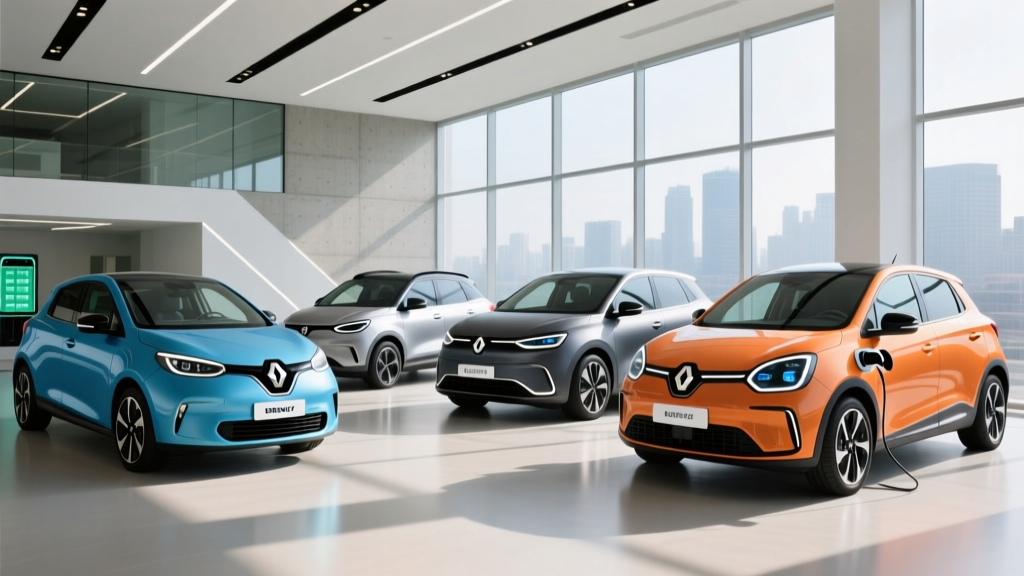
Renault does not sell new electric vehicles in the United States as of 2026. The Renault Group exited the US passenger-car market decades ago and currently focuses its EV sales on Europe, Latin America, and select Asian markets. Models like the Renault 5 E-Tech, Renault Scenic E-Tech, and Renault Megane E-Tech are not available through any US dealer network, are not EPA-certified, and do not qualify for the federal §30D tax credit.
If you're searching for a Renault EV because you've seen coverage of these compelling European models, your practical options are: (1) wait for any potential future US re-entry (unconfirmed), (2) consider a grey-market import with significant regulatory hurdles, or (3) look at comparable EVs already sold in the US from Hyundai, Kia, Volkswagen, or Chevrolet that match Renault's price and range positioning.
Why Renault EVs Are Generating Buzz — and Why US Buyers Can't Have Them
Renault's current EV portfolio is genuinely competitive in Europe. The retro-styled Renault 5 E-Tech launched in 2024 and won the 2025 European Car of the Year award, offering up to 400 km (WLTP) of range — roughly 220–240 miles EPA-equivalent — from a 52 kWh NMC battery at a starting price around €25,000 in France. The larger Scenic E-Tech delivers up to 625 km WLTP (~340–360 miles EPA-equivalent) from an 87 kWh pack, also winning European Car of the Year in 2024.
These are well-executed vehicles with competitive charging speeds, modern interiors, and aggressive European pricing. But none of this matters for US buyers because:
- No US dealer network: Renault has no authorized passenger-vehicle dealerships in the United States. The Renault-Nissan-Mitsubishi Alliance operates in the US through Nissan and Mitsubishi channels only.
- No EPA certification: Vehicles sold in the US must meet EPA emissions and fuel-economy testing standards. Renault EVs have not undergone EPA range and efficiency certification, meaning no official MPGe or range figures exist on fueleconomy.gov.
- No NHTSA compliance: US-market vehicles must meet Federal Motor Vehicle Safety Standards (FMVSS). European-spec Renaults are homologated to UNECE standards, which differ in areas like lighting, crash structures, and mirror requirements.
- No federal tax credit eligibility: The IRS §30D clean vehicle credit requires the vehicle to be assembled in a qualifying manner, meet critical-mineral and battery-component sourcing rules, and appear on the IRS's official eligible-vehicle list. No Renault model qualifies.
Renault's 2026 EV Lineup: Specs That Make US Enthusiasts Jealous
For reference — and to help you identify comparable US-market alternatives — here are the key specifications of Renault's current European EV lineup. Note that all range figures are WLTP, which tends to run 10–20% higher than EPA estimates for the same vehicle.
| Model | Battery (kWh usable) | WLTP Range | Est. EPA-Equiv. Range | Peak DC Charge (kW) | 10–80% DC Time | 0–100 km/h | EU Starting Price |
|---|---|---|---|---|---|---|---|
| Renault 5 E-Tech (52 kWh) | 52 (NMC) | 400 km / 249 mi | ~220 mi | 100 kW | ~30 min | 8.0 sec | ~€25,000 |
| Megane E-Tech (60 kWh) | 60 (NMC) | 450 km / 280 mi | ~245 mi | 130 kW | ~30 min | 7.4 sec | ~€38,000 |
| Scenic E-Tech (87 kWh) | 87 (NMC) | 625 km / 388 mi | ~340 mi | 150 kW | ~37 min | 7.9 sec | ~€40,000 |
Sources: Renault Group press specifications; WLTP-to-EPA conversion is an estimate based on typical adjustment factors and may not reflect actual EPA results if these vehicles were ever certified.
US-Market Alternatives That Match Renault's EV Positioning
If you're drawn to what Renault offers — compact footprint, competitive range, value pricing — here are US-market EVs that occupy similar territory. All are EPA-certified, available through US dealers, and potentially eligible for the §30D tax credit (subject to MSRP caps, buyer income limits, and battery-sourcing requirements).
| Model | Battery (kWh) | EPA Range | Peak DC Charge (kW) | 10–80% DC Time | 0–60 mph | Base MSRP | §30D Eligible? |
|---|---|---|---|---|---|---|---|
| Chevrolet Equinox EV (LT2 FWD) | 85 (NMC) | 319 mi | 150 kW | ~32 min | 8.1 sec | $34,900 | Yes (verify sourcing) |
| Hyundai Kona Electric (SEL) | 64.8 (NMC) | 261 mi | 100 kW | ~43 min | 7.6 sec | $34,975 | No (Korea assembly) |
| Volkswagen ID.4 (Pro) | 82 (NMC) | 291 mi | 170 kW | ~28 min | 7.7 sec | $40,290 | Yes (TN assembly) |
| Kia Niro EV (Wind) | 64.8 (NMC) | 239 mi | 85 kW | ~45 min | 7.2 sec | $40,975 | No (Korea assembly) |
Source: fueleconomy.gov and manufacturer US spec sheets. Tax-credit eligibility depends on current IRS sourcing rules — always verify at irs.gov before purchasing.
What a Renault 5 E-Tech Would Cost vs. a US Alternative — If You Could Buy One
To illustrate the pricing gap that makes Renault's European lineup so tantalizing, here's a five-year cost comparison between the Renault 5 E-Tech (hypothetical US pricing) and the closest US-market equivalent, the Chevrolet Equinox EV:
| Cost Category | Renault 5 E-Tech (Hypothetical US) | Chevrolet Equinox EV LT2 |
|---|---|---|
| Purchase Price (est.) | $28,000 (if imported, excl. tariffs) | $34,900 |
| Federal Tax Credit | $0 (not eligible) | Up to $7,500 (if sourcing qualifies) |
| Net Purchase Cost | $28,000 | $27,400 |
| Home Charging (5 yrs, 12k mi/yr @ $0.14/kWh) | $2,800 (est. 3.5 mi/kWh) | $2,860 (est. 3.4 mi/kWh) |
| Maintenance (5 yrs) | $1,500 (est.) | $1,500 |
| Insurance (5 yrs, avg.) | $8,500 (est., import surcharge) | $7,500 |
| Total 5-Year Cost | $40,800 | $39,260 |
The Renault 5's lower sticker is offset by tax-credit ineligibility and likely higher insurance for a grey-market import. The Equinox EV, after the federal credit, actually costs less upfront — and comes with a US dealer network for warranty service.
EV vs. Gas: The Cost Comparison That Matters
If you're weighing any compact EV against a gas-powered equivalent (say, the Renault 5 vs. a Honda Civic, or the Equinox EV vs. a Toyota RAV4), the math increasingly favors electric — but only if you can charge at home.
| Vehicle Type | Efficiency | Cost per Mile | Annual Cost |
|---|---|---|---|
| Compact EV (home Level 2, $0.14/kWh avg.) | 3.5 mi/kWh | $0.04 | $480 |
| Compact EV (public DC fast charging, $0.40/kWh avg.) | 3.5 mi/kWh | $0.11 | $1,370 |
| Gas Compact Car (30 MPG combined, $3.40/gal) | 30 MPG | $0.11 | $1,360 |
The takeaway: Home charging makes an EV roughly 65% cheaper to fuel than a gas car. But if you rely exclusively on public DC fast charging, your per-mile cost is essentially the same as gasoline. This is why home charging access is the single most important factor in EV ownership satisfaction.
Common Renault EV Misconceptions — Addressed with Facts
| Myth | Fact |
|---|---|
| "I can just import a Renault 5 from Europe." | Federal law requires imported vehicles to comply with FMVSS standards. Converting a European-spec Renault to US compliance typically costs $15,000–$30,000+ in modifications, testing, and certification — if it's possible at all. Vehicles less than 25 years old face strict requirements. |
| "Renault is coming back to the US soon." | As of early 2026, Renault Group has made no official announcement of a US passenger-vehicle re-entry. The Alliance's US strategy runs through Nissan. Any future return would likely require at least 2–3 years of lead time for homologation and dealer setup. |
| "The Renault 5 costs $27,000, so it would be that price in America." | European prices include VAT (typically 20%) but exclude the costs of US compliance, shipping, tariff adjustments, and dealer markup. A hypothetical US-spec Renault 5 would likely start closer to $30,000–$33,000 before incentives. |
| "WLTP range is the same as EPA range." | WLTP testing tends to produce range figures 10–20% higher than EPA testing for the same vehicle. A Renault 5 rated at 400 km WLTP would likely achieve roughly 220–240 miles EPA, not 249 miles. |
First-Time EV Buyer? Here's What Actually Matters
Whether you were drawn to this article by Renault's European buzz or you're simply researching your first EV, these are the factors that determine real-world satisfaction:
Home Charging Access
Over 80% of EV charging happens at home. A Level 2 home charger (240V, 32–48 amps) adds roughly 25–35 miles of range per hour and costs $500–$2,500 installed depending on your electrical panel. If you live in an apartment or lack a dedicated parking spot with electrical access, plan for public charging costs and time.
Real-World Range vs. EPA Stickers
EPA range estimates assume mixed driving. Expect to lose:
- 15–30% in cold weather (below 32°F) due to battery chemistry and cabin heating demands
- 10–15% at sustained highway speeds (75+ mph) due to aerodynamic drag
- 5–10% when using DC fast charging regularly due to charging-curve taper — you rarely charge from 0–100% at peak speed
The §30D Tax Credit Reality
The federal clean vehicle credit can reduce your tax liability by up to $7,500, but eligibility is complex:
- Vehicle MSRP must not exceed $55,000 (sedans) or $80,000 (SUVs/trucks)
- Buyer adjusted gross income must not exceed $150K (single) / $300K (joint)
- Battery components and critical minerals must meet phased-in sourcing requirements
- Credit can be transferred to the dealer as a point-of-sale discount
Always verify current eligibility on the IRS clean vehicle credit page before signing a purchase agreement.
Decision Framework: What to Do If You Want a Renault EV
Choose a US-market alternative (Equinox EV, ID.4, Kona Electric) if:
- You need a vehicle now and want full warranty coverage
- You want to take advantage of the §30D tax credit
- You value a local dealer network for service and recalls
- You finance through a US lender (grey-market imports complicate financing)
Wait and monitor Renault's US plans if:
- You're 2–3 years out from a purchase and want to see if Renault announces US re-entry
- You specifically want the Renault 5's retro design and are willing to wait
- You follow Alliance news and will track any Nissan-Renault channel-sharing announcements
Consider a grey-market import only if:
- You have $15,000–$30,000+ beyond the vehicle cost for federalization
- You accept no warranty coverage and limited service options
- You understand the vehicle may not be insurable through standard carriers
- You're doing it as a passion project, not as practical transportation
Will Renault Ever Return to the US?
Renault last sold cars in the United States in the late 1980s, when the Renault Alliance and Encore (built by AMC in Kenosha, Wisconsin) failed to gain lasting traction. Since then, the Alliance structure has assigned Nissan as the primary brand for the US market, while Renault focuses on Europe and emerging markets.
The calculus could shift. The US EV market is growing, and Renault's competitive European lineup — particularly the value-oriented Renault 5 — would slot into a price segment where US offerings remain thin. But any re-entry would require:
- EPA and NHTSA homologation for each model (12–24 months)
- A dealer or direct-sales network build-out
- Navigation of US battery-sourcing rules for tax-credit eligibility
- Resolution of potential tariff impacts on European-built vehicles
Until Renault makes an official announcement, treat any "Renault coming to America" coverage as speculative.
Frequently Asked Questions
Can I buy a Renault 5 E-Tech in the United States?
No. As of 2026, Renault does not sell any passenger vehicles in the US market. The Renault 5 E-Tech is available in Europe, with deliveries beginning in early 2025. There is no US-spec version, no EPA certification, and no dealer network.
How much would a Renault EV cost if imported to the US?
Beyond the European purchase price (roughly €25,000–€40,000 depending on model), expect $15,000–$30,000+ in shipping, federalization, compliance modifications, and registration costs. The vehicle would also be ineligible for the federal §30D tax credit.
What US EV is closest to the Renault 5 E-Tech?
The Chevrolet Equinox EV (319 mi EPA range, $34,900 base) and the Hyundai Kona Electric (261 mi EPA, $34,975) are the closest US-market matches in terms of compact crossover positioning and value pricing. Neither replicates the Renault 5's retro styling, but both offer competitive range and US warranty coverage.
Does Renault share EV technology with Nissan?
Yes. The Renault-Nissan-Mitsubishi Alliance shares platforms and powertrain technology. The Renault Megane E-Tech and Nissan Ariya share elements of the CMF-EV platform. However, Alliance vehicles are engineered and certified separately for each market, and Nissan's US EV lineup (Ariya, Leaf) goes through its own EPA/NHTSA certification process.
Is the Renault Scenic E-Tech the longest-range Renault EV?
Yes. The Scenic E-Tech with the 87 kWh battery pack is rated at up to 625 km (388 mi) WLTP, which would translate to roughly 340–360 miles under EPA testing. This makes it competitive with long-range offerings from Tesla, Hyundai, and BMW — but again, only in European markets.
Will Renault EVs qualify for the US federal tax credit if they ever launch here?
Not automatically. To qualify for the §30D credit, any future US-spec Renault would need to meet MSRP caps ($55,000 for cars, $80,000 for SUVs), buyer income limits, and battery-component/critical-mineral sourcing requirements. European-built vehicles face additional scrutiny under current sourcing rules. Eligibility would need to be confirmed on the IRS eligible-vehicle list at the time of purchase.