Quick Answer: Porsche currently sells one electric SUV in the U.S.: the Macan Electric (starting at ~$78,800 for the Macan 4, up to ~$105,300 for the Macan Turbo). It delivers up to an EPA-estimated 308 miles of range, peaks at 270 kW on DC fast chargers (10–80% in about 21 minutes), and runs on an 800-volt architecture shared with the Taycan. A larger Cayenne Electric is announced for the 2026 model year but is not yet available at dealerships. Neither Porsche EV qualifies for the federal §30D tax credit due to MSRP caps and battery-sourcing rules. If you want a Porsche electric SUV today, the Macan EV is your only option; if you need three-row space or maximum towing, wait for the Cayenne EV or consider the plug-in hybrid Cayenne E-Hybrid as a bridge.
Which Porsche Electric SUVs Can You Actually Buy?
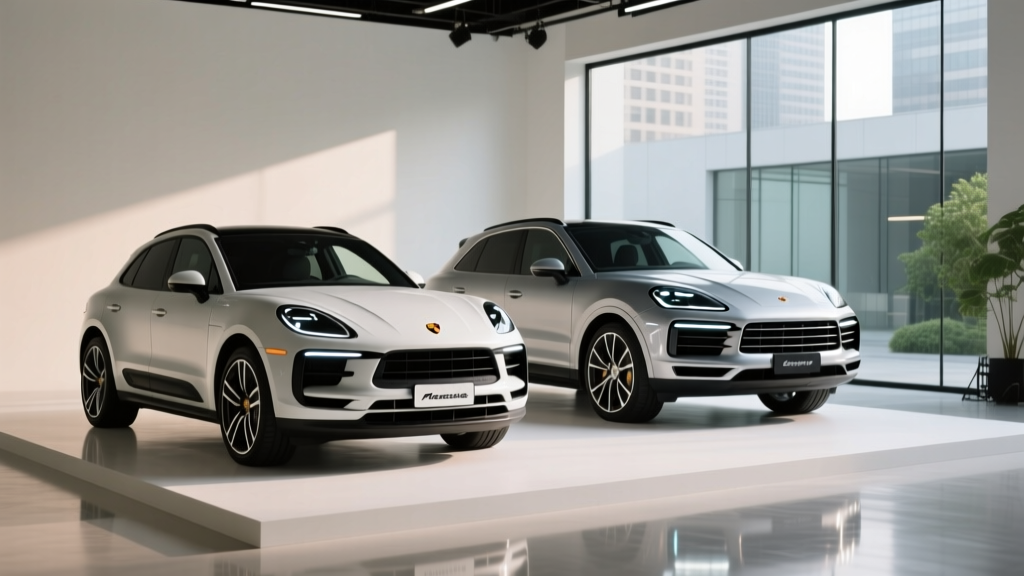
Porsche's electric SUV lineup in 2026 consists of the Macan Electric, which went on sale in the U.S. as a 2024 model and carries over with minor updates for 2025 and 2026. The Macan EV sits on the Premium Platform Electric (PPE) co-developed with Audi, featuring an 800-volt electrical architecture that enables faster DC charging than most competitors in the luxury compact SUV segment.
The Cayenne Electric was officially announced by Porsche and is expected to arrive as a 2026 or 2027 model year vehicle. Until it reaches showrooms, Porsche continues to sell the Cayenne E-Hybrid (a plug-in hybrid) alongside the gas Cayenne. Buyers searching for a "Porsche electric SUV" should be aware of this distinction: the Macan EV is a battery-electric vehicle (BEV) you can order now; the Cayenne EV is upcoming with preliminary specifications only.
| Spec | Macan (Base) | Macan 4 | Macan 4S | Macan Turbo |
|---|---|---|---|---|
| Base MSRP | ~$75,300 | ~$78,800 | ~$84,900 | ~$105,300 |
| Battery (usable, kWh) | ~95 kWh (NMC) | ~95 kWh (NMC) | ~95 kWh (NMC) | ~95 kWh (NMC) |
| EPA Range (est.) | ~308 mi | ~288 mi | ~278 mi | ~258 mi |
| Horsepower | ~335 hp | ~402 hp | ~509 hp | ~630 hp |
| 0–60 mph | ~5.4 sec | ~4.9 sec | ~3.9 sec | ~3.1 sec |
| Peak DC Charge Rate | 270 kW | 270 kW | 270 kW | 270 kW |
| 10–80% DCFC Time | ~21 min | ~21 min | ~21 min | ~21 min |
| Level 2 (AC) Rate | 11 kW | 11 kW | 11 kW | 11 kW |
| Drivetrain | RWD | AWD | AWD | AWD |
| Battery Warranty | 8 yr / 100k mi | 8 yr / 100k mi | 8 yr / 100k mi | 8 yr / 100k mi |
Note: EPA range figures are based on Porsche estimates and official filings; confirm at fueleconomy.gov for finalized ratings. The base RWD Macan achieves the longest range; adding AWD and higher-output motors reduces efficiency. Specs reflect the latest available model-year data and may vary by trim year.
Real-World Range: What the EPA Sticker Doesn't Tell You
EPA Sticker: Up to 308 miles (Macan base RWD)
Real-World Expectation: 250–275 miles on mixed highway driving; 210–240 miles in sustained cold weather (below 32°F) or at sustained 80+ mph speeds.
The Macan EV's 95 kWh (usable) NMC battery is large for the compact luxury SUV class, but Porsche's performance tuning prioritizes responsiveness over maximum efficiency. In real-world highway testing at 70–75 mph in moderate temperatures (55–75°F), expect roughly 2.5–2.7 miles per kWh, translating to 240–260 miles before you'll want to stop. In cold weather, lithium-ion batteries lose efficiency due to increased internal resistance and cabin heating demands; plan for a 15–25% range reduction in sub-freezing conditions unless you precondition the battery while plugged in.
Preconditioning matters especially for fast charging. When you navigate to a DC fast charger in the Macan EV's navigation system, the thermal management system warms the battery to its optimal charging temperature. Without preconditioning, you may see peak charge rates well below the 270 kW maximum, particularly in cold weather.
Charging the Macan EV: Home Setup and Public Networks
The Macan EV's 800-volt architecture is its standout feature for charging. At a 350 kW-capable DC fast charger (such as Electrify America's latest stations), the Macan can accept up to 270 kW, adding roughly 100 miles of range in about 10 minutes under ideal conditions. However, like all EVs, the charge curve tapers significantly above 80% state of charge. The 10–80% sprint takes roughly 21 minutes, but pushing from 80–100% can add another 15–20 minutes. On road trips, plan to charge to 80% and move on.
| Charging Level | Power (kW) | Miles Added per Hour | Typical Use Case |
|---|---|---|---|
| Level 1 (120V household) | ~1.4 kW | ~4–5 mi/hr | Emergency top-up only |
| Level 2 (240V, 48A home) | 11 kW | ~35–40 mi/hr | Overnight home charging (~9–10 hr for full) |
| DC Fast Charge (peak) | 270 kW | ~600+ mi/hr (peak) | Road trips, 10–80% in ~21 min |
Home charging reality: To get the full 11 kW Level 2 rate, you need a 240-volt circuit with at least a 60-amp breaker (to sustain 48 amps continuous). Installation costs typically range from $800 to $2,500 if your electrical panel has capacity; a panel upgrade from 100A to 200A service can add $1,500–$3,500. The Porsche Mobile Charger Connect (included or available depending on trim) supports up to 11 kW when paired with the correct NEMA 14-50 outlet or hardwired wall connector. Consult a licensed electrician for final specifications — panel capacity varies by home.
Connector note: The Macan EV currently uses the CCS1 connector for DC fast charging in North America. Porsche has indicated future models will adopt the NACS (Tesla-style) connector, but as of the current model year, you'll need a CCS-to-NACS adapter to access Tesla Superchargers where supported. Check adapter compatibility before relying on Supercharger access.
Macan EV vs Gas Macan: 5-Year Cost Comparison
The electric Macan starts roughly $10,000–$15,000 higher than a base gas Macan, but operating costs tell a different story. Below is a 5-year / 75,000-mile ownership comparison assuming national average electricity and fuel prices.
| Cost Category | Macan EV (4 AWD) | Gas Macan (Base AWD) |
|---|---|---|
| Purchase Price (MSRP) | $78,800 | $62,900 |
| Federal Tax Credit (§30D) | $0 (exceeds MSRP cap) | $0 |
| Fuel / Electricity | ~$4,500 (home charging avg.) | ~$9,400 (premium gas, 22 MPG combined) |
| Maintenance | ~$1,800 | ~$4,200 |
| Insurance (est. avg.) | ~$14,500 | ~$11,200 |
| Estimated Depreciation (5 yr) | ~$39,400 (50%) | ~$31,450 (50%) |
| Total Est. 5-Yr Cost | ~$100,200 | ~$88,250 |
Key takeaways: The Macan EV saves roughly $4,900 on energy and $2,400 on maintenance over five years (no oil changes, fewer brake replacements due to regenerative braking, no transmission fluid). However, higher purchase price, steeper depreciation on luxury EVs, and elevated insurance premiums (typically 20–30% higher for EVs) partially offset those savings. If you charge primarily at home at residential electricity rates ($0.14–$0.18/kWh national average), the fuel savings are substantial. If you rely on public DC fast charging at $0.40–$0.60/kWh, your energy costs will be closer to the gas vehicle's.
Source: Maintenance and depreciation estimates informed by industry data; fuel costs based on EPA combined ratings and fueleconomy.gov pricing tools. Insurance varies significantly by driver profile and state.
Federal Tax Credit: Why the Macan EV Doesn't Qualify
§30D Federal EV Tax Credit Requirements (2026):
- MSRP Cap: SUVs must be under $80,000 MSRP. The Macan 4 starts at ~$78,800, which is technically under the cap, but most trims with common options exceed it.
- Buyer Income Cap: Modified AGI must not exceed $300,000 (joint), $225,000 (head of household), or $150,000 (individual).
- Battery Sourcing: Critical minerals and battery components must meet phased-in thresholds from U.S. or FTA-partner countries. Porsche's battery supply chain currently does not meet these thresholds for the Macan EV.
- Assembly: Final assembly must occur in North America. The Macan EV is assembled in Leipzig, Germany.
Result: The Macan EV does not qualify for the §30D credit, primarily due to foreign assembly and battery-sourcing requirements. Always verify current eligibility at IRS.gov or consult a tax professional before purchasing.
This is a significant consideration for buyers cross-shopping the Macan EV against EVs that do qualify (such as certain domestically assembled models from Tesla, Ford, or GM). The $7,500 credit — available as a point-of-sale transfer since 2024 — effectively reduces a competitor's purchase price by that amount. Factor this into your comparison.
Common Misconceptions About the Porsche Macan EV
| Myth | Fact |
|---|---|
| "The Macan EV charges at 270 kW the entire session." | Peak 270 kW occurs at low state of charge (around 10–20%). The rate tapers to ~150 kW by 50% and drops further above 80%. Expect an average rate of ~180 kW across a 10–80% session. |
| "I'll get 308 miles on the highway easily." | The 308-mile EPA figure applies to the base RWD model on a mixed driving cycle. Highway-only driving at 75 mph yields roughly 250–270 miles. AWD and Turbo trims have lower EPA ratings. |
| "Porsche EVs qualify for the $7,500 tax credit." | Neither the Macan EV nor any current Porsche qualifies due to foreign assembly and battery-sourcing rules under §30D. Check IRS guidelines. |
| "The battery will need replacing in 5 years." | Porsche warranties the battery for 8 years / 100,000 miles against degradation below 70% capacity. NMC batteries in liquid-cooled systems typically retain 85–90% capacity at 100,000 miles based on industry data. |
| "I can charge at any Tesla Supercharger." | The Macan EV uses CCS1. Accessing NACS-only Superchargers requires a compatible adapter, and not all Supercharger stalls support non-Tesla vehicles. Plan routes using PlugShare or the Porsche Charging app. |
First-Time EV Buyer Considerations
If the Macan EV would be your first electric vehicle, several ownership realities deserve attention before signing:
Home charging access is critical. Without a Level 2 home charger, owning any EV becomes significantly less convenient. Public DC fast charging is viable for road trips but relying on it daily is expensive ($0.40–$0.60/kWh vs. $0.14–$0.18 at home) and adds wear from frequent high-rate charging. If you live in an apartment or condo without charging access, a PHEV like the Cayenne E-Hybrid may be a better fit until home charging is feasible.
Cold climate impact is real. In northern states where winter temperatures regularly drop below freezing, expect 15–25% range reduction. The Macan EV's heat pump (standard on most trims) mitigates cabin heating energy draw, but battery chemistry inherently loses efficiency in cold. Preconditioning while plugged in recovers some of this loss.
Insurance costs more. Luxury EVs carry higher insurance premiums due to repair costs, battery replacement expense, and specialized labor. Get quotes before purchasing — expect 20–30% more than a comparable gas Macan.
Tire wear accelerates. The Macan EV's instant torque and ~5,300-pound curb weight consume tires faster than a gas vehicle. Budget for tire replacement every 25,000–35,000 miles rather than the 40,000+ miles typical of lighter gas SUVs.
Decision Framework: Is the Porsche Macan EV Right for You?
Choose the Macan EV if:
- You have Level 2 home charging (or can install it)
- You prioritize driving dynamics and build quality over maximum interior space
- Your typical daily driving is under 200 miles and you road-trip 2–4 times per year
- You're comfortable paying $80,000–$105,000 without a federal tax credit offset
- You want 800V charging for faster road-trip stops than most luxury EV competitors
Choose the Cayenne E-Hybrid (PHEV) instead if:
- You need more cargo room, towing capacity, or optional third-row seating
- You lack reliable home charging access
- You frequently drive 400+ mile routes through areas with sparse DC fast charging
- You want to reduce fuel consumption without full EV commitment
Wait for the Cayenne Electric if:
- You need full-size SUV space with battery-electric operation
- You want the latest-generation PPE platform with potential NACS native charging
- Your purchase timeline is flexible into late 2026 or 2027
Frequently Asked Questions
Does the Porsche Macan EV have a frunk (front trunk)?
Yes, the Macan EV has a front trunk (frunk) in addition to its rear cargo area. The frunk provides roughly 3–4 cubic feet of storage, useful for charging cables or a small bag. Total cargo volume behind the rear seats is approximately 18 cubic feet, expanding to about 47 cubic feet with seats folded — competitive with the gas Macan but smaller than some electric rivals like the BMW iX.
What is the Macan EV's towing capacity?
The Macan EV is rated to tow up to 4,409 pounds when properly equipped — adequate for a small boat trailer or lightweight camper. Towing significantly reduces range; expect a 30–50% reduction depending on trailer weight and aerodynamics at highway speeds.
How does the Macan EV compare to the Tesla Model Y Performance?
The Model Y Performance starts around $52,000, qualifies for the $7,500 federal tax credit (bringing effective price to ~$44,500), and offers an EPA-estimated 285 miles of range. It uses NACS natively for Supercharger access. The Macan EV costs roughly $30,000–$50,000 more, delivers superior interior materials and ride refinement, but lacks the tax credit and has fewer public charging options. The choice depends on budget, brand preference, and whether luxury build quality justifies the premium for you.
Will the Macan EV switch to the NACS (Tesla) connector?
Porsche has committed to adopting NACS on future models, and the upcoming Cayenne Electric is expected to feature NACS natively. For the current Macan EV, CCS1 remains the standard. Porsche and third-party manufacturers offer CCS-to-NACS adapters for Supercharger access where non-Tesla vehicles are permitted. Check adapter availability and Supercharger network compatibility before relying on this for travel.
What happens if the Macan EV battery degrades?
Porsche's battery warranty covers capacity retention above 70% for 8 years or 100,000 miles, whichever comes first. If the battery falls below this threshold within the warranty period, Porsche will repair or replace it. Out-of-warranty battery replacement for a ~95 kWh NMC pack is estimated at $15,000–$25,000 based on current luxury EV battery pricing, though costs are expected to decline as the industry scales. In practice, liquid-cooled NMC batteries in premium EVs have shown 85–92% capacity retention at 100,000 miles in fleet and owner-reported data.