Quick Answer: Which Porsche Electric Car SUV Fits You?
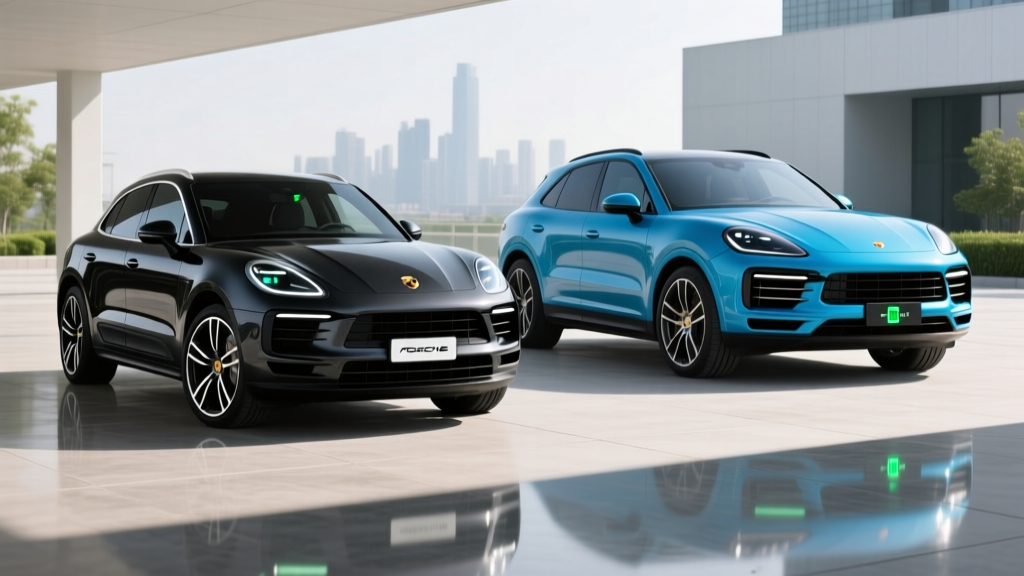
Porsche currently sells one all-electric SUV in the U.S.: the Macan Electric (launched for the 2025 model year, continuing into 2026). It offers 250 to 308 miles of EPA range, up to 270 kW DC fast charging, and starts around $78,800. A larger, three-row Cayenne Electric is announced for late 2026/early 2027 but is not yet on sale. If you need a Porsche electric car SUV today, the Macan EV is your only option — and it's best suited to buyers with home Level 2 charging, mild-to-moderate climates, and daily drives under 200 miles.
The Porsche Electric SUV Lineup: What's Available Now vs. Coming Soon
Porsche's electric SUV strategy rests on two pillars. The Macan Electric is the production reality; the Cayenne Electric is the upcoming flagship. Here's how they compare on paper.
| Spec | Macan EV (Base / 4 / 4S / Turbo) | Cayenne Electric (Announced — Preliminary) |
|---|---|---|
| Status | On sale (2025–2026 model years) | Announced; expected late 2026/early 2027 |
| EPA Range | 250 mi (Turbo) – 308 mi (Base RWD) | Estimated 300–370 mi (unconfirmed) |
| Usable Battery | ~95 kWh (100 kWh gross), NMC lithium-ion | Expected ~100–113 kWh, NMC (preliminary) |
| Peak DC Fast Charge | 270 kW (800V architecture) | Expected 270–350 kW (preliminary) |
| 10–80% DC Charge Time | ~21 minutes (under ideal conditions) | Estimated ~18–22 minutes (preliminary) |
| Level 2 AC Charge Rate | 11 kW (optional 22 kW onboard charger) | Expected 11–22 kW |
| Horsepower | 335 hp (Base) / 402 hp (4) / 509 hp (4S) / 630 hp (Turbo) | Expected 400–800+ hp depending on variant |
| 0–60 mph | 5.2s (Base) / 3.3s (Turbo) | Estimated 3.0–4.5s (preliminary) |
| Starting MSRP | $78,800 (Base) – $107,400 (Turbo) | Estimated $90,000–$130,000+ |
| Seating | 5 passengers | Expected 5 passengers (possible 3-row variant TBD) |
| Battery/Powertrain Warranty | 8 years / 100,000 miles | Expected 8 years / 100,000 miles |
Sources: fueleconomy.gov (EPA range/efficiency), Porsche USA Macan Electric specs.
Real-World Range: What the EPA Sticker Doesn't Tell You
The Macan EV Base rear-wheel-drive earns an EPA-estimated 308 miles, while the Turbo all-wheel-drive drops to 250 miles due to higher power output and wider tires. In real-world highway driving at 70–75 mph, expect to lose roughly 10–15% from the EPA figure — so the Base delivers around 260–275 highway miles and the Turbo closer to 210–225. In freezing temperatures (below 32°F), lithium-ion batteries lose efficiency and cabin heating demands energy; plan for 20–30% range reduction, bringing the Turbo down to approximately 175–200 miles in harsh winter conditions. The Macan EV's heat pump (standard on most trims) mitigates this somewhat, but physics is physics.
Charging the Macan EV: Speed, Connectors, and Home Setup
The Macan Electric uses Porsche's 800-volt architecture — the same platform proven in the Taycan — which enables class-leading DC fast-charging speeds. But peak kW is not sustained kW, and understanding the charge curve is essential for road-trip planning.
| Charging Level | Power (kW) | Connector | Speed (Miles Added per Hour) | Typical Use Case |
|---|---|---|---|---|
| Level 1 (120V household) | ~1.4 kW | J1772 (with adapter) | ~4–5 mi/hr | Emergency trickle; not practical for daily use |
| Level 2 (240V home/public) | 11 kW (standard) / 22 kW (optional) | J1772 or NACS (with adapter) | ~35 mi/hr (11 kW) / ~70 mi/hr (22 kW) | Overnight home charging; full charge in ~9 hrs (11 kW) |
| DC Fast Charging | Up to 270 kW peak | CCS1 (NACS via adapter at Tesla Superchargers) | ~100 mi in ~10 min (at peak) | Road trips; 10–80% in ~21 min |
The Charging Curve Reality
Porsche's 270 kW peak rate applies only between roughly 10% and 40% State of Charge (SoC). Above 50%, the rate tapers to ~150 kW; above 80%, it drops further to ~50–70 kW to protect the NMC battery cells. This is why manufacturers quote 10–80% times rather than 0–100%. For road trips, the practical strategy is to charge from 10–80% in ~21 minutes and then drive on — charging to 100% adds another 30+ minutes for relatively few extra miles.
Home Charging Installation Costs
Most Macan EV owners will install a Level 2 home charger. Here's what to budget:
| Component | Typical Cost Range |
|---|---|
| Level 2 EVSE hardware (e.g., Porsche Mobile Charger Connect, ChargePoint Home Flex, Wallbox Pulsar Plus) | $400–$900 |
| Electrician labor (240V/50A circuit, 40-ft run) | $800–$2,500 |
| Electrical panel upgrade (if needed — 100A to 200A service) | $1,500–$4,000 |
| Permit and inspection | $50–$300 |
| Total (no panel upgrade) | $1,250–$3,700 |
| Total (with panel upgrade) | $2,750–$7,700 |
Always hire a licensed electrician for final specifications. Porsche includes a basic Mobile Charger (Level 1/2) with the vehicle; the optional Porsche Mobile Charger Connect ($700+) adds Wi-Fi, scheduling, and higher output.
Macan EV vs. Gas Macan vs. Gas Cayenne: Ownership Cost Comparison
Is the Porsche electric car SUV actually cheaper to own than its gasoline siblings? Let's compare the Macan EV 4 (starting ~$84,900) against the gas Macan (starting ~$62,900) and the gas Cayenne (starting ~$79,200) over 5 years and 60,000 miles.
| Cost Factor | Macan EV 4 | Gas Macan (2.0T) | Gas Cayenne (3.0T V6) |
|---|---|---|---|
| MSRP (base) | $84,900 | $62,900 | $79,200 |
| Federal Tax Credit (§30D) | $0 (exceeds MSRP cap & income limits for most buyers — see below) | $0 | $0 |
| Fuel/Energy (60k mi) | ~$3,600 (home charging at $0.15/kWh) | ~$9,000 (premium gas at $4.50/gal, 21 MPG combined) | ~$10,300 (premium gas at $4.50/gal, 19 MPG combined) |
| Maintenance (60k mi) | ~$1,200 (cabin filter, wipers, brake inspection — no oil changes) | ~$4,500 (oil, filters, brakes, spark plugs) | ~$5,200 |
| Insurance (5-yr avg) | ~$14,000 (higher EV premiums) | ~$10,500 | ~$12,000 |
| Estimated Depreciation (5 yr) | ~$38,000 (EV depreciation still settling) | ~$28,000 | ~$35,000 |
| 5-Year Total Cost of Ownership | ~$141,700 | ~$114,900 | ~$141,700 |
Sources: fueleconomy.gov for MPG/efficiency data, IRS §30D credit rules.
Key Takeaway on Cost
The Macan EV saves roughly $5,400 in fuel and $3,300 in maintenance over 5 years compared to the gas Macan. However, the higher purchase price (~$22,000 more), steeper insurance premiums (~$3,500 more), and potentially faster depreciation erase those savings. The Macan EV's 5-year total cost lands almost identically with the gas Cayenne — you're trading fuel and maintenance costs for a higher upfront price and insurance. The EV wins on driving experience and daily convenience (home charging, instant torque), not on pure economics at this price point.
Federal Tax Credit Reality for Porsche Electric SUVs
Under current IRS §30D rules, the Macan EV does not qualify for the $7,500 federal clean vehicle credit. Here's why:
- MSRP Cap: SUVs must have an MSRP at or below $80,000 to qualify. The Macan EV Base starts at $78,800 — technically under the cap — but virtually any option package pushes it above $80,000.
- Buyer Income Limits: Adjusted gross income must not exceed $150,000 (single), $225,000 (head of household), or $300,000 (joint filers). Many Porsche buyers exceed these thresholds.
- Battery Sourcing Requirements: Critical minerals and battery components must meet escalating percentages from U.S. free-trade partners. Porsche's supply chain, heavily European/Asian, may not meet 2026 thresholds for full credit.
- Point-of-Sale Transfer: If eligible, the credit can be transferred to the dealer at purchase for an immediate price reduction — but only if all requirements are met.
Bottom line: Budget for the Macan EV at full MSRP. Consult a tax professional for your specific situation, and check the latest IRS guidance before purchasing, as rules evolve annually.
Real-World Ownership: What First-Time EV Buyers Must Know
| Myth | Fact |
|---|---|
| "The Macan EV will go 308 miles no matter what." | 308 miles is the EPA estimate for the Base RWD under ideal conditions. Highway driving, cold weather, and aggressive acceleration reduce this by 15–30%. |
| "I can charge to full in 21 minutes." | 21 minutes gets you from 10–80%. Charging from 80–100% takes another 30+ minutes due to the taper. Plan road trips around 10–80% cycles. |
| "EVs need no maintenance." | EVs need less maintenance — no oil changes, fewer brake pad replacements (thanks to regenerative braking) — but still require tire rotations, cabin air filter changes, coolant checks, and wiper fluid. Budget ~$200–$300/year. |
| "I don't need home charging; public chargers are everywhere." | Public DC fast chargers are improving but remain inconsistent in reliability and availability. Without home Level 2 charging, EV ownership becomes significantly less convenient and more expensive (public DCFC costs $0.35–$0.55/kWh vs. ~$0.15/kWh at home). |
| "The battery will need expensive replacement in a few years." | Porsche warranties the battery for 8 years/100,000 miles against degradation below 70% capacity. Modern NMC batteries with liquid thermal management typically retain 85–90% capacity at 100,000 miles based on industry data. |
Home Charging Access: The Make-or-Break Factor
If you can install a Level 2 charger at home (garage or driveway with a 240V circuit), the Macan EV transforms your daily routine: plug in at night, wake up to a full charge every morning, and visit a gas station never. If you live in an apartment or condo without charging access, you'll rely on public infrastructure — which means 20–40 minute DC fast-charging sessions 1–3 times per week, at roughly 2–3× the per-kWh cost of home electricity. Confirm your home charging situation before committing to any EV purchase.
Climate Considerations
The Macan EV's liquid-cooled and heated battery pack with heat pump handles temperature extremes better than older EVs. However, if you live in northern-tier states with prolonged sub-freezing winters, precondition the battery (via the Porsche app or scheduled departure) before fast charging — a cold battery charges far slower and risks lithium plating. Expect 20–30% range loss in sustained cold weather.
Decision Framework: Should You Buy the Porsche Macan EV?
Choose the Macan EV If:
- You have (or can install) Level 2 home charging
- Your daily commute is under 200 miles round-trip
- You prioritize driving dynamics, acceleration, and build quality over maximum cargo space or third-row seating
- You want the lowest-maintenance Porsche SUV experience (no oil changes, reduced brake wear)
- You live in a mild-to-moderate climate, or you're willing to precondition and accept winter range loss
Wait for the Cayenne Electric (or Consider Alternatives) If:
- You need three rows or more than 18 cu ft of rear cargo volume
- You regularly tow more than the Macan EV's ~4,400-lb rated capacity
- You want longer range (350+ mi) for frequent 400-mile road trips without stopping
- Your budget is closer to $60,000 — consider the Hyundai Ioniq 5, Kia EV6, or Tesla Model Y instead
- You cannot install home charging and your area has limited public DC fast-charging infrastructure
Competitors Worth Cross-Shopping
At the $80,000–$110,000 price point, the Macan EV competes with the BMW iX (307–324 mi EPA, ~$87,000+), the Mercedes-Benz EQE SUV (279 mi EPA, ~$78,000+), the Audi Q8 e-tron (285 mi EPA, ~$75,000+), and the Tesla Model X (311–335 mi EPA, ~$81,000+). The Macan EV stands out for its 800V charging speed and Porsche driving dynamics; the iX and Model X offer more interior volume; the Q8 e-tron is the value play.
Frequently Asked Questions
Does the Porsche Macan EV qualify for any federal tax credit?
Under current 2026 IRS §30D rules, the Macan EV likely does not qualify for the $7,500 credit. The Base model's $78,800 MSRP sits just under the $80,000 SUV cap, but options quickly push it over. Additionally, buyer income caps ($150K single / $300K joint) and battery-sourcing requirements eliminate most Porsche buyers. Always verify with a tax professional and the latest IRS guidance.
How long does the Macan EV battery last, and what does replacement cost?
Porsche warranties the high-voltage battery for 8 years or 100,000 miles against degradation below 70% of original capacity. Based on industry data from similar NMC packs (Taycan, Hyundai/Kia E-GMP), expect 85–92% capacity retention at 100,000 miles with proper care (avoid frequent 100% charges; keep between 20–80% for daily use). Out-of-warranty battery replacement for a ~95 kWh NMC pack currently costs $15,000–$25,000 at a Porsche dealer, though prices are expected to decline as battery costs fall.
Can I charge the Macan EV at Tesla Superchargers?
The Macan EV uses a CCS1 charge port. Tesla has opened portions of its Supercharger network to non-Tesla EVs via the "Magic Dock" NACS adapter built into select stalls. You can also use a Porsche-approved NACS adapter (when available) to access more Supercharger locations. Check the Tesla app for NACS-compatible stations in your area. Electrify America, EVgo, and ChargePoint remain the primary non-Tesla DCFC networks.
Is the Macan EV faster than the gas Macan?
Significantly. The Macan EV Turbo does 0–60 mph in 3.3 seconds with 630 hp, rivaling the gas 911 Carrera. Even the base Macan EV (335 hp, 5.2s to 60) outpaces the gas Macan 2.0T (261 hp, 6.2s). Electric motors deliver instant torque with no turbo lag or transmission shift delay.
What happens if I run out of charge on the road?
Porsche provides roadside assistance for the duration of the new-vehicle warranty (4 years/50,000 miles). If you deplete the battery, Porsche will tow the vehicle to the nearest charger. To avoid this, use the built-in navigation's route planner, which automatically factors in charging stops and battery preconditioning. Keep a 10–15% buffer for detours and charger outages.
When will the Porsche Cayenne Electric be available?
Porsche has confirmed the Cayenne Electric is in development on the PPE (Premium Platform Electric) architecture, with production expected to begin in late 2026 for the 2027 model year. U.S. deliveries would likely start in early-to-mid 2027. Pricing and final specs remain unconfirmed. We'll update this guide when official figures are released.