The Quick Answer: Is a One-Person Electric Boat Right for You?
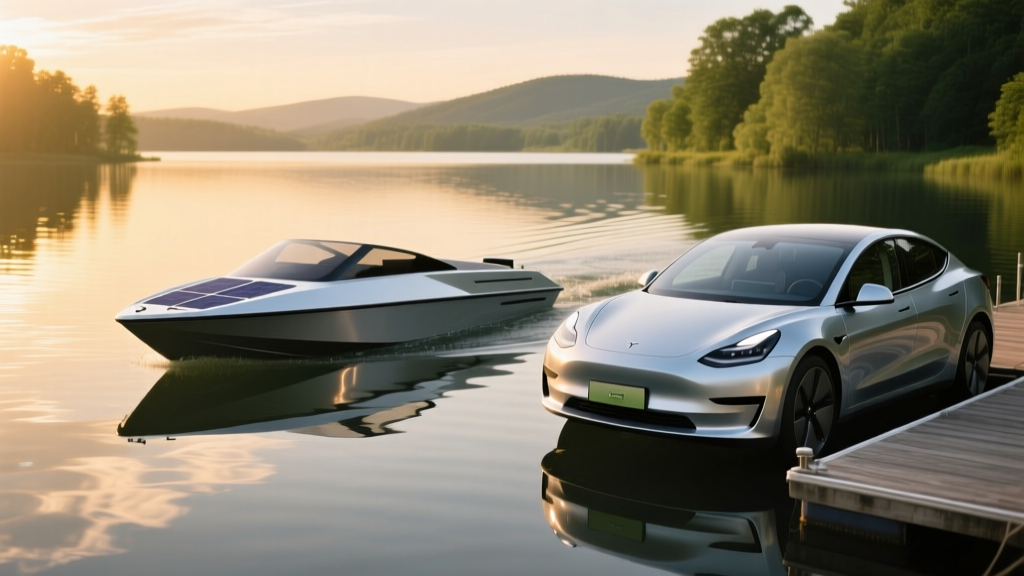
Short answer: A one-person electric boat (like the Rand Source 10 or the electric Microjet-style personal watercraft) is a niche recreational vehicle — not a commuter replacement. Expect 15–40 miles of range on a 3–10 kWh battery pack, 2–6 hours of runtime, and purchase prices from $4,000 to $25,000+ depending on hull type and motor output. If your goal is daily transportation, an electric car like the 2026 Chevy Equinox EV (EPA 315 mi, ~$33,600 MSRP) delivers vastly more utility per dollar. If you want quiet, zero-emission time on the water for fishing, exploring, or lake commuting, a one-person electric boat fills a gap no car can.
Before spending on a marine EV, it helps to understand how the ownership math, charging logistics, and real-world limitations compare to the electric vehicles most buyers are already researching. This guide breaks down both worlds with hard numbers.
What Is a One-Person Electric Boat?
The term covers several product categories now reaching the U.S. market:
- Electric kayaks / micro-skiffs (e.g., Old Town ePDL+ motorized kayaks, Bixpy J-1000 outboard kits): 0.3–1 kWh battery, 5–15 mile range, $2,000–$5,000.
- Compact electric pontoons and bass boats (e.g., Princecraft Vectra with Torqeedo outboards, Rand Source 10): 3–10 kWh, 20–40 mile range, $12,000–$30,000.
- Personal electric watercraft (e.g., Taiga Orca electric PWC): 20+ kWh, 45–60 minute runtime at high speed, ~$17,000–$24,000.
Unlike electric cars, which benefit from standardized EPA range testing and a mature charging infrastructure, electric boats lack a universal range-rating standard. Range depends heavily on hull drag, water conditions, payload, and throttle habits — much like how an EV's real-world highway range can drop 15–25% below its EPA sticker.
Cost Breakdown: Electric Boat vs. Electric Car
The table below compares a mid-tier one-person electric boat (Rand Source 10 class, ~$18,000) against a mainstream 2026 EV (Chevy Equinox EV 2LT, ~$36,400 before incentives) to show where each dollar goes.
| Category | One-Person Electric Boat (Mid-Tier) | 2026 Chevy Equinox EV 2LT |
|---|---|---|
| Purchase Price | $15,000–$22,000 | $36,400 MSRP |
| Battery Capacity | 5–10 kWh (typically NMC) | 85 kWh usable (NMC) |
| Range | 20–40 miles (water-dependent) | 315 mi EPA (real-world ~250–270 mi hwy) |
| Charging (Level 2, 240V) | 2–4 hours (no standardized fast charge) | ~9.5 hours; DC fast 10–80% in ~30 min at 150 kW |
| Annual Energy Cost | $30–$80 (seasonal use) | $550–$750 (12,000 mi/yr at $0.16/kWh) |
| Maintenance (Annual) | $150–$400 (hull, impeller, winterization) | $300–$500 (tires, cabin filter, wipers) |
| Insurance (Annual) | $200–$600 (marine policy) | $1,400–$2,200 |
| Federal Tax Credit (§30D) | Not eligible (not a highway vehicle) | Up to $7,500 if income/MSRP/sourcing rules met |
| Depreciation (5-Year) | ~35–50% (niche market) | ~40–55% (per Kelley Blue Book EV data) |
Sources: fueleconomy.gov, IRS §30D guidelines.
Charging & Infrastructure: Where Boats Fall Short
This is the starkest difference. EV drivers in 2026 have access to over 70,000 public charging ports nationwide (per the AFDC), plus standardized NACS and CCS connectors. Home Level 2 installation typically runs $800–$2,000 for a 40-amp, 9.6 kW wallbox.
Electric boat owners face a different reality:
- No public marine charging network comparable to Electrify America or Tesla Superchargers. A few marinas in coastal and lake communities (Lake Tahoe, Miami, Seattle) are installing shore-power chargers, but coverage is sparse.
- Connector fragmentation. Torqeedo uses proprietary plugs; Taiga uses standard J1772 adapters; smaller outboards rely on removable battery packs charged on household 120V outlets.
- Charging speed is slow. Most electric boats charge at 1–3 kW (Level 1 equivalent). A 10 kWh pack takes 4–8 hours on a standard outlet — fine for weekend use, impractical for daily commuting.
- Trailer charging is a workaround. Many owners charge the boat's battery on a home Level 2 circuit while it's on the trailer in the driveway, then tow it to the water.
If you lack home charging access — whether for a car or a boat — ownership gets significantly harder. Apartment dwellers and street-parkers should weigh this carefully before committing to any electric vehicle, marine or otherwise.
Electric Boat vs. Gas Outboard: Real-World Comparison
| Metric | Electric Outboard (10 kW / ~13 HP equiv.) | Gas Outboard (15 HP, 4-Stroke) |
|---|---|---|
| Upfront Cost | $3,500–$7,000 (motor + battery) | $2,500–$4,000 |
| Runtime / Range | 2–4 hours at half throttle (~20–30 mi) | 6–10+ hours (3–6 gal tank, 40–80+ mi) |
| Energy/Fuel Cost per Hour | $0.30–$0.80 (at $0.16/kWh) | $4.00–$7.00 (at $4.00/gal) |
| Maintenance | Near-zero (no oil, spark plugs, or impeller wear on direct-drive) | Annual oil change, impeller, lower-unit lube ($200–$400/yr) |
| Noise Level | ~50–60 dB (conversation-quiet) | ~80–95 dB |
| Weight | 40–80 lbs (motor); 30–60 lbs (battery) | 50–110 lbs (motor); 25–50 lbs (fuel + tank) |
| Cold-Weather Impact | 15–30% range loss below 40°F (battery chemistry) | Minimal (choke start, slight fuel-efficiency dip) |
| Refuel/Recharge Time | 3–6 hours (Level 1/2) | 2 minutes (gas can) |
The electric outboard wins on operating cost, noise, and maintenance — critical for fishing, wildlife observation, and no-wake zones. The gas outboard wins on range, refueling speed, and cold-weather reliability — critical for open-water safety and longer trips.
Common Misconceptions About One-Person Electric Boats
| Myth | Fact |
|---|---|
| "They qualify for the $7,500 federal EV tax credit." | Section 30D applies only to highway-capable vehicles with 4 wheels. Marine vessels are excluded. Some states offer separate marine electrification rebates (e.g., California's CARB programs), but check local rules. |
| "Electric boats are maintenance-free." | The motor requires minimal upkeep, but hulls still need antifouling, bilge pumps need servicing, and lithium packs degrade 2–4% per year depending on cycle depth and storage temperature. |
| "Range is the same in all conditions." | Just like EVs, electric boats lose range in cold water (battery internal resistance rises), headwinds, heavy chop, and when carrying max payload. Expect 20–30% less than the manufacturer's "ideal conditions" claim. |
| "I can charge it anywhere with a regular outlet." | Technically yes on 120V, but a 10 kWh battery takes 8–12 hours on a standard household circuit. Marinas with 240V shore power can cut that to 3–4 hours — if the marina offers it. |
| "They're as fast as gas boats." | Top speed for most one-person electric hulls is 5–15 mph. The Taiga Orca PWC hits ~65 mph but costs $24,000 and runs for under an hour at that speed. For most buyers, electric boats are about quiet cruising, not speed. |
Real-World Ownership: What First-Time Buyers Should Know
Drawing on the same ownership principles that apply to electric cars, here are the practical realities of living with a one-person electric boat:
Storage and Winterization
Lithium batteries should not be stored below 32°F at high state of charge. Most manufacturers recommend storing at 40–60% SoC in a climate-controlled space (garage, heated shed). If you live in a freezing climate, budget for indoor winter storage or battery removal — a 10 kWh pack weighs 60–100 lbs and may require two people to move.
Trailer and Tow Requirements
A one-person electric boat on a single-axle trailer weighs 800–2,000 lbs. Most SUVs and crossovers can tow this, but verify your vehicle's tow rating. An EV towing a boat trailer will see 30–50% range reduction due to aerodynamic drag and rolling resistance — a factor EV buyers often underestimate.
Registration and Licensing
Most U.S. states require registration for any motorized watercraft, including electric. Fees range from $20–$200 annually. Some states exempt human-powered craft (kayaks, canoes) but require registration once a motor — even electric — is attached.
Battery Longevity
Marine-grade NMC packs are typically warrantied for 2–5 years or 500–1,000 charge cycles. At 80% depth of discharge, expect 70–80% capacity retention after 500 cycles. Replacement packs cost $2,000–$6,000 depending on capacity. This mirrors early EV battery economics — significant, but amortized over many years of low-cost operation.
Decision Framework: Should You Buy a One-Person Electric Boat or an EV?
Buy a one-person electric boat if:
- You have regular access to a lake, calm river, or protected coastal water within 30 minutes of home.
- You value silence and zero local emissions for fishing, photography, or nature observation.
- You already own a capable daily-driver vehicle (EV, hybrid, or gas) and want a recreational addition.
- You have home charging access (garage or driveway with 120V/240V outlet) and storage space for a trailer.
- Your trips are under 20 miles round-trip and you can accept 2–6 hours of runtime.
Buy an electric car instead if:
- You need daily transportation for commuting, errands, or family use.
- You want to take advantage of the federal §30D tax credit (up to $7,500, subject to MSRP caps, buyer income limits, and battery sourcing requirements).
- You need access to public fast-charging infrastructure for road trips.
- You live in an apartment or lack dedicated parking with electrical access.
- Your budget is under $30,000 and you need maximum utility per dollar (e.g., 2026 Nissan Leaf at ~$28,140 MSRP, EPA 212 mi range).
Consider a plug-in hybrid (PHEV) if:
- You want electric-only commuting (25–40 mi range) without range anxiety for longer trips.
- You lack reliable home charging and want the safety net of a gas engine.
- You want to tow the boat trailer without devastating your EV's range (PHEVs like the 2026 RAV4 Prime handle towing with less range penalty since the gas engine supplements under load).
Frequently Asked Questions
Can I charge a one-person electric boat at a public EV charger?
Generally no. Most electric boats use proprietary marine connectors or removable battery packs designed for household outlets. The Taiga Orca is a rare exception, offering a J1772-compatible inlet, but you'd still need to trailer the boat to the charger. Never plug marine equipment into a public DC fast charger (NACS/CCS) — the voltage and protocol are incompatible and could cause damage.
How long do electric boat batteries last?
Marine NMC lithium packs typically retain 70–80% of original capacity after 500–1,000 full charge cycles. At typical recreational use (50–80 cycles per year), that's 8–15 years before noticeable degradation. Store at 40–60% SoC in moderate temperatures to maximize lifespan. Replacement costs $2,000–$6,000 depending on capacity.
Are one-person electric boats safe in rough water?
No. Most are designed for calm lakes, slow rivers, and protected bays. Small hulls (under 12 feet) are vulnerable to wind, wake from larger boats, and sudden weather changes. Always wear a PFD, check marine weather forecasts, and stay within your hull's rated conditions. The U.S. Coast Guard does not currently require specific safety standards for electric propulsion beyond standard marine electrical codes.
Do electric boats need to be registered?
In most states, yes — any motorized watercraft (including electric) must be registered with the state boating authority. Fees are typically $20–$200 per year. Check your state's specific rules, as a few states exempt craft under a certain length or horsepower.
What's the cheapest way to get on the water with electric power?
A kayak with an electric outboard kit (e.g., Bixpy J-1000, ~$1,500 motor + $800 battery) is the most affordable entry point — roughly $2,500–$3,500 total including the kayak. Range is limited to 8–15 miles, but it's enough for a full day of fishing or exploring on a small lake.