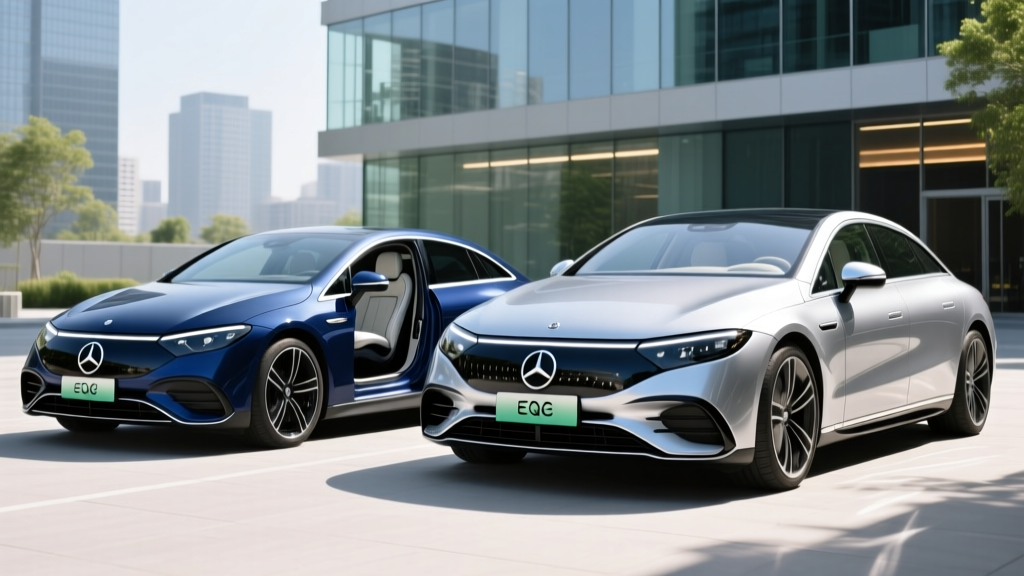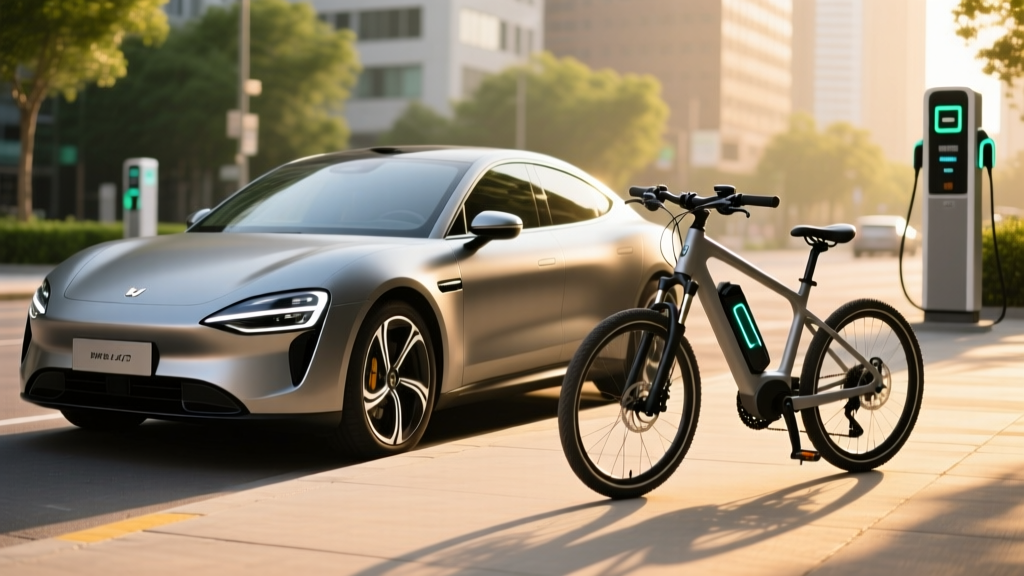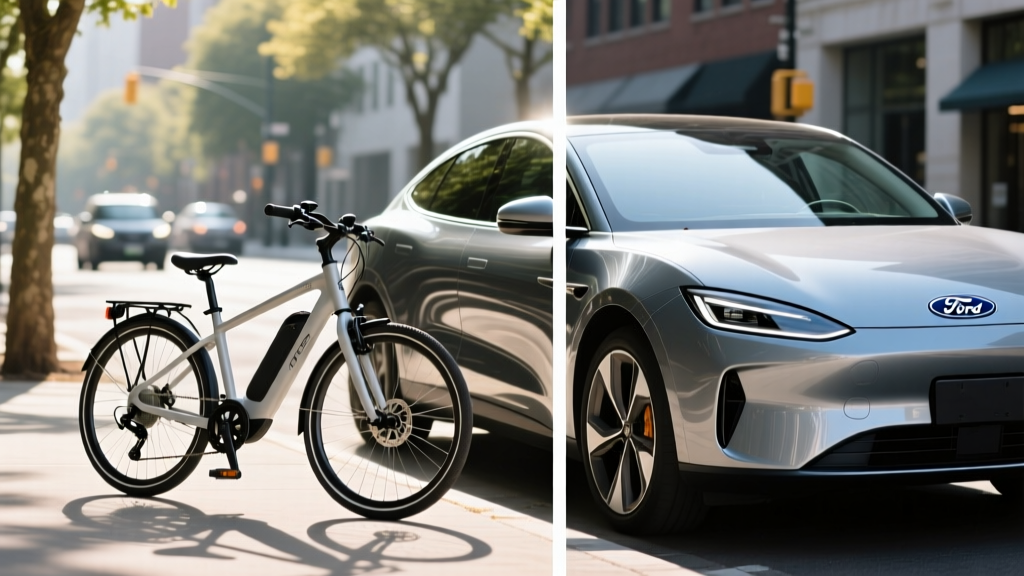
The Quick Answer on Ford Electric Bikes
Ford does not manufacture or sell electric bikes (e-bikes) as of 2026. While Ford briefly explored the e-bike space over a decade ago with concept prototypes, the company has never brought a production electric bicycle to market. If you're searching for "Ford electric bikes," you'll find third-party accessories, dealership promotional giveaways, and concept renders — but no Ford-branded e-bike you can actually buy.
What Ford does offer are electrified vehicles that serve many of the same commuting and urban-mobility needs that draw people to e-bikes: the Mustang Mach-E (BEV crossover), the E-Transit (electric commercial van), and the F-150 Lightning (electric pickup). Below, we break down whether a Ford EV makes sense for your daily commute — or if a dedicated e-bike from another brand is the better call.
Why People Search for Ford Electric Bikes (and What They Actually Want)
The search term "Ford electric bikes" reflects a real consumer desire: affordable, efficient, electrified personal transportation for short commutes and urban errands. E-bikes typically cost $1,200–$4,500, require no license or registration, and can cover 20–60 miles per charge at 15–28 mph depending on class. They park anywhere, skip gas stations entirely, and cost pennies per mile to charge.
The confusion around Ford e-bikes likely stems from a few sources: Ford's 2011 e-bike concept (shown at the Frankfurt Auto Show but never produced), Ford dealership promotional e-bike giveaways tied to vehicle purchases, and the general expectation that a major automaker would participate in the booming micro-mobility market. As of 2026, Ford's electrification strategy remains focused on four-wheeled vehicles.
So the real decision isn't "which Ford e-bike should I buy?" — it's whether a Ford EV like the Mach-E can replace your car commute at a reasonable cost, or whether you should pair a non-Ford e-bike with your existing vehicle.
Ford's 2026 EV Lineup: Specs, Pricing, and Real-World Numbers
Here's what Ford actually sells in the electrified space for 2026, with the exact figures you need to evaluate ownership:
| Spec | Mustang Mach-E (Select RWD) | Mustang Mach-E (Premium AWD ER) | F-150 Lightning (XLT SR) | E-Transit (Cutaway) |
|---|---|---|---|---|
| EPA Range | 250 mi | 320 mi | 240 mi | 126 mi |
| Real-World Range (highway/cold) | ~200–220 mi | ~260–285 mi | ~185–210 mi | ~95–110 mi |
| Battery (usable kWh) | 72 kWh (LFP) | 91 kWh (NMC) | 98 kWh (NMC) | 68 kWh (NMC) |
| Peak DC Fast Charge | 150 kW | 150 kW | 150 kW | 115 kW |
| 10–80% DC Charge Time | ~38 min | ~45 min | ~41 min | ~45 min |
| Level 2 Home Charge Rate | 10.5 kW | 10.5 kW | 19.2 kW (w/ 80A) | 10.5 kW |
| Horsepower | 266 hp | 346 hp | 563 hp | 266 hp |
| 0–60 mph | 6.3 sec | 5.1 sec | 4.0 sec | N/A (governed) |
| MPGe (combined) | 105 MPGe | 98 MPGe | 70 MPGe | — |
| Base MSRP | $39,995 | $49,995 | $54,995 | $47,895 (commercial) |
| Battery Warranty | 8 yr / 100,000 mi | 8 yr / 100,000 mi | 8 yr / 100,000 mi | 8 yr / 100,000 mi |
Sources: fueleconomy.gov, Ford Mustang Mach-E specs. Real-world range estimates reflect highway driving at 70+ mph and cold-weather (below 32°F) conditions based on owner testing data. EPA estimates assume mixed driving; expect 15–20% reduction on sustained highway trips and 25–35% loss in sub-freezing temperatures.
EV vs. Gas vs. E-Bike: The Commute Cost Comparison
The core question for anyone researching electric transportation is total cost per mile. Here's how a Ford Mach-E Select stacks up against a comparable gas crossover (Toyota RAV4 AWD) and a mid-tier Class 2 e-bike (e.g., Rad Power RadCity 5 Plus) for a 20-mile round-trip commute over five years:
| Cost Factor | Mach-E Select RWD | Toyota RAV4 AWD (Gas) | Class 2 E-Bike |
|---|---|---|---|
| Purchase Price | $39,995 | $34,000 | $1,999 |
| Federal Tax Credit (§30D) | Up to $3,750* | $0 | $0 |
| Fuel/Energy (5 yr, 12k mi/yr) | ~$3,600 (electric) | ~$8,400 (gas @ $3.50/gal) | ~$180 (electric) |
| Maintenance (5 yr) | ~$1,800 | ~$3,900 | ~$600 |
| Insurance (5 yr avg) | ~$9,600 | ~$7,200 | ~$0–$600 |
| 5-Year Total (approx.) | ~$51,245 | ~$53,500 | ~$4,379 |
| Cost Per Mile | $0.14 | $0.18 | $0.04 |
*The Mach-E Select with LFP battery qualifies for up to $3,750 under current IRS §30D rules based on critical-mineral and battery-component sourcing requirements. The full $7,500 credit is not currently available for the Mach-E due to battery sourcing constraints. Eligibility also depends on buyer income caps ($150k single / $300k joint) and MSRP caps ($55k for SUVs). Consult a tax professional for your specific situation. E-bike cost assumes no federal e-bike tax credit (proposed but not enacted as of 2026).
The math is clear: an e-bike obliterates everything on cost for short urban commutes. But it can't handle highway driving, passengers, cargo, bad weather, or trips over 30 miles — which is where the Mach-E earns its place.
Real-World Ownership: What First-Time Ford EV Buyers Must Know
If you're pivoting from an e-bike search to considering an actual Ford EV, here are the ownership realities that spec sheets don't highlight:
Home Charging Is the Make-or-Break Factor
Over 80% of EV charging happens at home. A Level 2 home charger (240V, 32–48 amp) delivers roughly 25–35 miles of range per hour of charging for the Mach-E — enough to fully replenish overnight. Installation costs range from $500–$2,500 depending on whether your electrical panel needs an upgrade to 200 amps. If you live in an apartment or lack garage access, public charging becomes your primary strategy, and that changes the ownership equation significantly. Check Ford's home charging resources and consult a licensed electrician before purchasing.
The Charge Curve Matters More Than Peak kW
Ford advertises 150 kW peak DC fast charging for the Mach-E, but that peak only holds between roughly 10–45% State of Charge (SoC). Above 60%, the rate tapers to ~70 kW, and above 80% it drops to ~30 kW to protect battery health. A 10–80% session takes about 38 minutes at a capable charger — but a 10–95% session can stretch past 70 minutes. For road trips, plan stops around the 10–80% window to minimize time at the charger.
Cold Weather Hits Range Hard
The Mach-E's LFP battery (Select trim) is more resistant to long-term degradation but suffers greater cold-weather range loss than NMC chemistry — expect 25–35% reduction below freezing. The heat pump (standard on Premium trims) helps, but preconditioning the battery while plugged in at home is essential to preserve range and enable faster DC charging in winter.
Insurance Costs Are Higher
EV insurance premiums run 15–25% higher than comparable gas vehicles due to repair costs, battery replacement expense, and specialized labor. Budget an extra $400–$600/year versus a gas crossover. Shop quotes from GEICO, Progressive, and State Farm before committing.
Common EV Misconceptions — Fact-Checked
| Myth | Fact |
|---|---|
| "EV batteries need replacing every 5 years." | Ford's battery warranty guarantees 70% capacity retention for 8 years/100,000 miles. Real-world data shows NMC packs losing ~10–15% capacity over 150,000 miles; LFP packs degrade even slower. Full replacement (rarely needed) costs $12,000–$18,000. |
| "Charging an EV costs as much as gas." | At the US average residential electricity rate of ~$0.16/kWh (2026 EIA data), charging a 72 kWh Mach-E from empty costs ~$11.50 for 250 miles of range — roughly $0.046/mile vs. $0.14/mile for a 25 MPG gas car at $3.50/gallon. |
| "You can't take an EV on a road trip." | The Mach-E Premium ER (320 mi EPA) can cover most US highway corridors with one 20–30 minute DC fast-charge stop every 200–250 miles using Ford's BlueOval Charge Network, which includes 90,000+ charge points via partner networks. |
| "EVs are worse for the environment due to battery mining." | Lifecycle analyses from Argonne National Laboratory show EVs produce 50–70% fewer lifetime emissions than gas cars in the US grid mix, even accounting for battery manufacturing. The grid gets cleaner every year, widening this gap. |
| "The $7,500 tax credit applies to every EV." | Under current §30D rules, the credit is split: $3,750 for meeting critical-mineral sourcing and $3,750 for battery-component sourcing. Most Ford EVs qualify for $3,750, not the full amount. Income caps ($150k single/$300k joint) and MSRP caps ($55k SUVs/$80k trucks) also apply. Credit can be transferred to the dealer at point of sale. |
Decision Framework: E-Bike, Ford EV, or Both?
Choose a Non-Ford E-Bike If:
- Your one-way commute is under 15 miles on surface streets or bike lanes
- You don't need to carry passengers or significant cargo
- Your budget is under $3,000
- You live in a mild climate or are willing to ride in rain/cold with proper gear
- You already have a car for longer trips and just want to eliminate short-drive fuel costs
Choose the Ford Mustang Mach-E If:
- Your commute includes highway driving or exceeds 20 miles each way
- You need a practical daily driver for passengers, groceries, and all weather
- You have (or can install) home Level 2 charging
- Your household income is under §30D caps and you want to reduce fuel/maintenance costs long-term
- You want Ford's BlueCruise (hands-free highway driving on approved roads — SAE Level 2, driver must remain attentive)
Choose the Ford F-150 Lightning If:
- You need truck capability (towing up to 7,700 lb, 223 lb payload bed) with zero tailpipe emissions
- You want Pro Power Onboard (up to 9.6 kW V2L) for job-site power or home backup
- Your daily driving is under 200 miles and you can charge at home overnight
Consider Both (EV + E-Bike) If:
- You want the EV for family/highway duty and an e-bike for solo errands under 10 miles — this combination maximizes savings and minimizes vehicle wear
Frequently Asked Questions
Did Ford ever make an electric bike?
Ford unveiled an e-bike concept at the 2011 Frankfurt Auto Show (the "E-Bike Concept" based on a city-bike frame with a front-hub motor), but it never reached production. Ford has not announced any production e-bike as of 2026. Any "Ford electric bike" you see online is either a third-party product, a promotional giveaway item, or a fan concept.
What is the cheapest Ford electric vehicle in 2026?
The 2026 Mustang Mach-E Select RWD starts at $39,995 before incentives. With the $3,750 federal tax credit (if eligible), the effective price drops to ~$36,245. The Ford Maverick hybrid (not a BEV) starts around $28,000 if you want Ford electrification at a lower entry point.
Does the Mustang Mach-E qualify for the full $7,500 tax credit?
No. Under current IRS §30D rules, the Mach-E qualifies for $3,750 (the critical-minerals half of the credit). Battery-component sourcing requirements prevent the additional $3,750. Eligibility also requires buyer AGI under $150k (single) or $300k (joint), and the vehicle MSRP must be under $55,000 (SUV cap). Always verify current rules at irs.gov before purchasing.
How long does it take to charge a Mach-E at home?
On a Level 2 home charger (240V, 48 amp / 10.5 kW), a depleted 72 kWh Mach-E Select battery charges from 0–100% in approximately 7–8 hours — ideal for overnight replenishment. On a standard 120V outlet (Level 1), expect ~3 miles of range per hour, or roughly 70+ hours for a full charge. Level 1 is viable only for low-mileage drivers who can top up nightly.
What e-bike brands should I consider instead?
Since Ford doesn't offer e-bikes, top-rated alternatives in 2026 include Rad Power Bikes (RadCity 5 Plus, ~$1,999), Aventon (Pace 500.3, ~$1,799), Lectric (XPress 750, ~$1,499), and Trek (FX+ 2, ~$2,750). Look for UL 2849 certification for battery safety, a 40+ mile real-world range, and hydraulic disc brakes. None of these qualify for a federal tax credit as of 2026, though some states and utilities offer local rebates.
Is BlueCruise on the Mach-E actually self-driving?
No. BlueCruise is an SAE Level 2 driver-assistance system. It enables hands-free driving on pre-mapped divided highways (130,000+ miles of BlueCruise zones), but you must remain alert, keep your eyes on the road (monitored by an infrared camera), and be ready to take over instantly. It does not handle city streets, construction zones, or unmapped roads. Think of it as an advanced cruise control, not a self-driving system.