Quick Answer: Which Mercedes Electric SUV Is Right for You?
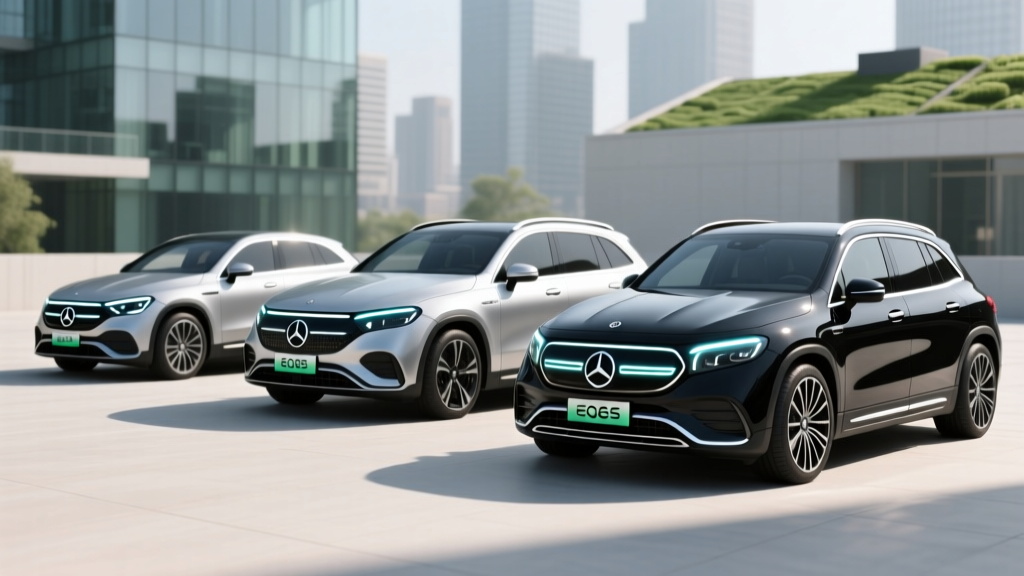
The 2026 Mercedes-Benz electric SUV lineup spans three distinct models. The EQB (EPA 251 mi, ~$54,000) is a compact 3-row family hauler. The EQE SUV (EPA 305 mi, ~$78,000) is a midsize luxury cruiser with 800V-class charging. The EQS SUV (EPA 305-330 mi, ~$105,000) is the flagship with the most range and tech. None currently qualify for the full $7,500 federal §30D tax credit due to battery-sourcing rules — verify current eligibility at IRS.gov before purchasing.
The Mercedes Electric SUV Lineup at a Glance
Mercedes-Benz fields three battery-electric SUVs for the U.S. market in 2026, each targeting a different buyer profile. The naming convention mirrors their gas counterparts: EQB slots in as the compact entry, EQE SUV occupies the midsize luxury segment, and the EQS SUV sits at the top as a full-size premium flagship. All three use the CCS1 connector for DC fast charging in the U.S. market, though Mercedes has committed to adopting the NACS (Tesla) connector on future models.
| Spec | EQB 350 4MATIC | EQE 350+ SUV | EQS 450+ SUV |
|---|---|---|---|
| EPA Range | 251 mi | 305 mi | 330 mi |
| Battery (usable) | 66.5 kWh (NMC) | 90.6 kWh (NMC) | 108.4 kWh (NMC) |
| Peak DC Charge Rate | 100 kW | 170 kW | 200 kW |
| 10–80% DC Fast Charge | ~32 min | ~32 min | ~31 min |
| Level 2 Charge Rate | 9.6 kW | 9.6 kW | 9.6 kW |
| Horsepower | 288 hp | 288 hp (RWD) | 355 hp (RWD) |
| 0–60 mph | 5.8 sec | 6.4 sec | 6.3 sec |
| MPGe (combined) | 94 MPGe | 93 MPGe | 87 MPGe |
| Seating | 5–7 (optional 3rd row) | 5 | 5–7 (optional 3rd row) |
| Cargo (behind 2nd row) | 22.0 cu ft | 27.4 cu ft | 33.5 cu ft |
| Base MSRP | ~$54,350 | ~$78,050 | ~$105,550 |
| Battery Warranty | 8 yr / 100,000 mi | 8 yr / 100,000 mi | 8 yr / 100,000 mi |
Real-World Range vs. EPA Sticker
EQB 350: EPA 251 mi. Expect ~210–225 mi on sustained highway driving at 70+ mph; ~185–200 mi in sub-freezing temperatures.
EQE 350+ SUV: EPA 305 mi. Expect ~260–280 mi highway; ~230–250 mi in cold weather.
EQS 450+ SUV: EPA 330 mi. Expect ~280–300 mi highway; ~250–270 mi in cold weather. The large 108.4 kWh battery provides a bigger buffer, but the heavy curb weight (~5,900 lbs) limits efficiency.
Charging Speed and Infrastructure: What You'll Actually Experience
The most significant practical difference across the lineup is DC fast-charge capability. The EQB's 100 kW peak rate means road-trip stops take noticeably longer than the EQE and EQS. Here's how that translates to real-world charging:
| Charging Level | Power (kW) | EQB Miles/Hr | EQE SUV Miles/Hr | EQS SUV Miles/Hr |
|---|---|---|---|---|
| Level 1 (120V household) | ~1.4 kW | ~4 mi/hr | ~3 mi/hr | ~3 mi/hr |
| Level 2 (240V home/public) | 9.6 kW | ~28 mi/hr | ~25 mi/hr | ~24 mi/hr |
| DC Fast Charge (peak) | 100–200 kW | ~140 mi/30 min | ~200 mi/30 min | ~230 mi/30 min |
A critical detail buyers often miss: peak charge rate is not sustained. The EQS SUV may hit 200 kW at low state-of-charge (SoC), but the charge curve tapers significantly above 50% SoC, dropping to ~80 kW by 70%. This is why Mercedes quotes 10–80% times rather than 0–100%. For road trips, plan charging stops around the 10–80% window for maximum efficiency.
At home, a Level 2 charger (9.6 kW) fully replenishes the EQB overnight in roughly 7 hours, the EQE in ~9.5 hours, and the EQS in ~11.5 hours. If your daily commute is under 60 miles, even the EQS will recharge fully from a standard overnight session. Home charger installation typically runs $500–$2,000 depending on panel proximity and local permitting — budget for a licensed electrician to assess your 200A panel capacity before purchase.
Cost of Ownership: Mercedes Electric SUV vs. Gas Equivalent
The premium EV proposition only works if you run the numbers honestly. Below is a 5-year total cost of ownership comparison between the EQE 350+ SUV and its closest gas counterpart, the GLE 350.
| Cost Category | EQE 350+ SUV | GLE 350 4MATIC |
|---|---|---|
| Base MSRP | $78,050 | $63,500 |
| Federal Tax Credit (§30D) | $0 (sourcing rules)* | $0 |
| Est. 5-Year Fuel/Energy | $4,200 (home L2, $0.14/kWh avg) | $11,800 (premium gas, $4.10/gal, 22 MPG) |
| Est. 5-Year Maintenance | $2,100 | $4,800 |
| Est. 5-Year Insurance | $12,500 | $9,800 |
| Est. 5-Year Depreciation | $32,000 | $24,000 |
| 5-Year Total (excl. financing) | ~$128,850 | ~$113,900 |
*Check current §30D eligibility at IRS.gov. As of 2026, most Mercedes-Benz EVs do not qualify for the full $7,500 credit due to battery-component and critical-mineral sourcing requirements, though partial credits or point-of-sale lease credits may apply depending on the dealer structure.
Key takeaway: the EQE saves roughly $9,600 in fuel and maintenance over 5 years but costs ~$14,550 more upfront and loses ~$8,000 more to depreciation. Insurance premiums for EVs run 15–25% higher on average due to battery-repair costs. The break-even point on operating savings alone extends beyond 7 years for most buyers.
Tax Credit Reality Check for Mercedes EVs
§30D Federal Tax Credit Requirements (2026)
- MSRP Cap: SUVs/vans/pickups must be ≤$80,000. This disqualifies the EQS SUV entirely and most EQE trims.
- Buyer Income Cap: AGI ≤$300,000 (joint), ≤$225,000 (head of household), ≤$150,000 (single).
- Battery Component Sourcing: ≥75% of battery components must be manufactured or assembled in North America (phased thresholds).
- Critical Minerals: ≥80% of critical minerals must be sourced from the U.S. or FTA partners.
- Point-of-Sale Transfer: Eligible credits can be transferred to the dealer at purchase for an immediate price reduction.
- Lease Loophole (§45W): Commercial lease credits are not subject to the same sourcing/income caps — some dealers pass savings through. Confirm with your dealer and tax professional.
The EQB 350 at ~$54,350 MSRP clears the price cap, but its battery pack is sourced from suppliers that may not meet the 2026 critical-minerals threshold. Always verify eligibility on fueleconomy.gov for the specific VIN before committing.
Common Misconceptions About Mercedes Electric SUVs
| Myth | Fact |
|---|---|
| "Mercedes EVs get the full $7,500 tax credit." | Most do not qualify due to battery-sourcing rules. Some leases may pass through a commercial credit — verify per VIN. |
| "The EQS SUV charges at 200 kW the entire session." | Peak 200 kW occurs only at low SoC. The charge curve tapers to ~80 kW above 70% SoC. Plan 10–80% stops for efficiency. |
| "I don't need home charging — public chargers are everywhere." | Public DC fast-charging costs 2–4× more per kWh than home charging and is less reliable. Without home L2, ownership costs rise significantly and convenience drops. |
| "EV batteries need replacement every 5 years." | NMC batteries in these models are warranted for 8 years/100,000 miles at ≥70% capacity retention. Real-world degradation data from similar platforms shows ~8–12% loss over 100,000 miles. |
| "The EQB's 251-mile range is fine for road trips." | With real-world highway range closer to 215 mi and 100 kW charging, road trips require more frequent and longer stops than the EQE or EQS. Plan accordingly. |
Real-World Ownership Considerations
Home Charging Access
If you own a home with a garage or dedicated parking spot near a 240V outlet (or can install one), any of these three SUVs works well as a daily driver. The Level 2 charge rate of 9.6 kW across all three models means overnight charging covers virtually any daily commute. Renters or apartment dwellers without charging access should carefully evaluate public charging availability in their area before committing — rely on apps like PlugShare or ChargePoint to map nearby stations.
Cold-Weather Range Loss
All three models use NMC (nickel-manganese-cobalt) chemistry, which experiences more cold-weather range loss than LFP. Expect 15–25% range reduction in sustained sub-32°F driving. The EQS SUV's larger battery provides a bigger absolute buffer (~70 miles of cushion vs. ~40 for the EQB), making it the better cold-climate choice. All three include heat pumps as standard, which reduces cabin-heating energy draw compared to resistive heaters.
Driving Patterns
For city-heavy commutes under 50 miles round-trip, regenerative braking (Mercedes offers adjustable regen via paddle shifters, including a strong one-pedal mode) maximizes efficiency, and the EQB's smaller battery is perfectly adequate. For frequent 200+ mile highway trips, the EQE or EQS SUV's faster charging and greater range meaningfully reduce stop frequency and duration.
Decision Framework: Which Mercedes Electric SUV Should You Buy?
Choose the EQB If:
- Your budget is under $60,000 and you need a compact luxury EV
- You need an occasional 3rd row for kids (it's tight — not for adults)
- Your daily commute is under 80 miles and you rarely road-trip beyond 200 miles
- You prioritize agility and urban maneuverability over range
Choose the EQE SUV If:
- You want the best balance of range (305 mi EPA), charging speed (170 kW), and interior space
- You take regular road trips and want ~30-minute 10–80% charging stops
- You value the MBUX Hyperscreen and latest Mercedes driver-assist tech
- Budget is $80,000–$95,000 and you're comfortable without a 3rd row
Choose the EQS SUV If:
- Budget exceeds $100,000 and you want the maximum range and luxury Mercedes offers
- You need a 3rd row in a premium EV (one of very few options)
- You want the most comfortable long-distance cruiser with the largest battery buffer
- Tax credit ineligibility is not a dealbreaker at this price point
Choose a Plug-in Hybrid Instead If:
- You lack home charging access and can't install a Level 2 charger
- You regularly drive 300+ miles in rural areas with sparse DC fast-charging infrastructure
- You want Mercedes luxury without the EV price premium — consider the GLE 350e PHEV (~30 mi electric-only range, ~56 MPGe combined)
Frequently Asked Questions
Do any Mercedes electric SUVs qualify for the $7,500 federal tax credit in 2026?
The EQB 350 clears the MSRP cap but likely fails the battery-sourcing requirements for the full credit. The EQE and EQS SUVs exceed the $80,000 SUV MSRP cap. Some buyers may access savings through a lease structure that uses the §45W commercial credit — discuss with your dealer and a tax professional. Always verify at IRS.gov.
How much does it cost to charge a Mercedes electric SUV at home?
At the U.S. average residential electricity rate of ~$0.16/kWh (varies significantly by state), a full charge of the EQB costs ~$10.64, the EQE ~$14.50, and the EQS ~$17.34. For context, filling the GLE 350's 22.5-gallon tank with premium at $4.10/gal costs ~$92.25.
What is the real-world highway range of the EQS SUV?
The EPA rates the EQS 450+ SUV at 330 miles. In sustained 70–75 mph highway driving at moderate temperatures, expect ~280–300 miles. In winter conditions (below 32°F), expect ~250–270 miles. The large 108.4 kWh battery still provides a comfortable buffer for most 250-mile trips without charging.
Can I use Tesla Superchargers with a Mercedes electric SUV?
As of 2026, Mercedes-Benz EVs sold in the U.S. use the CCS1 connector. Tesla's NACS connector is not natively compatible. Mercedes has announced plans to adopt NACS on future models, and some Tesla Supercharger stations now include CCS cables with a Magic Dock adapter. Check Tesla's Supercharger map for CCS-compatible locations in your area.
How long will the battery last in a Mercedes electric SUV?
Mercedes warrants the high-voltage battery for 8 years or 100,000 miles, whichever comes first, with a capacity-retention threshold of 70%. Based on NMC degradation data from similar platforms, expect ~8–12% capacity loss at 100,000 miles under normal use. Avoiding frequent DC fast charging above 80% SoC and not letting the battery sit at 100% SoC for extended periods will help preserve long-term health. Full battery replacement costs are estimated at $15,000–$25,000+ depending on the model, though most batteries outlast the warranty period.
Is Mercedes-Benz Drive Pilot self-driving?
No. Mercedes-Benz Drive Pilot is a Level 2 driver-assistance system (with limited Level 3 capability in specific, geofenced conditions in certain markets). The driver must remain attentive and ready to take over at all times. It is not equivalent to a Level 4 autonomous system like Waymo. Do not confuse driver-assist with self-driving capability.