The Short Answer on Electric Mini Boats for Adults
Electric mini boats for adults — typically 8-to-12-foot personal watercraft powered by 1 kWh to 10 kWh lithium battery packs — are a niche recreational product, not a replacement for an electric vehicle. Prices range from roughly $1,200 for basic inflatable pontoons to $15,000+ for rigid-hull models with 20+ mph top speeds. They share battery chemistry and charging concepts with EVs, but the ownership economics, range, and infrastructure are entirely different. If you're researching electric mini boats as a recreational purchase or as a way to understand small-scale battery-electric propulsion before committing to a full EV, this guide breaks down the real numbers and compares them to electric car ownership in 2026.
What Are Electric Mini Boats for Adults?
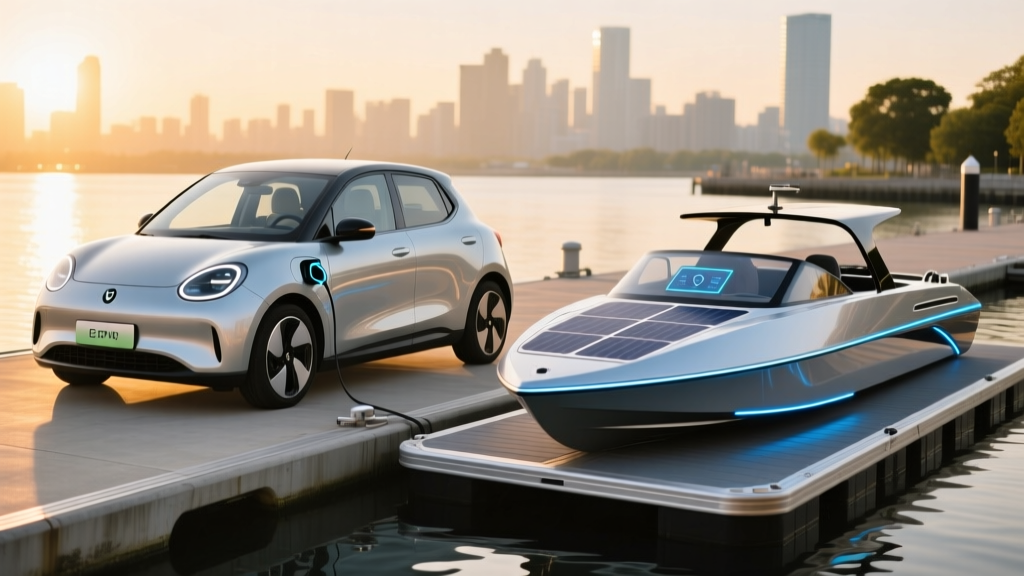
Electric mini boats are compact, battery-powered watercraft designed for one to four adults on calm lakes, slow rivers, and protected coastal waters. They use electric outboard motors (typically 1 kW to 10 kW of continuous power) paired with onboard lithium-ion or lithium iron phosphate (LFP) battery packs. Unlike electric cars measured in 60-120 kWh, these boats carry between 1 kWh and 10 kWh of usable energy — closer to an e-bike or electric scooter than a highway-capable BEV.
Popular categories in 2026 include:
- Inflatable electric pontoons: 1-3 kWh battery, 3-5 mph top speed, 10-20 mile range, $1,200-$3,500
- Rigid-hull electric dinghies: 3-6 kWh battery, 5-10 mph, 15-30 mile range, $4,000-$8,000
- Performance electric runabouts: 8-15 kWh battery, 15-25 mph, 20-40 mile range, $9,000-$18,000
The propulsion technology mirrors EVs: a battery pack feeds a motor controller that drives an electric motor. Regenerative systems are rare on water since boats lack the braking cycles that make regen effective in cars. Thermal management is also simpler — most mini boat batteries are air-cooled, unlike the liquid-cooled packs in EVs from Tesla, Hyundai, or Ford.
Electric Mini Boat vs Electric Car: Spec Comparison
To put electric mini boats for adults in context, here's how a typical mid-range rigid-hull electric dinghy compares to a mainstream 2026 EV like the Chevrolet Equinox EV and a comparable gas-powered boat with a 9.9 HP outboard:
| Specification | Electric Mini Boat (Rigid Hull, 5 kWh) | 2026 Chevrolet Equinox EV 2LT | Gas Boat (9.9 HP Outboard) |
|---|---|---|---|
| Energy Capacity | 5 kWh (NMC lithium-ion) | 85 kWh usable (NMC) | 6-gallon fuel tank (~200 kWh chemical energy) |
| Motor Power | 5 kW (~6.7 HP) | 213 HP (159 kW) | 9.9 HP (7.4 kW) |
| Top Speed | 8-10 mph | 0-60 in 7.8 sec; 112 mph governed | 15-20 mph |
| Range | 15-25 miles at 5 mph | EPA 319 mi; ~260 mi real-world highway | 40-60 miles |
| "Refuel" Time | 5-8 hours (120V Level 1) | 10-80% in ~27 min at 150 kW DCFC | 5 minutes (gas can) |
| Purchase Price | $5,500-$7,500 | $33,600 MSRP (before credits) | $3,500-$5,000 (boat + motor) |
| Fuel/Energy Cost per Hour | ~$0.50-$1.00 (at $0.15/kWh) | ~$4.50/100 mi (at $0.15/kWh) | ~$5.00-$8.00 (gas at $3.50/gal) |
| Maintenance | Near-zero (no oil, impeller service annually) | Tire rotation, cabin filter, fluid checks | Oil change, spark plugs, lower unit lube, winterization |
The scale difference is stark. An electric mini boat carries less energy than a single Chevy Bolt module, yet the physics of water resistance means that 5 kWh might only push a hull 20 miles at displacement speed. Water is roughly 800 times denser than air, so hull drag dominates efficiency in ways that aerodynamic drag does not for cars below 50 mph.
Real Costs: Purchase, Charging, and Maintenance
If you're weighing electric mini boats for adults as a recreational purchase, the total cost of ownership is actually favorable compared to gas-powered equivalents — provided you use the boat frequently enough to justify the upfront premium.
| Cost Category | Electric Mini Boat (5 kWh, $6,500) | Gas Boat (9.9 HP, $4,200) |
|---|---|---|
| Purchase Price | $6,500 | $4,200 |
| Annual Energy (50 outings × 4 hrs) | $60 (at $0.15/kWh) | $420 (at $3.50/gal, ~1 gal/hr) |
| Annual Maintenance | $75 (impeller, inspection) | $350 (oil, plugs, lower unit, winterization) |
| Battery Replacement (Year 8-10) | $1,500-$2,500 | N/A |
| 5-Year Total Cost | $7,275 | $8,450 |
| 10-Year Total Cost | $11,050 (incl. battery swap) | $12,700 |
The breakeven point against a gas boat typically arrives around year 4-5. After that, the electric mini boat's lower operating costs compound. However, the battery replacement event in years 8-10 is a real expense that gas-boat owners don't face — similar to how EV buyers must eventually consider traction battery degradation, even though most 2026 EVs carry 8-year/100,000-mile battery warranties per federal mandate.
Charging and Battery Realities for Electric Mini Boats
Unlike EVs, which benefit from the expanding NACS/CCS DC fast-charging network, electric mini boats charge exclusively from standard AC outlets. Here's what that means in practice:
- Level 1 (120V household outlet): Most mini boats ship with a 120V charger rated at 300W to 800W. A 5 kWh pack takes 6-10 hours from empty — plan to charge overnight after every outing.
- Level 2 (240V): Some premium models offer 240V charging at 1.5-3 kW, cutting charge time to 2-4 hours. This requires a marine-rated or outdoor 240V outlet near your dock or storage.
- No DC fast charging: The battery packs are too small and lack the thermal management to handle high-rate DC charging. Don't expect any equivalent to a 150 kW Supercharger stop.
Battery chemistry matters here. Most budget electric mini boats use NMC (nickel manganese cobalt) cells, which offer higher energy density but degrade faster if stored at 100% state of charge or exposed to heat. Higher-end models are beginning to adopt LFP (lithium iron phosphate) chemistry, which trades some energy density for longer cycle life and safer storage — the same trade-off you'll see in the Tesla Model 3 Standard Range and Ford Mustang Mach-E Select.
For owners in colder climates, expect 20-35% range reduction when water temperatures drop below 50°F. Battery internal resistance increases in cold conditions, and unlike EVs with heat pumps and liquid thermal management, mini boat batteries have no active warming system. If you boat in northern states from October through April, plan for significantly shorter outings.
Common Misconceptions About Electric Mini Boats
| Myth | Fact |
|---|---|
| "They have zero range anxiety" | With only 15-25 miles of range and no public marine charging infrastructure, range planning is critical. Running out of battery on open water means a tow — no 20-minute fast-charge rescue. |
| "They're maintenance-free" | Motors need minimal service, but hulls require cleaning, battery terminals corrode in marine environments, and impellers wear annually. Budget $75-$150/year. |
| "The battery will last forever" | NMC packs typically retain 70-80% capacity after 500-800 full cycles (roughly 5-8 years of weekly use). LFP packs last longer (1,500-2,000 cycles) but cost more upfront. |
| "They qualify for EV tax credits" | The federal §30D tax credit applies to highway-capable four-wheeled vehicles only. Electric mini boats do not qualify. Some states offer separate marine electrification rebates — check your state energy office. |
| "They're as fast as gas boats" | At the mini-boat scale, electric motors deliver instant torque but are limited by battery power output. A 5 kW electric outboard matches a 6.7 HP gas motor — adequate for fishing and cruising, not water sports. |
Decision Framework: Should You Buy an Electric Mini Boat, an EV, or Both?
Choose an electric mini boat if:
- You have lakefront property, dock access, or a storage location with a standard 120V outlet nearby
- Your typical outing is under 15 miles at displacement speeds (fishing, nature cruising, swimming access)
- You want near-silent operation and zero on-water emissions (important for ecologically sensitive waterways)
- You're spending $5,000-$8,000 on recreation and don't need highway transportation
Choose an electric vehicle instead if:
- Your primary goal is reducing daily transportation costs and emissions
- You commute more than 20 miles round-trip and need reliable, year-round range
- You want access to DC fast-charging infrastructure for road trips (the EPA's EV technology overview details how modern EVs achieve 250-350+ miles of range)
- You're eligible for the federal §30D tax credit (up to $7,500 with MSRP, income, and battery-sourcing requirements — see IRS guidelines for new clean vehicle credits)
Consider both if:
- You already own or plan to buy an EV and have $5,000-$8,000 in discretionary recreation budget
- Your EV can tow the mini boat on a lightweight trailer (most compact EVs handle 1,000-1,500 lb towing — a small electric boat on an aluminum trailer falls in this range)
- You boat frequently enough (30+ outings/year) to justify the electric premium over gas
What First-Time EV Buyers Should Know (Whether Boat or Car)
If researching electric mini boats for adults has sparked broader interest in battery-electric technology, several ownership principles transfer directly to EV purchases:
kW vs. kWh is fundamental. Kilowatts (kW) measure power — how fast a motor can deliver energy or a charger can push it into a battery. Kilowatt-hours (kWh) measure energy capacity — how much total energy the battery stores. A 5 kW boat motor drawing from a 5 kWh battery will theoretically run for one hour at full power (less in practice due to efficiency losses). The same logic applies to a 159 kW EV motor drawing from an 85 kWh pack.
Real-world range never matches the sticker. On water, headwinds, current, hull loading, and cold temperatures reduce range 15-35% below calm-condition estimates. In EVs, highway speeds above 65 mph, cold weather below 30°F, and cabin heating can reduce EPA-estimated range by 20-40%. Always plan for the worst-case scenario.
Charging infrastructure defines usability. An electric mini boat is only practical if you can charge it where you store it. An EV is only practical if you can charge at home (Level 2 installation typically costs $500-$2,000 including a 240V outlet and circuit) or have reliable access to workplace or public chargers. Renters and apartment dwellers face real constraints with both.
Battery degradation is gradual, not catastrophic. You won't wake up one morning to a dead battery. Capacity loss follows a curve — steepest in the first 1-2 years, then flattening. Most modern EV batteries retain 85-92% capacity after 100,000 miles based on fleet data. Mini boat batteries, with fewer cycles and simpler chemistry, follow a similar pattern but on a compressed timeline due to smaller pack sizes and less sophisticated management systems.
Frequently Asked Questions
Do electric mini boats for adults qualify for any tax credits?
No. The federal §30D clean vehicle credit applies only to qualified four-wheeled highway vehicles. Electric boats are classified as recreational marine equipment. Some states and local utilities offer rebates for electric marine equipment — check your state energy office or utility provider for marine electrification programs.
How long do electric mini boat batteries last before replacement?
NMC lithium-ion packs typically deliver 500-800 full charge cycles before dropping to 80% capacity — roughly 5-8 years with weekly use. LFP packs can achieve 1,500-2,000 cycles. Replacement battery packs cost $1,500-$3,000 depending on capacity and chemistry. Proper storage (50-60% state of charge, cool and dry) extends lifespan significantly.
Can I charge an electric mini boat from my EV's V2L outlet?
Possibly. Some 2026 EVs with vehicle-to-load (V2L) capability — including the Hyundai Ioniq 5, Kia EV6, and Ford F-150 Lightning — can output 1,900W to 7,200W through standard 120V or 240V outlets. This is more than enough to charge a mini boat's 300W-800W charger, making your EV a mobile power station for dock-side charging.
Are electric mini boats safe in rough water?
No. Electric mini boats are designed for calm, protected waters — lakes, slow rivers, harbors, and sheltered bays. They lack the hull design, freeboard, and power reserves for choppy conditions or open ocean. Always check weather and water conditions, carry a marine VHF radio, and file a float plan just as you would with any watercraft.
How does electric boat maintenance compare to gas boat maintenance?
Electric outboards eliminate oil changes, spark plug replacements, fuel system maintenance, and winterization fuel stabilization. You'll still need to service the impeller (annually), inspect wiring for corrosion (marine environments are harsh on electrical connections), clean the hull, and maintain the battery per manufacturer storage guidelines. Expect to spend $75-$150 annually versus $300-$500 for a comparable gas outboard.
What's the best electric mini boat for fishing?
For fishing, prioritize silent operation, low-speed maneuverability, and 6-8 hours of runtime at 2-4 mph trolling speed. A 5 kWh rigid-hull model with a 3-5 kW motor typically delivers this. Look for models with integrated GPS-based range estimation, a BMS (battery management system) with cell-level monitoring, and USCG-compliant navigation lighting. Brands like Torqeedo and ePropulsion offer fishing-oriented packages in the $5,000-$9,000 range as of 2026.
Sources: U.S. Department of Energy / fueleconomy.gov — EV Technology Overview; IRS — Credits for New Clean Vehicles.