Quick Answer: Which Kia SUV Electric Vehicle Fits You?
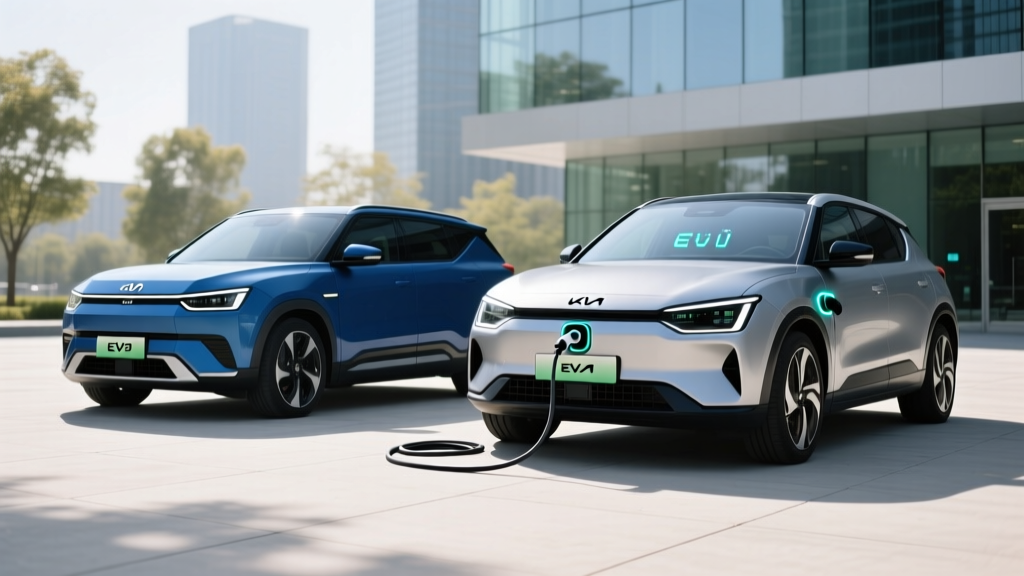
If you need three rows and family hauling, the 2026 Kia EV9 (EPA range up to 304 miles, starting ~$54,900) is Kia's flagship electric SUV. If you want a sportier, more affordable two-row crossover, the 2026 Kia EV6 (EPA range up to 310 miles, starting ~$42,900) delivers faster charging and a lower entry price. Both use Kia's 800V E-GMP architecture for class-leading DC fast charging. Federal §30D tax credit eligibility varies by trim, battery sourcing, and buyer income — check the IRS sidebar below before budgeting.
2026 Kia Electric SUV Lineup at a Glance
Kia currently offers two fully electric SUVs in the U.S. market. The EV6 is a midsize crossover with a coupe-like roofline, while the EV9 is a full-size, three-row family hauler. Both sit on Hyundai Motor Group's Electric-Global Modular Platform (E-GMP), which supports 800V DC fast charging — a significant hardware advantage over rivals limited to 400V systems.
| Spec | 2026 Kia EV6 (Long Range RWD) | 2026 Kia EV9 (Long Range RWD) |
|---|---|---|
| EPA Range | 310 mi | 304 mi |
| Battery (usable) | 77.4 kWh (NMC) | 100.0 kWh (NMC) |
| Peak DC Fast Charge | ~240 kW | ~210 kW |
| 10–80% DC Charge Time | ~18 min | ~24 min |
| Level 2 (240V) Rate | 10.9 kW | 10.9 kW |
| Horsepower | 225 hp (RWD) / 320 hp (AWD) | 215 hp (RWD) / 379 hp (AWD) |
| 0–60 mph | 7.2s (RWD) / 4.6s (AWD GT-Line) | 8.2s (RWD) / 5.0s (AWD) |
| MPGe (combined) | 134 MPGe | 88 MPGe |
| Base MSRP | ~$42,900 | ~$54,900 |
| Battery/Powertrain Warranty | 10 yr / 100,000 mi | 10 yr / 100,000 mi |
Sources: fueleconomy.gov, Kia America. EPA figures vary by trim and wheel size. Real-world highway range is typically 10–15% below EPA; cold-weather (below 30°F) can reduce range by 20–30%.
Real-World Range Reality Check
EV6 Long Range RWD: EPA 310 mi → Expect ~265–280 mi on highway road trips at 70+ mph. In winter conditions (20°F), plan for ~220–240 mi between charges.
EV9 Long Range RWD: EPA 304 mi → Expect ~255–270 mi highway. The EV9's boxy shape and 5,000+ lb curb weight hit efficiency harder at speed. Winter range: ~210–230 mi.
Both vehicles support battery preconditioning — enable it via navigation routing to a charger to warm the pack and hit peak charge rates.
EV vs Gas: What Does a Kia Electric SUV Actually Save You?
The most common question from buyers cross-shopping a Kia EV against a gas-powered Telluride or Sorento is whether the higher sticker price pays off. Let's run the numbers over five years and 75,000 miles.
| Cost Factor (5 yr / 75k mi) | Kia EV9 AWD (~$60k) | Kia Telluride AWD (~$42k) |
|---|---|---|
| Purchase Price (before incentives) | $60,000 | $42,000 |
| Estimated Federal Tax Credit (§30D) | Up to $7,500* | $0 |
| Fuel / Electricity | ~$3,750 (home charging @ $0.14/kWh) | ~$9,375 (22 MPG avg @ $3.50/gal) |
| Maintenance | ~$1,200 | ~$3,500 |
| Insurance (estimated avg) | ~$10,500 | ~$8,250 |
| 5-Year Total Cost | ~$75,450 | ~$63,125 |
*§30D credit eligibility depends on MSRP caps (SUVs: $80,000), buyer AGI limits ($150k single / $300k joint), and battery critical-mineral/component sourcing. Check current rules at IRS.gov. Credit can be transferred to the dealer at point of sale as of 2024+.
Key takeaway: The EV9 saves roughly $5,600 in fuel and $2,300 in maintenance over five years, but the higher purchase price, potentially higher insurance, and uncertain credit eligibility mean breakeven takes longer than many buyers assume. If you drive fewer than 10,000 miles/year or lack cheap home charging, the gas Telluride remains the cheaper option. If you drive 15,000+ miles/year with affordable overnight electricity, the gap narrows quickly.
Charging at Home and on the Road
Charging access is the single biggest ownership variable. Here's what you need to know about keeping a Kia electric SUV powered.
Home Charging (Where 80%+ of Charging Happens)
| Item | Typical Cost Range |
|---|---|
| Level 2 Charger (40A–48A, hardwired) | $400–$700 |
| Electrician labor (240V/50A circuit run) | $600–$2,000 |
| Permit & inspection | $50–$250 |
| Electrical panel upgrade (if needed, 100A→200A) | $1,500–$3,500 |
| Total (no panel upgrade) | $1,050–$2,950 |
| Total (with panel upgrade) | $2,550–$6,450 |
Both the EV6 and EV9 accept up to 10.9 kW on Level 2. That means a full charge from 10% takes roughly 7–9 hours — plug in at night, wake up full. A NEMA 14-50 outlet is the most common setup, but hardwiring eliminates one failure point and supports higher amperage.
DC Fast Charging (Road Trips)
Kia's 800V architecture is a genuine differentiator. At a 350 kW Electrify America or Tesla Supercharger (with NACS adapter, now included on 2025+ models), the EV6 can peak near 240 kW, adding roughly 100 miles of range in 10 minutes. The EV9 peaks around 210 kW. However, peak rate is not sustained rate — charging speed tapers significantly above 80% State of Charge to protect the battery. Plan road-trip stops around 10–80% sessions for maximum efficiency.
| Level | Power | EV6 Miles/Hour | EV9 Miles/Hour |
|---|---|---|---|
| Level 1 (120V household) | ~1.4 kW | ~4 mi/hr | ~3 mi/hr |
| Level 2 (240V home/public) | 10.9 kW | ~36 mi/hr | ~30 mi/hr |
| DC Fast (peak) | 210–240 kW | ~700+ mi/hr (peak) | ~550+ mi/hr (peak) |
Tax Credit, Incentives, and Purchase Considerations
Federal §30D tax credit rules have tightened significantly. For 2026, key requirements include:
- MSRP cap: SUVs must be under $80,000 (both EV6 and EV9 qualify on most trims).
- Income cap: Buyer AGI must not exceed $150,000 (single), $225,000 (head of household), or $300,000 (joint).
- Battery sourcing: Increasingly strict critical-mineral and battery-component requirements phased in annually — specific Kia eligibility shifts by model year and battery supplier. Verify at fueleconomy.gov before purchasing.
- Point-of-sale transfer: You can transfer the credit to the dealer for an immediate price reduction rather than claiming it on your tax return.
Many states and utilities offer additional rebates — California's CVRP, Colorado's state credit, and various utility off-peak charging incentives can stack. Check your state energy office and local utility for current programs.
Common Misconceptions About Kia Electric SUVs
| Myth | Fact |
|---|---|
| "The battery will need replacing in 5 years." | Kia warranties the battery for 10 years/100,000 miles with a 70% capacity retention threshold. Industry data shows NMC packs typically lose 10–15% capacity over 150,000+ miles with normal use. |
| "I can't road-trip in an EV." | With 10–80% DC charging in 18–24 minutes and growing 350 kW station density on major corridors, road trips require brief meal/rest stops every 2–3 hours. Planning apps like A Better Routeplanner make this routine. |
| "EVs are worse in cold weather." | Range drops 20–30% in sub-freezing temps — real and worth planning for. But both EVs use heat-pump HVAC systems that mitigate cabin energy draw. Preconditioning while plugged in preserves range. |
| "Charging takes too long." | Home charging is overnight — zero active time. DC fast charging adds 150+ miles in 15 minutes. The 10–80% taper is real, but you're usually eating or stretching during that window. |
| "Kias don't hold value." | EV depreciation has been volatile industry-wide. Kia's 10-year warranty transfers to second owners, which supports resale. However, early EV depreciation remains higher than comparable gas vehicles — factor this into TCO. |
Decision Framework: Which Kia Electric SUV Should You Buy?
Choose the Kia EV6 if:
- You want a two-row crossover with sporty handling and the fastest charging in the Kia lineup.
- Your budget is $42,000–$56,000 and you prioritize efficiency (134 MPGe combined).
- You mostly commute and take occasional road trips — 310 miles EPA covers most daily needs for a week.
- You value a lower curb weight and quicker 0–60 (4.6s in GT-Line AWD).
Choose the Kia EV9 if:
- You need three rows and genuine family-hauling capacity (up to 7 passengers).
- You're cross-shopping the gas Telluride and want to electrify without switching brands.
- Your budget is $54,000–$75,000 and you can leverage the §30D credit.
- You tow occasionally (EV9 rated up to 5,000 lbs with AWD — uncommon for electric SUVs in this class).
Consider a Kia Hybrid (Sorento PHEV) instead if:
- You lack reliable home or workplace charging access.
- You regularly drive 400+ mile routes through charging-sparse rural areas.
- Your budget is under $40,000 and you want electrified driving without full BEV commitment.
First-Time EV Buyer Checklist
- Audit your charging options. Can you install a 240V outlet at home? Does your workplace offer Level 2 charging? Without daily access to cheap charging, EV ownership gets expensive and inconvenient fast.
- Map your actual driving. Most Americans drive under 40 miles/day. If your daily commute plus errands fit within 80% of EPA range, range anxiety is overblown. If you regularly exceed 250 miles in a day, plan your charging stops.
- Get an electrician quote early. Before purchasing, spend $150–$250 on a home electrical assessment. Knowing whether you need a panel upgrade (and what it costs) prevents post-purchase surprises.
- Verify tax credit eligibility. Use the IRS VIN-check tool and confirm sourcing requirements for the specific model year and trim. Don't budget around $7,500 until you've confirmed in writing.
- Insurance shop before you buy. EV insurance premiums run 15–25% higher than comparable gas vehicles on average. Get quotes on the exact trim — GT-Line and GT trims carry notably higher rates.
- Test the actual charge port location. The EV6 and EV9 use a rear-quarter charge port. Make sure it aligns with your garage or driveway charging setup.
Frequently Asked Questions
Does Kia offer any other electric SUVs besides the EV6 and EV9?
As of 2026, the EV6 and EV9 are Kia's two dedicated electric SUVs in the U.S. The Niro EV (a smaller subcompact crossover) was previously available but has been limited in recent model years. Kia has announced plans for additional EVs, but no further electric SUVs are currently on sale.
Can I use Tesla Superchargers with a Kia EV6 or EV9?
Yes. Starting with 2025 model-year vehicles, Kia equips new EVs with the NACS (North American Charging Standard) port natively, granting direct access to Tesla's Supercharger network — over 25,000 stalls nationwide. Owners of earlier CCS-equipped models can use a Kia-approved NACS adapter. This dramatically expands fast-charging options for road trips.
How much does it cost to charge a Kia EV9 at home per month?
At the U.S. average residential rate of ~$0.16/kWh (check your local utility), fully recharging the EV9's 100 kWh battery costs about $16. If you drive 1,200 miles/month at ~3.0 mi/kWh, you'll use roughly 400 kWh — about $64/month. Compare that to ~$190/month in gas for a Telluride at 22 MPG and $3.50/gallon. Off-peak utility rates can cut home charging costs by 30–50%.
What happens if the battery degrades significantly?
Kia's battery warranty guarantees at least 70% capacity retention for 10 years or 100,000 miles. If capacity drops below that threshold within the warranty period, Kia will repair or replace the battery at no cost. Out-of-warranty replacement costs are estimated at $10,000–$18,000 depending on pack size, though real-world data suggests most NMC packs retain 85–90% capacity at 100,000 miles under normal use. You can monitor State of Health (SoH) through the Kia Connect app or via OBD-II diagnostic tools.
Is the Kia EV9 safe?
The EV9 earned a 5-star overall safety rating from NHTSA and was named an IIHS Top Safety Pick+ by the Insurance Institute for Highway Safety. Standard ADAS features include forward collision-avoidance assist, blind-spot monitoring, lane-keeping assist, and highway driving assist — a Level 2 driver-assistance system requiring the driver to remain engaged at all times.
EV6 or EV9 for towing?
The EV9 AWD is rated to tow up to 5,000 lbs — competitive with many gas midsize SUVs. The EV6 is rated for up to 2,700 lbs (with AWD). Note that towing significantly reduces range — expect a 30–50% range reduction at maximum trailer weight, especially at highway speeds.