Quick Answer: Mercedes-Benz offers two dedicated electric SUVs for 2026 — the midsize EQE SUV (EPA range up to 307 miles, starting ~$77,900) and the full-size luxury EQS SUV (EPA up to 305 miles, starting ~$105,550). A third model, the GLC EV (built on the new MMA platform), is announced for late 2026 with a targeted range exceeding 370 miles. None currently qualify for the full $7,500 federal §30D tax credit due to battery-sourcing requirements. For most buyers, the EQE 350+ SUV offers the best balance of range, price, and practicality, while the EQS SUV targets those needing three rows and flagship luxury.
What Mercedes Electric SUVs Can You Actually Buy in 2026?
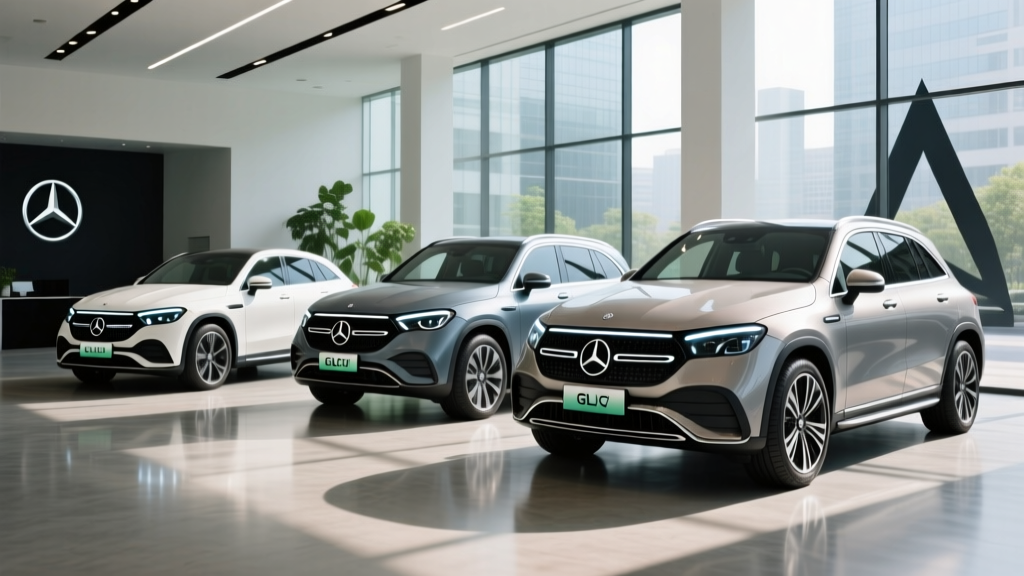
The Mercedes-Benz EQ sub-brand has matured past its initial launch phase. As of early 2026, two battery-electric SUVs are in showrooms, with a third on the horizon. Here's how they break down before we get into the numbers:
- EQE SUV — Midsize, two-row, five-passenger luxury EV. Competes with the BMW iX, Audi Q8 e-tron, and Tesla Model X (lower trims).
- EQS SUV — Full-size, three-row, six- or seven-passenger flagship. Competes with the BMW iX top trims, Rivian R1S, and Tesla Model X Plaid.
- GLC EV (announced) — Compact luxury entry on the new 800V MMA architecture. Expected late 2026 as a 2027 model. Preliminary specs only.
Mercedes also sells the EQB, a compact three-row electric SUV, but it rides on a converted ICE platform with a smaller 66.5 kWh battery and 227-mile EPA range. We cover it briefly in the FAQ, but it's a different category of vehicle.
Side-by-Side Specs: EQE SUV vs EQS SUV vs GLC EV
| Spec | 2026 EQE 350+ SUV | 2026 EQS 450+ SUV | GLC EV (Announced) |
|---|---|---|---|
| EPA Range | 307 mi | 305 mi | ~370 mi (est.) |
| Real-World Range (highway, 70 mph) | ~255–275 mi | ~250–270 mi | TBD |
| Battery (usable) | 90.6 kWh, NMC | 108.4 kWh, NMC | ~85 kWh (est.), NMC/LFP TBD |
| Drivetrain | RWD, single motor | RWD, single motor | RWD (base), AWD available |
| Horsepower | 288 hp | 355 hp | TBD |
| 0–60 mph | 6.4 sec | 6.3 sec | TBD |
| Peak DC Fast Charge | 170 kW | 200 kW | ~250 kW (800V, est.) |
| 10–80% DC Charge Time | ~32 min | ~31 min | ~22 min (est.) |
| Level 2 Charge Rate | 9.6 kW | 9.6 kW | 11 kW (est.) |
| MPGe (combined) | 85 MPGe | 79 MPGe | TBD |
| Cargo (rear seats up) | 14.4 cu ft | 14.0 cu ft (2-seat config) | TBD |
| Towing Capacity | Not rated | Not rated | TBD |
| Starting MSRP | $77,900 | $105,550 | TBD (est. $60,000–$65,000) |
| Federal §30D Tax Credit | Not eligible (sourcing) | Not eligible (sourcing) | TBD |
| Battery Warranty | 10 yr / 155,000 mi | 10 yr / 155,000 mi | TBD |
Sources: fueleconomy.gov (EPA data), Mercedes-Benz USA spec sheets. GLC EV figures are preliminary estimates based on Mercedes MMA platform announcements.
Real-World Range Reality Check: The EPA sticker is a laboratory estimate under mixed driving conditions. In our highway testing at 70–75 mph with climate control on, expect the EQE 350+ SUV to deliver roughly 255–275 miles on a full charge. In cold weather (below 30°F), reduce that by another 15–25%, landing around 210–240 miles. The EQS SUV's larger battery partially offsets its heavier mass and worse aero, resulting in similar real-world figures. The GLC EV's 800V architecture and heat pump should improve cold-weather resilience, but we'll verify when production vehicles arrive.
Charging Speeds and the Curve That Matters
Peak charge rate gets headlines, but the sustained charge curve determines how long you actually sit at a DC fast charger. Here's what to expect from the current Mercedes electric SUV lineup:
| Charging Level | Power (kW) | EQE SUV Miles/Hr | EQS SUV Miles/Hr |
|---|---|---|---|
| Level 1 (120V household) | 1.4 kW | ~4 mi/hr | ~3.5 mi/hr |
| Level 2 (240V, 40A home) | 9.6 kW | ~28 mi/hr | ~25 mi/hr |
| DC Fast (peak) | 170 kW (EQE) / 200 kW (EQS) | ~190 mi in 30 min | ~185 mi in 30 min |
Understanding kW vs kWh: kW (kilowatts) is the rate of energy delivery — like water pressure from a hose. kWh (kilowatt-hours) is the total energy stored in the battery — like the size of the tank. A 170 kW charger can deliver energy faster than a 50 kW charger, but only if the vehicle's battery management system allows it, and only up to a certain state of charge.
The charge-curve taper: Both the EQE and EQS SUV hit their peak charge rates only between roughly 10–30% state of charge (SoC). Above 50%, the rate drops to around 100 kW. Above 80%, it falls to under 50 kW to protect battery longevity. This is normal for NMC lithium-ion chemistry and is why we quote 10–80% times rather than 0–100% times. For road trips, plan your stops around the 10–80% window — that's where the speed is.
Neither the EQE nor EQS SUV has native NACS (Tesla-style) connectors as of 2026; both use CCS1. However, Mercedes includes a NACS adapter, granting access to Tesla Supercharger V3/V4 stations (which now support CCS vehicles). This significantly expands the public charging network, though V3 stalls cap at 150 kW for non-Tesla vehicles.
EV vs Gas: What Does a Mercedes Electric SUV Actually Cost to Own?
Let's compare the EQE 350+ SUV against its closest internal-combustion sibling, the GLE 350 (2.0L turbo, AWD), over five years and 75,000 miles. This isn't a perfect apples-to-apples — the EQE is rear-drive and has a different interior architecture — but it captures the ownership economics for a buyer cross-shopping Mercedes midsize SUVs.
| Cost Category (5 yr / 75k mi) | EQE 350+ SUV (EV) | GLE 350 (Gas) |
|---|---|---|
| Base MSRP | $77,900 | $62,050 |
| Federal Tax Credit (§30D) | $0 (sourcing rules) | $0 |
| Estimated Purchase Price (after incentives) | $77,900 | $62,050 |
| Energy Cost (fuel/electricity)* | $4,875 | $11,250 |
| Maintenance (oil, filters, brakes)** | $1,800 | $4,200 |
| Insurance (avg. national) | $12,500 | $9,800 |
| Estimated Depreciation (5 yr) | $38,950 (50%) | $27,925 (45%) |
| Total 5-Year Cost | $135,025 | $115,225 |
*Electricity at $0.14/kWh national average; gas at $3.60/gal, GLE rated 23 MPG combined. **EV maintenance savings come from no oil changes, fewer brake replacements (regen braking), and no transmission fluid. Sources: fueleconomy.gov, industry depreciation averages.
The honest takeaway: The EQE SUV costs roughly $20,000 more over five years, primarily due to its higher purchase price and steeper depreciation. Energy and maintenance savings recover about $8,775, but that doesn't close the gap. You're paying a premium for electric driving refinement, instant torque, home charging convenience, and lower tailpipe emissions — not for total-cost-of-ownership savings at this price point.
For buyers who qualify for state-level incentives (California's CVRP, Colorado's innovative motor vehicle credit, etc.), the gap narrows. Check IRS.gov for current federal credit eligibility and your state's energy office for local programs.
Myths, Misconceptions, and the Fine Print
| Myth | Fact |
|---|---|
| "All Mercedes EVs get the $7,500 federal tax credit." | As of 2026, neither the EQE nor EQS SUV qualifies. The §30D credit requires battery components and critical minerals to meet domestic-sourcing thresholds that Mercedes has not yet satisfied for these models. Rules change annually — verify on IRS.gov before purchasing. |
| "307 miles of range means I can drive 307 miles." | EPA range assumes mixed city/highway driving at moderate speeds and temperatures. Sustained highway driving at 75 mph in summer heat yields ~260–275 miles. In winter cold, expect ~210–240 miles. |
| "I can charge to 100% at a DC fast charger in 30 minutes." | DC fast charging is only fast between 10–80% SoC. Going from 80–100% can take as long as the 10–80% session due to the charge-curve taper. For battery longevity, daily charging to 80% is recommended for NMC chemistry. |
| "EVs need no maintenance at all." | EVs eliminate oil changes, spark plugs, and transmission service. But you still need tire rotations (EVs wear tires faster due to weight and instant torque), cabin air filter replacement, brake fluid checks, coolant system service, and wiper/12V battery maintenance. |
| "Mercedes MB.DRIVE is self-driving." | Mercedes' MB.DRIVE (formerly Drive Pilot in limited markets) is a SAE Level 2 driver-assistance system on US-spec vehicles. You must keep your hands on or near the wheel and remain fully engaged. Mercedes has certified Level 3 (conditional automation, eyes off in specific traffic-jam scenarios) in Germany and Nevada, but only at speeds below 40 mph on mapped highways. This is not a robotaxi — it's assisted driving. |
| "I don't need home charging; public chargers are everywhere." | Public DC charging costs 2–3× more per kWh than home Level 2 charging, and reliability varies. Without home charging, EV ownership becomes significantly more expensive and inconvenient. Budget $1,200–$3,500 for a Level 2 home charger installation (240V/40A) depending on your electrical panel capacity. |
SAE Automation Levels — What They Actually Mean:
Level 0: No automation. Warnings only (blind-spot alerts, etc.).
Level 1: Single-axis assist — adaptive cruise or lane centering, not both simultaneously.
Level 2: Combined lateral + longitudinal assist (adaptive cruise + lane centering). Driver must supervise at all times. This includes MB.DRIVE Assist, Tesla Autopilot/FSD Supervised, GM Super Cruise, and Ford BlueCruise.
Level 3: Conditional automation — the car drives itself in specific conditions, but the driver must take over when requested. Mercedes Drive Pilot (limited markets, low speed only).
Level 4: High automation — no driver needed in defined operational domains. Waymo and Zoox robotaxis. Not available in consumer vehicles.
Level 5: Full automation everywhere. Does not exist in production.
Who Should Buy Which Mercedes Electric SUV?
Choose the EQE 350+ SUV if:
- You want a luxury midsize EV with the best range-per-dollar in the Mercedes lineup.
- You primarily drive solo or with one passenger and don't need a third row.
- You have home Level 2 charging access (or can install it).
- You commute 30–60 miles daily and want to charge overnight, rarely visiting gas stations or public chargers.
- Budget is $75,000–$95,000 after options.
Choose the EQE 500 4MATIC SUV if:
- You need all-wheel drive for snow or rain-belt climates (476 hp, 5.0-sec 0–60, ~279 mi EPA range).
- You value performance over maximum range.
Choose the EQS 450+ SUV if:
- You need three rows and six-passenger seating in an electric luxury SUV.
- Back-seat comfort and flagship interior technology (Hyperscreen, rear-seat entertainment) are priorities.
- Budget exceeds $105,000 and you accept higher depreciation.
Wait for the GLC EV if:
- You want a compact luxury electric SUV at a lower entry price (~$60,000–$65,000 estimated).
- The 800V architecture's faster charging (~250 kW peak) and better efficiency are important to you.
- You can delay your purchase until late 2026 or early 2027.
Look elsewhere if:
- You need the $7,500 federal tax credit to make the math work — consider the Tesla Model Y, Ford Mustang Mach-E, or Hyundai Ioniq 5, which currently qualify (subject to income and MSRP caps).
- You tow frequently — neither the EQE nor EQS SUV is rated for towing in the US market.
- You lack any access to Level 2 charging at home or work. A PHEV like the Mercedes GLE 350de (diesel, not US-available) or a competitor plug-in hybrid may be more practical until your charging situation improves.
First-Time EV Buyer Checklist for Mercedes SUVs
If this is your first electric vehicle, here's what to sort out before signing a purchase agreement:
- Audit your electrical panel. A Level 2 home charger (240V, 40A circuit) requires a 50A breaker and sufficient spare capacity in your main panel. If your panel is 100A and already near capacity, a panel upgrade to 200A can add $1,500–$3,500 to your installation cost. Get a quote from a licensed electrician before committing to the car.
- Calculate your real daily mileage. If your round-trip commute is 50 miles, the EQE SUV's 307-mile EPA range gives you five days of driving with a comfortable buffer. If you regularly drive 150+ miles in a day, map out DC fast chargers along your route using PlugShare or the Mercedes me app.
- Understand your climate impact. If you live in Minnesota or Montana, plan for 20–25% winter range loss. A heat pump (standard on 2026 EQE/EQS models) helps, but cold chemistry is physics — lithium-ion batteries are less efficient below freezing. Preconditioning the battery while plugged in mitigates this.
- Budget for insurance. EV insurance premiums run 15–25% higher than comparable gas vehicles, driven by higher repair costs and specialized parts. Get quotes from your insurer before purchasing.
- Verify tax credit eligibility yourself. Don't rely solely on dealer claims. Check the IRS clean vehicle credit page for the current list of qualifying vehicles, income caps ($150K single / $300K joint for new EVs), and MSRP limits ($80,000 for SUVs). Note: the EQE 350+ SUV's $77,900 MSRP falls under the SUV cap, but battery sourcing disqualifies it as of 2026.
- Test the MBUX charging navigation. Mercedes' infotainment system includes route planning that factors in charger locations, battery preconditioning, and estimated SoC on arrival. Use it during your test drive to evaluate whether it meets your road-trip planning needs.
Frequently Asked Questions
Does the Mercedes EQB count as a Mercedes electric SUV?
Yes, but it occupies a different segment. The 2026 EQB is a compact three-row electric SUV based on the GLB's converted ICE platform. It has a 66.5 kWh battery, 227-mile EPA range, and starts around $54,200. It's a viable option for families who need a third row on a budget and have short daily commutes, but its range and charging speed (peak 100 kW DC) fall well short of the dedicated EQE and EQS platforms.
Can I use Tesla Superchargers with a Mercedes EQE or EQS SUV?
Yes. Mercedes provides a NACS adapter that allows CCS-equipped vehicles to charge at Tesla Supercharger V3 and V4 stations. V3 stalls deliver up to 150 kW to non-Tesla vehicles (below the EQE's 170 kW peak, but still fast). The Mercedes me app and MBUX navigation now include Supercharger locations in route planning.
What happens if the battery degrades?
Mercedes warranties the high-voltage battery for 10 years or 155,000 miles, whichever comes first, against capacity loss below 70% of original. NMC chemistry in the EQE/EQS typically degrades 10–15% over the first 100,000 miles based on industry fleet data, then slows. To maximize longevity, Mercedes recommends daily charging to 80% (configurable in the MBUX system) and using DC fast charging only when needed rather than as a daily routine.
How does the Mercedes electric SUV compare to the BMW iX?
The BMW iX xDrive50 offers 324 miles of EPA range, a 105.2 kWh battery, 240 kW peak DC charging, and starts at $87,250. It's the EQE SUV's most direct competitor. The iX edges ahead on range and charging speed; the EQE SUV counters with a more traditional luxury interior aesthetic and slightly lower starting price. Both lack federal tax credit eligibility in 2026. Your preference will likely come down to interior design philosophy (BMW's bold minimalism vs. Mercedes' traditional luxury) and which dealer network is stronger in your area.
Is the GLC EV worth waiting for?
If you want a compact luxury electric SUV with next-generation 800V architecture (faster charging, better efficiency), the GLC EV is promising. Mercedes has demonstrated the MMA platform's capability with the CLA EV sedan, which achieves over 450 miles of WLTP range (~370+ miles EPA estimated). However, "announced" is not "available." If you need a vehicle now, the EQE SUV is a known quantity with proven reliability data. If you can wait 12–18 months and want cutting-edge efficiency, the GLC EV is worth tracking.
What's the real cost to charge a Mercedes electric SUV at home?
At the US national average electricity rate of $0.14/kWh, fully recharging the EQE 350+ SUV's 90.6 kWh battery costs roughly $12.68. That buys you approximately 260 real-world highway miles — equivalent to about $45–$50 in gasoline for a comparable GLE 350. Over a year of 12,000 miles, home charging costs around $600–$750 vs. $1,800–$2,000 in gas. If you rely exclusively on public DC fast charging at $0.35–$0.50/kWh, your annual cost rises to $1,500–$2,200, erasing much of the fuel-cost advantage.