Which Hyundai Electric Vehicle Should You Buy?
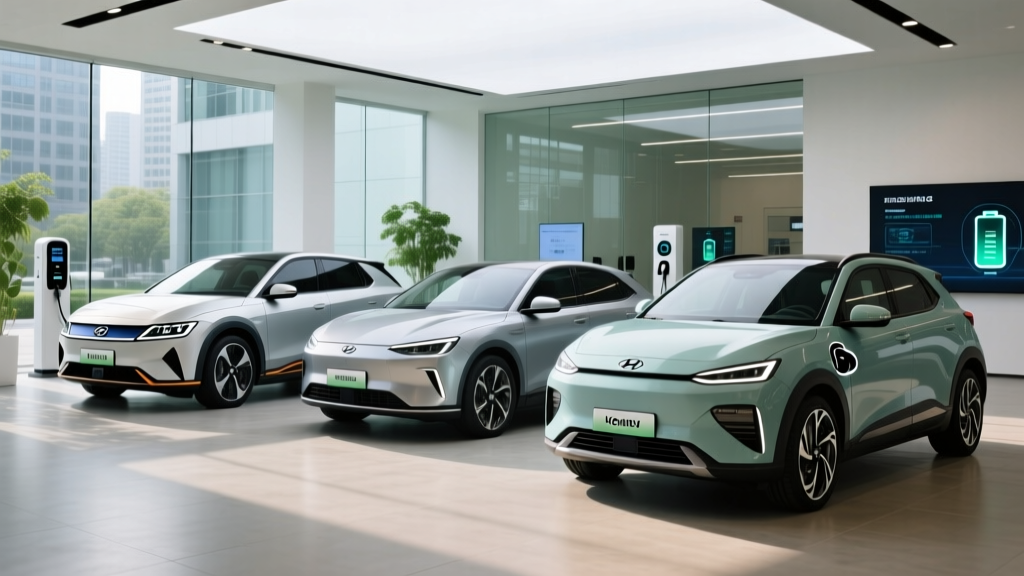
If you want maximum interior space, the fastest charging, and the best road-trip versatility, the 2026 Hyundai Ioniq 5 (EPA range up to 318 miles, 10–80% DC fast charge in ~18 minutes) is the strongest all-around Hyundai electric vehicle. Choose the Ioniq 6 if you prioritize aerodynamic efficiency and highway range (up to 361 miles EPA). Choose the Kona Electric if you want the lowest entry price (~$33,000 MSRP) and primarily drive in the city. All three qualify for varying levels of the federal §30D tax credit depending on battery sourcing, your income, and the point-of-sale transfer rules in effect for 2026.
The 2026 Hyundai EV Lineup at a Glance
Hyundai currently sells three battery-electric vehicles in the United States. Each targets a different buyer profile, and the differences in range, charging architecture, and price are significant enough to matter over a 5-year ownership cycle.
| Spec | 2026 Kona Electric | 2026 Ioniq 5 | 2026 Ioniq 6 |
|---|---|---|---|
| EPA Range (max trim) | 261 mi | 318 mi | 361 mi |
| Battery (usable) | 64.8 kWh (NMC) | 84.0 kWh (NMC) | 77.4 kWh (NMC) |
| Peak DC Charge Rate | ~100 kW (400V) | ~240 kW (800V) | ~240 kW (800V) |
| 10–80% DC Fast Charge | ~43 min | ~18 min | ~18 min |
| Level 2 Charge (full) | ~6.5 hr (10.9 kW) | ~5.5 hr (10.9 kW) | ~5.5 hr (10.9 kW) |
| Horsepower (RWD/AWD) | 201 hp (FWD) | 168/320 hp | 149/320 hp |
| 0–60 mph (AWD) | N/A (FWD only) | 4.5 sec | 5.1 sec |
| MPGe (combined) | 112 MPGe | 114 MPGe | 140 MPGe |
| Starting MSRP | ~$33,000 | ~$42,600 | ~$38,650 |
| Battery/Powertrain Warranty | 10 yr / 100,000 mi | 10 yr / 100,000 mi | 10 yr / 100,000 mi |
Source: fueleconomy.gov and Hyundai USA specifications. Real-world range varies with temperature, speed, and terrain — expect 10–20% less than EPA on sustained highway drives at 75+ mph, and up to 30% loss in sub-freezing conditions without preconditioning.
Real-World Range vs. the EPA Sticker
The EPA range figure is a blended-cycle estimate. In practice, your mileage depends heavily on how and where you drive.
Ioniq 5 (Long Range RWD, 318 mi EPA)
City/mixed driving (60–70 mph): ~280–310 miles achievable with regen braking.
Highway (75 mph sustained): ~250–270 miles.
Cold weather (below 32°F, highway): ~210–240 miles without preconditioning; ~250–260 miles with cabin preconditioning active.
Heat pump equipped trims recover roughly 10–15 miles of range in cold weather vs. resistive heating.
The Ioniq 6's lower drag coefficient (0.21 Cd) gives it a meaningful highway advantage. On a 300-mile road trip at 75 mph, the Ioniq 6 SEL will arrive with more buffer than an equivalently trimmed Ioniq 5, even though the Ioniq 5 has a physically larger battery.
The Kona Electric, with its smaller 64.8 kWh pack, is best suited for commutes and city errands. A 200-mile round trip is feasible in mild weather, but you'll want a mid-trip charge if temperatures drop or you're running the HVAC hard.
Charging Speed: The 800V Advantage
This is where Hyundai's E-GMP platform (Ioniq 5 and Ioniq 6) separates from the Kona Electric and most competitors in this price range.
| Charging Level | Power | Kona Electric | Ioniq 5 / Ioniq 6 |
|---|---|---|---|
| Level 1 (120V household) | ~1.4 kW | ~4 mi/hr | ~3–4 mi/hr |
| Level 2 (240V home/public) | 10.9 kW | ~32 mi/hr | ~30–36 mi/hr |
| DC Fast (peak) | Up to 240 kW | ~100 kW max | ~240 kW (800V architecture) |
The Ioniq 5 and 6 use an 800-volt electrical architecture, allowing them to accept up to ~240 kW at compatible DC fast chargers (Electrify America 350 kW stalls, Tesla Superchargers with the included NACS adapter on 2025+ models). The charge curve peaks between 10–55% State of Charge (SoC), then tapers progressively. Expect 10–80% in roughly 18 minutes under ideal battery temperatures (above 60°F with preconditioning).
The Kona Electric uses a conventional 400V system, capping at roughly 100 kW. A 10–80% charge takes about 43 minutes. For a daily commuter who charges at home overnight, this is a non-issue. For road trippers, it means longer stops.
Charging curve reality check: Peak kW is not sustained kW. No EV charges at its maximum rate from 10% to 80%. The Ioniq 5 holds near 240 kW briefly (roughly 10–35% SoC), then steps down to ~180 kW, then ~120 kW, then ~80 kW as it approaches 80%. The "18-minute" figure accounts for this taper. Above 80%, charging slows dramatically to protect the battery — expect 80–100% to take an additional 20+ minutes.
Cost Breakdown: Hyundai EV vs. Gas Equivalent
Let's compare the 2026 Ioniq 5 SEL (MSRP ~$47,000) against a comparably equipped gas crossover like the Hyundai Tucson SEL AWD (~$33,000 MSRP). This is the comparison most buyers are actually weighing.
| Cost Factor | Ioniq 5 SEL (EV) | Tucson SEL AWD (Gas) |
|---|---|---|
| MSRP | $47,000 | $33,000 |
| Federal §30D Tax Credit (est.) | Up to $7,500* | $0 |
| Effective Purchase Price | ~$39,500 | $33,000 |
| Fuel/Energy (15,000 mi/yr) | ~$540/yr (home charging at $0.13/kWh) | ~$1,800/yr (28 MPG avg, $3.36/gal) |
| Maintenance (annual avg) | ~$200 (cabin filter, tire rotation, fluid top-off) | ~$600 (oil, filters, brakes wear faster) |
| Insurance (annual avg) | ~$1,900 | ~$1,500 |
| 5-Year Fuel/Energy Total | ~$2,700 | ~$9,000 |
| 5-Year Maintenance Total | ~$1,000 | ~$3,000 |
*Federal §30D credit eligibility depends on your modified adjusted gross income (single: ≤$150K, joint: ≤$300K), vehicle MSRP caps ($55K for SUVs like the Ioniq 5), battery critical-mineral and component sourcing requirements, and whether you elect point-of-sale transfer. Verify current-year rules at IRS.gov. Credit amount may be reduced or $0 depending on battery sourcing compliance for the specific build month.
Over five years, the Ioniq 5 saves roughly $8,300 in fuel and maintenance combined, partially offset by ~$2,000 higher insurance costs. The effective price gap narrows from $14,000 (raw MSRP) to approximately $4,500 after the tax credit and five-year operating savings. If you keep the vehicle 8–10 years, the EV typically breaks even or comes out ahead — provided you can charge at home at residential electricity rates.
Home Charging: What First-Time Buyers Must Know
Charging at home is the single biggest factor in EV satisfaction. If you can install a Level 2 (240V) charger, you'll start every morning with a full battery and rarely visit a public charger except on road trips.
| Item | Typical Cost Range |
|---|---|
| Level 2 EVSE hardware (32–48A, hardwired or NEMA 14-50) | $400–$700 |
| Electrician labor (standard install, panel nearby) | $500–$1,200 |
| Electrical permit | $50–$200 |
| Panel upgrade (if 200A service insufficient) | $1,500–$3,500 |
| Total (no panel upgrade) | $950–$2,100 |
| Total (with panel upgrade) | $2,450–$5,600 |
A 48-amp Level 2 circuit requires a 60-amp breaker. Homes with 100-amp electrical service may need a panel upgrade to add a dedicated EV circuit, especially if you already run electric range, dryer, and HVAC. Get a quote from a licensed electrician before purchasing the vehicle — this is the one cost that catches buyers off guard.
If you cannot charge at home (apartment, street parking, no garage access), an EV is still viable but requires planning around public Level 2 or DC fast charging. The Ioniq 5/6's 800V architecture makes public DC charging practical (18-minute stops), but relying exclusively on DC fast charging accelerates battery wear slightly and costs more per mile than home charging.
Tax Credit Eligibility: The Fine Print for Hyundai EVs
As of 2026, the §30D Clean Vehicle Credit remains in effect but with strict sourcing requirements that affect Hyundai models differently than domestic-built competitors.
- Income cap: MAGI ≤ $150,000 (single), ≤ $225,000 (head of household), ≤ $300,000 (joint)
- MSRP cap: ≤ $55,000 for sedans (Ioniq 6), ≤ $80,000 for SUVs/pickups/vans (Ioniq 5, Kona Electric)
- Final assembly: Must occur in North America — the Ioniq 5 is now built at Hyundai's Metaplant in Ellabell, Georgia (production began late 2024). The Kona Electric and Ioniq 6 assembly locations should be verified by VIN at the point of sale.
- Battery sourcing: Critical minerals and battery components must meet escalating percentage thresholds from qualifying trade partners. This can reduce the credit to $3,750 or $0 depending on the build date and supply chain.
- Point-of-sale transfer: You can transfer the credit to the dealer at purchase, reducing your out-of-pocket cost immediately rather than waiting to claim it on your tax return.
Always verify eligibility by entering the specific VIN on fueleconomy.gov before signing a purchase agreement. Battery sourcing compliance changes with supply chain updates throughout the model year.
Common Misconceptions About Hyundai EVs
| Myth | Fact |
|---|---|
| "The battery will need expensive replacement within a few years." | Hyundai's battery warranty covers 10 years/100,000 miles for capacity below 70%. NMC degradation data from E-GMP vehicles shows ~8–12% capacity loss at 100,000 miles under normal use. Full battery replacement (if ever needed out of warranty) costs roughly $12,000–$18,000 depending on pack size. |
| "EVs are worse in cold weather." | Range drops 15–30% in sub-freezing temps, but EVs start reliably (no cold-cranking amps), and preconditioning while plugged in warms the battery and cabin using grid power, preserving range. The Ioniq 5's available heat pump reduces cold-weather losses. |
| "Public charging is unreliable everywhere." | Reliability varies by network. Tesla Superchargers (now accessible to Hyundai via included NACS adapter) consistently report 95%+ uptime. Electrify America and EVgo have improved but still trail. Plan road trips around high-reliability corridors. |
| "I need AWD for snow." | RWD EVs with winter tires outperform most AWD gas cars with all-season tires in snow, thanks to instant torque control and low center of gravity. AWD is helpful but not essential for most winter drivers. |
Decision Framework: Which Hyundai Electric Vehicle Fits You?
Choose the Kona Electric if:
- Your budget is under $35,000 (before incentives)
- Your daily commute is under 60 miles round-trip
- You rarely take road trips over 200 miles
- You want the lowest insurance premiums in Hyundai's EV lineup
Choose the Ioniq 5 if:
- You need maximum cargo space (27.2 cu ft rear seats up, 59.3 cu ft folded)
- You take regular road trips and want 18-minute DC fast charging
- You want AWD availability and a spacious, flat-floor cabin
- Vehicle-to-load (V2L) capability matters (power devices from your car's battery)
Choose the Ioniq 6 if:
- Highway efficiency is your top priority (140 MPGe combined, best in class)
- You drive long distances and want 361 miles of EPA range
- You prefer a sedan's driving dynamics and lower wind noise
- You don't need SUV cargo height or a frunk (Ioniq 6 has minimal front storage)
Frequently Asked Questions
Does Hyundai's EV battery warranty actually cover real-world degradation?
Yes. Hyundai warrants the high-voltage battery for 10 years or 100,000 miles (whichever comes first) against capacity loss below 70% of original capacity. If your battery degrades past that threshold, Hyundai will repair or replace it at no cost. Independent data from fleet Ioniq 5 vehicles suggests typical degradation of 8–12% at 100K miles, well within warranty tolerance.
Can I use Tesla Superchargers with a Hyundai EV?
Starting with 2025 model-year vehicles, Hyundai includes a NACS (North American Charging Standard) port or adapter, enabling access to Tesla's Supercharger network. For 2026 models, this is standard. This significantly expands your DC fast-charging options on road trips, especially in rural corridors where Tesla's network has better coverage than CCS-only networks.
How does Hyundai's highway driver assist compare to Tesla Autopilot?
Hyundai's Highway Driving Assist 2 (HDA2) is an SAE Level 2 system — it handles lane centering and adaptive cruise, including lane-change assist on some trims, but requires your hands on the wheel and full attention at all times. It is not "self-driving." In IIHS evaluations, Hyundai's driver-monitoring systems have scored well for ensuring driver engagement. Tesla's Autopilot offers similar Level 2 capability but with more aggressive marketing; neither system is autonomous.
What happens if I charge exclusively on DC fast chargers?
You won't destroy the battery, but exclusive DC fast charging accelerates degradation slightly compared to Level 2 home charging. Studies on NMC chemistry suggest an additional 2–4% capacity loss over 100,000 miles when DC fast charging is used for more than 75% of charging sessions. If you lack home charging, the Ioniq 5/6 remain practical — just expect the battery to age slightly faster, and stay within warranty coverage.
Is a Hyundai EV practical for apartment dwellers without home charging?
It depends on your local public charging infrastructure. If you have reliable Level 2 chargers at your workplace or near your apartment (ChargePoint, EVgo, or similar), it's workable. If your only option is DC fast charging 2–3 times per week, the time cost (18–45 minutes per session) and higher per-kWh cost ($0.30–$0.48/kWh at public DC stations vs. ~$0.13/kWh at home) reduce the financial advantage. Check PlugShare or your preferred network's app for chargers within a 5-minute detour of your daily routes before committing.