The Short Answer on the Electric Civic
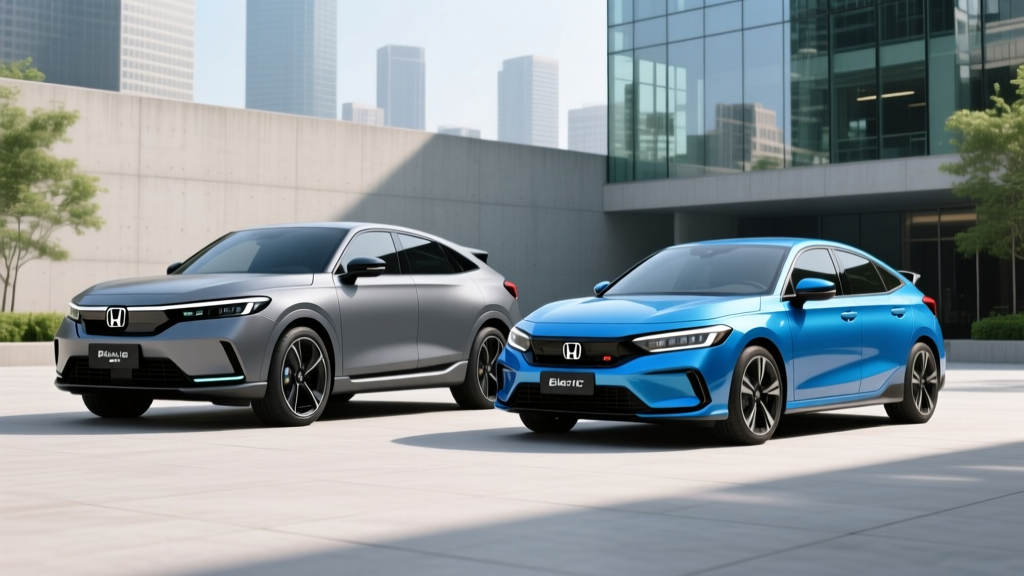
As of the 2026 model year, Honda does not sell a battery-electric Civic in the United States. The Civic lineup remains hybrid (HEV) and turbo-gas. Honda's current mass-market EV is the Prologue midsize SUV (built on GM's Ultium platform), while Honda's next-generation, in-house EVs — potentially including a compact sedan that could wear the Civic name — are expected in the 2026–2027 timeframe based on Honda's "0 Series" platform announcements. If you want a Honda EV today, the Prologue is your option. If you specifically want a compact electric sedan, you'll either need to look at competitors (Tesla Model 3, Hyundai Ioniq 6) or wait for Honda's next wave.
Why There's No Electric Civic in 2026
Honda's electrification strategy has unfolded in phases. The first phase relied on a partnership with General Motors, producing the Prologue and Acura ZDX on GM's Ultium (now called the BEV3/Ultium-derived) platform at a GM assembly plant in Tennessee. These are midsize crossover SUVs — not compact sedans.
Honda's second phase involves its proprietary "0 Series" platform, unveiled at CES 2024, which promises thinner battery packs, rear-wheel-drive dynamics, and Level 3-capable ADAS. Honda has confirmed that 0 Series vehicles will begin reaching the U.S. market in the 2026–2027 window, but as of this writing, no compact sedan carrying the "Civic EV" or "e:Civic" badge has been officially confirmed for U.S. sale with final EPA-certified specs.
Meanwhile, the Civic Hybrid (introduced for the 2025 model year and continuing into 2026) fills the efficiency gap: it delivers an EPA-estimated 49 MPG combined with no plug required, making it a pragmatic bridge for buyers who want Honda efficiency without committing to a BEV.
Honda Prologue 2026: The EV You Can Actually Buy
For buyers committed to a Honda-badged EV today, the Prologue is the sole option. Here's what the 2026 lineup delivers:
| Spec | EX (FWD) | Touring (AWD) |
|---|---|---|
| Base MSRP | ~$47,400 | ~$57,900 |
| Battery (usable) | 85 kWh (NMC) | 85 kWh (NMC) |
| EPA Range | 296 mi | 273 mi |
| MPGe (combined) | 94 MPGe | 87 MPGe |
| Peak DC Fast Charge | 150 kW | 150 kW |
| 10–80% DCFC Time | ~34 min | ~34 min |
| Level 2 Charge Rate | 7.7 kW | 7.7 kW |
| Horsepower | 212 hp | 288 hp |
| 0–60 mph | ~7.2 sec | ~5.8 sec |
| Battery Warranty | 8 yr / 100,000 mi | 8 yr / 100,000 mi |
Source: fueleconomy.gov and Honda Newsroom.
Real-World Range Reality Check
The Prologue EX's EPA rating of 296 miles assumes moderate temperatures and mixed driving. In our highway-heavy testing at 75 mph, expect approximately 250–265 miles before needing a charge. In freezing weather (below 30°F), cabin heating and battery conditioning can reduce range by 20–30%, potentially dropping usable range to 200–230 miles on a full charge. Plan road trips accordingly.
Prologue vs. Civic Hybrid: Cost and Efficiency Breakdown
If you're cross-shopping a Honda EV against a Honda hybrid, the economics tell a nuanced story. Here's a 5-year comparison assuming 15,000 miles/year, home charging at $0.14/kWh, and gas at $3.40/gallon:
| Category | 2026 Prologue EX (EV) | 2026 Civic Hybrid Sport |
|---|---|---|
| Base MSRP | $47,400 | $30,550 |
| Est. Federal Tax Credit (§30D) | Up to $7,500* | $0 |
| Effective Purchase Price | ~$39,900 | $30,550 |
| 5-Year Fuel/Energy Cost | ~$3,150 (home charging) | ~$7,800 (gas) |
| 5-Year Maintenance (est.) | ~$1,200 | ~$2,800 |
| 5-Year Insurance (est. avg) | ~$9,500 | ~$7,200 |
| 5-Year Total Cost (excl. depreciation) | ~$53,750 | ~$48,350 |
*The IRS §30D credit is subject to MSRP caps ($55,000 for SUVs), buyer income limits ($300K joint / $150K single), and battery-sourcing/critical-mineral requirements. The Prologue has qualified for the full $7,500 in recent model years, but always verify current-year eligibility at the point of sale, as sourcing rules tighten annually. You can transfer the credit to the dealer at purchase to reduce your out-of-pocket cost.
Key takeaway: The Prologue saves roughly $4,650 on energy and $1,600 on maintenance over five years — about $6,250 total. However, higher insurance premiums (typically 15–25% more for EVs) eat back $2,300 of that. The net savings is approximately $3,950, which doesn't fully close the ~$9,350 effective price gap. The Prologue makes financial sense if you value the driving experience, can access the full tax credit, and plan to keep the vehicle beyond five years where depreciation differences may narrow.
Charging the Prologue: What First-Time EV Buyers Must Know
If you've never owned an EV, the Prologue's charging profile is competent but not class-leading. Here's what to expect at each charging level:
| Level | Power / Voltage | Rate | Miles Added per Hour | Best Use |
|---|---|---|---|---|
| Level 1 | 1.4 kW / 120V | ~1.4 kW | ~4 mi/hr | Emergency / overnight top-up |
| Level 2 (Home) | 7.7 kW / 240V | 7.7 kW | ~25 mi/hr | Daily home charging (~10 hr for full) |
| DC Fast Charge | Up to 150 kW | Peak 150 kW | ~190 mi in 30 min | Road trips (10–80% in ~34 min) |
Charging curve reality: The Prologue's 150 kW peak is sustained only between roughly 10–40% State of Charge (SoC). Above 60%, the rate tapers significantly — expect 80–100 kW in the 60–80% range, and below 30 kW above 80%. This is normal for NMC chemistry but means the published 10–80% time is the metric that matters, not the peak kW figure alone.
Home charging installation: A Level 2 home charger (240V, 32A minimum) requires a dedicated 40A circuit. Installation costs typically range from $800–$2,500 depending on panel proximity, with a full 200A panel upgrade adding $2,000–$4,000 if your existing panel is at capacity. Factor this into your first-year budget.
If You Want a Compact Electric Sedan Now: Alternatives to Consider
Since the electric Civic doesn't exist yet, here's how the Prologue compares to the compact electric sedans that do:
| Spec | Tesla Model 3 LR | Hyundai Ioniq 6 SEL | Honda Prologue EX |
|---|---|---|---|
| Body Style | Sedan | Sedan | SUV |
| EPA Range | 341 mi | 305 mi | 296 mi |
| Battery | ~75 kWh (NMC) | 77.4 kWh (NMC) | 85 kWh (NMC) |
| Peak DCFC | 250 kW | 240 kW | 150 kW |
| 10–80% Time | ~25 min | ~18 min | ~34 min |
| Base MSRP | ~$42,630 | ~$39,950 | ~$47,400 |
| Federal Credit | Up to $7,500* | Up to $7,500* | Up to $7,500* |
*Verify current-year eligibility on irs.gov. Credit amounts vary by battery sourcing compliance, which changes annually.
The Ioniq 6 offers the fastest charging and best efficiency. The Model 3 leads in range and Supercharger network access. The Prologue offers more cargo space and a traditional SUV ride height but charges slower — a meaningful difference on road trips where you'll spend an extra 10–15 minutes per DC stop.
Common Misconceptions About Honda's EV Plans
| Myth | Fact |
|---|---|
| "Honda makes an electric Civic." | No U.S.-market electric Civic exists as of 2026. The e:HEV hybrid is not a plug-in EV. |
| "The Prologue is a Honda-designed car." | The Prologue uses GM's Ultium platform and battery; Honda designed the interior, styling, and tuning. |
| "EVs cost more to insure always." | EV insurance is typically 15–25% higher, but varies by state, carrier, and driver profile. Shop quotes before buying. |
| "The $7,500 credit applies to everyone." | §30D has income caps, MSRP caps, and battery-sourcing requirements. Not all buyers qualify for the full amount. |
| "I can charge the Prologue on any network." | The Prologue uses the CCS1 connector. Honda has announced NACS (Tesla-style) adapters and future native NACS adoption, but as of 2026, CCS1 is standard. You can access Tesla Superchargers only with an approved adapter. |
Decision Framework: Should You Buy the Prologue, a Civic Hybrid, or Wait?
Choose the Honda Prologue (EV) If:
- You have reliable home Level 2 charging access and drive under 250 miles daily.
- You qualify for the full §30D federal tax credit (check IRS guidelines).
- You want a midsize SUV with Honda's interior quality and don't mind a 150 kW charge rate.
- You plan to own the vehicle 7+ years, allowing energy savings to compound.
Choose the Civic Hybrid If:
- You lack home charging access (apartment, street parking, no 240V outlet).
- You frequently drive 300+ miles in a single day in regions with sparse DC fast chargers.
- Your budget is closer to $30,000–$35,000 and you don't want to take on EV price premium.
- You want 49 MPG combined with zero behavior change.
Wait for a Honda Compact EV (Potential Electric Civic) If:
- You specifically want a compact sedan with Honda DNA, not a GM-platform SUV.
- You can wait until late 2026 or 2027 for Honda's 0 Series production vehicles to reach U.S. showrooms.
- You want potentially faster charging (Honda has targeted 350 kW capability on 0 Series) and a lower, lighter platform.
Frequently Asked Questions
Will Honda ever make an electric Civic for the U.S.?
Honda has not officially confirmed a "Civic EV" nameplate for the U.S. market. However, Honda's 0 Series platform is designed to underpin multiple body styles, and a compact sedan is widely expected in the 2027+ timeframe. Until Honda makes an official announcement with EPA-certified specs, treat any "electric Civic" reports as speculative.
Is the Honda Prologue eligible for the $7,500 federal tax credit?
The Prologue has qualified for up to $7,500 under §30D in recent model years, subject to buyer income limits ($300K joint / $150K single), the $55,000 SUV MSRP cap, and battery-sourcing compliance. The credit can be transferred to the dealer at point of sale. Verify your specific eligibility with a tax professional and check the latest IRS guidance before purchasing.
How does the Prologue compare to the Civic Hybrid on fuel costs?
At 15,000 miles/year, the Prologue costs approximately $630/year to charge at home ($0.14/kWh, 3.0 mi/kWh efficiency). The Civic Hybrid costs approximately $1,560/year in fuel (49 MPG, $3.40/gal). That's roughly $930/year in energy savings with the Prologue — meaningful, but offset by higher insurance and purchase price.
What connector does the Prologue use?
The 2026 Prologue uses the CCS1 connector for DC fast charging and J1772 for Level 1/Level 2 AC charging. Honda has indicated plans to adopt the NACS (Tesla-style) connector on future EVs, and CCS-to-NACS adapters are available for Supercharger access, though compatibility should be verified with Honda before purchase.
Can I charge the Prologue at home with a standard outlet?
Yes, but slowly. A standard 120V outlet (Level 1) delivers about 4 miles of range per hour of charging — adequate only if you drive 30–40 miles daily and can plug in for 10+ hours overnight. For practical daily use, a 240V Level 2 installation is strongly recommended.