Quick Answer: HPS Domestique vs. an Electric Car for Daily Commuting
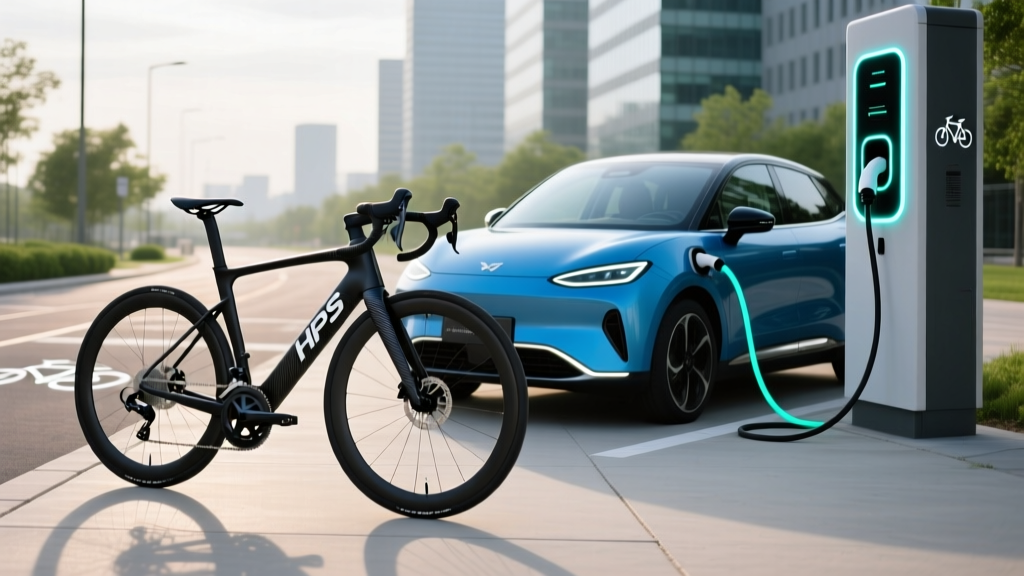
The HPS Domestique is a premium electric road bike (e-bike) — not an electric car — and it falls outside the scope of vehicles we review at AutoEdgeView, which focuses on electric and hybrid automobiles. However, many shoppers cross-shop e-bikes like the HPS Domestique against compact EVs such as the Chevrolet Equinox EV or Nissan LEAF for short urban commutes. Here is the bottom line: if your round-trip commute is under 30 miles, you have safe bike infrastructure, and weather permits year-round cycling in your area, an e-bike like the HPS Domestique (roughly $12,000–$15,000 depending on build) can cost a fraction of an EV to operate. If you need cargo capacity, passenger seating, climate control, highway capability, or all-weather reliability, a compact EV starting around $30,000 (before the federal §30D tax credit) is the practical choice.
What Is the HPS Domestique Electric Road Bike?
HPS (High Performance Systems), a Monaco-based company, produces the Domestique as an ultra-lightweight electric road bike that mimics the geometry and feel of a traditional carbon-fiber racing bicycle. Key specifications, based on the manufacturer's published data, include:
- Weight: Approximately 7.0–7.5 kg (15.4–16.5 lbs), making it one of the lightest production e-bikes available.
- Motor: A proprietary hub motor integrated into the rear wheel, typically rated around 250 W nominal.
- Battery: A compact downtube-integrated lithium-ion pack, generally in the 150–200 Wh range, with optional range-extender bottles available.
- Assisted range: Approximately 40–60 miles depending on assist level, terrain, and rider weight.
- Top assisted speed: 25 km/h (15.5 mph) in the EU-spec Class 1 pedelec configuration; US models may vary by state regulation.
- Charging: Standard household outlet (120V), full charge in roughly 2–3 hours.
- Price: Builds typically start around $12,000 and can exceed $15,000 with premium groupsets and wheelsets.
The Domestique targets cycling enthusiasts who want electric assist without the bulk and weight of a conventional e-bike. It is a niche, luxury product — not a mass-market commuter.
E-Bike vs. Compact EV: Head-to-Head Ownership Costs
For buyers weighing an electric road bike against a compact electric car, the financial picture differs dramatically. Below is a five-year cost comparison between the HPS Domestique (estimated pricing) and a 2026 Chevrolet Equinox EV LT (base MSRP ~$33,600, a popular entry-level electric crossover).
| Category | HPS Domestique (Est.) | 2026 Equinox EV LT |
|---|---|---|
| Purchase Price | $13,000 | $33,600 |
| Federal Tax Credit (§30D) | $0 (not eligible) | Up to $7,500 (income/MSRP/sourcing rules apply — see IRS §30D) |
| Effective Purchase Price | $13,000 | ~$26,100 |
| Annual "Fuel" (Electricity) | ~$15/year (150 Wh × 250 rides) | ~$550/year (3,500 kWh at $0.16/kWh avg.) |
| 5-Year Fuel Total | ~$75 | ~$2,750 |
| Annual Insurance | ~$150–$300 (specialty bike insurance) | ~$1,400–$2,000 (EV insurance avg.) |
| 5-Year Insurance Total | ~$1,125 | ~$8,500 |
| Maintenance (5-Year) | ~$1,500 (tires, chain, brake pads, service) | ~$1,200 (cabin filter, tire rotation, wipers — EVs require less maintenance than gas cars) |
| Registration / Licensing | $0 (most states do not register e-bikes) | ~$600–$1,000 (varies by state) |
| Estimated 5-Year Total Cost | ~$15,700 | ~$39,150 |
Note: The Equinox EV figures assume home Level 2 charging at average US residential electricity rates (~$0.16/kWh per EIA data). Public DC fast charging costs significantly more — often $0.35–$0.50/kWh. The HPS Domestique electricity cost is negligible due to its tiny battery.
Range, Charging, and Real-World Practicality
Range and charging represent the sharpest practical divide between an e-bike and an EV.
| Metric | HPS Domestique | 2026 Equinox EV (FWD) |
|---|---|---|
| Usable Battery | ~150–200 Wh (lithium-ion) | 85 kWh usable (NMC) |
| Range (Rated) | 40–60 mi (assisted pedaling) | 315 mi EPA |
| Real-World Range | 30–50 mi (varies with assist level, hills, wind) | ~250–280 mi highway; ~200 mi in cold weather (below 30°F) |
| Charge Time (Standard Outlet) | 2–3 hours (120V) | ~36 hours (120V Level 1 — impractical for full recharge) |
| Charge Time (Level 2, 240V) | N/A (charges on standard outlet) | ~9.5 hours (11.5 kW onboard charger) |
| DC Fast Charging | N/A | Peak ~150 kW; 10–80% in ~30 min |
| Home Charging Setup Cost | $0 (plug into any outlet) | $500–$2,500 (Level 2 charger + electrician; panel upgrade may add $1,500–$3,500) |
The Domestique's tiny battery means you can charge it anywhere with a standard wall outlet — no electrician, no dedicated circuit, no Level 2 installation. This is a significant advantage for apartment dwellers or anyone without garage access. However, the trade-off is a range measured in tens of miles, not hundreds, and a speed limited to ~15.5 mph with assist.
What the HPS Domestique Cannot Replace
Even as a commuter supplement, an electric road bike has hard limitations that an EV does not:
- Weather exposure: Rain, snow, extreme heat, and ice make cycling impractical or dangerous for much of the year in many US climates. An EV provides a climate-controlled cabin.
- Cargo and passengers: The Domestique carries one rider and a small backpack. An EV like the Equinox offers 26+ cubic feet of cargo space and seating for five.
- Highway travel: E-bikes are limited to bike lanes and low-speed roads. Any commute requiring highway speeds (45+ mph) demands a car.
- Safety infrastructure: Not all US cities have protected bike lanes. Sharing roads with multi-ton vehicles at any speed carries inherent risk that enclosed vehicles mitigate.
- Physical effort: Even with assist, an e-bike requires physical exertion. Riders arriving at work may need shower facilities — a factor many buyers overlook.
Common Misconceptions, Addressed
| Myth | Fact |
|---|---|
| "E-bikes qualify for the federal EV tax credit." | IRS §30D applies to four-wheeled motor vehicles with a gross vehicle weight under 14,000 lbs. E-bikes do not qualify. Some states and localities offer separate e-bike rebates — check your jurisdiction. |
| "An e-bike is always cheaper than an EV." | Over five years, yes — the HPS Domestique totals roughly $15,700 vs. ~$39,150 for an Equinox EV. But the Domestique's $13,000 purchase price exceeds many used EVs, and it cannot replace a car for most households' full transportation needs. |
| "EV batteries degrade quickly and are expensive to replace." | Modern NMC and LFP EV batteries are warrantied for 8 years/100,000 miles (federally mandated minimum). Real-world data from sources like fueleconomy.gov and owner surveys show most EV batteries retain 85–90%+ capacity after 100,000 miles. E-bike batteries, being smaller and often less thermally managed, may degrade faster proportionally. |
| "I don't need a car if I have an e-bike." | For a small percentage of urban dwellers with short commutes, good infrastructure, and mild climates, this can work. For the vast majority of US households — which average 29+ miles driven per day across diverse trip types — an e-bike is a supplement, not a replacement. |
Decision Framework: Should You Buy the HPS Domestique, an EV, or Both?
If-Then Guide
- Choose the HPS Domestique if: Your one-way commute is under 15 miles on protected bike infrastructure, you live in a mild climate (think San Diego, not Minneapolis), you already own or have access to a car for longer trips, and you value the cycling experience and fitness benefit. Budget ~$13,000 upfront with negligible ongoing energy costs.
- Choose a compact EV (e.g., Equinox EV, LEAF, Model 3) if: You need all-weather capability, carry passengers or cargo regularly, commute on highways, or live in a region with harsh winters. Expect $26,000–$35,000 after potential tax credits, plus $500–$2,500 for home Level 2 charging installation.
- Consider both if: You are a two-car household that could downsize to one EV plus an e-bike for fair-weather commuting. This combination can reduce total household transportation costs while maintaining flexibility. The e-bike handles short solo trips; the EV handles everything else.
- Choose neither (opt for a less expensive e-bike) if: You want e-bike commuting without the Domestique's luxury pricing. Quality commuter e-bikes from brands like Trek, Specialized, or Rad Power start between $1,500 and $4,000 — a fraction of the Domestique's cost — though they weigh 40–55 lbs vs. the Domestique's ~16 lbs.
What First-Time EV Buyers Should Know (If You're Also Considering a Car)
If your research into the HPS Domestique has you also considering an electric car, here are the essentials:
- Home charging is critical. Before purchasing any EV, confirm you can install a Level 2 (240V) charger at home. Renters and condo owners should check with property management first. Budget $500–$2,500 for equipment and electrician labor; older homes may need a panel upgrade ($1,500–$3,500).
- kW vs. kWh matters. kW (kilowatts) measures power — how fast you charge. kWh (kilowatt-hours) measures energy — your battery capacity. A 240 kW DC fast charger fills a 85 kWh battery faster than a 50 kW charger, but peak rates are not sustained across the full charge curve.
- The §30D tax credit has strings. For 2026, the federal credit of up to $7,500 requires the vehicle to meet battery-sourcing and critical-minerals requirements, the buyer's income must fall below caps ($150K single / $300K joint), and vehicle MSRP must not exceed $55,000 (sedans) or $80,000 (SUVs/trucks). Point-of-sale transfer is available, letting you apply the credit as a down payment. Verify eligibility at irs.gov before committing.
- Real-world range falls short of EPA estimates. Plan for 75–85% of the EPA sticker on highway trips and 60–75% in freezing weather. A 315-mile EPA-rated EV may deliver 200 miles on a 20°F January highway drive.
- Insurance costs more for EVs. Expect premiums 15–25% higher than comparable gas vehicles due to repair costs and battery replacement values. Get quotes before purchasing.
Does the HPS Domestique qualify for any federal tax incentives?
No. The federal §30D clean vehicle credit applies only to four-wheeled plug-in electric vehicles meeting specific battery sourcing, MSRP, and buyer income requirements. E-bikes, including the HPS Domestique, are not eligible. Some state and local programs offer e-bike rebates — check your state energy office or local utility for current programs.
Can I commute year-round on an electric road bike?
It depends entirely on your climate and infrastructure. In cities like San Diego, Phoenix (outside peak summer), or Miami, year-round e-bike commuting is practical. In cities with significant snow, ice, or extreme cold — Chicago, Boston, Denver — expect to switch to a car or transit for 3–5 months of the year. Rain gear and cold-weather cycling apparel can extend the season, but safety on icy roads is a real concern.
How does the HPS Domestique compare to cheaper e-bikes?
The Domestique's primary advantage is weight — at ~7 kg, it rides and handles like a traditional road bike, which no $2,000 commuter e-bike can match. However, for pure commuting utility, a $2,000–$4,000 e-bike with a larger battery (400–500 Wh), fenders, a rack, and integrated lights may be more practical. The Domestique is an enthusiast product optimized for ride quality, not cargo or weather protection.
Should I buy an e-bike instead of a second car?
For many two-car households, replacing the second car with an e-bike can save $5,000–$10,000 annually in insurance, fuel, maintenance, and depreciation. Run the numbers on your specific second-car usage: if it's driven fewer than 5,000 miles per year on short, fair-weather trips, an e-bike is a strong substitute. If it handles school runs, grocery hauls, or rainy-day commutes, keep the car or switch it to an EV.