Quick Answer: Are High Speed Electric Scooters a Real Car Replacement?
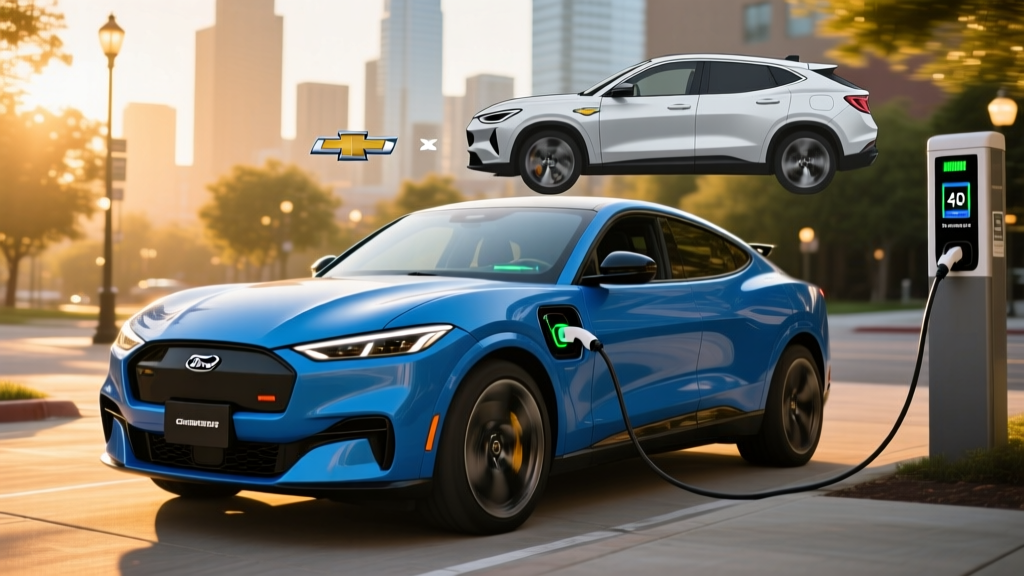
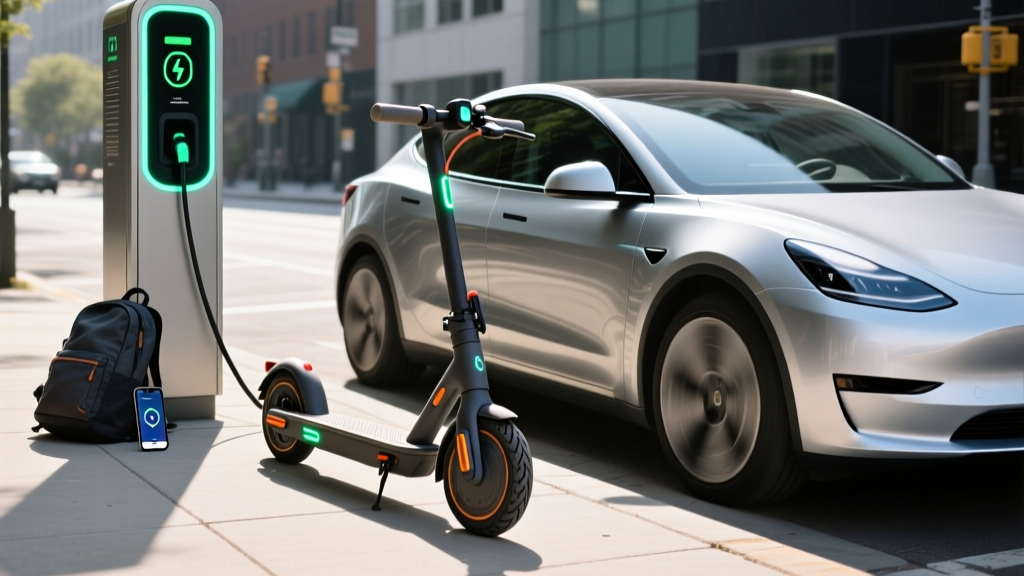
For most US commuters, high speed electric scooters (typically 25–50 mph, 1–5 kWh batteries, $1,500–$5,000) work only as a supplement to a primary vehicle — not a replacement. They excel for last-mile trips under 15 miles in fair weather but lack crash protection, cargo space, all-weather capability, and highway access. A compact EV like the 2026 Chevrolet Equinox EV (EPA 315 mi, ~$33,000 before credits) covers every commute scenario a scooter can, plus highway driving, winter weather, and passenger safety. Choose a scooter if your one-way commute is under 10 miles on protected bike lanes in mild climates; choose an EV if you need year-round, all-weather, any-distance transportation.
What "High Speed" Actually Means — And the Legal Reality
The term "high speed electric scooter" covers a broad and legally messy category. Most consumer models marketed as high speed fall into two buckets:
- Class 3 e-scooters: 20–28 mph top speed, typically 750W–2,000W motors, street-legal on roads with speed limits ≤35 mph in most states. Examples: Segway Ninebot MAX G3 (22 mph), NIU KQi3 Max (28 mph).
- "Moped-class" scooters: 30–50+ mph, 3,000W–8,000W motors, often requiring registration, insurance, a motorcycle endorsement, and a helmet. Examples: Dualtron Ultra 2 (50 mph), Kaabo Wolf King GTR (62 mph).
Here's what many buyers miss: most states prohibit any e-scooter on roads with speed limits above 35 mph, and many ban them entirely from bike paths once they exceed 20 mph. A scooter capable of 50 mph may legally only be ridden at 25 mph on your local bike lane. Always check your state's DMV and local municipal codes before purchasing — a $5,000 scooter you can't legally ride at full speed is a poor investment.
Scooter vs EV: The Real-World Numbers
Let's compare a popular high speed electric scooter against an affordable 2026 EV across the metrics that matter for daily commuting:
| Metric | Kaabo Wolf King GTR (Scooter) | 2026 Chevy Equinox EV LT |
|---|---|---|
| Top Speed | 62 mph (restricted to ~25 mph legally in most areas) | 124 mph (electronically limited) |
| Range | ~55 mi (manufacturer claim, ideal conditions); ~35 mi real-world at 30+ mph | 315 mi EPA; ~260 mi real-world highway |
| Battery | 2.52 kWh (72V, 35Ah lithium) | 85 kWh usable (NMC lithium-ion) |
| Charge Time (0–100%) | ~5 hours (standard); ~2.5 hours (dual charger) | ~9.5 hours (Level 2, 11.5 kW); 10–80% in ~20 min (DC fast, 150 kW peak) |
| Purchase Price | $5,495 | $33,400 MSRP (~$25,900 after $7,500 point-of-sale credit if eligible) |
| Energy Cost per Mile | ~$0.005 (at $0.16/kWh national avg) | ~$0.045 (at $0.16/kWh, 3.5 mi/kWh efficiency) |
| Annual Insurance | $0–$200 (often not required, optional coverage) | $1,400–$2,200 (varies by state/driver) |
| Annual Maintenance | $100–$300 (tires, brake pads, battery health) | $300–$600 (tires, cabin filter, wipers, brake fluid) |
| Cargo Capacity | Backpack only (~0 cu ft built-in) | 26.4 cu ft (rear seats up); 57.1 cu ft (folded) |
| Passengers | 1 (rider only) | 5 |
| Weather Capability | Fair weather only (rain/snow/ice = high risk) | All-weather, heated seats/steering, AWD available |
| Safety Rating | None (no NHTSA/IIHS testing for e-scooters) | NHTSA 5-star overall; IIHS Top Safety Pick |
The True Cost of Ownership Over 3 Years
Purchase price alone tells only part of the story. Here's a 3-year total cost of ownership assuming a 20-mile daily round-trip commute (250 workdays/year = 5,000 miles/year):
| Cost Category | High Speed Scooter ($5,495) | 2026 Equinox EV ($25,900 after credit) |
|---|---|---|
| Purchase (net) | $5,495 | $25,900 |
| Insurance (3 years) | $450 ($150/yr optional) | $5,400 ($1,800/yr avg) |
| Energy (15,000 mi) | $65 | $675 |
| Maintenance (3 years) | $600 | $1,500 |
| Tires & Consumables | $300 (scooter tires wear fast at high speed) | $900 (EV tires are heavier-duty, pricier) |
| Registration/Taxes | $0–$150 (varies by state) | $450 ($150/yr avg) |
| 3-Year Total | $6,910 | $34,825 |
| Cost Per Mile (all-in) | $0.46 | $0.59 (including depreciation) |
The scooter wins on pure cost — but only if it can actually replace your car trips. If you still need a car for weekends, grocery runs, bad weather, and highway driving, you're paying for both, and the scooter becomes an add-on expense rather than a replacement.
Real-World Ownership Considerations Most Reviews Skip
Home Charging Access
Scooters have one major charging advantage: you can carry the battery (or entire scooter) indoors and charge from any standard 120V outlet. No Level 2 installation, no $500–$2,000 electrician bill, no panel upgrade concerns. A full charge on a 2.5 kWh scooter battery costs roughly $0.40 at the national average electricity rate of ~$0.16/kWh.
However, apartment dwellers face a wrinkle: many landlords and HOAs prohibit storing or charging large lithium batteries indoors due to fire risk. The NFPA has documented a sharp rise in lithium-ion battery fires from micromobility devices. Check your lease or building rules before assuming indoor charging is allowed.
Climate and Seasonality
High speed electric scooters are fundamentally fair-weather vehicles. In practice:
- Cold weather (below 40°F): Expect 20–35% range loss due to lithium-ion chemistry slowdown and increased rolling resistance from cold tires. A 55-mile rated scooter may deliver 35 miles in January.
- Rain: Most scooters carry IP54 or IP55 water resistance — fine for light drizzle, dangerous in downpours. Wet roads drastically reduce braking distance and traction on small wheels.
- Snow/Ice: Effectively unusable. Small wheels (10–13 inches) and light weight (70–110 lbs) provide zero traction on ice.
If you live in Minneapolis, Chicago, or anywhere with real winters, plan on 4–6 months where your scooter is garage-bound. An EV with AWD and a heat pump handles these conditions without compromise.
Safety Is the Elephant in the Room
E-scooter injuries have risen sharply alongside adoption. A CDC study found that e-scooter emergency room visits increased over 300% between 2017 and 2022, with head injuries comprising roughly 28% of cases. At 30–50 mph on a scooter, you have:
- No crumple zones, no airbags, no seatbelts
- Minimal visibility to drivers (you're roughly the size of a bicycle)
- Small wheels that are unstable on potholes, gravel, and wet manhole covers
- Braking distances 2–3× longer than a car at equivalent speeds
A full-face motorcycle helmet, armored jacket, gloves, and knee pads are non-negotiable at speeds above 25 mph. Factor $300–$600 for proper safety gear into your budget.
Common Misconceptions — Fact vs Fiction
| Myth | Fact |
|---|---|
| "A high speed scooter replaces my car entirely." | Only if your commute is under 15 miles one-way, you have no passengers or cargo needs, you live in a mild climate, and you accept significant safety trade-offs. For most households, it's a supplement, not a replacement. |
| "It's completely legal to ride at 50 mph." | Most states cap e-scooter road use at 20–25 mph on roads with speed limits ≤35 mph. Faster scooters often require motorcycle registration and endorsement. |
| "The range on the spec sheet is accurate." | Manufacturer range claims assume a 165-lb rider on flat ground at 15 mph in 70°F weather. At sustained 30+ mph speeds, expect 40–60% of the claimed range due to aerodynamic drag and higher power draw. |
| "Maintenance is basically zero." | Tires on high speed scooters wear out every 1,500–3,000 miles (especially at sustained 30+ mph). Hydraulic brakes need periodic bleeding. Batteries degrade 10–20% over 2–3 years of heavy use. |
| "I don't need insurance." | While most states don't require it for low-speed scooters, a 50-mph scooter classified as a moped may require liability insurance. And if you injure someone or cause an accident, you're personally liable without coverage. |
Decision Framework: Scooter, EV, or Both?
Choose a High Speed Electric Scooter If:
- Your one-way commute is under 12 miles on roads with speed limits ≤35 mph or protected bike lanes
- You live in a mild climate (rarely below 40°F, minimal rain/snow months)
- You already have a car (or access to one) for longer trips, bad weather, and cargo
- You have secure indoor or locked storage at both home and work (theft is a major issue)
- You're comfortable wearing a full-face helmet and armored gear daily
- Your budget is under $6,000 total and you want to avoid car payments
Choose a Compact EV Instead If:
- Your commute exceeds 15 miles one-way or involves highways (speed limits 45+ mph)
- You regularly carry passengers, groceries, or gear
- You live in a region with real winters, heavy rain seasons, or extreme heat
- Safety is a top priority (NHTSA-rated vehicles with airbags, ABS, AEB)
- You qualify for the §30D federal EV tax credit (up to $7,500 point-of-sale for eligible buyers and vehicles under MSRP/income caps)
- You want one vehicle that handles every transportation scenario
Consider Both If:
- You have a two-car household and can replace the second car with a scooter for fair-weather commutes
- You want to minimize EV miles for city errands and save the car for highway and long-distance driving
- Your workplace has secure scooter parking and charging access
Frequently Asked Questions
Do high speed electric scooters qualify for the federal EV tax credit?
No. The IRS §30D clean vehicle credit applies only to four-wheeled motor vehicles with a gross vehicle weight rating under 14,000 lbs that are primarily for use on public streets. E-scooters, e-bikes, and motorcycles do not qualify. Some states offer separate micromobility rebates — check your state energy office for details.
How long do high speed scooter batteries last before replacement?
Most quality lithium-ion scooter batteries retain 70–80% of original capacity after 500–800 full charge cycles. At one charge per day, that's roughly 2–3 years before noticeable range loss. Replacement batteries cost $400–$1,200 depending on the model and capacity. Store your scooter at 50–80% charge when not in use, and avoid charging in extreme heat to maximize longevity.
What's the real range at high speeds versus the spec sheet?
Aerodynamic drag scales with the square of speed. A scooter rated for 55 miles at 15 mph will typically deliver 30–35 miles at a sustained 30 mph, and 18–25 miles at 45+ mph. Add cold weather (below 40°F) and hilly terrain, and you may see only 40% of the advertised range. Always plan routes with a 50% buffer on the manufacturer's range claim when riding at high speeds.
Is a high speed electric scooter cheaper than a used gas car?
On purchase price alone, yes — a $5,500 scooter undercuts even the cheapest used car. But a used gas car provides weather protection, crash safety, cargo space, highway capability, and passenger seating. The scooter's per-mile energy cost is dramatically lower (~$0.005/mi vs ~$0.12/mi for gas), but total value depends entirely on whether it replaces trips you'd otherwise drive.
Can I ride a 50 mph electric scooter on the highway?
No. Virtually every US state prohibits e-scooters on highways and roads with speed limits above 35–45 mph, regardless of the scooter's top speed capability. Some states reclassify scooters above 30 mph as mopeds or motorcycles, requiring registration, a motorcycle license endorsement, insurance, and DOT-compliant helmets. Check your state DMV for exact classification thresholds.