The Quick Answer
GM's EV strategy in 2026 centers on its Ultium battery platform — a modular architecture spanning the Chevrolet Equinox EV (EPA 319 mi, from ~$33,600) to the Cadillac Escalade IQ (EPA ~460 mi, from ~$130,000). For buyers, this means a widening lineup with improving DC fast-charge speeds (up to 350 kW peak on Silverado EV), native NACS connectors for Tesla Supercharger access, and aggressive pricing aimed at undercutting comparable gas models on total cost of ownership. The catch: real-world range falls 10–15% below EPA on highways and up to 30% in freezing weather, public charging infrastructure remains uneven outside metro areas, and federal §30D tax-credit eligibility depends on your income, the vehicle's MSRP, and battery-sourcing rules that shift annually.
What GM's EV Lineup Looks Like in 2026
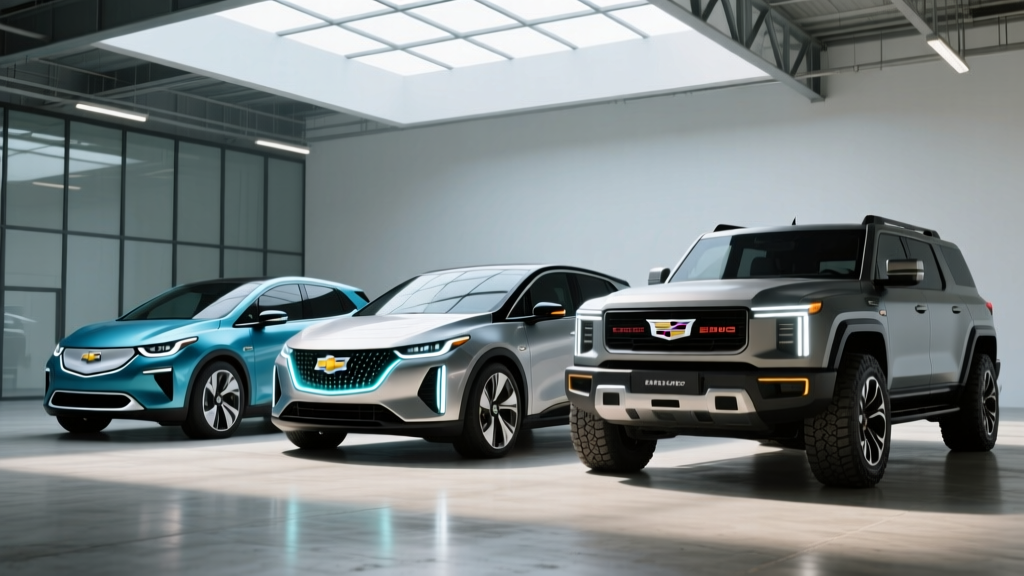
General Motors has pivoted hard from its early Bolt EV days. The current lineup runs on the Ultium platform, which uses large-format pouch cells in a modular pack design — allowing GM to scale from ~85 kWh to 200+ kWh usable capacity across vehicle segments. Here's the current buyable lineup:
| Model | Battery (usable kWh) | EPA Range | Peak DC Charge (kW) | 10–80% Time | Base MSRP |
|---|---|---|---|---|---|
| Chevrolet Equinox EV | ~85 kWh (NMC) | 319 mi | 150 kW | ~32 min | $33,600 |
| Chevrolet Blazer EV | ~102 kWh (NMC) | 324 mi | 190 kW | ~28 min | $44,600 |
| Cadillac Lyriq | ~102 kWh (NMC) | 314 mi | 190 kW | ~28 min | $58,590 |
| Cadillac Optiq | ~85 kWh (NMC) | ~300 mi | 150 kW | ~32 min | $52,900 |
| GMC Sierra EV | ~200 kWh (NMC) | 440 mi | 350 kW | ~25 min | $81,800 |
| Chevrolet Silverado EV | ~200 kWh (NMC) | 440 mi | 350 kW | ~25 min | $74,800 |
| Cadillac Escalade IQ | ~200 kWh (NMC) | ~460 mi | 350 kW | ~25 min | $130,000 |
Note that the Silverado EV 4WT fleet-oriented trim starts lower, but the consumer-focused RST and Trail Boss trims sit in the $75K–$100K+ range. The Equinox EV remains GM's volume play — a compact crossover priced to compete directly with the Hyundai Ioniq 5 and Tesla Model Y on sticker price before incentives.
GM vs. Gas: Real Ownership Cost Comparison
GM's strategy leans heavily on total-cost-of-ownership arguments. Let's run the numbers for the Chevrolet Equinox EV 2LT ($33,600 MSRP) against a comparably equipped Chevrolet Equinox gas model (~$31,000 MSRP, 28 MPG combined per fueleconomy.gov).
5-Year / 75,000-Mile Ownership Cost Estimate
| Category | Equinox EV 2LT | Equinox Gas (28 MPG) |
|---|---|---|
| Purchase price | $33,600 | $31,000 |
| Federal §30D credit (if eligible) | −$7,500 | $0 |
| Net purchase | $26,100 | $31,000 |
| Fuel/energy (75K mi) | $2,250 (home L2 @ $0.14/kWh) | $9,375 ($3.50/gal gas) |
| Maintenance (5 yr) | $1,200 | $3,500 |
| Insurance (5 yr avg) | $9,500 | $7,800 |
| Estimated depreciation | $11,000 | $13,000 |
| 5-Year Total | $50,050 | $64,675 |
Assumptions: 15,000 mi/yr, 80% home charging, electricity at national avg $0.14/kWh, gas at $3.50/gal. EV insurance is typically 15–25% higher per IIHS data. Tax credit eligibility requires meeting IRS §30D income caps, MSRP limits, and battery-sourcing rules — verify at irs.gov.
The EV wins on operating costs by a wide margin — roughly $7,125 less in fuel over five years. But that advantage assumes reliable home Level 2 charging at residential electricity rates. If you're dependent on public DC fast charging at $0.35–$0.50/kWh, your fuel cost jumps to $5,600–$8,000 over 75,000 miles, narrowing the gap substantially.
Real-World Range: What the EPA Sticker Doesn't Tell You
GM's EPA range figures are competitive, but real-world results depend heavily on conditions. Here's what to expect from the Equinox EV's 319-mile EPA rating:
- Mild-weather mixed driving (55–65°F): ~290–310 miles — close to sticker
- Highway-only at 75 mph: ~250–270 miles — aerodynamic drag cuts efficiency 15–20%
- Cold weather (20°F) with cabin heat: ~220–240 miles — battery chemistry and HVAC draw reduce range up to 30%
- Cold weather + highway: ~200–220 miles — worst-case scenario for road trips
GM's Ultium packs use a liquid thermal management system that preconditions the battery during navigation-routed charging. This matters: arriving at a DC fast charger with a cold-soaked battery can cut peak charge rate from 150 kW to under 50 kW until the pack warms. Always use the built-in navigation to route to chargers when possible — the car will begin preconditioning 10–15 minutes before arrival.
For the larger Ultium trucks (Silverado EV, Sierra EV), the ~200 kWh packs deliver genuinely long legs. A 440-mile EPA rating means ~350 miles highway in mild weather and ~300 miles in freezing conditions — enough for most single-day drives without stopping.
Charging Reality: Home, Public, and the NACS Advantage
GM's 2026 lineup ships with native NACS (North American Charging Standard) connectors, meaning direct access to Tesla's Supercharger network — over 25,000 stalls in North America — without an adapter. This is a significant strategic shift from the CCS1 connectors on 2024 models.
Charging Speed Comparison
| Charging Level | Power (kW) | Miles Added/Hour | Typical Use Case |
|---|---|---|---|
| Level 1 (120V outlet) | 1.4 kW | ~4 mi/hr | Overnight top-up, PHEVs |
| Level 2 (240V home) | 7.7–11.5 kW | ~25–40 mi/hr | Daily home charging |
| DC Fast (Equinox/Blazer) | 150–190 kW | ~500–700 mi/hr | Road trips |
| DC Fast (Silverado/Sierra EV) | up to 350 kW | ~800+ mi/hr | Road trips (requires 350 kW station) |
Home Level 2 installation typically costs $500–$2,000 for the charger hardware plus $800–$3,000 for electrician labor and permits, depending on panel capacity and conduit run length. If your home has a 200-amp panel with spare capacity, expect the lower end. A panel upgrade to 200A or 400A adds $2,000–$5,000. Factor this into your first-year ownership cost.
Without home charging, public DC fast charging at Electrify America, EVgo, or Superchargers runs $0.30–$0.50/kWh. A full Equinox EV charge (85 kWh × $0.40) costs ~$34 for ~250 real-world miles — comparable to gas on a per-mile basis. The cost advantage of EV ownership depends overwhelmingly on home charging access.
Federal Tax Credit: §30D Eligibility Is Not Guaranteed
GM's pricing strategy assumes many buyers will capture the full $7,500 federal tax credit under IRS §30D, but eligibility has tightened considerably. Here's the current framework:
- Income caps: AGI ≤ $150K single / $225K head of household / $300K joint
- MSRP caps: ≤ $55,000 for sedans/crossovers / ≤ $80,000 for SUVs, trucks, vans
- Battery sourcing: Increasing percentages of critical minerals and battery components must come from US or FTA-partner countries — thresholds tighten annually
- Point-of-sale transfer: You can apply the credit at purchase to reduce your out-of-pocket, but the dealer must be registered with IRS and you must attest to income eligibility
- One credit per 3 years: New vehicle credit is limited to one per taxpayer every three years
For 2026, the Equinox EV (MSRP under $55K) and Blazer EV (under $80K) are positioned to qualify if battery-sourcing requirements are met — but GM's supply chain compliance varies by production batch. Always check the current eligibility list at fueleconomy.gov before signing a purchase agreement. The Lyriq at $58,590 falls under the SUV cap but sourcing compliance should be verified per VIN. The Silverado EV and Sierra EV base trims fall under $80K, but higher trims exceed the truck MSRP cap and become ineligible.
Decision Framework: Should You Buy Into GM's EV Lineup?
Choose a GM EV If:
- You have home Level 2 charging (or can install it for under $3,000)
- Your daily commute is under 100 miles round-trip — any Ultium model handles this with margin
- You qualify for §30D credit and the model's MSRP falls under the cap
- You value NACS Supercharger access for road trips without adapter hassle
- You want a mainstream-brand dealer network for service — GM has 4,000+ US dealerships
Consider a Hybrid or Gas Vehicle If:
- You live in an apartment or lack off-street parking for a home charger
- You regularly drive 400+ miles in single days through areas with sparse DC fast-charging infrastructure
- You live in extreme cold (regularly below 10°F) and cannot garage the vehicle
- Your budget is tight and you don't qualify for the federal tax credit — the upfront premium narrows or disappears
- You tow frequently — EV towing range drops 40–50%, and a hybrid truck like the Silverado Hybrid may better serve dual-use needs
Consider a Competing EV If:
- You prioritize charge speed: Hyundai/Kia E-GMP models (Ioniq 5, EV6) sustain higher charge rates on 800V architecture — 10–80% in ~18 min at 350 kW stations
- You want LFP chemistry: Tesla Model Y Standard Range uses LFP batteries, which tolerate daily 100% charging with less degradation concern
- You need the most proven Supercharger-native experience: Tesla's own vehicles have the deepest software integration with the network
Common Misconceptions About GM's EV Strategy
| Myth | Fact |
|---|---|
| "GM abandoned EVs and went back to gas" | GM scaled back its initial 2025 production targets but continues launching Ultium models. The Equinox EV, Blazer EV, Lyriq, Optiq, Silverado EV, Sierra EV, and Escalade IQ are all in production for 2026. |
| "Ultium batteries are unreliable" | Early Bolt EV recalls involved a different (LG pouch, pre-Ultium) cell design. Ultium packs use a different cell format and chemistry with redundant safety layers. GM covers the battery for 8 years / 100,000 miles with a capacity-retention threshold of 70%. |
| "All GM EVs qualify for the $7,500 tax credit" | Eligibility depends on MSRP caps, buyer income, and battery-sourcing compliance. Higher-trim Silverado EV and Escalade IQ exceed MSRP limits. Always verify per VIN before purchase. |
| "You need a Tesla to use Superchargers" | GM's 2026 NACS-equipped vehicles plug directly into V3 and V4 Superchargers. The Tesla app is not required — GM's in-vehicle navigation and MyChevrolet/Cadillac apps handle payment and routing. |
| "EV maintenance costs nothing" | EVs eliminate oil changes and have less brake wear (regen braking), but tire replacement costs are higher due to vehicle weight, cabin air filters still need changing, and coolant/brake fluid service intervals remain. Budget ~$200–$300/year in maintenance. |
Frequently Asked Questions
How does GM's Ultium battery compare to competitors?
Ultium uses NMC (nickel manganese cobalt) pouch cells with a flexible modular design — GM can stack 6 to 24 modules depending on the vehicle. Energy density is competitive but not class-leading; Hyundai's E-GMP and Tesla's 4680 cells offer similar or slightly better efficiency per kWh. GM's advantage is platform scalability across body styles. Ultium's 8-year/100,000-mile warranty matches the industry standard.
Can I charge a 2026 GM EV at a Tesla Supercharger right now?
Yes. All 2026 GM EVs ship with native NACS charge ports. You can pull up to any V3 (250 kW) or V4 Supercharger and plug in directly. Payment is handled through the vehicle's infotainment system or the GM brand app — no Tesla account required. Access to non-Tesla networks (Electrify America, EVgo, ChargePoint) is also supported, though you may need a CCS1 adapter for older Electrify America stalls that haven't added NACS cables.
What happens if I can't install a home charger?
Without home charging, EV ownership becomes significantly more expensive and less convenient. Public DC fast charging at $0.35–$0.50/kWh eliminates most of the fuel-cost advantage over gas. You'll also spend 30–45 minutes charging 2–3 times per week instead of 5 minutes at a gas station. If home charging isn't possible, a plug-in hybrid (PHEV) like the upcoming Chevrolet Corvette E-Ray or a conventional hybrid may be a better fit until your charging situation improves.
Are GM EVs good in cold weather?
Ultium packs have active liquid thermal management and a heat pump (standard on most 2026 models), which helps. Expect 20–30% range loss at 20°F compared to the EPA rating. The heat pump reduces cabin-heating energy draw by roughly 30–40% compared to resistive heating. Preconditioning while plugged in is essential — it warms the battery and cabin using grid power rather than battery energy, preserving range. GM's cold-weather performance is comparable to Ford and VW but trails Tesla's octovalve heat-pump system in efficiency.
Will GM's EV resale value hold up?
EV depreciation has been steeper than gas vehicles in 2024–2025, driven by price wars and rapid technology improvement. GM models are not immune — expect 40–50% depreciation over 5 years for mainstream models (Equinox EV, Blazer EV) and somewhat better retention for limited-production or high-demand models. This is improving as the market matures, but buying a 2–3-year-old GM EV on the used market may offer better value than buying new if you can forgo the §30D credit (the used-EV credit caps at $4,000 with stricter income limits).