The Commercial EV Truck Dilemma: Traditional Workhorse vs. Premium Adventurer
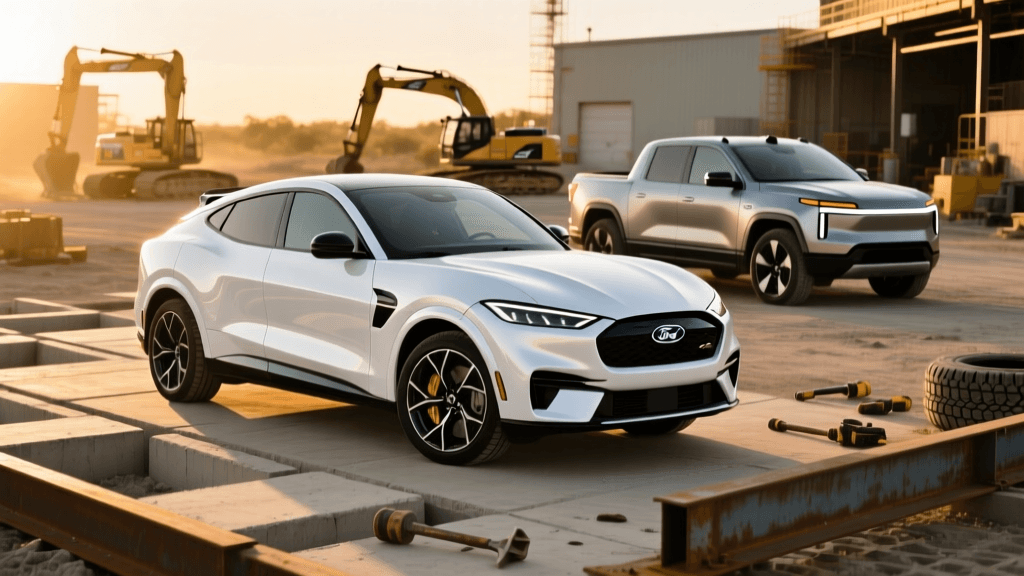
As commercial fleets and independent contractors transition toward electrification, two heavyweights dominate the conversation: the Ford F-150 Lightning and the Rivian R1T. While the Rivian R1T is frequently marketed as a premium adventure vehicle, its robust torque and innovative storage solutions have made it a compelling, albeit expensive, option for high-end contractors and specialized field work. Conversely, the Ford F-150 Lightning was engineered from the ground up to slot seamlessly into existing commercial workflows, offering familiar ergonomics and fleet-ready utility. For fleet managers and tradespeople, the decision cannot be based on marketing brochures alone. It requires a rigorous, data-driven comparison of payload capacities, cargo volume, real-world range degradation under load, and total cost of ownership (TCO). In this head-to-head analysis, we strip away the hype and look strictly at the numbers to determine which electric truck truly earns the title of ultimate workhorse.
Core Capability Metrics: Payload, Towing, and Dimensions
When evaluating a work truck, the fundamental metrics are how much weight it can carry in the bed and how much it can pull from the hitch. Below is a data table comparing the maximum capabilities of the Ford F-150 Lightning (Extended Range) and the Rivian R1T (Dual-Motor Max Pack).
| Specification | Ford F-150 Lightning (Extended Range) | Rivian R1T (Dual-Motor Max Pack) |
|---|---|---|
| Max Payload Capacity | 2,235 lbs | 1,760 lbs |
| Max Towing Capacity | 10,000 lbs | 11,000 lbs |
| Bed Length | 67.1 inches | 54.0 inches |
| Bed Width (Between Wells) | 50.6 inches | 45.0 inches |
| Front Trunk (Frunk) Volume | 14.1 cu ft | 11.0 cu ft |
| EPA Estimated Max Range | 320 miles | 352 miles |
| On-Site Power Output | Up to 9.6 kW (Pro Power) | 1.8 kW (110V Bed Outlets) |
Decoding the Payload and Towing Data
The data reveals a distinct divergence in engineering philosophy. The Ford F-150 Lightning secures a decisive victory in payload capacity, maxing out at 2,235 pounds. This advantage is largely due to Ford’s use of a trailing-arm independent rear suspension combined with a focus on minimizing curb weight in the Pro and XLT trims. For contractors hauling dense materials like concrete bags, gravel, or heavy toolboxes, the Lightning is the mathematically superior choice. The Rivian R1T, conversely, sacrifices payload (1,760 lbs) due to the sheer mass of its complex skateboard chassis, standard air suspension system, and luxury interior appointments. However, the R1T fights back in maximum towing, leveraging its Dual-Motor Max Pack configuration to pull up to 11,000 pounds, edging out the Lightning’s 10,000-pound limit. If your daily operations involve heavy equipment trailers rather than dense bed loads, the Rivian holds a slight edge in gross combined weight capability.
Cargo Management and On-Site Power Delivery
A work truck is only as useful as its ability to organize and protect gear. The F-150 Lightning features a traditional 67.1-inch bed, which is long enough to accommodate standard 4x8 sheets of plywood if the tailgate is down or if utilizing a specialized bed extender. The Rivian R1T’s 54-inch bed is notably shorter, making it challenging to haul standard construction materials without a trailer. However, Rivian compensates with the Gear Tunnel—an 11-cubic-foot pass-through storage area located between the cab and the bed. This space is ideal for securing long, awkward items like PVC pipes, ladders, or surveying equipment out of sight and out of the weather.
Where the Lightning truly dominates the job site is on-site power delivery. Ford’s available Pro Power Onboard system can deliver up to 9.6 kW of continuous power through multiple 120V and 240V outlets in the bed and cabin. This is enough to simultaneously run heavy-duty job site equipment, including MIG welders, large air compressors, and miter saws, effectively turning the Lightning into a mobile generator. The Rivian R1T offers 110V outlets in the bed and the option for a Camp Kitchen, but it lacks the high-amperage 240V infrastructure required for heavy commercial tools. For mobile mechanics, fabricators, and heavy carpentry crews, the Lightning’s power matrix is non-negotiable.
The Reality of Range Degradation Under Load
EPA range estimates are largely irrelevant for work trucks, as these vehicles rarely drive unladen at optimal highway speeds. Fleet managers must account for range degradation when hauling heavy payloads or towing trailers. To provide actionable data, we look to rigorous real-world testing conducted by major automotive publications.
In a comprehensive towing test conducted by MotorTrend, the Ford F-150 Lightning Platinum (extended range) was hitched to a 5,900-pound trailer. The results were a stark warning for fleet routing: the truck’s range was effectively halved. While the EPA estimates a 300-mile range for that specific trim, the Lightning managed only 100 to 115 miles of real-world highway towing before requiring a charge. The energy consumption spiked to over 2.0 kWh per mile, highlighting the severe aerodynamic and rolling resistance penalties of towing with an EV.
The Rivian R1T experiences similar physics, though its slightly more aerodynamic profile and massive Max Pack battery yield marginally different results. According to a towing range evaluation by Car and Driver, towing a heavy trailer resulted in a range reduction of approximately 40% to 50% depending on the speed and trailer profile. While the R1T’s air suspension can lower the vehicle to reduce drag at highway speeds, the fundamental energy cost of moving 15,000+ pounds of combined vehicle and trailer weight remains immense. The critical takeaway for fleet managers is that neither truck is currently viable for long-haul, cross-state towing routes without meticulous DC fast-charging infrastructure planning. For local job sites within a 50-mile radius of the depot, however, both trucks offer more than sufficient buffer to handle a full day of loaded work and return home for overnight Level 2 charging.
Total Cost of Ownership (TCO) and Fleet Economics
Upfront acquisition cost is the first hurdle in commercial EV adoption. The Ford F-150 Lightning Pro is explicitly targeted at fleets, with starting MSRPs hovering around the $55,000 mark (before incentives). The Rivian R1T, positioned as a luxury lifestyle truck, starts significantly higher, often exceeding $75,000 for dual-motor configurations equipped with the Max Pack battery. For a fleet of ten vehicles, this represents a $200,000 discrepancy in initial capital expenditure.
However, analyzing the Total Cost of Ownership requires looking beyond the sticker price. According to data from the U.S. Department of Energy’s Alternative Fuels Data Center, electric vehicles generally offer significantly lower maintenance and fueling costs compared to internal combustion counterparts. The Lightning benefits from Ford’s massive commercial service network, meaning fleet managers can utilize existing corporate accounts for tire rotations, cabin air filters, and software-related diagnostics. Rivian’s service model, heavily reliant on mobile service vans and specialized regional hubs, can present logistical challenges for commercial fleets operating in rural or remote areas where downtime equals lost revenue.
Furthermore, the IRS Commercial Clean Vehicle Credit (Section 45W) can provide up to $40,000 in tax credits for qualified commercial EVs, which heavily mitigates the upfront cost of both vehicles. Yet, when factoring in insurance premiums, depreciation curves, and the potential out-of-warranty repair costs of the Rivian’s complex hydraulic roll-control suspension versus the Ford’s more conventional steel-spring and coil-over setup, the F-150 Lightning presents a vastly superior financial profile for high-mileage commercial use.
Final Verdict: Matching the Truck to the Trade
The data leaves little ambiguity regarding the ideal use cases for these two electric trucks. The Ford F-150 Lightning is the undisputed champion for traditional commercial work. Its superior payload capacity, 67-inch bed, 9.6 kW Pro Power Onboard system, and fleet-friendly pricing make it an indispensable tool for electricians, plumbers, general contractors, and municipal fleets. It does exactly what a full-size pickup is supposed to do, with the added benefit of zero tailpipe emissions and a lockable, weather-sealed front trunk that acts as the ultimate mobile toolbox.
The Rivian R1T, while exceptionally capable, is best suited for a niche segment of the working world. It is the ideal vehicle for high-end custom home builders, remote environmental surveyors, or off-grid solar installation teams who require premium client transport, superior off-road articulation, and the innovative Gear Tunnel for specialized equipment. It is an adventurer that can work, whereas the Lightning is a worker that can adventure. For 90% of commercial fleet buyers analyzing the hard data on payload, bed utility, and TCO, the Ford F-150 Lightning remains the mathematically sound investment.