The Short Answer: No Fully Electric Toyota Highlander Exists Yet
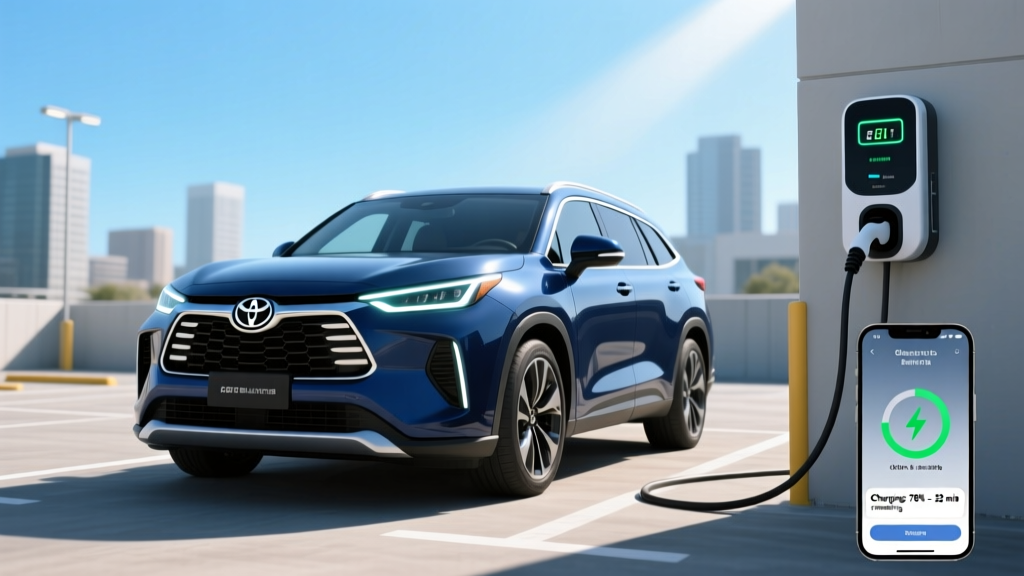
As of the 2026 model year, Toyota does not sell a fully electric Highlander. The Highlander lineup remains exclusively hybrid (HEV), powered by a 2.4-liter turbocharged four-cylinder hybrid system producing up to 362 hp and earning an EPA-estimated 35 MPG combined. Buyers searching for an electric Toyota Highlander are currently choosing between the Highlander Hybrid, the all-electric three-row alternatives from other brands, or waiting for Toyota's promised battery-electric three-row SUV (expected no earlier than 2027-2028, unconfirmed). If you need an electrified three-row SUV today, the Highlander Hybrid is a proven, efficient option—but it's not a plug-in or a BEV.
Why the Search for an Electric Toyota Highlander Keeps Growing
The Highlander has been a staple three-row family SUV for over two decades. As competitors roll out battery-electric three-row options—the Kia EV9, Hyundai Ioniq 9, and Volvo EX90—shoppers naturally wonder when Toyota will follow. The honest answer involves Toyota's cautious electrification strategy.
Toyota has invested heavily in hybrid technology and has been slower than Hyundai/Kia or legacy luxury brands to commit to full battery-electric vehicles in the mainstream three-row segment. The company's announced BEV roadmap includes larger SUVs, but production timelines remain preliminary. Meanwhile, the Highlander Hybrid continues to serve as Toyota's electrified family hauler, bridging the gap for buyers not ready to commit to a full BEV.
2026 Toyota Highlander Hybrid: The Electrified Option You Can Actually Buy
| Spec | Value |
|---|---|
| Powertrain | 2.4L Turbo 4-Cyl Hybrid (i-FORCE MAX) |
| Horsepower | 362 hp combined |
| Torque | 400 lb-ft |
| Drivetrain | AWD (standard on most trims) |
| EPA Fuel Economy | ~35 MPG combined (35 city / 34 hwy) |
| Seating | 7 or 8 passengers |
| Towing Capacity | 5,000 lbs |
| Cargo Volume | ~84 cu ft (max, behind 1st row) |
| Base MSRP (LE trim) | ~$42,000 |
| Hybrid Battery Warranty | 10 years / 150,000 miles |
| Federal EV Tax Credit | Not eligible (HEV, not PHEV or BEV) |
The Highlander Hybrid is a conventional hybrid (HEV), meaning it cannot plug in and has no electric-only driving range. The small traction battery charges through regenerative braking and the gasoline engine. You'll never visit a charging station, but you also won't drive a single mile on electricity alone. The trade-off is simplicity: no charging infrastructure needed, no range anxiety, and fuel economy that beats the non-hybrid Highlander by roughly 14 MPG combined.
Highlander Hybrid vs. Gas vs. Electric Three-Row SUVs: The Numbers
| Vehicle | Type | EPA Range/Efficiency | Base MSRP | Est. Annual Fuel/Energy Cost | Federal Credit |
|---|---|---|---|---|---|
| Toyota Highlander Hybrid | HEV | 35 MPG combined | ~$42,000 | ~$2,000 (gas) | $0 |
| Toyota Grand Highlander Hybrid | HEV | 36 MPG combined | ~$44,000 | ~$1,950 (gas) | $0 |
| Kia EV9 (AWD Long Range) | BEV | 270 mi / 89 MPGe | ~$56,000 | ~$750 (electricity) | Up to $7,500* |
| Hyundai Ioniq 9 (AWD) | BEV | ~300 mi / ~90 MPGe | ~$57,000 | ~$720 (electricity) | Up to $7,500* |
| Volkswagen ID. Buzz | BEV | 231 mi / 83 MPGe | ~$60,000 | ~$800 (electricity) | Not eligible (MSRP/weight) |
*§30D federal tax credit eligibility depends on buyer income, vehicle MSRP caps, battery component sourcing, and point-of-sale transfer rules. Always verify current-year requirements at IRS.gov.
The data tells a clear story: the Highlander Hybrid costs $12,000-$18,000 less upfront than a comparable electric three-row SUV, but you'll spend roughly $1,200-$1,300 more per year on fuel. The break-even point on fuel savings alone is roughly 10-14 years of average driving (15,000 miles/year). However, if you qualify for the full $7,500 federal tax credit on a BEV, the effective price gap shrinks to $4,500-$10,500, and the payback period drops to 4-8 years.
Real Costs of Ownership: Highlander Hybrid vs. an Electric Alternative
| Cost Category | Highlander Hybrid (HEV) | Kia EV9 (BEV) |
|---|---|---|
| Purchase Price (base) | $42,000 | $56,000 |
| Federal Tax Credit | $0 | -$7,500 (if eligible) |
| Effective Purchase Price | $42,000 | $48,500 |
| Fuel/Energy (5 yr, 75k mi) | $10,000 | $3,750 |
| Maintenance (5 yr) | $3,500 | $1,800 |
| Insurance (5 yr est.) | $8,500 | $10,000 |
| Home Charger Install | $0 | $1,200-$2,500 |
| Est. 5-Year Total | $64,000 | $61,550-$65,550 |
At the 5-year mark, the costs are remarkably close. The BEV wins on fuel and maintenance (no oil changes, fewer brake replacements due to regen), but loses on insurance premiums (typically 10-20% higher for EVs) and the upfront home charger installation. Your personal result depends heavily on three variables: whether you qualify for the tax credit, your local electricity rate vs. gas price, and whether you already have a 240V outlet for Level 2 charging.
What a First-Time EV Buyer Needs to Know Before Switching from the Highlander
If you're a current Highlander owner considering a jump to a full BEV three-row SUV, these are the practical realities no brochure will emphasize:
Home Charging Is Non-Negotiable for Most Owners
Over 80% of EV charging happens at home. Without access to a garage or dedicated parking spot where you can install a Level 2 charger (240V, 32-48 amps, adding 20-30 miles of range per hour), EV ownership becomes significantly less convenient. Public DC fast charging works for road trips, but relying on it daily is expensive ($0.35-$0.50/kWh at networks like Electrify America or EVgo) and time-consuming. If you can't charge at home, the Highlander Hybrid remains the smarter choice.
Cold Weather Cuts EV Range 20-30%
A BEV rated for 270 miles of EPA range may deliver only 190-215 miles in sustained sub-30°F weather due to battery chemistry limitations and cabin heating demand. The Highlander Hybrid's 35 MPG barely changes in winter because the engine waste heat warms the cabin for free. If you live in Minnesota, Wisconsin, or upstate New York and regularly drive 150+ miles in winter, this matters.
DC Fast Charging Isn't as Fast as the Peak Number Suggests
When a manufacturer advertises "240 kW peak DC fast charging," that rate is typically sustained only between 10-30% state of charge. Above 50%, the charge curve tapers sharply to protect battery health. A realistic 10-80% session on a 240 kW-capable SUV takes 20-28 minutes—not the 15 minutes the peak number implies. Plan road trips accordingly.
Common Misconceptions About Electric Three-Row SUVs
| Myth | Fact |
|---|---|
| "EVs cost more to own than hybrids." | Over 5-7 years with home charging and tax credit eligibility, a BEV can match or beat a hybrid on total cost. Without home charging or the credit, the hybrid wins. |
| "EV batteries need replacing every few years." | Modern NMC and LFP batteries are warranted for 8 years/100,000 miles (federally mandated minimum). Real-world degradation data shows most retain 85-92% capacity at 150,000 miles. Replacement cost is $8,000-$18,000, but is rarely needed within typical ownership. |
| "Hybrids are just as green as EVs." | A BEV charged on the US average grid produces roughly 50-60% fewer lifecycle CO2 emissions than a 35 MPG hybrid over 150,000 miles, per EPA analysis. On cleaner grids (California, Pacific Northwest), the gap widens. |
| "I can tow just as far with an EV." | Towing cuts EV range by 40-55%. A 270-mile BEV towing a 4,000-lb trailer may deliver only 120-150 miles before needing a charge. The Highlander Hybrid's range barely drops when towing within its 5,000-lb capacity. |
| "The tax credit is $7,500 for everyone." | §30D credit has income caps ($150k single / $300k joint), MSRP caps ($80k for SUVs), and battery sourcing requirements that disqualify some models. Always check fueleconomy.gov for current eligibility. |
Toyota's Electric SUV Pipeline: What's Announced vs. Confirmed
Toyota has signaled plans for a larger, three-row battery-electric SUV, potentially built on its next-generation battery-electric platform with a target production date around 2027-2028. However, as of early 2026:
- No official name, pricing, or EPA range figures have been published
- No prototype has been publicly tested by independent media
- Battery chemistry (LFP vs. NMC), charging speed, and motor configuration remain unconfirmed
- The vehicle is not available for order or reservation
Toyota's approach has been deliberate: the bZ4X (their current BEV offering) launched with modest range (252 miles EPA) and middling DC charge speeds (peaking around 150 kW, tapering significantly above 60%). Until Toyota demonstrates competitive fast-charging performance and range in the 280-320 mile bracket, waiting for a "Toyota electric Highlander" carries real opportunity cost—you could be driving an efficient, proven BEV from Kia or Hyundai today.
Decision Framework: Should You Buy a Highlander Hybrid, Go Electric, or Wait?
Choose the Toyota Highlander Hybrid if:
- You cannot install a Level 2 home charger (apartment, street parking, no garage)
- You regularly tow more than 3,000 lbs or take 200+ mile road trips in winter
- Your household drives fewer than 12,000 miles/year (fuel savings from a BEV won't offset the price premium)
- You want the lowest possible purchase price for a three-row SUV with proven reliability
- You plan to keep the vehicle 3-5 years (the BEV cost advantage needs 5+ years to materialize)
Choose an Electric Three-Row SUV (Kia EV9, Hyundai Ioniq 9) if:
- You have home charging access and drive 15,000+ miles per year
- You qualify for the §30D federal tax credit (check income and sourcing requirements)
- Your daily driving is under 100 miles round-trip with occasional longer road trips
- You value instant torque, quiet operation, and zero tailpipe emissions
- You plan to own the vehicle 6+ years (maximizing fuel and maintenance savings)
- You live in a region with moderate winters or have a heat-pump-equipped model
Wait for a Toyota Electric Highlander if:
- You're loyal to the Toyota brand and trust their long-term reliability above all else
- Your current vehicle has 2+ years of life remaining and you're not in a rush
- You want to see how Toyota's next-gen BEV platform handles DC fast charging before committing
Frequently Asked Questions
Will Toyota make an electric Highlander?
Toyota has announced plans for larger battery-electric SUVs but has not confirmed a vehicle wearing the Highlander nameplate or matching its exact dimensions. The earliest realistic timeframe for a production-ready Toyota three-row BEV is 2027-2028, with no pricing or specs confirmed. Any article claiming specific range or pricing figures for an "electric Highlander" before an official Toyota announcement is speculative.
Is the Highlander Hybrid a plug-in?
No. The Highlander Hybrid is a conventional HEV (hybrid electric vehicle), not a PHEV (plug-in hybrid). It has no charging port, no electric-only range, and a small battery that charges exclusively through regenerative braking and the gasoline engine. Toyota does not currently offer a plug-in Highlander in the US market.
Does the Highlander Hybrid qualify for any tax credits?
No. The §30D federal clean vehicle credit applies only to battery-electric vehicles (BEVs) and plug-in hybrids (PHEVs) with sufficient battery capacity. Conventional hybrids like the Highlander Hybrid are not eligible. Some states offer small hybrid incentives, but these vary widely and are typically $500-$1,500—check your state's energy office for current programs.
How does the Grand Highlander Hybrid compare?
The Grand Highlander is Toyota's stretched three-row SUV offering more third-row legroom and cargo space than the standard Highlander. The hybrid powertrain is essentially the same 2.4L turbo hybrid system, rated at 36 MPG combined with the Hybrid MAX powertrain. Pricing starts roughly $2,000-$3,000 higher than the standard Highlander Hybrid. If you regularly carry adults in the third row, the Grand Highlander is the better fit; if you mostly use two rows and need a slightly lower price, the standard Highlander Hybrid suffices.
What's the best electric alternative to the Toyota Highlander today?
The Kia EV9 (270 miles EPA, ~$56,000 base, eligible for the §30D credit when sourced compliantly) offers the closest combination of three-row seating, competitive range, and DC fast charging (peaking at 236 kW, 10-80% in roughly 20 minutes on a 350 kW station). The Hyundai Ioniq 9 is its platform sibling with similar capabilities. For buyers prioritizing value, the Volkswagen ID. Buzz offers three rows and 231 miles of range at a higher price point but is not eligible for the federal credit due to MSRP/weight classification.
How much does home Level 2 charger installation cost?
A typical Level 2 home charger installation (48-amp hardwired unit on a 60-amp circuit) runs $1,200-$2,500 including the charger ($400-$700), electrician labor ($500-$1,500), and permits ($50-$200). If your electrical panel needs an upgrade from 100A to 200A service, add $1,500-$3,500. The Residential Clean Energy Credit covers 30% of charger installation costs up to $1,000 through 2032, which can offset a significant portion.
What happens to the hybrid battery long-term?
Toyota warranties the Highlander Hybrid's traction battery for 10 years or 150,000 miles (whichever comes first). Real-world data from Toyota's hybrid fleet (Prius, Camry Hybrid, RAV4 Hybrid) shows typical capacity retention of 85-90% at 200,000 miles. Full replacement, if ever needed, costs approximately $3,000-$5,000 for the hybrid battery pack—far less than a BEV traction battery replacement.
Sources: fueleconomy.gov (EPA efficiency data), IRS.gov §30D credit rules, Toyota USA specifications.