Quick Answer: Electric Schwinn Bike or Electric Car?
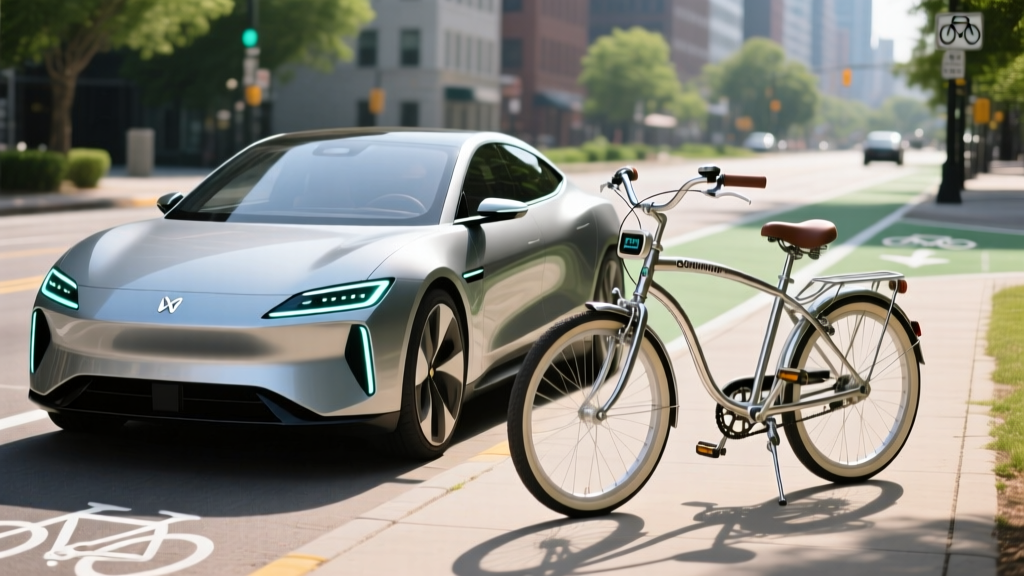
If your one-way commute is under 15 miles on bike-friendly roads, an electric Schwinn bike (like the Schwinn Mendocino e-cruiser or Schwinn Coston DX e-hybrid) can replace a car trip for under $1,500 with virtually zero fueling cost. If you need highway capability, weather protection, cargo space, or year-round reliability in cold or rainy climates, a used or new EV—starting around $28,000 before incentives—remains the practical choice. Many owners use both: an e-bike for fair-weather solo commutes and an EV for everything else.
The search for an "electric Schwinn bike" often lands at a crossroads: you want to electrify your daily travel, but you're not sure whether a two-wheeled e-bike or a four-wheeled electric car is the right investment. Both run on batteries, both plug into standard outlets, and both eliminate tailpipe emissions. But the ownership math, infrastructure needs, and practical limitations are vastly different. This guide breaks down the real numbers so you can match the right electric vehicle to your actual life.
Schwinn E-Bikes in 2026: What's Actually Available
Schwinn's current electric lineup focuses on commuter and cruiser e-bikes rather than high-performance models. The most popular options include:
- Schwinn Mendocino Electric Cruiser: ~$799 MSRP, 250W rear-hub motor, ~20-mile range, 36V 7.8 Ah (281 Wh) lithium battery, Class 1 pedal-assist up to 15.5 mph.
- Schwinn Coston DX Electric Hybrid: ~$1,299 MSRP, 250W motor, ~35-mile range, 36V 10 Ah (360 Wh) battery, Class 1/2 pedal-assist up to 20 mph.
- Schwinn Healy Ridge Electric: ~$1,499 MSRP, 250W motor, ~40-mile range, 36V 11.6 Ah (418 Wh) battery, Class 1 pedal-assist up to 20 mph.
These are all Class 1 or Class 2 e-bikes, meaning they assist up to 20 mph and require pedaling (or throttle-only in Class 2 mode). They charge from a standard 120V household outlet in 4–6 hours using the included charger drawing roughly 80–120 watts—far below even a Level 1 EV trickle charge.
Head-to-Head: Electric Schwinn Bike vs. Entry-Level EV
To make this comparison concrete, we're pitting the Schwinn Coston DX (the most capable Schwinn e-bike) against the 2026 Chevrolet Equinox EV LT (one of the most affordable new EVs on the market). We'll also include a used EV benchmark—a 2022 Nissan Leaf S—as a budget alternative.
| Spec | Schwinn Coston DX | 2026 Chevy Equinox EV LT | 2022 Nissan Leaf S (Used) |
|---|---|---|---|
| Base MSRP / Price | $1,299 | $33,600 | ~$14,000 (used) |
| Battery Capacity | 360 Wh (0.36 kWh) | 85 kWh usable | 40 kWh usable |
| Battery Chemistry | Lithium-ion (NMC) | NMC | NMC |
| Range | ~35 miles (pedal-assist) | 319 miles (EPA) | 149 miles (EPA) |
| Top Speed | 20 mph (assist) | 112 mph | 90 mph |
| Charging (Standard Outlet) | 4–6 hours (120V, ~100W) | ~50 hours 10–80% (120V, 1.4 kW) | ~25 hours 10–80% (120V, 1.4 kW) |
| Charging (Level 2, 240V) | N/A (no L2 support) | ~9 hours (11.5 kW onboard) | ~5 hours (6.6 kW onboard) |
| DC Fast Charging | None | 150 kW peak, 10–80% in ~30 min | 50 kW CHAdeMO, 10–80% in ~45 min |
| Federal Tax Credit (§30D) | None (not a motor vehicle) | Up to $7,500 (subject to eligibility) | Up to $4,000 (used EV credit, §25E) |
| Insurance (Annual Avg.) | $0–$150 (optional rider) | $1,600–$2,200 | $1,200–$1,700 |
| Annual Maintenance | $50–$150 (tires, brakes, chain) | $300–$500 | $400–$700 |
| Battery Warranty | 1 year | 8 years / 100,000 miles | 8 years / 100,000 miles (original) |
The Real Cost of Ownership: 5-Year Breakdown
Purchase price is only the beginning. Here's what five years of ownership actually costs for each option, assuming a 10-mile one-way commute (20 miles/day), 240 commuting days/year, and average electricity rates of $0.16/kWh.
| Cost Category | Schwinn Coston DX | 2026 Equinox EV LT | 2022 Nissan Leaf S |
|---|---|---|---|
| Purchase Price | $1,299 | $33,600 | $14,000 |
| Federal Tax Credit | $0 | –$7,500* | –$4,000* |
| Net Purchase | $1,299 | $26,100 | $10,000 |
| 5-Year Charging Cost | $37 (1.2 kWh/day) | $1,843 (6.3 kWh/day) | $1,106 (3.8 kWh/day) |
| 5-Year Insurance | $500 (optional) | $9,500 | $7,250 |
| 5-Year Maintenance | $500 | $2,000 | $2,750 |
| Registration / Fees | $0 | $1,500 | $1,000 |
| Battery Replacement Risk | $300 (after warranty) | $0 (under warranty) | $0 (under warranty) |
| 5-Year Total | $2,636 | $40,943 | $22,106 |
*Tax credit eligibility depends on income caps, MSRP limits, battery sourcing requirements, and point-of-sale transfer rules under IRS §30D and §25E. Consult a tax professional.
When an Electric Schwinn Bike Wins (and When It Doesn't)
Decision Framework: E-Bike or EV?
Choose the electric Schwinn bike if:
- Your one-way commute is under 15 miles on protected bike lanes or low-traffic roads
- You live in a mild climate (temps above 40°F for most of the year)
- You have secure bike storage at home and work
- You want near-zero operating costs and no car payment
- You already own a car for longer trips, groceries, and bad weather
Choose an EV if:
- You need highway speeds, rain/snow/cold protection, or passenger/cargo capacity
- Your commute exceeds 15 miles or lacks safe bike infrastructure
- You need year-round, all-weather reliability
- You're replacing a gas car entirely, not supplementing it
- You need to carry passengers, groceries, or gear regularly
Charging Reality: What Most Guides Don't Tell You
One of the biggest misconceptions about e-bikes is that "charging is free." It isn't, but it's close. The Schwinn Coston DX's 360 Wh battery costs roughly $0.06 per full charge at the national average electricity rate of $0.16/kWh. Over a full year of daily commuting, you'll spend about $7–$8 on electricity. That's not a typo.
For EVs, the story is more nuanced. Home Level 2 charging (240V) is where the economics shine: the Equinox EV's 85 kWh battery costs about $13.60 for a full charge at home, delivering 319 miles of range—roughly $0.043 per mile. Compare that to a 30 MPG gas car at $3.50/gallon: $0.117 per mile. That's a 63% per-mile savings.
However, public DC fast charging changes the math. Networks like Electrify America and EVgo charge $0.35–$0.55/kWh, pushing per-mile costs to $0.09–$0.15—narrowing or even exceeding the gas-car cost advantage. If you lack home or workplace charging and must rely entirely on public DC fast chargers, an EV's fuel savings shrink dramatically. This is a critical ownership variable that e-bike buyers largely avoid: a 120V wall outlet is all you need.
Common Misconceptions, Addressed with Facts
| Myth | Fact |
|---|---|
| "E-bikes are as fast as mopeds and don't need helmets." | Schwinn e-bikes assist up to 20 mph. Many jurisdictions require helmets for e-bike riders, and crash risk at 20 mph is significant. Always wear a helmet. |
| "EVs are worse for the environment than gas cars because of battery mining." | Per EPA lifecycle analysis, EVs produce fewer lifetime emissions than comparable gas cars in every U.S. grid region, even accounting for battery manufacturing. |
| "I can charge an EV from any regular outlet quickly." | Level 1 (120V) charging adds roughly 3–5 miles of range per hour. A full charge on a 85 kWh battery takes 50+ hours. Level 2 (240V) home installation costs $800–$2,500 and is essential for daily EV ownership. |
| "E-bike batteries last forever." | Schwinn e-bike batteries typically last 500–800 full charge cycles before degrading to ~80% capacity—roughly 3–5 years of daily use. Replacement batteries cost $250–$400. |
| "The $7,500 federal EV tax credit applies to everyone." | The §30D credit has strict requirements: buyer income caps ($150K single / $300K joint), vehicle MSRP caps ($55K cars / $80K SUVs/trucks), and battery critical-mineral and component sourcing rules. Per the IRS, many popular models qualify for only a partial credit or none at all. |
| "E-bikes are weatherproof." | Schwinn e-bikes are water-resistant (IPX4-rated components), not waterproof. Heavy rain, snow, and standing water can damage the motor and battery controller. Most e-bike owners need a fair-weather backup plan. |
What First-Time Buyers Should Know Before Deciding
If you're buying an electric Schwinn bike: Prioritize battery capacity (Wh) over motor wattage. A 400 Wh battery will outlast a 280 Wh battery on every metric—range, longevity, and hill-climbing endurance. Store the battery indoors at 40–80% charge during winter months to minimize degradation. Register the bike with your homeowner's or renter's insurance for theft coverage; e-bike theft is rampant in urban areas.
If you're buying an EV: Confirm your home electrical panel can support a 240V / 40-amp circuit before purchasing. A panel upgrade from 100A to 200A adds $1,500–$3,500 to your installation cost. Check fueleconomy.gov for the exact EPA range of your target trim—real-world highway range at 70+ mph typically drops 15–25% below the sticker, and cold weather (below 30°F) can reduce range by an additional 20–30%. Finally, verify §30D eligibility for the specific VIN before signing; the dealer's point-of-sale credit transfer must be confirmed at purchase, not retroactively on your tax return.
Frequently Asked Questions
Can I use an electric Schwinn bike as my only vehicle?
Possibly, if your lifestyle fits narrow parameters: sub-15-mile commutes, mild climate, minimal cargo needs, and access to a rideshare or rental car for exceptions. Most e-bike-only owners live in cities with robust bike infrastructure and warm climates (San Diego, Austin, Portland in summer). For the majority of U.S. households, an e-bike supplements a car rather than replacing it.
How long does a Schwinn e-bike battery last before needing replacement?
Expect 500–800 full charge cycles, translating to roughly 17,500–28,000 miles on a 35-mile-range bike. With daily commuting, that's 3–5 years before noticeable range loss (below 80% of original capacity). A replacement battery costs $250–$400. Compare this to an EV battery warranty: 8 years / 100,000 miles with a guaranteed 70% capacity retention threshold.
Is an e-bike cheaper than a used gas car for commuting?
Yes, dramatically so. A used gas car averaging 25 MPG at $3.50/gallon costs $0.14/mile in fuel alone—roughly $672/year for a 4,800-mile annual commute. Add insurance ($1,200+), maintenance ($600+), and registration ($200+), and you're looking at $2,600+ per year. The Schwinn Coston DX costs about $7/year in electricity and $100/year in maintenance, though it cannot replace a car for all use cases.
Do Schwinn e-bikes qualify for any tax credits or incentives?
No federal tax credit applies to e-bikes under current IRS rules—§30D covers four-wheeled motor vehicles only. However, some states and utilities offer e-bike rebates (Colorado's e-bike rebate program, for example, offers up to $450). Check your state energy office or local utility for current programs.
What's the real-world range of a Schwinn e-bike vs. the advertised range?
Advertised ranges (35 miles for the Coston DX) assume flat terrain, moderate pedal assist, a 165-lb rider, and 60°F weather. In real-world conditions—hills, headwinds, higher assist levels, cold temperatures, or a heavier rider—expect 20–28 miles of usable range. This mirrors the EV world, where EPA range stickers also overestimate real-world highway and cold-weather performance by 15–30%.