The Short Answer on Electric Rally Cars
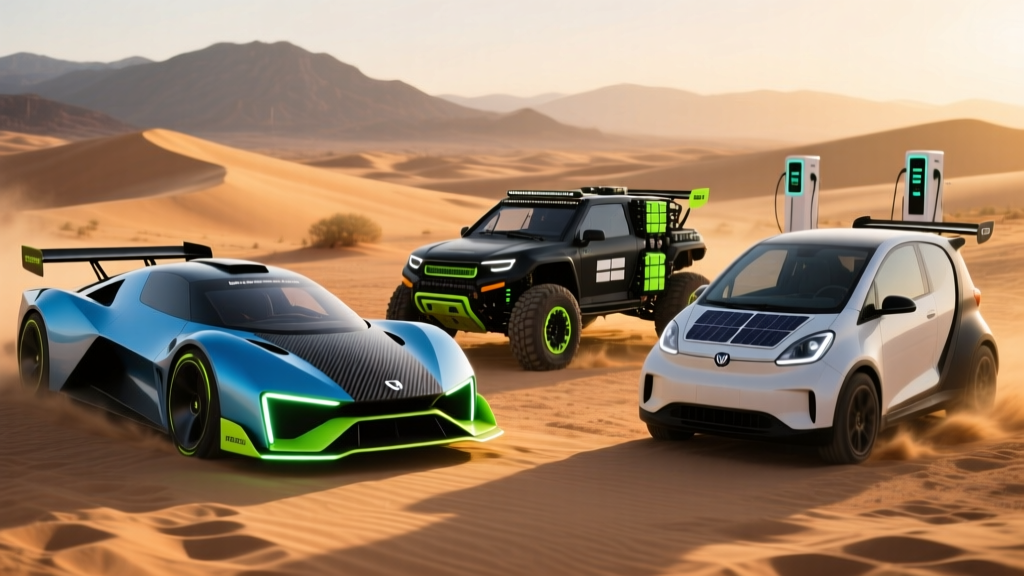
An electric rally car is any battery-electric vehicle built or modified for rally racing — dirt stages, gravel, snow, and mixed-surface timed events. In 2026, you cannot walk into a dealership and buy a factory-homologated electric rally car for street use. The most famous examples — the Volkswagen ID.R (1,150 hp, 0-60 in ~1.8 seconds) and the Extreme E ODYSSEY 21 race SUV — are purpose-built competition machines, not road-legal vehicles. However, you can rally a consumer EV like the Subaru Solterra, Tesla Model Y, or Hyundai Ioniq 5 in grassroots SCCA RallyCross events, and several aftermarket shops now build dedicated electric rally conversions starting around $60,000–$120,000.
What Exactly Is an Electric Rally Car?
Rally racing demands instant torque, all-wheel drive, long suspension travel, and the ability to handle brutal surfaces. Electric motors deliver all of that naturally. Maximum torque arrives at 0 RPM, dual-motor AWD systems can vector power to each axle independently, and the low center of gravity from a floor-mounted battery pack reduces body roll on loose surfaces.
The benchmark remains the Volkswagen ID.R, which set the Pikes Peak International Hill Climb record in 2018 (7:57.148) and the Nürburgring EV lap record in 2019. It runs a 44 kWh battery pack and produces 500 kW (680 hp) across two motors. But it weighs just 1,100 kg — far lighter than any consumer EV.
For buyers researching "electric rally car" in 2026, the realistic options break into three tiers:
- Factory motorsport EVs: VW ID.R, Extreme E ODYSSEY 21, upcoming Hyundai Ioniq 5 N-based rally concepts — not available to consumers.
- Consumer EVs used in RallyCross: Tesla Model 3/Y Performance, Subaru Solterra, Hyundai Ioniq 5 — modified with skid plates, rally tires, and roll cages for amateur events.
- Aftermarket electric rally builds: Shops like EV West and Electrified Garage offer rally-prep packages for existing EV platforms.
Electric Rally Car vs. Gas Rally Car: Performance and Cost Data
How does an electric rally car compare to a traditional gas-powered rally build like a Subaru WRX STI or Ford Fiesta Rally2? Here's a data-driven breakdown:
| Spec / Factor | Electric Rally Build (Ioniq 5 AWD) | Gas Rally Build (WRX STI) |
|---|---|---|
| Powertrain | Dual motor AWD, 320 hp / 446 lb-ft | 2.5L turbo flat-4, 310 hp / 290 lb-ft |
| Torque delivery | Instant at 0 RPM | Peak at ~2,000 RPM (turbo lag) |
| 0-60 mph | ~4.5 sec (stock) | ~5.2 sec (stock) |
| Curb weight | ~4,600 lbs | ~3,450 lbs |
| Rally stage range (est.) | 60–90 miles at race pace | 150–200 miles per tank |
| Refuel / recharge time | ~18 min (10–80% at 240 kW DC) | ~3 min (15-gal tank) |
| Build cost (rally-prep) | $55,000–$80,000 (vehicle + mods) | $35,000–$55,000 (vehicle + mods) |
| Per-event "fuel" cost | $8–$18 (electricity) | $45–$80 (race fuel / premium gas) |
| Maintenance per season | ~$800–$1,500 (suspension, tires, brakes) | ~$2,500–$5,000 (engine, clutch, turbo, fluids) |
The electric rally car wins on torque response, per-event operating cost, and drivetrain simplicity. The gas rally car wins on weight, stage range, refueling speed, and overall build cost. For SCCA RallyCross — where stages are typically 1–3 miles and you run 4–6 heats per event — the EV's range is not a limiting factor. For full-length stage rally (like ARA events with 60+ mile days), range remains a genuine constraint in 2026.
Real Costs: Building and Running an Electric Rally Car
If you're seriously considering an electric rally car, here's a realistic 2026 cost breakdown for a consumer-EV-based RallyCross build:
| Expense Category | Electric Rally (Ioniq 5 AWD) | Gas Rally (WRX STI) |
|---|---|---|
| Base vehicle (used 2024–2025) | $32,000–$42,000 | $22,000–$32,000 |
| Roll cage + safety | $3,500–$5,000 | $3,500–$5,000 |
| Suspension (rally-spec) | $2,500–$4,000 | $2,000–$3,500 |
| Skid plates + underbody | $1,200–$2,000 | $800–$1,500 |
| Wheels + rally tires | $1,500–$2,500 | $1,500–$2,500 |
| Brake upgrade | $800–$1,200 | $600–$1,000 |
| Total build | $41,500–$56,700 | $30,400–$45,500 |
| Annual operating (6 events) | $1,200–$2,500 | $3,500–$6,000 |
The electric rally car costs roughly $10,000–$15,000 more upfront but saves $2,000–$3,500 per year in fuel and maintenance. Most builders break even on operating costs within 3–4 seasons. Insurance for a modified EV used in motorsport typically requires a specialty policy; expect $1,800–$3,200 annually depending on event coverage.
Range, Charging, and Real-World Rally Considerations
Range is the single biggest question for any electric rally car. At aggressive race pace on gravel, energy consumption spikes dramatically — often 2–3× the EPA-rated efficiency. A Hyundai Ioniq 5 AWD rated at 256 miles EPA (84 kWh usable battery, NMC chemistry) might deliver just 60–90 miles of hard rally running before needing a charge.
Myth vs. Fact: Electric Rally Cars
| Myth: EVs can't handle dirt and gravel. | Fact: Instant torque and AWD make EVs competitive on loose surfaces. Tesla Model 3 owners have competed in SCCA RallyCross since 2019. |
| Myth: Batteries will break on jumps and rough terrain. | Fact: Structural battery packs (like the Ioniq 5's E-GMP platform) are among the stiffest parts of the chassis. Rally-prep skid plates add protection. Battery failures from impacts are rare with proper underbody armor. |
| Myth: You can't rally in cold weather with an EV. | Fact: Cold reduces battery capacity by 15–30% below 20°F. Heat pump–equipped EVs (Ioniq 5, Model Y) mitigate this. For winter rally, plan for ~70% of warm-weather stage range. |
| Myth: EVs are too heavy for rally. | Fact: Weight is a real disadvantage — a 4,600-lb EV eats tires and brakes faster than a 3,000-lb gas car. But low center of gravity and torque vectoring offset some of this on loose surfaces. |
| Myth: Charging takes too long between stages. | Fact: At a 240 kW DC fast charger, the Ioniq 5 charges 10–80% in ~18 minutes. Most RallyCross events have 30–60 min gaps between runs — enough time to recover significant charge. |
Best Consumer EVs for RallyCross in 2026
Not every EV is a good rally candidate. The ideal platform needs AWD, reasonable ground clearance, strong aftermarket support, and a battery large enough for multiple hot laps. Here are the top picks:
Hyundai Ioniq 5 AWD — 320 hp, 84 kWh battery, 256 mi EPA range. The E-GMP platform is stiff, the 800V architecture enables ultra-fast 240 kW charging, and Hyundai's N division has already proven the platform's performance potential with the Ioniq 5 N. Ground clearance: 6.1 inches. MSRP (2025 AWD SEL): ~$50,250. Battery warranty: 10 years / 100,000 miles.
Tesla Model Y Performance (AWD) — ~456 hp, 75 kWh battery, 303 mi EPA range. Proven in grassroots RallyCross with an active owner community. Octovalve thermal management handles repeated hard runs well. Ground clearance: 6.6 inches. MSRP (2025 Performance): ~$52,490. Battery warranty: 8 years / 120,000 miles.
Subaru Solterra — 215 hp, 71.4 kWh battery, 227 mi EPA range. Lower power but genuine rally DNA — Subaru co-developed the platform with Toyota and includes standard Symmetrical AWD with X-MODE terrain settings. Ground clearance: 8.3 inches (best in class). MSRP (2025 Premium): ~$44,995. Battery warranty: 8 years / 100,000 miles.
Ford Mustang Mach-E GT — 480 hp, 91 kWh usable battery, 265 mi EPA range. Powerful and heavy (4,920 lbs), but Ford Performance has supported grassroots motorsport. Ground clearance: 6.7 inches. MSRP (2025 GT): ~$59,995.
Decision Framework: Should You Build an Electric Rally Car?
Choose an Electric Rally Build If:
- You primarily compete in SCCA RallyCross (short stages, time between runs for charging)
- You have access to a Level 2 home charger (240V / 40–48A) or a DC fast charger near your event venue
- You value low per-event operating costs and reduced maintenance over minimum build cost
- You want instant torque and AWD without turbo lag or complex drivetrain components
- You're willing to accept 1,000+ lbs of extra weight and faster tire wear
Choose a Gas Rally Build If:
- You compete in full-length ARA stage rally events (60+ mile days, remote locations)
- You need rapid refueling between stages (3 min vs. 18+ min charging)
- Your budget is under $35,000 for a complete build
- You race in areas with limited charging infrastructure (rural rally venues)
- Weight is a primary concern for tire and brake longevity
Federal Tax Credits and EV Rally Builds
If you're buying a new or used EV as your rally platform, you may qualify for federal incentives — but with important caveats under current IRS §30D rules:
- New EV credit: Up to $7,500, but subject to MSRP caps ($55,000 for sedans, $80,000 for SUVs/trucks), buyer income limits ($150K single / $300K joint AGI), and critical-mineral/battery-sourcing requirements that eliminate many models.
- Used EV credit: Up to $4,000 (or 30% of sale price, whichever is lower) for vehicles priced under $25,000 — this can apply to older Tesla Model 3 or Nissan LEAF rally donors.
- Point-of-sale transfer: Eligible buyers can apply the credit as a down-payment reduction at the dealer rather than waiting for a tax refund.
- Motorsport use: There is no restriction on using a credit-eligible EV for racing after purchase. The credit applies at the time of sale based on the vehicle and buyer qualifications.
Always verify current-year eligibility on fueleconomy.gov before purchasing, as battery-sourcing requirements have disqualified several models since 2024.
What First-Time EV Rally Builders Should Know
Regenerative braking changes rally technique. In a gas rally car, left-foot braking and clutch-kick oversteer are standard techniques. In an EV, aggressive regen can upset the car's balance on loose surfaces. Most rally-prepped EVs run regen at the lowest setting or use custom maps that allow coasting.
Suspension matters more than power. The biggest performance gains come from rally-spec coilovers (Reiger, Ohlins, or M-Sport), not motor upgrades. Budget $2,500–$4,000 for proper suspension before chasing horsepower.
Tire wear is accelerated. A 4,600-lb EV with instant torque chews through rally tires faster than a lighter gas car. Plan on 2–3 sets of gravel tires per season (~$400–$600 per set mounted) vs. 1–2 sets in a comparable gas build.
Battery protection is non-negotiable. A punctured battery pack is a $15,000–$25,000 replacement and a fire risk. Invest in proper skid plates (aluminum or composite) covering the full battery case. Most aftermarket rally shops offer vehicle-specific solutions.
Frequently Asked Questions
Can I daily-drive my electric rally car?
Yes — if the build retains street-legal equipment (lights, mirrors, DOT tires for road use). Many RallyCross competitors drive their EVs to events and back. Roll cages and harnesses are legal for street use in most states, though you'll want to check local regulations. The trade-off is firmer suspension and rally tire noise on pavement.
Do electric rally cars compete in professional series?
Yes. Extreme E (now transitioning to Extreme H for hydrogen) uses electric SUVs in off-road racing. The FIA has explored electric rally regulations, but the World Rally Championship (WRC) currently uses hybrid powertrains, not full EVs. Professional fully-electric stage rally is still emerging.
What happens if I damage the battery in a rally crash?
EV battery packs are heavily armored by design, and rally skid plates add another layer. If a pack is punctured or deformed, the vehicle's battery management system (BMS) will isolate the damaged cells. Replacement costs range from $12,000–$25,000 depending on the model. Motorsport insurance policies can cover this — confirm with your insurer before competing.
How do I charge at remote rally venues?
Most RallyCross events are held at venues within 30–50 miles of populated areas with DC fast charging. Bring a portable Level 2 EVSE (like the Emporia VUE or ChargePoint Home Flex) that can plug into a 240V outlet — many rural venues have dryer or welder outlets available. For remote stage rally, some teams use portable generators with built-in inverters, though this partially defeats the emissions advantage.
Is an electric rally car faster than a gas one?
On short, tight RallyCross courses (under 2 miles), an EV's instant torque and AWD can produce competitive or faster times than a similarly priced gas build. On long, high-speed stages, the EV's extra weight (1,000+ lbs more) and limited range become disadvantages. In 2026, electric rally cars are most competitive in sprint-format events — not endurance stage rally.