The Quick Answer on "Electric Motor for a Kayak"
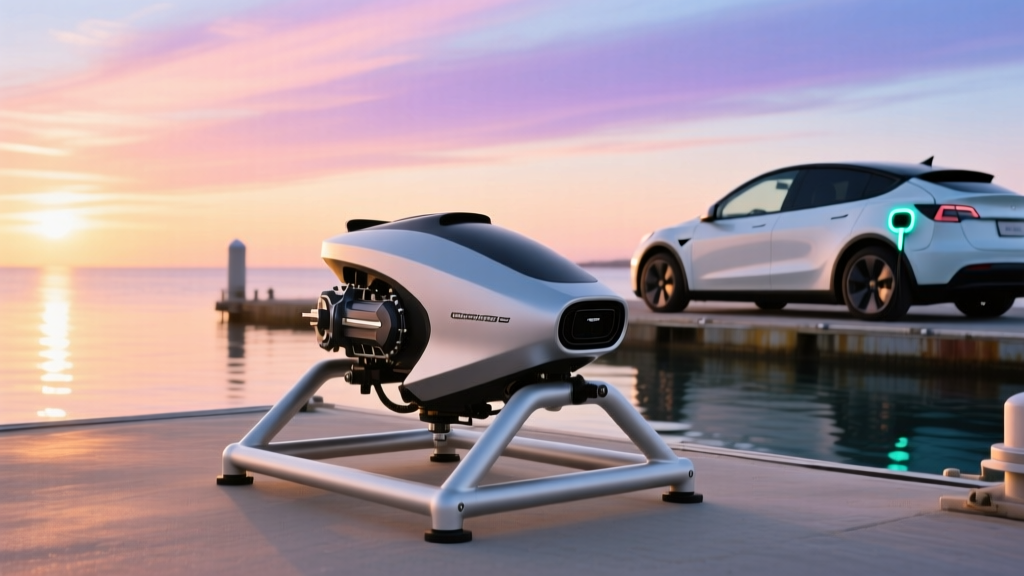
If you've landed here searching for an electric motor for a kayak, you should know upfront: AutoEdgeView covers electric vehicles — cars, trucks, SUVs, and plug-in hybrids — not marine motors, trolling motors, or e-bikes. A quality kayak electric motor (like a Torqeedo or Newport Vessels trolling motor) costs $200–$1,500 and runs off a 12V lithium or AGM battery, which is outside our automotive scope.
However, if you're researching electric motors because you're also considering your first EV purchase, this guide is for you. The same lithium-ion battery chemistry, kW/kWh distinctions, and charging fundamentals that power a kayak motor scale up to the 60–100 kWh traction batteries in today's electric cars. Below, we break down what a 2026 EV actually costs to buy, charge, and own — so you can decide whether that EV budget belongs on the water or in the driveway.
What Does a First-Time EV Buyer Actually Need to Decide?
The core decision isn't "electric vs. gas" in the abstract — it's whether your specific driving patterns, housing situation, and budget align with EV ownership in 2026. Here's the framework:
If-Then EV Decision Framework
- If you have a garage or driveway where a Level 2 (240V) charger can be installed, then a battery-electric vehicle (BEV) is highly practical for daily use.
- If you rely exclusively on street parking or apartment living with no charging access, then a plug-in hybrid (PHEV) or conventional hybrid (HEV) is likely a better fit until public infrastructure catches up.
- If your daily round-trip commute is under 80 miles and you can charge at home, then any current BEV with 250+ miles of EPA range will handle your week with margin to spare.
- If you regularly drive 300+ miles in a single day (road trips, rural routes), then prioritize models with DC fast-charge capability above 150 kW and a NACS connector for Tesla Supercharger access.
- If you live in a climate where winter temperatures regularly drop below 25°F, then budget for 20–30% real-world range loss and choose a vehicle with a heat pump for cabin efficiency.
EV vs. Gas vs. Hybrid: The 2026 Numbers
Let's compare three representative vehicles that real shoppers cross-shop: the 2026 Hyundai Ioniq 6 SE (BEV), the 2026 Toyota Camry LE Hybrid (HEV), and the 2026 Honda Accord 1.5T (gas). All are midsize sedans in the $28,000–$42,000 range.
| Spec | Hyundai Ioniq 6 SE (BEV) | Toyota Camry LE (HEV) | Honda Accord 1.5T (Gas) |
|---|---|---|---|
| Base MSRP | $38,650 | $29,495 | $28,990 |
| EPA Range / Fuel Economy | 361 mi / 140 MPGe | 51 MPG combined | 33 MPG combined |
| Battery / Powertrain | 77.4 kWh (NMC), 168 kW motor | 1.1 kWh NiMH + 2.5L I4 | 1.5L turbo I4 |
| 0–60 mph | 7.0 sec | 7.2 sec | 7.5 sec |
| DC Fast Charge (10–80%) | ~18 min at 240 kW peak | N/A | N/A |
| Level 2 Home Charge (0–100%) | ~7.5 hours at 10.9 kW | N/A | N/A |
| Federal Tax Credit (§30D) | Up to $3,750 (sourcing dependent) | $0 | $0 |
| Estimated 5-Year Fuel/Energy Cost | $3,150 (electricity at $0.16/kWh) | $4,800 (gas at $3.40/gal) | $7,400 (gas at $3.40/gal) |
| Battery/Powertrain Warranty | 10 yr / 100,000 mi | 10 yr / 150,000 mi (hybrid battery) | 5 yr / 60,000 mi |
Sources: EPA fueleconomy.gov, Hyundai News, manufacturer spec sheets. Tax credit eligibility per IRS §30D rules — income caps, MSRP caps, and battery-sourcing requirements apply. Verify your eligibility with a tax professional.
Real Costs and Savings: The 5-Year Ownership Breakdown
Sticker price is only the start. Here's what five years of ownership actually looks like, assuming 15,000 miles driven annually and home charging for the BEV.
| Cost Category | Ioniq 6 SE (BEV) | Camry LE (HEV) | Accord 1.5T (Gas) |
|---|---|---|---|
| Purchase Price (after tax credit) | $34,900 | $29,495 | $28,990 |
| Home Charger Install (Level 2) | $1,200 (avg, 50-amp circuit) | $0 | $0 |
| Energy / Fuel (5 years) | $3,150 | $4,800 | $7,400 |
| Maintenance (5 years) | $1,500 (tires, cabin filter, fluid top-offs) | $2,800 (oil changes, filters, brakes) | $3,200 (oil changes, filters, brakes, spark plugs) |
| Insurance (5-year avg) | $9,500 | $7,200 | $7,000 |
| Estimated Depreciation | $14,000 (~40%) | $10,500 (~36%) | $11,200 (~39%) |
| 5-Year Total | $64,250 | $54,795 | $57,790 |
| Cost Per Mile | $0.86 | $0.73 | $0.77 |
The BEV costs more upfront and carries higher insurance premiums (EV collision repair costs remain elevated due to battery-pack precautions), but its fuel and maintenance savings are substantial. Over 5 years, the Ioniq 6 saves roughly $4,250 in fuel versus the gas Accord and $1,700 in maintenance. The hybrid sits in the sweet spot for buyers who can't charge at home.
Key caveat: These numbers assume reliable home charging at residential electricity rates. If you're relying entirely on public DC fast charging at $0.35–$0.50/kWh, your BEV energy cost jumps to $5,500–$7,800 over five years — erasing much of the fuel savings versus a hybrid.
What a First-Time EV Buyer Must Know Before Signing
Whether you came here researching a kayak motor or a commuter car, the electrical fundamentals are the same. Here are the realities that catch new EV owners off guard:
kW vs. kWh — The Distinction That Matters
This is the most common confusion for new EV buyers. kW (kilowatts) measures power — how fast energy flows, like water pressure from a hose. kWh (kilowatt-hours) measures energy — the total amount stored or consumed, like gallons in a tank.
- Your EV's battery capacity is in kWh (e.g., 77.4 kWh usable in the Ioniq 6).
- Your charger's speed is in kW (e.g., a Level 2 home charger delivers 7.7–11.5 kW; a DC fast charger may peak at 150–350 kW).
- A kayak trolling motor might draw 0.5–1.0 kW from a 0.5–1.0 kWh battery — same physics, much smaller scale.
Home Charging Is the Make-or-Break Factor
Over 80% of EV charging happens at home. A Level 2 (240V) home charger adds roughly 25–44 miles of range per hour of charging, depending on the vehicle's onboard charger acceptance rate. Installation costs vary widely:
- Equipment: $350–$700 for a quality Level 2 unit (ChargePoint Home Flex, Emporia Vue, Tesla Wall Connector).
- Electrician labor + permit: $500–$2,500 depending on panel proximity and whether your electrical panel needs a 200-amp upgrade ($1,500–$3,500 additional).
- Total typical install: $800–$2,000 for a straightforward installation near the panel.
If you're in a condo, apartment, or home without a dedicated parking space with electrical access, investigate workplace charging or public Level 2 networks (ChargePoint, EVgo, Electrify America) before purchasing a BEV. A PHEV with 30–45 miles of electric-only range may be the pragmatic choice — you get EV commuting on good days and a gas engine when charging isn't available.
Real-World Range vs. the EPA Sticker
EPA range estimates are tested under controlled conditions. In real-world driving, expect variation:
- Highway driving at 75+ mph: 10–15% below EPA range due to aerodynamic drag.
- Cold weather (below 32°F): 20–30% range reduction from battery chemistry limitations and cabin heating demands. Vehicles with heat pumps (standard on the Ioniq 6, Hyundai/Kia E-GMP platform) mitigate this by ~5–10%.
- Hilly terrain / towing: 15–25% reduction depending on grade and load.
A vehicle rated at 361 miles EPA may deliver 250–280 miles on a cold-weather highway trip. Plan road trips around charging stations with that buffer in mind.
The Federal Tax Credit Isn't Guaranteed
The §30D Clean Vehicle Credit offers up to $7,500 for qualifying new EVs, but eligibility depends on multiple factors that change frequently:
- MSRP caps: $80,000 for SUVs/pickups/vans; $55,000 for sedans.
- Buyer income caps: $150,000 single / $300,000 joint modified AGI.
- Battery sourcing: Critical minerals and battery components must meet escalating domestic-content thresholds. Many vehicles that qualified in 2024 no longer qualify in 2026 as sourcing rules tighten.
- Point-of-sale transfer: You can transfer the credit to the dealer at purchase to reduce your out-of-pocket cost — but only if the vehicle qualifies at the time of sale.
Always verify current eligibility on IRS.gov or consult a tax professional before counting on the credit in your budget.
Common EV Misconceptions — Myth vs. Fact
| Myth | Fact |
|---|---|
| "EV batteries need replacing every 5 years like a laptop." | Modern EV batteries are warrantied for 8 years / 100,000 miles at 70%+ capacity retention. Real-world degradation data from Geotab and Recurrent shows most NMC and LFP packs retain 85–92% capacity at 100,000 miles. Full replacement costs $8,000–$18,000 but is rarely needed in the vehicle's first decade. |
| "Charging takes too long for road trips." | At a 250+ kW DC fast charger, modern 800V-architecture vehicles (Hyundai Ioniq 5/6, Kia EV6, Porsche Taycan) charge 10–80% in 18–22 minutes. That's a rest stop, not a delay. The limitation is charger availability, not vehicle capability. |
| "EVs are worse for the environment because of battery mining." | Lifecycle analyses from Argonne National Laboratory and the ICCT consistently show that even on coal-heavy grids, a BEV's lifetime CO₂ emissions are 50–70% lower than an equivalent gas car. On cleaner grids (hydro, wind, nuclear, solar), the advantage widens to 70–85%. Battery recycling infrastructure (Redwood Materials, Li-Cycle) is scaling to recover 90%+ of critical minerals. |
| "I'll be stranded — there aren't enough chargers." | As of 2026, the U.S. has over 200,000 public charging ports, including 70,000+ DC fast chargers. However, distribution is uneven — urban corridors are well-served while rural routes in the Mountain West and Great Plains remain sparse. Plan trips using PlugShare or A Better Routeplanner and keep a 20% SoC buffer. |
| "Autopilot and FSD mean the car drives itself." | Tesla Autopilot, FSD (Supervised), GM Super Cruise, and Ford BlueCruise are all SAE Level 2 driver-assistance systems. The driver must remain engaged, eyes on the road (or ready to resume), at all times. No consumer vehicle sold in 2026 is self-driving. Only Level 4 robotaxi services (Waymo in select metro areas) operate without a human driver. |
If You're Still Shopping for a Kayak Motor: What Transfers to Your EV Decision
The research you're doing for a kayak electric motor actually translates directly to EV car shopping:
- Battery chemistry matters: Kayak trolling motors increasingly use LiFePO4 (LFP) batteries — the same chemistry Tesla uses in Standard Range Model 3/Y vehicles. LFP offers longer cycle life (3,000+ cycles vs. ~1,500 for NMC) and better thermal stability, but lower energy density (heavier for the same kWh).
- Voltage and amperage: A 12V kayak motor pulling 50 amps draws 600 watts (0.6 kW). A Level 2 home charger at 240V and 48 amps delivers 11.5 kW — roughly 19x the power. Understanding Ohm's Law and power calculations for your kayak motor means you already grasp EV charging basics.
- Range estimation: Your kayak motor's runtime depends on battery Ah × voltage ÷ motor draw. An EV's range works identically: battery kWh ÷ consumption rate (kWh/mile) = miles. If you've calculated kayak runtime, you can calculate EV range.
Frequently Asked Questions
Does AutoEdgeView review electric kayak motors or trolling motors?
No. We cover electric and hybrid automobiles — BEVs, PHEVs, and HEVs for road use. For kayak motors, consult marine-focused publications or manufacturers like Torqeedo, Newport Vessels, or Minn Kota.
What's the cheapest practical EV to buy in 2026?
The 2026 Chevrolet Equinox EV LT starts around $33,600 with an EPA-estimated 315 miles of range. After a potential $7,500 federal tax credit (eligibility varies — check IRS §30D), effective pricing can reach the mid-$20,000s, making it one of the most affordable long-range BEVs on the market.
Can I charge an EV from a standard 120V outlet?
Yes — this is called Level 1 charging. It delivers roughly 1.0–1.4 kW, adding about 3–5 miles of range per hour. For a 77 kWh battery, a full charge takes 55–77 hours. Level 1 works for PHEVs with small batteries (10–18 kWh) or for BEV owners who drive less than 30 miles daily and can charge overnight. For anything more, a 240V Level 2 installation is strongly recommended.
How much does home EV charger installation cost?
A typical Level 2 home charger installation costs $800–$2,000 including equipment, electrician labor, and permits, assuming your electrical panel has capacity. If your home needs a panel upgrade from 100-amp to 200-amp service, add $1,500–$3,500. Always get a quote from a licensed electrician — costs vary significantly by region, panel location, and run length.
Do EVs cost more to insure than gas cars?
On average, yes — EV insurance premiums run 15–25% higher than comparable gas vehicles due to higher repair costs (battery pack safety protocols, specialized technician requirements, and higher parts costs). However, some insurers offer EV-specific discounts. Shop quotes from Geico, Progressive, State Farm, and EV-specialty carriers before purchasing.
What happens to an EV battery at end of life?
EV batteries rarely fail catastrophically — they gradually lose capacity. At 70% State of Health (typically 150,000–200,000+ miles), the pack is still functional for daily driving with reduced range. When replacement is needed, options include refurbished packs ($5,000–$10,000), new OEM packs ($10,000–$18,000), or third-party remanufactured units. End-of-life packs are increasingly recycled by companies like Redwood Materials, recovering 90%+ of lithium, cobalt, nickel, and copper.
Disclaimer: This article addresses automotive EV ownership. Electric motors for kayaks, boats, and other marine applications are outside our editorial scope. Pricing, tax credit eligibility, and vehicle availability reflect 2026 model-year data and are subject to change. Always verify current figures with the manufacturer and IRS.gov.