Quick Answer: Are Electric Lake Boats Worth It?
Electric lake boats like the Arc ONE and Bruce Energy BRUCE 22 offer near-silent operation, zero on-water emissions, and lower running costs — but they come with a steep upfront premium ($80,000–$200,000+) and limited range (typically 40–80 miles at cruising speed). They are best suited for lake-home owners with dock-based Level 2 charging who boat 2–4 hours at a time. If you trailer your boat to remote lakes or need all-day range, a gas-powered alternative remains more practical in 2026.
Note: AutoEdgeView specializes in electric and smart automobiles. This guide applies our EV ownership-analysis framework — cost of ownership, charging logistics, battery tech — to the closely related category of electric lake boats, answering a growing number of reader requests.
What Are Electric Lake Boats and Who Makes Them?
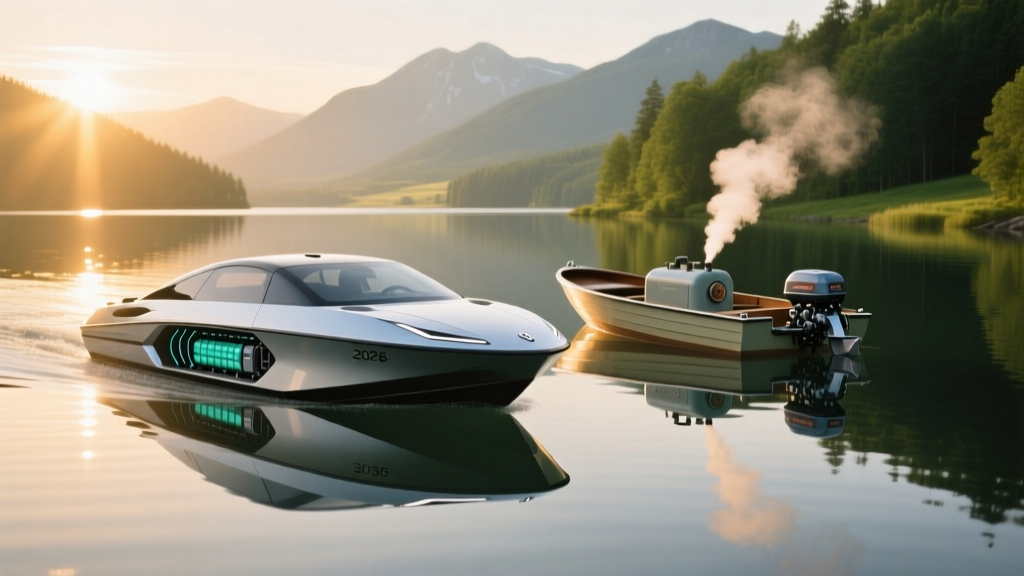
Electric lake boats are battery-electric watercraft (BEVs for the water) that replace internal-combustion marine engines with electric motors powered by lithium-ion battery packs. Unlike electric cars, the marine EV market is still early-stage, with a handful of production manufacturers and many concept-stage entrants.
Key 2026 production models include:
- Arc ONE (Arc Boat Company) — 24-foot aluminum runabout, 226 kWh NMC battery, 225 kW motor, starting around $148,000
- Bruce Energy BRUCE 22 — 22-foot luxury dayboat, ~120 kWh battery, starting around $195,000
- X Shore Eelex 8000 — 26-foot Swedish electric cruiser, 126 kWh battery, ~$330,000
- Navier ST30 — 30-foot hydrofoil electric boat, targeting 75+ mile range, announced pricing ~$300,000
For comparison, a well-equipped gas-powered 24-foot pontoon or bowrider (e.g., Bennington, Malibu) typically costs $45,000–$90,000 with a 200–350 HP outboard or sterndrive.
Range and Battery: The Real Numbers
Just as with EVs, manufacturer range claims for electric boats require scrutiny. Water creates far more drag than rolling resistance on a road, and range varies dramatically with speed — even more than in cars.
| Model | Battery (kWh) | Motor Power | Claimed Range | Real-World Range (Cruising) |
|---|---|---|---|---|
| Arc ONE | 226 kWh (NMC) | 225 kW (~300 HP equiv) | ~60 miles | ~40–50 miles at 20 mph |
| Bruce BRUCE 22 | ~120 kWh | ~100 kW | ~55 miles | ~35–45 miles at 18 mph |
| X Shore Eelex 8000 | 126 kWh | 225 kW | ~100 nm (115 mi) at slow speed | ~40–55 miles at 20 mph |
| Gas 24-ft bowrider | ~50–70 gal fuel | 250–350 HP | ~150–250 miles | ~150–250 miles |
Critical nuance: Electric boat range drops sharply at higher speeds because hydrodynamic drag increases with the cube of velocity. Running at 30 mph may cut range to half what you get at 20 mph — analogous to how highway driving at 80 mph reduces EV car range versus 65 mph city driving.
Real-world expectation: A 226 kWh battery (Arc ONE) cruising at 20 mph yields roughly 40–50 statute miles or about 2–3 hours on the water. For most lake use — tubing, swimming, sunset cruises — this covers a full day. For extended lake-hopping or large reservoirs, plan carefully.
Charging: Dock Power vs. Marina Reality
Charging infrastructure is where electric boat ownership diverges sharply from electric cars. There is no "Supercharger network for boats" — you are almost entirely dependent on your home dock or marina shore power.
| Charging Level | Power (kW) | Time to Full (226 kWh) | Availability |
|---|---|---|---|
| Standard 120V outlet (Level 1) | ~1.4 kW | ~160+ hours | Any dock outlet — impractical for full charge |
| 240V / 50A shore power (Level 2) | ~10–12 kW | ~19–23 hours | Many private docks and marinas |
| 240V / 100A dedicated (Level 2+) | ~20–24 kW | ~10–12 hours | Requires dedicated marine electrician install |
| DC fast charge (rare) | 50–150 kW | ~1.5–4 hours | Virtually nonexistent at marinas as of 2026 |
Home dock charging is the make-or-break factor. If your lake house has a dedicated 240V/50A circuit at the dock (similar to a large RV hookup), overnight charging works. If you trailer your boat to a public ramp with no shore power, you cannot recharge on-site — you must return home and plug in.
Installation cost: Running a dedicated 240V/50A marine-grade circuit to a private dock typically costs $2,000–$6,000 depending on distance from the panel, trenching needs, and local permitting. Always use a licensed marine electrician — freshwater and saltwater environments have distinct NEC code requirements (NFPA 70 / NEC Article 555 covers marinas and boatyards).
Cost Breakdown: Electric Lake Boat vs. Gas
The upfront price gap is enormous, but running costs tell a different story. Here is a realistic 5-year ownership comparison assuming 100 hours of lake use per year.
| Cost Category | Electric (Arc ONE) | Gas (24-ft Bowrider, 300 HP) |
|---|---|---|
| Purchase Price | $148,000 | $75,000 |
| Dock Charging Install | $4,000 | $0 |
| Fuel/Energy (5 yrs, 500 hrs) | ~$3,500 ($0.14/kWh avg) | ~$18,000 (~15 gal/hr × $4/gal) |
| Maintenance (5 yrs) | ~$1,500 (minimal) | ~$6,000 (oil, impeller, winterization, outboard service) |
| Insurance (annual avg) | ~$2,800/yr | ~$1,800/yr |
| 5-Year Total Cost | ~$171,500 | ~$100,000 |
| Cost per hour on water | ~$343/hr | ~$200/hr |
The honest verdict: Electric lake boats save significantly on fuel and maintenance (~$15,000+ over 5 years), but the purchase premium is so large that total cost of ownership remains substantially higher. This is a lifestyle and values purchase — silence, zero on-water exhaust, instant torque, and environmental impact — not a pure financial play.
Tax credit note: Unlike electric cars, electric boats do not qualify for the federal §30D Clean Vehicle Credit. That credit applies only to highway-capable motor vehicles. Some states and local utility districts offer marine electrification rebates — check your state energy office and utility provider for current programs.
Electric vs. Gas Lake Boats: Side-by-Side
| Factor | Electric Lake Boat | Gas Lake Boat |
|---|---|---|
| Noise Level | Near-silent at low speed, minimal at cruise | 75–90 dB — constant engine drone |
| On-Water Emissions | Zero | CO₂, unburned hydrocarbons, CO (lake water quality concern) |
| Torque / Acceleration | Instant — 0–20 mph in ~4 sec (Arc ONE) | Progressive — 0–20 mph in ~5–7 sec |
| Range | 40–60 miles typical | 150–250+ miles |
| Refueling/Recharge Time | 10–20 hours (Level 2) | 5 minutes at gas dock |
| Upfront Cost | $148,000–$330,000+ | $45,000–$90,000 |
| Maintenance | Minimal — no oil, filters, impellers | Annual service, winterization, fuel system |
| Resale / Depreciation | Uncertain — early market | Established depreciation curves |
Common Misconceptions — Myth vs. Fact
| Myth | Fact |
|---|---|
| "Electric boats can't go fast" | The Arc ONE hits ~45 mph. Electric motors deliver instant torque — acceleration rivals gas. |
| "You'll get stranded on the lake" | Most lake outings cover 10–30 miles total. A 50-mile range covers a full day for 90%+ of users. |
| "Batteries won't last in water" | Marine-grade battery enclosures are IP67/IP68 rated with active thermal management, similar to EV car packs. |
| "Electric boats are zero-emission" | On-water: zero tailpipe emissions. Upstream: depends on your local grid mix. A coal-heavy grid still means indirect emissions. |
| "You can charge at any marina" | Most marinas offer 120V/20A or 240V/30A — sufficient for slow top-ups, not full charges of large packs. |
Decision Framework: Should You Buy an Electric Lake Boat?
Choose an electric lake boat if:
- You own lakefront property with a private dock (or a marina slip with 240V/50A shore power)
- Your typical outings are 2–4 hours, staying within 20–30 miles of your dock
- Noise, exhaust fumes, and lake water quality are important to you
- You value near-zero maintenance and instant acceleration
- You can absorb the $80,000–$150,000+ premium over gas without financial strain
Stick with a gas boat if:
- You trailer your boat to multiple lakes or remote ramps
- You regularly boat 6+ hours or need 100+ mile range
- You lack dock-based charging access
- Budget is a primary concern — gas boats cost 50–70% less upfront
- You need proven resale values and an established dealer/service network
What First-Time Electric Boat Buyers Must Know
Before writing a check, verify these five items:
- Dock electrical capacity: Have a marine electrician assess your dock's panel. A 240V/50A circuit is the minimum for practical overnight charging of a 100+ kWh pack.
- Battery warranty: Look for 8–10 year / specific cycle-count warranties. Ask about capacity retention guarantees (e.g., 70% at 8 years, similar to EV car standards).
- Winterization: Electric boats still require hull and plumbing winterization, but skip the engine fogging and fuel stabilizer. Battery storage protocol matters — most manufacturers recommend maintaining 40–60% state of charge during winter layup.
- Insurance quotes: Get quotes before purchasing. Marine insurers are still developing actuarial data on electric boats, and premiums can be 40–60% higher than comparable gas boats.
- Service network: Unlike gas boats with nationwide dealer networks, electric boat service often requires factory-trained technicians. Confirm who services your area before buying.
Frequently Asked Questions
How long do electric lake boat batteries last?
Marine lithium-ion packs (typically NMC chemistry) are rated for 1,500–3,000 full charge cycles before degrading to ~80% capacity. At 50 cycles per year (weekly summer use), that translates to 30–60 years of service. Real-world degradation data is still limited given the market's newness — ask manufacturers for published cycle-life test data.
Can I use solar panels to charge my electric boat?
Technically yes, but practically it is slow. A large residential solar array (10 kW) produces roughly 40–50 kWh per day in summer — enough for about 10–15 miles of range. Solar is best used as a grid supplement, not a primary charging source for large marine battery packs.
Do electric boats qualify for any tax incentives?
The federal §30D EV tax credit does not apply to boats — it covers only highway motor vehicles. However, some states (notably California, New York, and Washington) and local utilities offer marine electrification rebates ranging from $1,000–$10,000. Check with your state energy office and Alternative Fuels Data Center for current programs.
What happens if I run out of charge on the lake?
Unlike a gas boat that can be refueled from a jerry can, an electric boat with a depleted battery must be towed back to a charger. Most electric boats include a small reserve buffer (similar to EV cars), and onboard navigation systems warn you well in advance. Carry a VHF radio or phone for towing assistance.
Are electric lake boats safe?
Electric marine systems must meet ABYC (American Boat & Yacht Council) standards and UL marine certifications. Battery enclosures are sealed against water intrusion and include thermal runaway protection. There is no fuel spill risk or carbon monoxide danger — a meaningful safety advantage in enclosed or crowded lake environments.