The Short Answer: Are Electric Cars Better Than Petrol Cars?
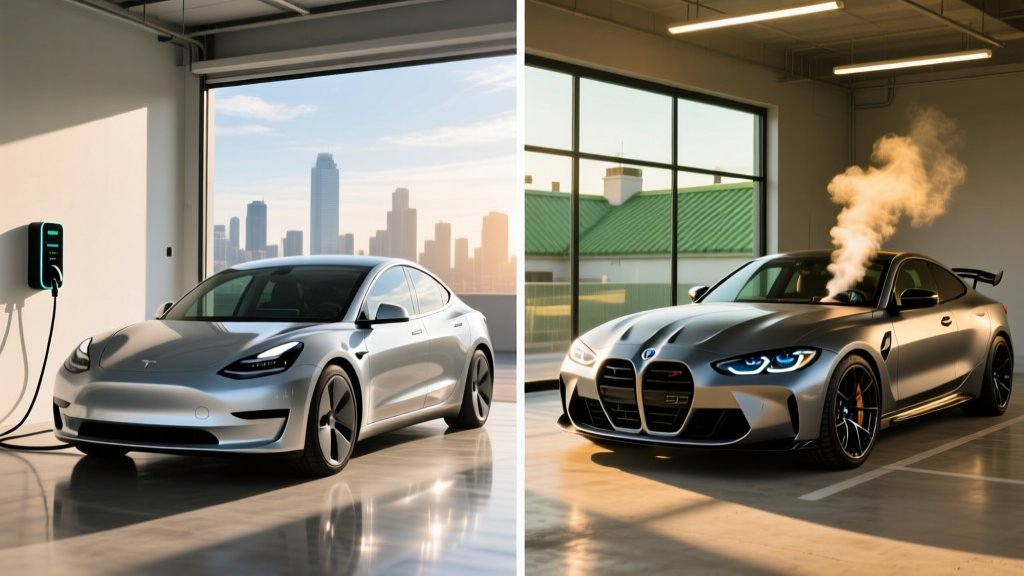
For most drivers who can charge at home and drive under 250 miles daily, electric cars deliver lower total cost of ownership, stronger acceleration, and fewer maintenance expenses than petrol cars. The 2026 Hyundai Ioniq 6 SE, for example, achieves 140 MPGe combined and costs roughly $0.045 per mile to charge at home versus $0.13 per mile for a 30 MPG petrol car at $3.90/gallon. However, EVs still carry higher upfront MSRPs, insurance premiums 15–25% above comparable gas models, and real-world highway range 10–20% below EPA stickers. If you lack home charging, regularly drive in extreme cold, or frequently tow heavy loads over long distances, a hybrid or efficient petrol car may serve you better today.
Total Cost of Ownership: EV vs Petrol Over 5 Years
The purchase price of an EV is only the beginning. Real ownership math must include fuel (or electricity), maintenance, insurance, depreciation, and available tax credits. Below is a representative five-year comparison between the 2026 Hyundai Ioniq 6 SE (BEV, $42,750 MSRP) and the 2026 Toyota Camry LE (2.5L petrol, $28,400 MSRP), driven 12,000 miles per year.
| Cost Category (5 yr / 60,000 mi) | 2026 Ioniq 6 SE (EV) | 2026 Camry LE (Petrol) |
|---|---|---|
| Base MSRP | $42,750 | $28,400 |
| Federal §30D Tax Credit | –$7,500 (if eligible) | $0 |
| Effective Purchase Price | $35,250 | $28,400 |
| Fuel / Electricity (60k mi) | $2,700 (home L2, $0.14/kWh) | $7,800 (30 MPG, $3.90/gal) |
| Maintenance | $1,200 | $3,800 |
| Insurance (avg premium) | $10,500 | $8,400 |
| Estimated Depreciation | $16,000 | $11,200 |
| 5-Year Total Cost | $65,650 | $59,600 |
| Cost Per Mile | $1.09 | $0.99 |
Sources: fueleconomy.gov for efficiency data; insurance estimates based on industry averages. Tax credit eligibility depends on income, MSRP caps, and battery-sourcing rules per IRS §30D guidelines.
The EV closes the gap substantially when the full $7,500 credit applies, and the fuel and maintenance savings widen over years six through ten. But if you do not qualify for the credit — due to income caps ($150K single / $300K joint), the $55,000 sedan MSRP cap, or critical-mineral sourcing rules — the petrol car retains a clear cost advantage in the near term.
Range, Efficiency, and Real-World Driving
The EPA range sticker is a starting point, not a guarantee. Here is how a typical 2026 mid-size EV stacks up against a petrol equivalent in real-world conditions:
| Metric | 2026 Hyundai Ioniq 6 SE (BEV) | 2026 Toyota Camry LE (Petrol) |
|---|---|---|
| EPA Range / Tank Range | 361 miles (EPA) | ~510 miles (14.5 gal × 35 MPG hwy) |
| Real-World Highway (70 mph) | ~290–310 miles | ~480–510 miles |
| Cold-Weather Range (20°F) | ~240–270 miles (25–30% loss) | ~460–490 miles (minimal loss) |
| Combined Efficiency | 140 MPGe / 24 kWh/100mi | 32 MPG combined |
| Refuel/Recharge Time | 10–80% in ~18 min (350 kW DC peak) | ~5 min (full tank) |
| Energy Cost Per Mile | $0.034–$0.045 (home L2) | $0.11–$0.13 |
| 0–60 mph | 5.1 seconds | 7.6 seconds |
Real-World Range Reality: The Ioniq 6 SE's 361-mile EPA figure assumes a mix of city and highway driving at moderate temperatures. On a sustained 75 mph highway run in 85°F heat with A/C, expect roughly 300 miles. In 20°F winter conditions without a heat pump engaged, plan for 240–270 miles. Petrol cars lose comparatively little range in cold weather, which remains an advantage for northern-climate drivers who lack garage parking.
For daily commutes under 80 miles round-trip, range is a non-issue for any modern EV — you simply plug in at home each night and wake up "full." The friction appears on road trips exceeding 250 miles, where a 20-minute DC fast-charge stop every 2.5–3 hours replaces the 5-minute gas station sprint. Whether that trade-off bothers you depends on your travel habits and tolerance for planning.
Charging Access: The Deciding Factor Most Buyers Overlook
The single biggest predictor of EV satisfaction is whether you can charge at home. According to industry surveys, over 80% of EV charging happens at a residence. Here is what home charging looks like in practice:
| Charging Level | Power (kW) | Miles Added Per Hour | Typical Cost to Install |
|---|---|---|---|
| Level 1 (120V outlet) | 1.2–1.4 kW | 3–5 mi/hr | $0 (existing outlet) |
| Level 2 (240V, 48A circuit) | 7.7–11.5 kW | 25–44 mi/hr | $800–$2,500 (electrician + permit) |
| DC Fast Charge (public) | 50–350 kW | N/A (session-based) | $0.30–$0.55/kWh per session |
A Level 2 home charger (such as a ChargePoint Home Flex or Tesla Wall Connector) delivers enough speed to fully replenish a 77 kWh battery overnight in roughly 7–9 hours. Installation costs depend on your electrical panel's capacity: a 200-amp panel with spare breaker slots may only need a $800–$1,200 circuit run, while a panel upgrade to 200A from an older 100-amp service can add $1,500–$3,000.
If you cannot charge at home — because you live in an apartment, park on the street, or your HOA restricts charger installation — an EV becomes substantially less convenient. Public DC fast charging at $0.35–$0.55/kWh erases much of the fuel-cost advantage over petrol, and relying on it weekly adds time and unpredictability. In this scenario, a hybrid like the Toyota Prius (57 MPG combined, ~$26,500 MSRP) or a plug-in hybrid such as the Toyota RAV4 Prime (42 miles electric-only, 38 MPG gas, ~$44,500) offers a practical bridge.
Maintenance, Longevity, and What Actually Breaks
EVs eliminate oil changes, spark plugs, timing belts, exhaust systems, and multi-speed transmissions. Regenerative braking drastically extends pad life — many EV owners report original brake pads at 80,000+ miles. The typical annual maintenance cost for a BEV runs $200–$300 versus $600–$900 for a petrol car, based on manufacturer service schedules.
The long-term concern is the traction battery. Most 2026 EVs use either NMC (nickel manganese cobalt) or LFP (lithium iron phosphate) chemistry:
| Factor | NMC Battery | LFP Battery |
|---|---|---|
| Energy Density | Higher (more range per kg) | Lower (heavier for same kWh) |
| Cycle Life | ~1,500–2,000 cycles | ~3,000–5,000 cycles |
| Recommended Daily Charge | 80% (to reduce degradation) | 100% (LFP tolerates full charges) |
| Typical Degradation at 100k mi | 8–12% capacity loss | 5–8% capacity loss |
| Replacement Cost (out of warranty) | $12,000–$20,000 | $10,000–$16,000 |
Federal law mandates that EV batteries carry a warranty of at least 8 years / 100,000 miles, with many automakers guaranteeing 70% capacity retention over that period. In practice, modern thermal-management systems have made catastrophic battery failure rare. The bigger ownership risk is insurance: EV premiums average 15–25% higher than comparable petrol cars because repair costs after collisions are elevated (specialized labor, battery-pack replacement thresholds).
Common Misconceptions — Myth vs. Fact
| Myth | Fact (with data) |
|---|---|
| "EVs don't have enough range for road trips." | The 2026 Ioniq 6 SE delivers 361 EPA miles; the Chevy Silverado EV 4WT offers 460 miles. With 350 kW DC fast charging, a 10–80% stop takes ~18 minutes. |
| "EV batteries need replacing every few years." | Warranties cover 8 yr / 100,000 mi minimum. Real-world data from Tesla and Hyundai fleets shows 88–92% capacity retention at 100,000 miles with proper charging habits. |
| "EVs are worse for the environment because of electricity generation." | Even on the US average grid mix, a BEV produces 60–68% fewer lifetime greenhouse gas emissions than a comparable petrol car (source: EPA). On renewable-heavy grids, the reduction exceeds 80%. |
| "Charging is always expensive at public stations." | Home Level 2 charging at $0.14/kWh costs $0.034/mile for a 24 kWh/100mi EV. Public DC fast charging at $0.48/kWh costs ~$0.115/mile — comparable to petrol, but most charging happens at home. |
| "EVs are slow in cold weather." | Instant electric torque provides strong acceleration regardless of temperature. However, range drops 20–30% at 20°F, and DC fast-charge speeds taper until the battery warms. Preconditioning (available on most 2026 models) mitigates both issues. |
Decision Framework: Should You Buy an EV, Hybrid, or Petrol Car?
Choose a Battery Electric Vehicle (BEV) if:
- You have reliable home Level 2 charging (garage or driveway with 240V access)
- Your daily driving is under 200 miles round-trip
- You qualify for the §30D tax credit (income under $150K single / $300K joint; vehicle under MSRP caps)
- You want the lowest per-mile operating cost and minimal scheduled maintenance
- You value instant torque and quiet operation
Choose a Plug-In Hybrid (PHEV) if:
- You can charge at home but also take frequent road trips over 300 miles
- You want 30–45 miles of electric-only commuting with a gas backup for longer drives
- You live in a region with sparse DC fast-charging infrastructure
- You need to tow heavier loads where EV range drops significantly
Choose a Petrol or Standard Hybrid (HEV) if:
- You cannot install or access home charging (apartment, street parking, restrictive HOA)
- You regularly drive in sub-20°F conditions where EV range loss is pronounced
- Your budget is firmly under $30,000 and you cannot leverage tax credits
- You drive over 30,000 miles per year and need maximum range with minimal stop time
Frequently Asked Questions
Do electric cars save money compared to petrol cars over time?
Yes, typically after 3–5 years of ownership when the §30D tax credit applies. Home-charged electricity costs $0.03–$0.05 per mile versus $0.11–$0.13 for petrol at $3.90/gallon and 30 MPG. Combined with $500–$700/year lower maintenance, most EVs break even on the higher purchase price within 60,000 miles. Without the tax credit or without home charging, the payback period extends to 7–10 years or may not occur at all.
What does the §30D federal tax credit require in 2026?
Under current IRS rules, the credit is up to $7,500 for new EVs meeting battery-sourcing and critical-mineral requirements. Buyer income must not exceed $150,000 (single) or $300,000 (joint). Sedan MSRP must not exceed $55,000; SUVs, vans, and trucks cap at $80,000. The credit can be transferred to the dealer at point of sale as an immediate price reduction. Always verify current eligibility on irs.gov, as sourcing requirements tighten annually.
How long do EV batteries actually last?
Modern liquid-cooled EV batteries with NMC or LFP chemistry typically retain 88–92% of original capacity at 100,000 miles. The federal minimum warranty is 8 years / 100,000 miles at 70% retention. Real-world fleet data from manufacturers shows that reaching 200,000 miles with 80%+ capacity is achievable with moderate charging habits — avoiding repeated 100% charges on NMC packs, limiting DC fast charging to road trips, and using preconditioning in cold weather.
Are electric cars worse in winter?
EVs lose 20–30% of EPA range in sustained 20°F weather due to battery chemistry slowdown and cabin heating demands. A 361-mile EPA EV may deliver 250–270 real-world winter miles. Petrol cars lose comparatively little range in cold but also waste energy as heat. Using a heat pump (standard on most 2026 EVs), preconditioning the cabin while plugged in, and seat/steering-wheel heaters can recover 10–15% of winter range loss.
Is a hybrid better than an EV for a first-time buyer?
A standard hybrid (HEV) like the Toyota Prius is the lowest-risk electrified option: no charging required, 57 MPG combined, ~$26,500 MSRP, and no range anxiety. A PHEV like the RAV4 Prime gives you 42 miles of electric commuting plus a gas engine for road trips. A full BEV makes the most sense if you have confirmed home charging access, a predictable daily route, and eligibility for the tax credit. First-time buyers uncertain about charging logistics should test the experience with a PHEV before committing to a BEV.