The Short Answer on Electric Jets
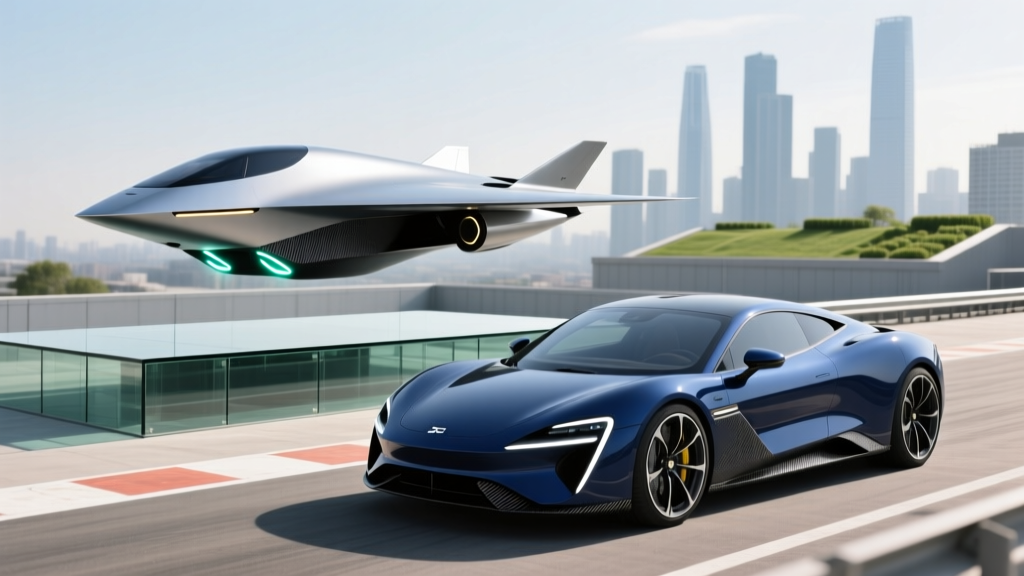
Electric jets — more accurately, electric aircraft and eVTOLs (electric vertical takeoff and landing vehicles) — are in active development but are not available for consumer purchase in 2026. Companies like Joby Aviation, Archer, and Beta Technologies are certifying electric aircraft for short-range air taxi and cargo use, typically with 100–150 miles of range and battery capacities between 50–150 kWh. For ground transportation buyers, the relevant takeaway is that the same lithium-ion battery supply chain, charging infrastructure buildout, and LFP/NMC chemistry trade-offs shaping your EV purchase are also determining when — and whether — electric aviation scales. If you're researching electric jets because you're weighing an EV purchase and wondering how the broader electrification landscape affects your decision, this guide connects the dots.
What Are Electric Jets and Why Are EV Buyers Searching for Them?
The term "electric jets" is a popular search phrase, but it's technically imprecise. True jet propulsion relies on combustion. What most people mean when searching for electric jets falls into three categories:
- Electric aircraft (fixed-wing): Battery-powered planes like the Pipistrel Velis Electro (the first EASA-certified electric airplane) or upcoming models from Beta Technologies and Bye Aerospace, used for training and short-haul flights.
- eVTOL air taxis: Electric vertical takeoff and landing vehicles from Joby Aviation, Archer Aviation, and Volocopter — essentially large passenger drones intended for urban air mobility services (not private ownership).
- Hydrogen-electric or hybrid-electric regional aircraft: Larger concepts from companies like Heart Aerospace and ZeroAvia that use hydrogen fuel cells or hybrid systems for 200–500 mile routes.
EV buyers search for this topic because the underlying technology — battery chemistry, energy density, thermal management, charging speed — is shared. Understanding where electric aviation stands helps contextualize where EV battery tech is headed, and whether waiting for next-generation solid-state batteries makes sense for your next car purchase.
Battery Tech Shared Between Electric Aircraft and EVs
The battery packs powering today's EVs and tomorrow's electric aircraft share core chemistry, but the engineering priorities diverge sharply.
| Parameter | Typical EV (2026) | Certified Electric Aircraft | eVTOL Air Taxi (Projected) |
|---|---|---|---|
| Battery Chemistry | NMC 811 or LFP | NMC (energy-density priority) | NMC high-nickel |
| Usable Capacity | 60–110 kWh | 15–50 kWh | 50–150 kWh |
| Energy Density (cell-level) | 250–300 Wh/kg | 260–320 Wh/kg | 300–350 Wh/kg (target) |
| Thermal Management | Liquid cooling standard | Air or liquid cooling | Liquid cooling required |
| C-Rate (Discharge) | 1C–3C typical | 3C–5C sustained | 5C–10C peak (hover) |
| Cost per kWh (pack-level) | ~$110–$130 | ~$200–$400 (low volume) | ~$150–$250 (projected at scale) |
The critical difference: aircraft demand extreme energy density because every kilogram of battery reduces payload or range. EVs can absorb heavier packs (a 2026 Ford F-150 Lightning carries a ~131 kWh pack weighing roughly 1,800 lbs), but a Cessna-class aircraft cannot. This is why the DOE tracks battery weight trends — the auto industry's push toward lighter, denser cells directly benefits aviation.
For EV buyers, this shared R&D pipeline means that breakthroughs in silicon-anode cells and solid-state batteries — driven partly by aviation demand — will eventually lower costs and increase range in cars. However, solid-state batteries remain in limited production as of 2026 (Toyota has begun small-volume deployment in Japan), so buying an EV today means choosing between proven NMC and LFP chemistries.
Real Costs: EV Ownership vs Gas in 2026
While electric jets remain aspirational, electric cars are a present-day financial decision. Here's what the numbers look like for a typical buyer comparing a 2026 battery-electric vehicle against a comparable gas car and a plug-in hybrid.
| Cost Category | BEV (e.g., Hyundai Ioniq 6 SE) | Gas (e.g., Toyota Camry LE) | PHEV (e.g., Toyota RAV4 Prime) |
|---|---|---|---|
| Base MSRP | $38,650 | $29,495 | $44,590 |
| Federal Tax Credit (§30D) | Up to $7,500* | $0 | Up to $7,500* |
| Effective Purchase Price | ~$31,150 | $29,495 | ~$37,090 |
| Fuel/Energy (5 yrs, 75k mi) | $4,200 (home L2 @ $0.14/kWh) | $9,750 (30 MPG @ $3.90/gal) | $5,800 (blended) |
| Maintenance (5 yrs) | $1,800 | $4,200 | $3,600 |
| Insurance (5 yrs avg) | $9,500 | $7,200 | $8,400 |
| Estimated Depreciation | $14,500 | $11,000 | $15,200 |
| Total 5-Year Cost | $61,150 | $61,645 | $70,090 |
*§30D credit eligibility depends on MSRP caps ($55,000 sedans / $80,000 SUVs/trucks), buyer income limits ($150K single / $300K joint AGI), battery critical-mineral and component sourcing requirements, and point-of-sale transfer availability. Always verify current rules at IRS.gov before purchasing.
The BEV breaks even with the gas car over five years primarily through fuel and maintenance savings, despite higher insurance and depreciation. The PHEV costs more upfront but offers flexibility for buyers without reliable home charging.
Charging Reality: What First-Time EV Buyers Must Know
If you're considering an EV — whether inspired by the broader electrification trend that includes electric aircraft or simply evaluating your commute economics — charging access is the single biggest variable in satisfaction.
Common EV Charging Misconceptions vs Reality
| Myth | Fact (2026 Data) |
|---|---|
| "Public chargers are unreliable" | Network uptime averages 85–92% across Electrify America and EVgo; Tesla Superchargers exceed 97%. Reliability is improving but varies by corridor. |
| "I need a 350 kW charger" | Most EVs peak between 150–250 kW DC. A 150 kW station delivers 10–80% in 20–30 minutes for most 2026 models. Peak rate matters less than sustained curve. |
| "Cold weather kills range permanently" | Cold reduces range 15–30% temporarily (battery chemistry limitation, not damage). A heat pump-equipped EV like the Ioniq 5 or Model Y loses ~15–20% at 20°F vs ~30% for resistive-heat systems. |
| "Level 1 charging is useless" | Level 1 (120V, 1.4 kW) adds ~4 miles/hour — enough for drivers covering under 30 miles/day who can plug in overnight. |
| "Home charging installation is always expensive" | Basic Level 2 (240V, 40A) installation runs $800–$2,200 if your panel has capacity. Panel upgrades (to 200A) add $2,000–$5,000 but aren't needed in most homes built after 2000. |
Home Charging Cost Breakdown (Level 2, 48A Hardwired)
| Component | Low Estimate | High Estimate |
|---|---|---|
| Level 2 Charger (Emporia, ChargePoint, Wallbox) | $350 | $700 |
| Electrician Labor (permit included) | $500 | $1,500 |
| Electrical Panel Upgrade (if needed) | $0 | $4,500 |
| Utility Rebate / Federal 30C Credit (30% up to $1,000) | –$300 | –$1,000 |
| Total Net Cost | $550 | $5,700 |
For context, the average US residential electricity rate in 2026 is approximately $0.16/kWh (EIA data). Charging a 77 kWh battery (typical midsize EV) from 10–80% at home costs roughly $8.50 — versus $45–$55 for the equivalent gas fill-up at 30 MPG and $3.90/gallon.
Decision Framework: Should You Buy an EV, Hybrid, or Wait?
Choose Based on Your Situation
Buy a BEV (full electric) if:
- You have home charging access (garage, driveway, or landlord-approved outlet)
- Your daily driving is under 200 miles round-trip
- You qualify for the §30D credit (check income and vehicle eligibility)
- You want minimum maintenance and lowest per-mile energy cost
- Example: 2026 Hyundai Ioniq 6 SE — 361 mi EPA range, 800V architecture (10–80% in ~18 min at 250 kW), $38,650 MSRP
Buy a PHEV (plug-in hybrid) if:
- You lack reliable home charging but want some electric-only driving
- You take frequent long road trips (>400 miles) through charging-sparse corridors
- You want EV-like commuting with gas-engine backup for winter or towing
- Example: 2026 Toyota RAV4 Prime — 42 mi electric-only, 94 MPGe combined, 302 HP, $44,590 MSRP
Stick with a hybrid (HEV) or gas car if:
- You live in an apartment with no charging access and street charging is unavailable
- Your budget is strictly under $30,000 and you need a new vehicle
- You tow heavy loads regularly (>5,000 lbs) in cold climates where EV range drops significantly
- Example: 2026 Toyota Camry Hybrid — 52 MPG combined, $30,495 MSRP, no plug required
Wait for solid-state batteries if:
- Your current vehicle is functional and you can delay purchase 3–5 years
- You need 500+ miles of range for work (long-haul sales, rural routes)
- Note: Solid-state promises faster charging and higher density, but 2026 production is limited to low-volume Japanese-market models. Broad US availability is projected for 2028–2030.
How Electric Aviation Progress Affects Your EV Purchase
The connection between electric jets and your EV buying decision isn't direct, but it's not irrelevant either. Here's how aviation electrification intersects with the car market:
Battery supply chain pressure: As eVTOL manufacturers scale production (Joby Aviation plans commercial service in select US cities by 2026–2027), demand for high-nickel NMC cells increases. This could create temporary supply constraints, though overall battery production capacity is expanding faster than demand through 2028.
Charging infrastructure overlap: Several eVTOL companies are developing high-power ground charging stations (350–600 kW) at vertiports. While these won't directly serve cars, the grid upgrades and utility negotiations they require can accelerate high-power charging availability in urban areas — benefiting EV owners nearby.
Technology trickle-down: Aviation demands extreme safety margins and cycle-life reliability. Battery management systems (BMS) and thermal management innovations developed for aircraft are already influencing automotive designs. The redundant cooling architectures in aircraft battery packs inform the multi-zone thermal systems in vehicles like the Tesla Model Y and Ford F-150 Lightning.
Regulatory precedent: FAA certification of electric aircraft establishes safety and testing frameworks that parallel NHTSA's evolving EV battery safety standards. As NHTSA continues to update EV safety guidance, aviation precedents inform crash-test, thermal runaway, and post-crash protocols for cars.
What First-Time EV Buyers Should Actually Focus On
Electric jets capture imagination, but your immediate purchase decision comes down to five practical factors:
- Home charging feasibility: Confirm your electrical panel capacity (most homes need a 200A panel for a 48A Level 2 charger). Get an electrician quote before buying the car — not after.
- Real-world range, not EPA sticker: Subtract 15–20% for highway driving at 70+ mph. Subtract another 15–25% for sustained below-freezing temperatures. A 300-mile EPA rating realistically delivers 220–250 miles in winter highway conditions.
- Charging speed over battery size: A 77 kWh battery that charges at 250 kW (10–80% in ~18 min) is more practical for road trips than a 100 kWh battery limited to 150 kW (10–80% in ~32 min). Look for 800V architecture in 2026 models (Hyundai/Kia E-GMP, Porsche Taycan, Lucid Air).
- Total cost, not monthly payment: Factor in insurance premiums (EVs average 15–25% higher than gas equivalents), potential home charger installation, and depreciation trends (EV depreciation has stabilized in 2025–2026 after steep 2023–2024 drops).
- Tax credit eligibility: The §30D credit has become more restrictive since 2023 due to battery sourcing rules. Many popular models qualify for partial or no credit depending on manufacturing date. Always check the DOE's fueleconomy.gov credit list for the specific model year and trim you're buying.
Frequently Asked Questions
Are electric jets available for consumers to buy?
No. As of 2026, no fully electric jet or fixed-wing electric aircraft is available for private consumer purchase at a practical price point. The Pipistrel Velis Electro (approx. $130,000) is certified for flight training but has only ~50 minutes of endurance. eVTOL air taxis from Joby and Archer are intended for ride-service operations, not individual ownership, and are expected to launch limited commercial routes in 2026–2027.
Will electric aviation technology make EV batteries cheaper?
Indirectly, yes. Aviation demand accelerates investment in higher energy-density cells (silicon anodes, solid-state electrolytes), which eventually reach automotive production. However, the timeline is 3–7 years from aviation certification to automotive cost parity. Don't delay an EV purchase today expecting aviation-driven battery breakthroughs to arrive quickly.
What's the cheapest way to own an EV in 2026?
Buy a credit-eligible model (like the Chevrolet Equinox EV or Hyundai Ioniq 6), take the §30D credit as a point-of-sale reduction, install a basic Level 2 home charger, and charge overnight on a time-of-use electricity plan (typically $0.08–$0.12/kWh off-peak). This approach delivers fuel costs under $0.04/mile — roughly one-third the cost of a 30 MPG gas car at $3.90/gallon.
Should I wait for solid-state batteries before buying an EV?
Only if your current vehicle is reliable and you can wait until 2028–2030. Solid-state batteries promise 40–50% higher energy density and faster charging, but 2026 production is limited to low-volume applications. Current NMC and LFP batteries in 2026 EVs are mature, well-warrantied (8 years/100,000 miles federally mandated minimum capacity retention), and offer 250–400 miles of real-world range at competitive prices.
Do electric jets use the same chargers as electric cars?
No. Electric aircraft require specialized high-power charging systems, often 350–600 kW or higher, with aviation-specific connectors and safety protocols. These are ground-support equipment, not consumer-facing infrastructure. Your EV uses CCS, NACS, or CHAdeMO connectors at public DC fast chargers — an entirely separate ecosystem.