The Short Answer: Electric Jet Planes Aren't Ready — EVs Are
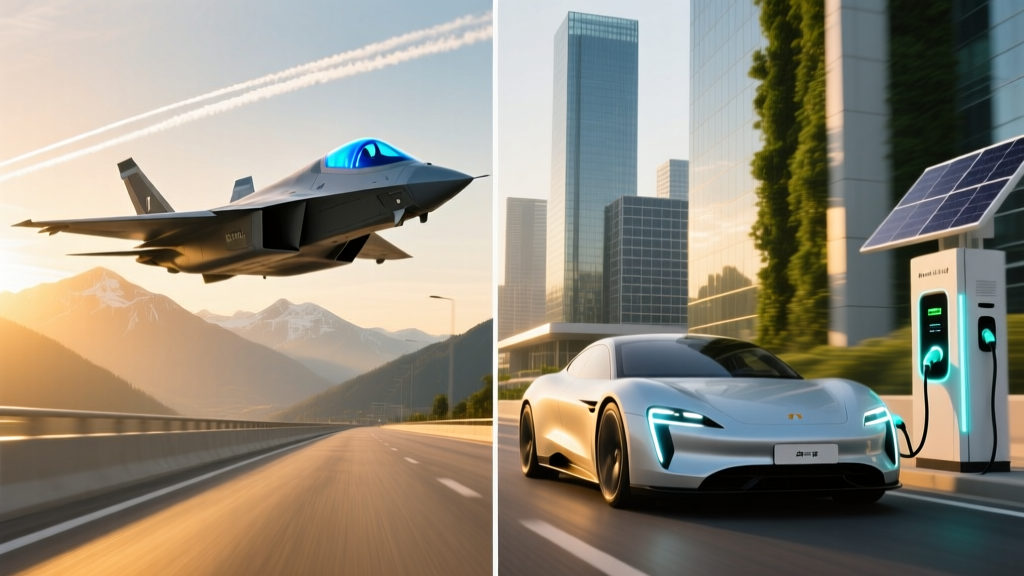
If you've searched for electric jet plane technology hoping it signals a new era of personal electric transport, here's the practical reality as of 2026: electric aviation remains in early-stage development with no commercially available electric jet aircraft for consumers. Meanwhile, electric vehicles (EVs) have matured into a proven, cost-competitive transportation option with EPA-rated ranges exceeding 300 miles, DC fast charging from 10–80% in under 20 minutes on many models, and a robust (if imperfect) charging infrastructure. If your goal is to reduce your transportation carbon footprint and fuel costs this year, an electric car — not an electric plane — is where your money delivers real results today.
Why "Electric Jet Plane" Searches Are Surging — And What They Really Mean
Search interest in electric jet planes has grown alongside announcements from companies like Eviation (Alice), Heart Aerospace (ES-30), and various eVTOL (electric vertical takeoff and landing) startups. These projects target short-haul regional air travel — typically 9 to 30 passengers over 250 to 500 nautical miles. They are not personal vehicles, and none are available for individual purchase.
For the EV shopper, the relevance is this: the same battery technology advances driving electric aviation research — higher energy-density cells, improved thermal management, faster charging architectures — are simultaneously making electric cars better every model year. The 2026 crop of EVs benefits from 800-volt platforms, NMC and LFP battery options, and sustained DC fast-charge rates above 200 kW on models like the Hyundai Ioniq 5, Kia EV6, and Porsche Taycan.
Electric Jet Plane vs Electric Car: The Numbers Don't Lie
Let's put the two side by side with real data. The comparison isn't apples to apples — it's apples to concept art — but it clarifies where your dollars go furthest right now.
| Metric | Electric Jet Plane (e.g., Eviation Alice — Announced) | 2026 Tesla Model Y Long Range AWD | 2026 Toyota Camry (Gas Baseline) |
|---|---|---|---|
| Status | Prototype / certification pending | Available now | Available now |
| Price | ~$4M+ (commercial operator pricing) | $46,630 MSRP (before credits) | ~$29,500 MSRP |
| Range / Endurance | ~250 nautical miles (announced) | 320 miles EPA (~270 mi highway real-world) | ~510 miles (13.2 gal × 39 mpg hwy) |
| Energy Storage | ~820 kWh battery pack (announced) | 75 kWh usable (NMC) | 13.2-gallon fuel tank |
| "Refuel" Time | ~30 min (announced fast-charge target) | 10–80% in ~25 min at 250 kW DCFC | ~5 min at gas station |
| Passenger Capacity | 9 (plus 2 crew) | 5 | 5 |
| Per-Passenger-Mile Cost | Not yet established | ~$0.04/mi (at $0.15/kWh home rate) | ~$0.10/mi (at $3.30/gal, 32 mpg combined) |
| Consumer Availability | None — airline/operator purchase only | Order today, deliver in weeks | Order today |
The takeaway: even if electric aviation matures on schedule, it serves a fundamentally different use case. For daily transportation, an EV like the Model Y delivers 60% lower per-mile energy costs than a gas car, with zero tailpipe emissions and a purchase price under $50,000 before incentives.
Real EV Ownership Costs in 2026: What First-Time Buyers Need to Know
If the electric jet plane conversation brought you to EVs for the first time, welcome. Here's what the actual cost picture looks like — not marketing, not hype, just numbers.
| Cost Category | 2026 EV (e.g., Hyundai Ioniq 5 SE, $42,600 MSRP) | 2026 Gas Car (e.g., Toyota RAV4 LE, $30,500 MSRP) |
|---|---|---|
| Purchase Price | $42,600 | $30,500 |
| Federal Tax Credit (§30D) | Up to $7,500 (if eligible — see IRS rules below) | $0 |
| Effective Purchase Price | ~$35,100 (with full credit) | $30,500 |
| Annual Fuel / Energy (12,000 mi/yr) | ~$540 (home charging, $0.15/kWh, 3.5 mi/kWh) | ~$1,240 ($3.30/gal, 32 mpg combined) |
| Annual Maintenance | ~$300 (no oil, fewer brake replacements due to regen) | ~$700 (oil, filters, brake pads, spark plugs) |
| Annual Insurance (avg.) | ~$2,100 (typically 10–15% higher than gas equivalent) | ~$1,800 |
| 5-Year Total Operating Cost | ~$14,700 (energy + maintenance + insurance) | ~$18,700 (fuel + maintenance + insurance) |
| 5-Year Net Cost (purchase + operating − credit) | ~$49,800 | ~$49,200 |
Key insight: The EV's higher upfront price nearly evaporates over five years when you factor in fuel and maintenance savings, especially if you qualify for the full §30D federal tax credit. Beyond year five, the EV pulls further ahead as battery degradation on modern packs remains minimal — most manufacturers warranty 70% capacity retention at 8 years/100,000 miles, and real-world data from fueleconomy.gov shows many packs exceeding those benchmarks.
Federal Tax Credit Eligibility (2026 Rules)
The §30D credit is not automatic. Per the IRS, you must meet all of the following:
- Income caps: Modified AGI ≤ $150,000 (single), $225,000 (head of household), $300,000 (joint)
- MSRP caps: ≤ $55,000 for sedans; ≤ $80,000 for SUVs, trucks, and vans
- Battery sourcing: Critical minerals and battery components must meet phased-in domestic/free-trade sourcing thresholds (increasing annually through 2026)
- Point-of-sale transfer: You can apply the credit at the dealership to reduce your purchase price directly — no waiting for tax filing
Always verify eligibility on the IRS website and with a tax professional. Sourcing requirements change annually, and a vehicle that qualifies in January may not in December.
Home Charging: The Make-or-Break Factor for First-Time EV Buyers
Here's where electric cars and electric jet planes share a common constraint: both depend entirely on access to charging infrastructure. For EV owners, the single biggest determinant of satisfaction is whether you can charge at home.
Charging Access Reality Check
- Homeowners with a garage or driveway: You're in the ideal position. A Level 2 (240V) home charger — typically 7.7 to 11.5 kW — adds 25 to 44 miles of range per hour of charging. Overnight charging fully replenishes most EV batteries. Installation costs range from $500 to $2,500 depending on whether your electrical panel needs an upgrade (200-amp service is standard for modern homes; older homes may need a panel upgrade costing $1,500–$3,000).
- Apartments and condos: This is a real limitation. Without dedicated parking with electrical access, you'll rely on public Level 2 chargers or DC fast charging. This works, but it's more expensive ($0.30–$0.50/kWh at public DCFC stations vs. $0.10–$0.20/kWh at home) and less convenient.
- Rural and charging-desert areas: Public DC fast-charging coverage has expanded significantly through networks like Tesla Supercharger (now open to NACS-equipped non-Tesla EVs), Electrify America, and EVgo — but gaps remain, particularly in the Mountain West and rural South.
Real-World Range: What the EPA Sticker Doesn't Tell You
EV range is not a fixed number. The EPA estimate is a useful baseline, but real-world results vary with driving conditions:
- Highway driving (70–80 mph): Expect 10–20% less than EPA. Aerodynamic drag scales with the square of speed, and EVs have no gears to optimize at high velocity.
- Cold weather (below 32°F): Range drops 15–30% due to battery chemistry limitations and cabin heating demands. A heat pump (standard on many 2026 models including the Ioniq 5 and Model Y) mitigates this to roughly 10–20% loss.
- City driving with regenerative braking: You may actually exceed the EPA estimate. Regen recovers kinetic energy during stop-and-go driving, and low-speed efficiency is excellent.
Common EV Misconceptions — Fact vs. Fiction
Whether you came here researching electric jet planes or EVs directly, you've likely encountered some myths. Let's address them with data.
| Myth | Fact (with data) |
|---|---|
| "EV batteries need replacing every few years." | Modern NMC and LFP packs are warrantied for 8 years/100,000 miles at 70% capacity minimum. Real-world data from fleet operators shows most packs retaining 85–90% capacity at 100,000 miles. Full replacement costs $5,000–$20,000 depending on pack size, but is rarely needed within the vehicle's useful life. |
| "EVs are worse for the environment because of battery mining." | Lifecycle analyses (including from the International Council on Clean Transportation) consistently show EVs produce 50–70% fewer lifetime emissions than gas cars, even when accounting for battery production and grid electricity sources. The grid is also getting cleaner every year. |
| "Charging takes too long for road trips." | On a 250 kW DC fast charger, vehicles like the Ioniq 5 and EV6 charge from 10–80% in approximately 18 minutes. That's a rest-stop bathroom break and coffee. Charging above 80% slows significantly (the charge curve tapers to protect the battery), which is why road-trip strategy targets 80%, not 100%. |
| "I can't take an EV on a road trip." | With 300+ mile EPA ranges and DCFC stations roughly every 50–100 miles along major interstate corridors, road trips are routine. Planning apps like A Better Routeplanner factor in terrain, temperature, and charger availability. The limitation is real in remote areas — but it's a planning issue, not a dealbreaker for most drivers. |
| "Electric planes and cars use the same technology, so I should wait." | Electric aviation faces fundamentally different physics challenges — energy density requirements for flight are orders of magnitude higher than for ground transport. Aviation-grade battery certification alone takes years. EVs are ready now; electric planes for consumers are not on any foreseeable timeline. |
Decision Framework: Should You Buy an EV in 2026?
Not every driver is a good EV candidate today, and that's okay. Use this framework to decide:
Buy an EV If:
- You have access to home or workplace Level 2 charging (or can install it)
- Your daily driving is under 200 miles (covers 95%+ of American commutes)
- You qualify for the §30D tax credit (check income and vehicle MSRP caps)
- You want to reduce per-mile fuel costs by 50–60%
- You live in a region with moderate winters, or you choose a model with a heat pump and adequate cold-weather range buffer
Consider a PHEV (Plug-In Hybrid) Instead If:
- You can't install home charging and public infrastructure is sparse in your area
- You regularly drive 400+ miles in a single trip through charging-desert regions
- You want electric-only commuting (20–40 miles) with gas backup for road trips — models like the Toyota RAV4 Prime (42 miles electric, 38 mpg combined after depletion) offer a strong compromise
Stick With Gas (for Now) If:
- You live in an apartment with no charging access, have no workplace charging, and your area lacks reliable public DCFC stations
- Your budget is under $25,000 and you can't wait for the used-EV market to mature further
- You regularly tow heavy loads (over 5,000 lbs) in cold climates — EV towing range drops 30–50%, and this remains a real limitation
What Electric Jet Plane Tech Means for Future EVs
The battery R&D dollars flowing into electric aviation aren't wasted on car buyers. Aviation's extreme requirements — high energy density, rapid charge/discharge cycles, stringent safety margins — push cell chemistry innovation that eventually reaches consumer EVs. Specifically:
- Solid-state batteries: Companies like QuantumScape and Toyota are developing solid-state cells that promise 20–40% higher energy density and faster charging. Aviation applications accelerate this timeline, with potential automotive adoption by the late 2020s.
- Thermal management: Electric aircraft require cooling systems that handle extreme discharge rates. Those advances translate to better battery longevity and sustained fast-charging performance in cars.
- Lightweighting: Aviation's obsession with weight-to-power ratio drives structural battery pack designs (where the battery is part of the vehicle's chassis) — a concept already appearing in vehicles like the Tesla Model Y's structural battery pack.
In short: follow the electric jet plane headlines if you're interested in where battery tech is heading. But don't wait for it to arrive before buying your next car.
Frequently Asked Questions
Are electric jet planes available for consumers to buy?
No. As of 2026, all electric aircraft projects (Eviation Alice, Heart Aerospace ES-30, various eVTOL air taxis) are in prototype, testing, or early certification phases. They target commercial airline and air-taxi operators, not individual consumers. No pricing or purchase pathway exists for private buyers.
How much does it cost to charge an EV at home vs. public stations?
Home charging at the national average residential rate of ~$0.15/kWh costs roughly $0.04–$0.05 per mile for a typical EV achieving 3–4 miles per kWh. Public DC fast charging costs $0.30–$0.50/kWh, or about $0.09–$0.15 per mile — still cheaper than gas at $0.10–$0.13/mile, but the savings shrink. Home charging is where the economics really shine.
Will an EV battery last the life of the car?
In most cases, yes. Federal law mandates battery warranties of at least 8 years/100,000 miles (10 years/150,000 miles in CARB states like California). Real-world degradation data shows most modern NMC and LFP packs retaining 85–92% capacity at 100,000 miles. LFP chemistry (used in base-model Tesla Model 3 and Model Y, among others) offers particularly strong cycle life and can be charged to 100% daily without accelerated degradation — unlike NMC, which benefits from an 80% daily charge limit.
Is an EV really better for the environment than a gas car?
Yes, in nearly all scenarios. Even on a coal-heavy grid, an EV's lifetime emissions are lower than a comparable gas car because electric motors are 85–90% efficient vs. 20–35% for internal combustion engines. As the U.S. grid adds more wind, solar, and nuclear capacity, the advantage grows. The Union of Concerned Scientists maintains an interactive tool showing EV emissions equivalence by zip code.
What's the best EV for a first-time buyer in 2026?
For value, the Hyundai Ioniq 5 SE ($42,600 MSRP, 303 miles EPA, 10–80% in ~18 min at 250 kW) and Tesla Model 3 Long Range ($44,130 MSRP, 341 miles EPA, NACS native) are strong choices. For budget-conscious buyers, the Chevrolet Equinox EV 2LT (~$35,000 MSRP, 319 miles EPA) offers compelling range at a lower entry point. All three may qualify for the §30D credit depending on your income and the vehicle's current sourcing compliance — always verify at the point of sale.