Electric Car vs Petrol: The Complete Head-to-Head Comparison
The debate between electric cars and petrol-powered vehicles continues to shape the automotive landscape. Whether you are a first-time buyer, a fleet manager, or simply curious about making the switch, understanding the real-world differences between these two powertrains is essential. In this comprehensive comparison, we break down every critical factor — from range and pricing to performance, technology, and long-term ownership costs — so you can make an informed decision that fits your lifestyle and budget.
At AutoEdgeView, we have tested dozens of electric and petrol vehicles across various segments. This guide distills that hands-on experience alongside data from the U.S. Environmental Protection Agency (EPA) and independent testing organizations to give you the most accurate picture possible.
Overview: Electric Cars vs Petrol Cars
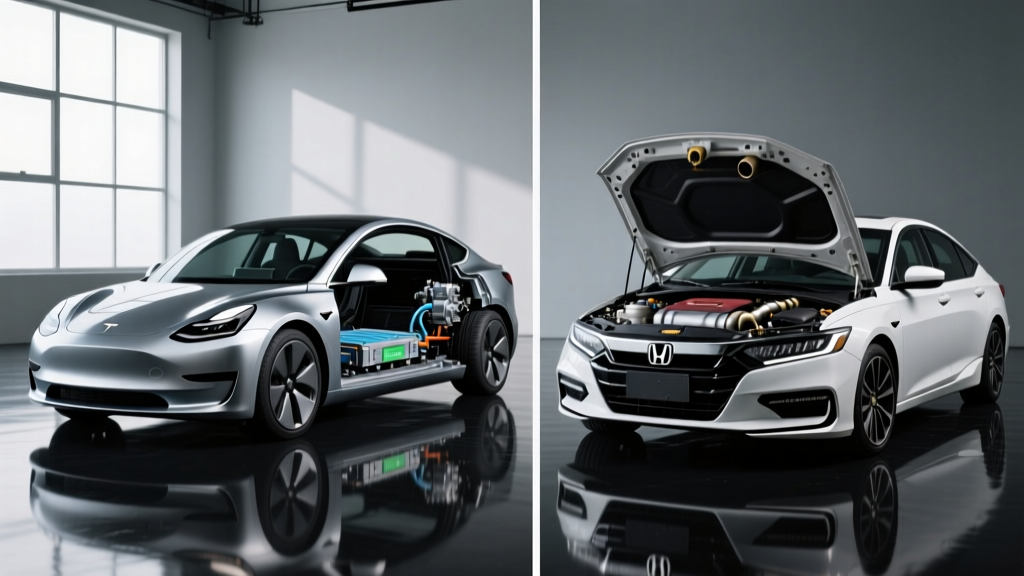
Electric vehicles (EVs) use one or more electric motors powered by a rechargeable battery pack. They produce zero tailpipe emissions, deliver instant torque, and have far fewer moving parts than internal combustion engine (ICE) vehicles. Petrol cars, on the other hand, rely on a gasoline-burning engine paired with a transmission to generate power. They benefit from a vast refueling infrastructure, established resale markets, and over a century of engineering refinement.
Both powertrains have distinct advantages, and the right choice depends on your driving habits, budget, access to charging, and personal priorities. Let us dive into the numbers.
Side-by-Side Specification Comparison
The table below compares a representative mid-size electric sedan with a comparable mid-size petrol sedan, reflecting typical EPA-rated figures and manufacturer data for vehicles in this class.
| Specification | Electric Car (Mid-Size Sedan) | Petrol Car (Mid-Size Sedan) |
|---|---|---|
| Powertrain | Single/Dual Electric Motor | Turbocharged 4-Cylinder ICE |
| Horsepower | 250–450 hp | 180–250 hp |
| Torque | 300–490 lb-ft | 190–280 lb-ft |
| EPA Range / Tank Range | 250–350 miles | 400–500 miles |
| Energy Efficiency | 120–140 MPGe | 28–35 MPG combined |
| 0–60 mph | 3.5–6.0 seconds | 6.0–8.5 seconds |
| Refueling / Recharging Time | 20–40 min (DC fast charge 10–80%) | 3–5 minutes |
| Starting Price (MSRP) | $38,000–$55,000 | $28,000–$40,000 |
| Estimated Annual Fuel/Energy Cost | $500–$800 | $1,500–$2,200 |
| Maintenance Cost (Annual Avg.) | $300–$500 | $800–$1,200 |
| Cargo Space | 15–23 cu ft (with frunk) | 14–16 cu ft |
| Basic Warranty | 4 years / 50,000 miles | 3 years / 36,000 miles |
| Battery / Powertrain Warranty | 8 years / 100,000 miles | 5 years / 60,000 miles |
Sources: EPA Fuel Economy, manufacturer specifications, and independent testing data.
Range & Refueling: How Far Can You Really Go?
Range anxiety remains one of the most frequently cited concerns among prospective EV buyers. Modern electric cars typically achieve EPA-rated ranges between 250 and 350 miles on a full charge, with some premium models pushing past 400 miles. Real-world range, as validated by independent testing from organizations such as Edmunds and Consumer Reports, can vary by 10–20% depending on temperature, driving style, and terrain.
Petrol vehicles maintain a clear advantage in total range per tank, with most mid-size sedans achieving 400 to 500 miles between fill-ups. More importantly, refueling takes only three to five minutes at any of the hundreds of thousands of petrol stations worldwide. For drivers who regularly cover long distances in rural areas or frequently take road trips through regions with sparse charging infrastructure, a petrol car still offers unmatched convenience.
However, for the majority of daily commuters — the EPA reports that the average American drives roughly 37 miles per day — an electric car provides more than enough range, and home charging means starting every morning with a full "tank." Explore our best long-range electric cars ranking for models that maximize distance per charge.
Price & Total Cost of Ownership
The upfront purchase price of electric cars is generally higher than that of comparable petrol vehicles. A mid-size electric sedan typically starts between $38,000 and $55,000, while an equivalent petrol model may begin at $28,000 to $40,000. Federal, state, and local incentives can narrow this gap significantly. In the United States, qualifying EVs may be eligible for federal tax credits of up to $7,500, depending on battery sourcing requirements and manufacturer caps.
Where electric cars shine is in total cost of ownership (TCO). Electricity costs substantially less per mile than petrol. According to EPA data, the average EV owner spends between $500 and $800 annually on electricity, compared with $1,500 to $2,200 on petrol for a similar vehicle. Maintenance costs are also lower: EVs have no engine oil, spark plugs, timing belts, or exhaust systems to service. Regenerative braking extends brake pad life considerably. Studies by the Argonne National Laboratory and other independent researchers estimate that EV maintenance costs are roughly 40–50% lower than those of ICE vehicles over the life of the car.
Insurance costs for EVs can be slightly higher due to the cost of battery replacement in the event of a collision, though this gap has been narrowing as battery technology matures and repair networks expand. Depreciation is another factor: early EVs depreciated faster than petrol cars, but as consumer demand for used EVs grows and battery longevity improves, residual values are strengthening. Check our best electric cars under $40,000 list for value-focused picks.
Charging Speed vs Refueling Convenience
Refueling a petrol car takes three to five minutes — a benchmark that electric vehicles have yet to match. However, the EV charging experience is more nuanced than a simple time comparison suggests.
Level 1 Charging (120V): Adds roughly 3–5 miles of range per hour. Suitable for overnight top-ups if your daily driving is minimal.
Level 2 Charging (240V): The most common home and public charging solution. Fully recharges most EV batteries in 6–10 hours, making it ideal for overnight charging. A Level 2 home charger installation typically costs between $500 and $2,000.
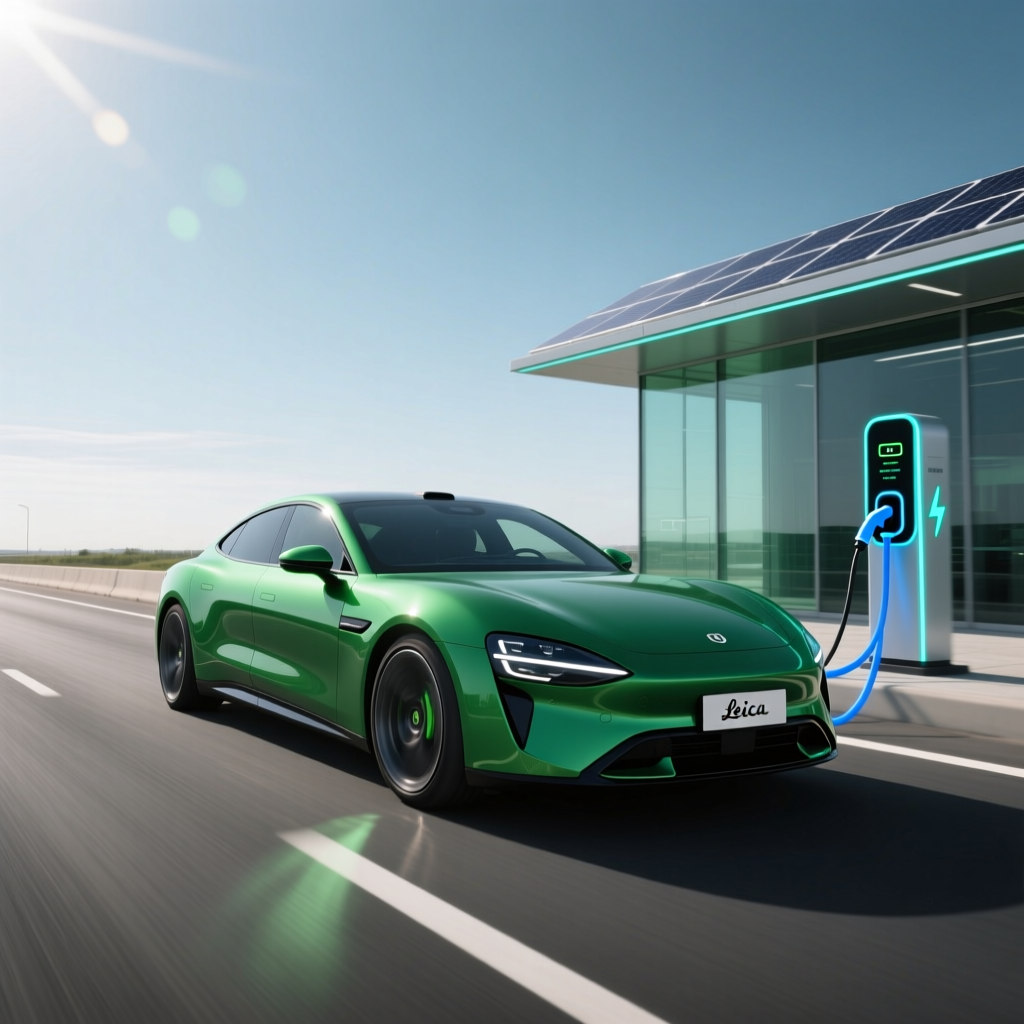
DC Fast Charging (Level 3): Modern EVs equipped with 400V or 800V architectures can charge from 10% to 80% in 18 to 40 minutes at public fast-charging stations. Networks such as Electrify America, EVgo, and Tesla Supercharger continue to expand, with thousands of stations now operational across major highways and urban centers.
For daily use, most EV owners charge at home and rarely visit a public charger. The "refueling" happens while you sleep, work, or shop. Petrol car owners, by contrast, must make dedicated trips to fuel stations. The convenience equation flips depending on your living situation: if you have access to home or workplace charging, an EV often requires less active refueling time than a petrol car. If you live in an apartment without charging access, petrol retains a significant practical advantage. Read our complete home EV charger guide for installation tips and top-rated charger recommendations.
Performance & Driving Dynamics
Electric cars deliver instant torque from zero RPM, resulting in brisk acceleration that often outperforms petrol vehicles in the same price bracket. A dual-motor electric sedan can sprint from 0 to 60 mph in as little as 3.5 seconds, rivaling sports cars that cost twice as much. Even single-motor EVs typically achieve 0–60 times of 5.5 to 6.5 seconds, which is quicker than most mainstream petrol sedans.
The driving experience differs in other meaningful ways as well. EVs are remarkably quiet, with no engine noise or vibration at idle or low speeds. The low placement of battery packs gives electric cars a low center of gravity, which improves handling and reduces body roll through corners. The added weight of batteries — EVs are typically 500 to 1,000 pounds heavier than petrol equivalents — can be felt during aggressive direction changes, but the trade-off is a planted, stable ride quality that many drivers prefer.
Petrol cars offer their own performance charms: the engaging sound of a high-revving engine, the tactile feedback of a manual or dual-clutch transmission, and lighter overall weight that benefits agility on winding roads. Enthusiasts who value the sensory experience of driving may find petrol cars more emotionally rewarding, even if the raw numbers favor EVs. For a closer look at performance-focused models, see our fastest electric cars roundup.
Interior Space, Comfort & Technology
Electric vehicle platforms offer packaging advantages that petrol cars cannot match. Without a large engine block, transmission tunnel, and exhaust system, EV designers can push wheels to the corners, creating more interior volume within the same exterior footprint. Many EVs feature a flat floor, generous rear legroom, and a front trunk (frunk) that adds 2–5 cubic feet of bonus cargo space.
On the technology front, EVs tend to lead the industry in innovation. Large touchscreen infotainment systems, over-the-air (OTA) software updates, advanced driver-assistance systems (ADAS), and smartphone-style user interfaces are standard in most modern electric cars. OTA updates mean your EV can gain new features, performance improvements, and bug fixes without visiting a dealership — something most petrol vehicles still cannot do to the same extent.
Petrol cars have closed much of the technology gap in recent years, with premium ICE models offering sophisticated infotainment, digital instrument clusters, and comprehensive ADAS suites. However, the integration between software and powertrain is inherently deeper in EVs, enabling features like one-pedal driving, preconditioning (warming or cooling the cabin while plugged in), and precise energy-flow monitoring. Browse our best electric SUVs ranking for family-friendly models that maximize interior space and tech.
Warranty, Reliability & Longevity
Electric vehicles come with robust warranty coverage, particularly for the battery pack. Most manufacturers provide an 8-year or 100,000-mile battery warranty, with some offering even longer coverage. The basic vehicle warranty on EVs typically runs 4 years or 50,000 miles, which is competitive with or slightly better than the 3-year/36,000-mile basic warranty common among petrol car manufacturers.
Reliability data increasingly favors EVs. With far fewer moving parts — no multi-speed transmission, no timing chain, no fuel pump, no catalytic converter — there are simply fewer components that can fail. Consumer Reports and J.D. Power studies have shown that EVs experience fewer mechanical problems on average than petrol vehicles, particularly as they age beyond the five-year mark.
Battery longevity is a common concern. Real-world data from high-mileage EV fleets indicates that modern lithium-ion battery packs retain 85–95% of their original capacity after 100,000 miles. Battery degradation is a gradual process, and most packs are engineered to outlast the useful life of the vehicle itself. Replacement costs, while still significant (typically $5,000 to $15,000 depending on the model), continue to decline as battery manufacturing scales up and chemistry improves. For more on this topic, visit our EV battery lifespan guide.
Environmental Impact
Electric cars produce zero tailpipe emissions, which directly improves local air quality — a significant benefit in densely populated urban areas. When charged using renewable energy sources such as solar or wind, the lifecycle carbon footprint of an EV is dramatically lower than that of a petrol car.
Even when charged on a grid powered partly by fossil fuels, studies by the Union of Concerned Scientists and the International Council on Clean Transportation (ICCT) have consistently shown that EVs produce fewer greenhouse gas emissions over their lifetime than comparable petrol vehicles. The manufacturing phase of an EV — particularly battery production — does generate more emissions than building a petrol car. However, this "carbon debt" is typically offset within 12 to 24 months of average driving, after which the EV operates at a net environmental advantage.
Petrol vehicles emit carbon dioxide, nitrogen oxides, and particulate matter with every mile driven. While modern emissions controls have reduced harmful output significantly compared with older vehicles, the cumulative environmental impact of burning fossil fuels remains a central concern in the global effort to address climate change.
Verdict: Which Should You Choose?
The choice between an electric car and a petrol car is not one-size-fits-all. Here are our buyer-type recommendations based on real-world testing and data:
Choose an Electric Car if:
- You have access to home or workplace charging
- Your daily commute is under 100 miles round-trip
- You want to minimize fuel and maintenance costs
- You value instant acceleration and a quiet, smooth ride
- You want the latest in-vehicle technology and OTA updates
- Reducing your environmental footprint is a priority
Choose a Petrol Car if:
- You regularly drive long distances through areas with limited charging infrastructure
- You live in an apartment or rental without charging access
- Your budget prioritizes the lowest possible upfront purchase price
- You prefer the sensory engagement of a traditional engine and transmission
- You need maximum range flexibility for unpredictable travel patterns
For many buyers, the ideal solution may be a plug-in hybrid (PHEV), which combines a smaller battery and electric motor with a petrol engine for extended range. Explore our best plug-in hybrids ranking to see if a PHEV fits your needs.
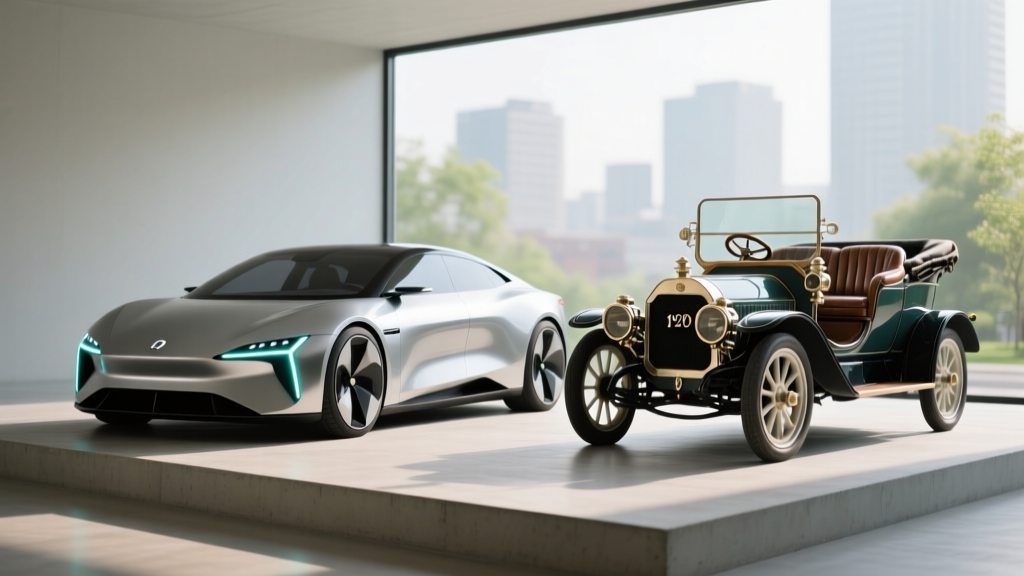
Ultimately, electric cars have matured to the point where they are the smarter choice for the majority of drivers. The combination of lower running costs, superior performance, advanced technology, and environmental benefits makes a compelling case. Petrol cars remain relevant for specific use cases, but the gap is narrowing with every new generation of EVs. Visit our best electric cars ranking to find the perfect model for your lifestyle.
Frequently Asked Questions
Is an electric car cheaper to own than a petrol car in the long run?
Yes, in most cases. While the upfront purchase price of an EV is typically higher, the total cost of ownership is lower over a five- to ten-year period. Savings on fuel (electricity costs roughly one-third to one-half of petrol per mile), reduced maintenance (no oil changes, fewer brake replacements, no exhaust repairs), and available tax incentives combine to offset the initial premium. According to analyses by Consumer Reports, EV owners save an average of $6,000 to $10,000 over the lifetime of the vehicle compared with petrol car owners.
How long do electric car batteries last before needing replacement?
Modern EV battery packs are designed to last the lifetime of the vehicle. Real-world data shows that most lithium-ion batteries retain 85–95% of their original capacity after 100,000 miles. Manufacturers back their batteries with warranties of 8 years or 100,000 miles (whichever comes first), and many batteries continue functioning well beyond 150,000 miles with acceptable degradation. Complete battery replacement is rarely necessary and costs continue to decline as technology advances.
Can I charge an electric car at home, and how much does it cost to install a charger?
Yes, home charging is the primary refueling method for most EV owners. A standard 120V outlet (Level 1) can add 3–5 miles of range per hour and requires no special installation. For faster charging, a 240V Level 2 home charger adds 25–40 miles of range per hour and typically costs $500 to $2,000 to install, depending on your electrical panel capacity and the distance from the panel to the charging location. Many utility companies offer rebates that reduce installation costs. A full overnight charge at average U.S. electricity rates ($0.15–$0.20 per kWh) costs approximately $8 to $15 for a 250-mile range vehicle.
Are electric cars better for the environment than petrol cars?
Over their full lifecycle, yes. While manufacturing an EV — especially the battery — generates more initial emissions than building a petrol car, this carbon debt is repaid within 12 to 24 months of average driving. After that, the EV operates at a significant environmental advantage. The benefit grows even larger when the EV is charged using renewable energy. Studies by the ICCT and the Union of Concerned Scientists confirm that EVs produce substantially fewer greenhouse gas emissions than petrol vehicles in nearly every region, even on grids that rely partially on fossil fuels.