Used Electric Car Reviews: A Head-to-Head Comparison of Top Pre-Owned EVs
Buying a used electric vehicle is one of the smartest moves you can make in today’s automotive market. Pre-owned EVs offer significant savings over new models, and because electric drivetrains have far fewer moving parts than internal combustion engines, they tend to age gracefully. Whether you’re looking for an affordable daily commuter or a long-range family hauler, the used EV marketplace is brimming with compelling options.
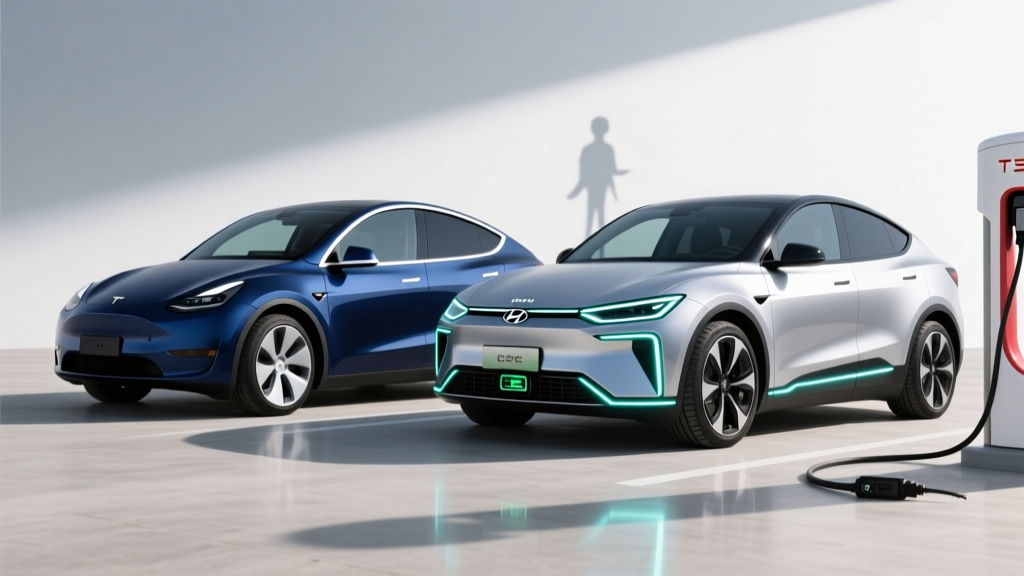
In this comprehensive comparison, we put two of the most popular used electric vehicles head to head: the Tesla Model 3 and the Chevrolet Bolt EV. These two models dominate the pre-owned EV market for good reason — they offer excellent range, proven reliability, and strong value retention. We’ll break down everything from range and charging speed to interior space and technology so you can make an informed decision. For more options, check out our best used electric cars rankings and our full electric car reviews hub.
Overview: Tesla Model 3 vs. Chevrolet Bolt EV
The Tesla Model 3 has been the benchmark for affordable electric sedans since its launch. With its minimalist interior, industry-leading Autopilot technology, and access to Tesla’s Supercharger network, the Model 3 remains the most sought-after used EV on the market. Multiple trim levels — Standard Range, Long Range, and Performance — give buyers flexibility across price points.
The Chevrolet Bolt EV takes a different approach. As a compact hatchback, it prioritizes practicality, affordability, and surprising interior space. The Bolt EV has consistently been one of the best-value propositions in the EV segment, offering over 250 miles of EPA-rated range at a fraction of the Tesla’s original MSRP. Its sibling, the Bolt EUV, offers even more room if you need extra cargo capacity.
Both vehicles have earned strong reliability ratings and enthusiastic owner communities. Let’s dive into the specs.
Side-by-Side Specification Comparison
| Specification | Tesla Model 3 (Long Range AWD) | Chevrolet Bolt EV |
|---|---|---|
| EPA Range | 353 miles | 259 miles |
| Battery Capacity | 82 kWh (usable ~79 kWh) | 65 kWh (usable ~60 kWh) |
| Motor Power | 346 hp / 389 lb-ft torque | 200 hp / 266 lb-ft torque |
| 0–60 mph | 4.2 seconds | 6.5 seconds |
| Drivetrain | Dual Motor AWD | Single Motor FWD |
| DC Fast Charging (Peak) | 250 kW (V3 Supercharger) | 55 kW (CCS) |
| AC Charging (Level 2) | 11.5 kW | 11.5 kW |
| Cargo Space | 23 cu ft (trunk + frunk) | 56.6 cu ft (rear seats folded) |
| Seating | 5 passengers | 5 passengers |
| Curb Weight | ~4,034 lbs | ~3,563 lbs |
| Starting Used Price (Typical) | $22,000–$35,000 | $14,000–$22,000 |
Note: Used prices vary by mileage, condition, region, and trim level. Data sourced from fueleconomy.gov EPA ratings and independent market analysis.
Range and Efficiency: How Far Can Each Used EV Really Go?
Range anxiety is the number one concern for first-time EV buyers, and it’s especially relevant when evaluating used electric cars. Battery degradation is a real factor, though modern lithium-ion packs have proven far more durable than early skeptics predicted.
The Tesla Model 3 Long Range carries an EPA rating of 353 miles of range. According to data from fueleconomy.gov, the Model 3 achieves a combined efficiency rating of approximately 131 MPGe. Real-world testing by independent reviewers has shown that the Model 3 typically delivers between 300 and 330 miles in mixed driving conditions, with highway-heavy routes at 70 mph reducing range to roughly 280 miles. Battery degradation on Tesla vehicles has been well-documented by owner communities, with most packs retaining approximately 90–95% of original capacity after 100,000 miles.
The Chevrolet Bolt EV carries an EPA rating of 259 miles with a combined efficiency of 120 MPGe. Real-world testing shows the Bolt EV consistently achieves between 230 and 250 miles in mixed driving. The Bolt’s battery thermal management system uses an active liquid cooling setup that has proven effective at minimizing long-term degradation. Independent battery degradation studies show the Bolt retaining approximately 92–96% of capacity after 80,000 miles.
Winner: Tesla Model 3. With nearly 100 additional miles of EPA-rated range, the Model 3 is the clear choice for road trippers and drivers with longer commutes. However, the Bolt EV’s 259 miles is more than sufficient for the vast majority of daily driving needs.
Used Pricing and Value: Which Pre-Owned EV Is the Better Deal?
One of the biggest advantages of buying used is the steep depreciation curve that EVs experience in their first few years. This works enormously in the buyer’s favor.
The Tesla Model 3 originally started around $39,990 for the Standard Range variant and climbed past $55,000 for the Long Range AWD. On the used market, you can expect to find a Standard Range model between $18,000 and $25,000 depending on mileage and condition, while Long Range variants typically list between $24,000 and $35,000. Performance trims command a premium, often sitting between $30,000 and $42,000. Tesla’s brand cachet and Supercharger network access help the Model 3 hold its value better than most EVs, but price cuts on new models have accelerated used-market depreciation.
The Chevrolet Bolt EV is where value seekers should pay close attention. Originally priced starting around $36,500 (before federal tax incentives that brought effective prices below $30,000), the Bolt EV can now be found on the used market for as little as $14,000 to $22,000. This makes it one of the most affordable long-range electric vehicles available. For buyers on a budget, the Bolt EV represents extraordinary value — you’re getting 259 miles of range for less than the cost of many used gasoline compact cars. Explore more options in our best budget electric cars guide.
Winner: Chevrolet Bolt EV. Dollar for dollar, the Bolt EV delivers more range per dollar spent than virtually any other used EV on the market. If budget is your primary concern, the Bolt is the undisputed champion.
Charging Speed: Getting Back on the Road Quickly
Charging speed is critical for anyone who plans to road trip or who lacks access to home charging. This is an area where the two vehicles diverge significantly.
The Tesla Model 3 supports DC fast charging at up to 250 kW on Tesla’s V3 Superchargers. In practice, this means you can add approximately 175 miles of range in just 15 minutes. Tesla’s proprietary Supercharger network is widely regarded as the most reliable and extensive fast-charging network in North America, with thousands of stations strategically located along major highways. The Model 3 also charges at 11.5 kW on Level 2, meaning a full charge from empty takes roughly 8–9 hours on a home charger. Tesla’s navigation system automatically preconditions the battery when you navigate to a Supercharger, optimizing charge speed upon arrival.
The Chevrolet Bolt EV has a DC fast charging capability limited to 55 kW via its CCS connector. This translates to roughly 100 miles of range added in 30 minutes — adequate for occasional road trips but noticeably slower than the Tesla. A full DC fast charge from 10% to 80% takes approximately 60–70 minutes in the Bolt compared to roughly 25–30 minutes in the Model 3. On Level 2, the Bolt charges at 11.5 kW, completing a full charge in about 7 hours. The Bolt uses the widely adopted CCS standard, meaning it can access Electrify America, EVgo, and other third-party networks. You can learn more in our EV charging networks comparison.
Winner: Tesla Model 3. The Model 3’s 250 kW peak charging speed and access to the Supercharger network give it a commanding advantage. For frequent road trippers, this is a decisive factor.
Performance and Driving Dynamics
Electric vehicles are known for instant torque delivery, and both of these cars leverage that advantage effectively — though in very different ways.
The Tesla Model 3 Long Range AWD produces 346 horsepower and 389 lb-ft of torque from its dual-motor setup. The 0–60 mph sprint takes just 4.2 seconds, which puts it in sports car territory. The dual-motor all-wheel-drive system provides excellent traction in rain and light snow. The Model 3’s low center of gravity — courtesy of its skateboard battery platform — gives it composed, flat cornering behavior. The steering is quick and precise, though some drivers note it feels artificially weighted. The Performance variant drops the 0–60 time to an astonishing 3.1 seconds. Independent Car and Driver testing has praised the Model 3 as one of the best-handling EVs in its class.
The Chevrolet Bolt EV delivers 200 horsepower and 266 lb-ft of torque through a single front-mounted motor. The 0–60 mph time of 6.5 seconds is respectable and perfectly adequate for highway merging and daily driving. The Bolt is front-wheel drive only, which limits its capability in severe winter conditions compared to the Tesla’s AWD. However, the Bolt’s lighter curb weight of approximately 3,563 pounds makes it feel nimble and tossable around town. The one-pedal driving mode is well-implemented and makes stop-and-go traffic nearly effortless. The Bolt’s ride quality is slightly softer than the Model 3’s, which some buyers will prefer for comfort-oriented commuting.
Winner: Tesla Model 3. For sheer performance and all-weather capability, the Model 3 is the clear winner. But the Bolt EV is more than quick enough for real-world driving and offers a comfortable, engaging experience in its own right.
Interior Space, Comfort, and Practicality
Interior design philosophy is where these two vehicles couldn’t be more different.
The Tesla Model 3 embraces extreme minimalism. There is no instrument cluster — all information is displayed on the central 15-inch touchscreen. This creates a clean, uncluttered dashboard but requires drivers to look at the center screen for speed and other critical information, which some find distracting. The front seats are supportive and comfortable on long drives, though rear seat legroom is somewhat tight for taller passengers. Cargo space totals approximately 23 cubic feet when combining the rear trunk and front trunk (frunk). The glass roof creates an airy, spacious feeling throughout the cabin. Build quality on earlier Model 3 vehicles was inconsistent, with some owners reporting panel gaps and rattles, though later production runs showed significant improvement.
The Chevrolet Bolt EV takes a more traditional approach with a conventional instrument cluster, physical climate controls, and a 10.2-inch infotainment touchscreen. The interior materials are mostly hard plastics, which is expected at this price point, but the layout is intuitive and user-friendly. The Bolt’s hatchback design gives it a significant practicality advantage: with the rear seats folded, it offers 56.6 cubic feet of cargo space — more than double the Model 3. The taller roofline also makes entry and exit easier, and rear-seat passengers enjoy surprisingly generous headroom. The Bolt’s seating position is higher, giving drivers a commanding view of the road that many prefer for urban driving.
Winner: Chevrolet Bolt EV for practicality; Tesla Model 3 for premium feel. If you regularly haul cargo or prefer a traditional cabin layout, the Bolt is the better choice. If you value a modern, tech-forward interior experience, the Model 3 wins.
Technology, Safety, and Warranty Coverage
Technology is an area where Tesla has long held a reputation advantage, but the Bolt EV is far from a luddite.
The Tesla Model 3 comes equipped with Tesla’s Autopilot suite as standard, which includes adaptive cruise control, lane-keeping assist, and automatic emergency braking. The optional Full Self-Driving (FSD) package adds features like automatic lane changes, Navigate on Autopilot, and Smart Summon. Over-the-air software updates continuously add new features and improvements, meaning a used Model 3 can actually gain capabilities after purchase. The 15-inch touchscreen handles navigation, media, climate controls, and vehicle settings with impressive responsiveness. Safety ratings are excellent, with the Model 3 earning a 5-star overall rating from NHTSA and Top Safety Pick+ from IIHS.
Tesla’s basic vehicle warranty covers 4 years or 50,000 miles, while the battery and drive unit warranty extends to 8 years or 120,000 miles (Long Range/Performance) or 8 years and 100,000 miles (Standard Range). When buying used, verify the remaining warranty coverage, as this can significantly impact long-term ownership costs.
The Chevrolet Bolt EV features a 10.2-inch infotainment system with Apple CarPlay and Android Auto integration — something the Tesla lacks. Chevrolet’s driver assistance suite includes automatic emergency braking, lane-keeping assist, following distance indicator, and available adaptive cruise control. The Bolt EV also earned strong safety ratings from NHTSA. One notable concern: Chevrolet issued a battery recall for certain Bolt EV models due to potential fire risk from manufacturing defects. When shopping for a used Bolt, verify that the recall remedy has been completed. Learn more about this in our EV recall guide.
The Bolt’s warranty coverage includes 3 years or 36,000 miles bumper-to-bumper and 8 years or 100,000 miles for the battery pack. Chevrolet’s dealer network provides widespread service access, which is an advantage over Tesla’s more limited service center footprint in some regions.
Winner: Tesla Model 3 for technology; tie for warranty coverage. Tesla’s over-the-air updates and Autopilot capabilities are industry-leading, but the Bolt’s CarPlay/Android Auto support and broader dealer network are meaningful practical advantages.
Verdict: Which Used EV Is Right for You?
Both the Tesla Model 3 and Chevrolet Bolt EV are outstanding used electric vehicles, but they serve different buyer profiles.
Choose the Tesla Model 3 If:
- You regularly take road trips and need fast charging plus maximum range
- You want all-wheel drive for inclement weather
- You value cutting-edge technology and over-the-air updates
- Performance and acceleration are important to you
- You have access to a Tesla Supercharger corridor near your home or commute
Choose the Chevrolet Bolt EV If:
- You want the best possible value and lowest entry price
- You need hatchback cargo versatility for groceries, gear, or pets
- You prefer a traditional interior layout with physical controls
- You want Apple CarPlay or Android Auto integration
- Your driving is primarily urban or suburban with occasional highway trips
For a deeper dive, read our full Tesla Model 3 review and Chevrolet Bolt EV review. And if you’re still exploring your options, our best used electric cars ranking covers additional models including the Nissan Leaf, Hyundai Kona Electric, and Volkswagen ID.4.
Frequently Asked Questions
Is buying a used electric car a good idea?
Absolutely. Used electric cars are among the best values in the automotive market today. EV drivetrains have far fewer moving parts than gasoline engines, which means less wear and fewer things that can go wrong. The main component to monitor is the battery, but modern lithium-ion packs are designed to last well beyond 150,000 miles with minimal degradation. When buying used, always request a battery health report, check for open recalls, and get a pre-purchase inspection from a qualified EV technician. The savings compared to buying new — often 30–50% off original MSRP — make used EVs an outstanding financial decision.
How much does it cost to replace an EV battery in a used electric car?
EV battery replacement costs vary significantly by model. For the Tesla Model 3, a full battery replacement can cost between $12,000 and $16,000 out of warranty, though this is rarely necessary. For the Chevrolet Bolt EV, replacement costs range from approximately $9,000 to $14,000. However, data from fleet operators and owner communities shows that complete battery failure is extremely rare. Most degradation is gradual, with packs retaining 85–95% of capacity even after 100,000 miles. Both Tesla and Chevrolet provide 8-year battery warranties that may still be in effect on newer used models. Always verify remaining warranty coverage before purchasing.
What should I look for when inspecting a used electric vehicle?
When evaluating a used EV, focus on these key areas: Battery health — request a state-of-health report showing remaining capacity percentage. Charging functionality — test both AC and DC charging to ensure ports and onboard chargers work properly. Software updates — verify the vehicle is running the latest firmware. Tire condition — EVs are heavier and deliver instant torque, which can accelerate tire wear. Recall status — check the NHTSA database for any open recalls. Service history — review records for any major repairs or warranty claims. A thorough pre-purchase inspection by an EV-qualified mechanic is always recommended and typically costs between $100 and $200 — a small investment that can save thousands.
Can I charge a used Tesla Model 3 at non-Tesla charging stations?
Yes, with an adapter. Tesla vehicles use a proprietary charging connector in North America, but Tesla offers a CCS adapter that allows Model 3 owners to charge at Electrify America, EVgo, and other CCS-equipped stations. Additionally, Tesla has begun opening its Supercharger network to non-Tesla vehicles, and newer Model 3 vehicles may come equipped with the NACS (North American Charging Standard) connector. For Level 2 charging, the Model 3 uses a standard J1772 connection with the included adapter, meaning you can charge at any public Level 2 station, at workplaces, or at home with a standard 240V outlet or wall connector.