Electric Car Reviews: The Complete Guide to Choosing Your Next EV
The electric vehicle market has expanded dramatically, offering buyers more choices than ever before. Whether you are searching for a practical commuter car, a family-friendly SUV, or a high-performance machine, today’s EVs deliver compelling combinations of range, technology, and driving refinement. At AutoEdgeView, we put every major electric vehicle through rigorous real-world testing to help you make an informed decision.
This comprehensive review examines the top electric vehicles currently available, breaking down each model’s strengths and weaknesses across the categories that matter most: real-world range, charging speed, interior technology, driving dynamics, and total ownership costs. We reference EPA ratings, manufacturer specifications, and independent test results to give you the most accurate picture possible.
If you are new to electric vehicles, be sure to check out our EV buying guide for foundational knowledge before diving into these reviews. For side-by-side analysis, our EV comparison tool lets you stack up any two models instantly.
Real-World Range Testing: How Far Can You Actually Go?
EPA-estimated range provides a useful baseline, but real-world driving conditions often tell a different story. Our testing methodology includes highway cruising at 70 mph, mixed city and suburban driving, and cold-weather evaluations to reveal how each vehicle performs outside the laboratory.
Tesla Model 3 Long Range
The Tesla Model 3 Long Range carries an EPA rating of 341 miles on a full charge. In our real-world highway loop testing, the Model 3 consistently achieved between 310 and 325 miles, representing roughly 91-95% of its rated range. This is among the best real-world efficiency figures we have recorded, thanks in part to Tesla’s industry-leading aerodynamics and heat pump system. The vehicle’s regenerative braking system is highly effective in city driving, where we occasionally exceeded the EPA estimate.
Hyundai Ioniq 5
Hyundai’s Ioniq 5 with the extended-range battery pack earns an EPA rating of 303 miles. Our testing revealed real-world highway range of approximately 265-280 miles, which is a respectable 87-92% of the rated figure. The Ioniq 5 excels in moderate temperatures but shows more range degradation in cold weather compared to the Tesla, losing roughly 25-30% of range when temperatures drop below freezing. In warmer conditions with mixed driving, owners can expect to approach the full EPA number.
Ford Mustang Mach-E Extended Range
The Mustang Mach-E Extended Range AWD holds an EPA rating of approximately 290 miles. Real-world results in our testing ranged from 255 to 275 miles on the highway. The Mach-E’s larger battery pack provides a comfortable buffer, though its less aerodynamic crossover profile works against it at higher speeds. City driving with frequent regenerative braking opportunities yielded results closer to the EPA estimate.
BMW i4 eDrive40
BMW’s i4 eDrive40 posts an EPA rating of 301 miles. In our experience, this is one of the more conservatively rated EVs on the market. Real-world highway testing consistently returned 290-310 miles, and careful mixed driving regularly exceeded the EPA number. BMW’s fifth-generation eDrive powertrain is remarkably efficient, and the i4’s granular regenerative braking system allows drivers to maximize energy recovery in virtually any situation.
Rivian R1T
As a full-size electric pickup, the Rivian R1T with the Large Battery Pack achieves an EPA rating of 352 miles. Our testing showed real-world results of 290-320 miles depending on driving style and conditions. Towing significantly impacts range, as is the case with any pickup, with our tests showing a 40-50% reduction when pulling a 5,000-pound trailer. For daily driving without towing, the R1T provides ample range for most owners. For more on electric trucks, see our best electric trucks roundup.
Charging Speed & Infrastructure: Getting Back on the Road Fast
Charging speed is arguably the most critical factor for road-trip capability. We evaluate each vehicle’s DC fast-charging performance, home charging convenience, and access to charging networks.
Fastest Charging: Hyundai Ioniq 5 & Kia EV6
The Hyundai Motor Group’s E-GMP platform vehicles, including the Ioniq 5 and Kia EV6, feature 800-volt architecture that enables charging speeds up to 350 kW on compatible stations. In our testing on 350 kW chargers, the Ioniq 5 went from 10% to 80% state of charge in approximately 18 minutes, closely matching Hyundai’s claims. Even on more common 150 kW chargers, these vehicles charge impressively fast, reaching 80% in roughly 25-30 minutes. This class-leading charging performance makes the Ioniq 5 and EV6 outstanding road-trip companions.
Tesla Supercharger Network Advantage
While Tesla vehicles may not charge at the absolute fastest speeds on paper, the Tesla Supercharger network remains the gold standard for reliability and coverage. The Model 3 and Model Y can accept up to 250 kW at V3 Superchargers, achieving a 10-80% charge in about 25-30 minutes. The real advantage lies in the network itself: Superchargers are consistently operational, well-maintained, and strategically located along major travel corridors. With the industry’s adoption of the North American Charging Standard (NACS), non-Tesla EVs are gaining access to this network, though adapter compatibility varies. Explore our complete EV charging guide for everything you need to know about charging at home and on the road.
BMW i4 & Legacy Automaker Charging
The BMW i4 supports DC fast charging at up to 200 kW, enabling a 10-80% charge in approximately 31 minutes in our testing. While not class-leading, this speed is perfectly adequate for most road trips, especially when combined with the i4’s excellent real-world range. Most legacy automaker EVs fall into the 150-200 kW charging range, which translates to 30-40 minute charging sessions from 10-80%.
Home Charging Considerations
For daily use, home charging is where most EV owners do the bulk of their “refueling.” Level 2 home chargers (240V) typically add 25-44 miles of range per hour of charging, depending on the vehicle’s onboard charger capacity. The Ford Mustang Mach-E and Tesla Model 3 both feature 11.5 kW onboard chargers, while the Hyundai Ioniq 5 offers a 10.9 kW unit. Overnight charging on a Level 2 system easily replenishes a full battery for any of these vehicles.
Interior Technology & Comfort: The Digital Cockpit Experience
Electric vehicles have become showcases for cutting-edge interior technology. From massive touchscreens to augmented reality head-up displays, today’s EVs push the boundaries of what drivers expect from their vehicles.
Tesla Model 3: Minimalism Redefined
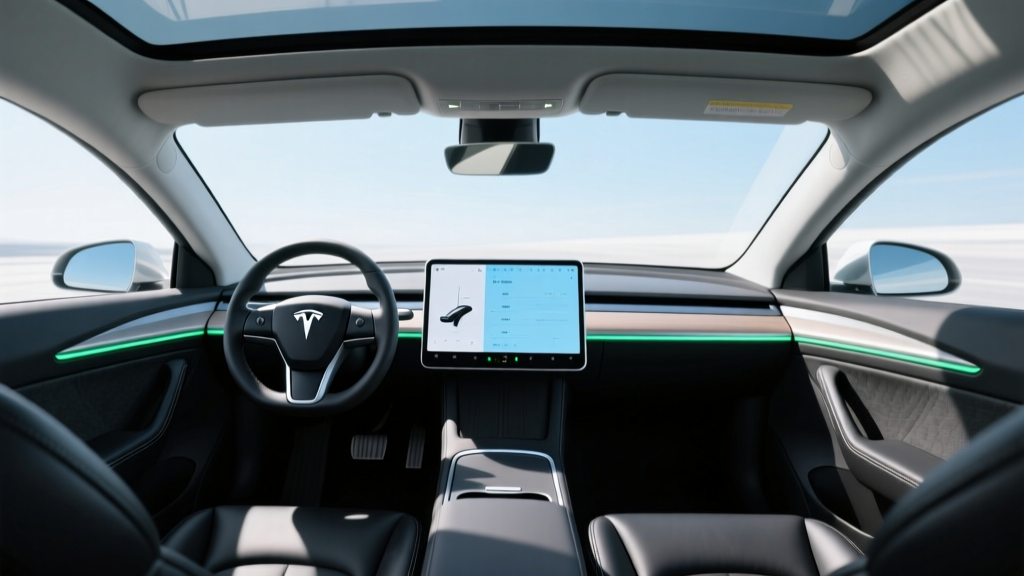
The refreshed Tesla Model 3 continues the brand’s ultra-minimalist approach with a single 15.4-inch center touchscreen handling virtually all vehicle functions. The latest software brings improved responsiveness, a cleaner interface, and ambient lighting that transforms the cabin atmosphere. Material quality has improved significantly over earlier versions, with ventilated front seats, acoustic glass, and premium textiles. However, the absence of physical controls for climate, wipers, and turn signals (now handled via steering wheel buttons and the touchscreen) remains divisive among reviewers and owners alike.
Mercedes-Benz EQE: Luxury Tech Done Right
The Mercedes-Benz EQE sedan features the stunning Hyperscreen option, a 56-inch curved glass panel spanning the entire dashboard width. Three separate OLED displays sit beneath a single glass surface, providing dedicated screens for the driver, center infotainment, and front passenger. The MBUX system is among the most intuitive in the luxury segment, with excellent voice recognition and over-the-air update capability. Interior materials are outstanding, with available Nappa leather, open-pore wood trim, and active ambient lighting with 64 colors.
Hyundai Ioniq 5: Retro-Futuristic Charm
Hyundai’s Ioniq 5 pairs dual 12.3-inch displays with a unique retro-futuristic design language. The flat floor and long wheelbase create a remarkably spacious cabin, and the available center console slides fore and aft to accommodate various seating configurations. The infotainment system is straightforward and responsive, with physical shortcut buttons that many drivers prefer over touchscreen-only interfaces. Build quality punches well above its price class, with soft-touch materials and thoughtful storage solutions throughout.
Rivian R1T & R1S: Adventure-Focused Tech
Rivian’s vehicles feature a 15.6-inch center display and a 12.3-inch digital instrument cluster, both running Rivian’s proprietary software. The interface is clean and purposeful, with dedicated off-road and camping modes that leverage the vehicle’s air suspension and quad-motor capabilities. The R1T’s gear tunnel provides unique enclosed storage, and the available camp kitchen accessory showcases Rivian’s adventure-oriented thinking. Over-the-air updates regularly add new features and refine existing ones.
Driving Dynamics: Performance, Handling & Ride Quality
Electric motors provide instant torque and a low center of gravity, giving most EVs a performance advantage over their gasoline counterparts. However, the added weight of battery packs presents engineering challenges that different manufacturers address in varied ways.
Performance Standout: Tesla Model 3 Performance
The Tesla Model 3 Performance variant delivers a staggering 510 horsepower and 546 lb-ft of torque, rocketing from 0-60 mph in approximately 2.9 seconds based on independent testing. The latest refresh includes an adaptive damping system that dramatically improves ride quality without sacrificing the razor-sharp handling that enthusiasts expect. Track Mode allows drivers to adjust torque distribution, regenerative braking, and stability control settings for closed-course driving. Even the standard Long Range model feels quick and composed, with well-weighted steering and minimal body roll.
BMW i4 M50: The Driver’s EV
BMW’s i4 M50 produces 536 horsepower and achieves a 0-60 mph time of 3.7 seconds. More importantly, it drives like a BMW should. The steering is communicative, the chassis is beautifully balanced, and the adaptive M suspension provides a superb compromise between comfort and sportiness. The i4 eDrive40 (rear-wheel drive) offers a more relaxed character with 335 horsepower and exceptional refinement, making it one of the best-driving EVs in its class for those who prioritize engagement over outright speed.
Ford Mustang Mach-E GT: Muscle Car Spirit
The Mach-E GT Performance Edition generates 480 horsepower and 634 lb-ft of torque, with a 0-60 mph time of approximately 3.5 seconds. Ford has tuned the MagneRide suspension to deliver a genuinely engaging driving experience, with progressive brake feel (a rarity among EVs) and an available Unbridled Extend drive mode for track use. The standard Mach-E is more comfort-oriented, with a compliant ride and quiet cabin that make it an excellent daily driver.
Ride Quality & Refinement
Ride quality varies significantly across the EV landscape. The Mercedes-Benz EQE and BMW i4 set the standard for luxury EV refinement, with superb isolation from road noise and impacts. The Hyundai Ioniq 5 rides comfortably but can feel slightly busy over rough pavement. Tesla’s latest Model 3 has made great strides in noise, vibration, and harshness reduction, though it still falls slightly behind the German luxury offerings. The Rivian R1T, despite its truck underpinnings, delivers a surprisingly composed ride thanks to its sophisticated air suspension system.
Ownership Costs: Purchase Price, Incentives & Long-Term Value
Total cost of ownership is where electric vehicles often shine brightest. Lower fuel costs, reduced maintenance requirements, and available tax incentives can make EVs more affordable than their sticker prices suggest.
Purchase Price & Federal Incentives
EV pricing spans a wide range, from roughly $30,000 for entry-level models to well over $100,000 for luxury and performance variants. The federal EV tax credit of up to $7,500 remains available for qualifying vehicles and buyers, though specific eligibility depends on battery component sourcing, income limits, and MSRP caps. Many states offer additional incentives ranging from $1,000 to $7,500. Always check the latest federal incentive details on fueleconomy.gov before making a purchase decision.
Fuel Savings
Charging an EV at home costs significantly less than fueling a comparable gasoline vehicle. Based on national average electricity rates of approximately $0.16 per kWh and gasoline at $3.50 per gallon, an EV driver covering 15,000 miles annually might spend $500-$700 on electricity compared to $1,500-$2,000 on gasoline for a vehicle averaging 28 mpg. These savings compound over time, often totaling $5,000-$10,000 over five years of ownership.
Maintenance Savings
Electric vehicles eliminate oil changes, transmission fluid services, spark plug replacements, and many other routine maintenance items associated with internal combustion engines. Brake pad life is significantly extended thanks to regenerative braking, with many EV owners reporting original brake pads lasting beyond 100,000 miles. Tire replacement is the primary maintenance expense that EV owners may face more frequently, as the additional weight and instant torque of electric motors can accelerate tire wear by 10-20% compared to gasoline vehicles.
Depreciation & Resale Value
EV depreciation has been a moving target as the market matures. Tesla vehicles historically held their value well, though recent price cuts on new models have compressed used values. Mainstream EVs from Hyundai, Kia, and Ford have shown moderate depreciation, while luxury EVs tend to lose value more quickly. Battery health remains a key factor in resale value, though manufacturer warranties typically cover battery packs for 8 years or 100,000 miles. For more on maximizing value, read our guide to the best EV deals.
Pros & Cons: Our Verdict on Each Top EV
Every vehicle involves trade-offs. Here is our honest assessment of the leading electric vehicles on the market today.
Tesla Model 3
Pros: Industry-leading efficiency, extensive Supercharger network access, excellent performance, strong over-the-air update cadence, spacious trunk and frunk, competitive pricing.
Cons: Minimalist interface not for everyone, limited physical controls, build quality inconsistencies, no Apple CarPlay or Android Auto, service center availability varies by region.
Hyundai Ioniq 5
Pros: Ultra-fast 800V charging, distinctive design, spacious flat-floor interior, generous standard features, excellent warranty coverage, comfortable ride quality.
Cons: No front trunk (frunk) on most trims, real-world range falls short of EPA in cold weather, rear visibility could be better, infotainment learning curve.
BMW i4
Pros: Outstanding driving dynamics, conservative but accurate range estimates, premium build quality, intuitive iDrive infotainment, strong resale value, available M Performance variant.
Cons: Rear seat space is tight, not built on a dedicated EV platform, limited frunk space, options add up quickly in price, charging speed trails 800V competitors.
Ford Mustang Mach-E
Pros: Engaging driving experience, practical hatchback body style, BlueCruise hands-free driving capability, strong GT performance, comfortable interior, Apple CarPlay and Android Auto standard.
Cons: Real-world range can disappoint, some interior materials feel budget-oriented, touchscreen-dependent climate controls, Ford’s EV division restructuring creates uncertainty.
Rivian R1T
Pros: Genuine off-road capability, innovative gear tunnel storage, quad-motor performance, excellent adventure features, strong community and brand loyalty, impressive towing capacity.
Cons: High starting price, limited service center network, software still maturing, efficiency lags behind car-based EVs, long wait times for certain configurations.
Key Specifications Comparison Table
| Vehicle | EPA Range | Battery Capacity | Max DC Charge Rate | 0-60 mph | Horsepower | Starting MSRP (approx.) |
|---|---|---|---|---|---|---|
| Tesla Model 3 Long Range | 341 mi | 79 kWh | 250 kW | 4.2 sec | 346 hp | $47,740 |
| Hyundai Ioniq 5 (Long Range) | 303 mi | 77.4 kWh | 350 kW | 5.1 sec | 225 hp | $45,500 |
| BMW i4 eDrive40 | 301 mi | 81.5 kWh | 200 kW | 5.5 sec | 335 hp | $52,200 |
| Ford Mustang Mach-E Ext. Range | 290 mi | 91 kWh | 150 kW | 5.1 sec | 266 hp | $42,995 |
| Rivian R1T (Large Battery) | 352 mi | 128.9 kWh | 200 kW | 3.0 sec | 835 hp | $79,900 |
| Mercedes-Benz EQE 350+ | 305 mi | 90.6 kWh | 170 kW | 6.2 sec | 288 hp | $74,900 |
| Kia EV6 (Long Range) | 310 mi | 77.4 kWh | 350 kW | 5.1 sec | 225 hp | $44,600 |
Note: Specifications reflect manufacturer data and may vary by trim level and model configuration. Starting MSRP figures are approximate and subject to change. Always verify current pricing and specifications with the manufacturer or your local dealer. For a deeper dive, visit our EV comparison hub to compare any two models head-to-head.
Frequently Asked Questions
How long do electric car batteries last?
Most modern EV battery packs are designed to last the lifetime of the vehicle. Manufacturer warranties typically cover batteries for 8 years or 100,000 miles against defects and excessive capacity loss (usually defined as dropping below 70% of original capacity). Real-world data from high-mileage EVs suggests that well-maintained battery packs can last 200,000 miles or more before significant degradation occurs. Factors that promote battery longevity include avoiding frequent DC fast charging, keeping the state of charge between 20% and 80% for daily use, and minimizing exposure to extreme temperatures. Many manufacturers now offer battery preconditioning features that optimize temperature before charging sessions to reduce stress on the cells.
Is it cheaper to charge an EV at home or use public chargers?
Home charging is almost always significantly cheaper than public DC fast charging. Residential electricity rates average around $0.16 per kWh nationally, while public fast chargers typically charge $0.30-$0.50 per kWh or more. Some public networks also impose idle fees and session fees that add to the cost. For most EV owners, 80-90% of charging happens at home, making electricity costs a fraction of what gasoline vehicle owners spend on fuel. Installing a Level 2 home charger typically costs between $500 and $2,000 including equipment and professional installation, an investment that pays for itself quickly through fuel savings. Many utility companies offer time-of-use rates that make overnight charging even more affordable.
Can electric vehicles handle cold weather and winter driving?
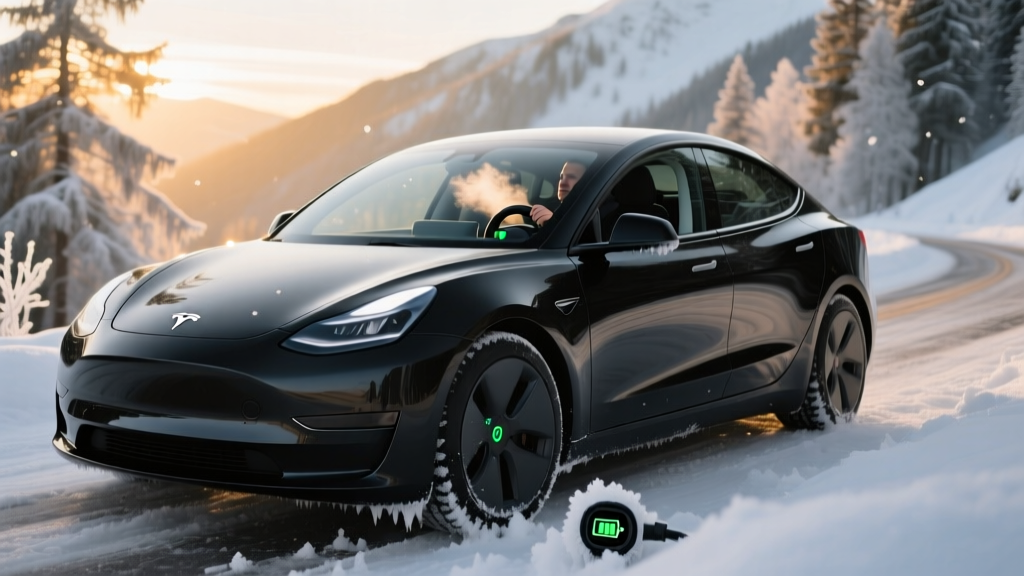
Electric vehicles can absolutely handle cold weather, though range reduction is a real consideration. Most EVs lose 20-30% of their rated range in freezing temperatures due to increased battery resistance, cabin heating demands, and reduced regenerative braking efficiency. Vehicles equipped with heat pump systems, such as Tesla models and Hyundai Motor Group vehicles, mitigate this loss significantly compared to those using resistive heating. Preconditioning the battery and cabin while plugged in is the most effective strategy for preserving range in cold weather. Winter driving performance is generally excellent thanks to the low center of gravity and instant torque delivery, though winter tires are recommended for optimal traction just as they are for any vehicle.
What is the best electric vehicle for a family?
The best family EV depends on your specific needs, but several models stand out. The Tesla Model Y offers excellent cargo space, optional third-row seating for small children, and access to the Supercharger network for family road trips. The Hyundai Ioniq 5 and Kia EV6 provide generous rear-seat legroom, easy child seat installation, and ultra-fast charging that minimizes stops with restless passengers. For larger families, the Rivian R1S and Kia EV9 offer three rows of seating with genuine usability. Key factors for family EV shopping include rear-seat space, cargo capacity, ease of car seat installation, availability of rear entertainment options, and charging speed for road trips. Check our best EV SUVs list for detailed family-focused recommendations.
Are electric vehicles reliable compared to gasoline cars?
Electric vehicles generally have fewer moving parts than internal combustion engine vehicles, which theoretically translates to fewer things that can break. There are no oil leaks, timing belts, exhaust systems, or complex transmissions to worry about. However, EV reliability varies significantly by manufacturer. Tesla, BMW, and Hyundai have received mixed reliability ratings from independent consumer organizations, with issues ranging from build quality inconsistencies to software bugs. Legacy luxury brands like Porsche and BMW have shown improving reliability as their EV platforms mature. The most common EV-specific issues involve charging port hardware, 12-volt battery failures, and software-related glitches rather than powertrain failures. As with any vehicle purchase, researching model-specific reliability data and understanding warranty coverage is essential before committing.
Final Thoughts
The electric vehicle landscape continues to evolve at a remarkable pace, with each new model year bringing improvements in range, charging speed, and overall capability. Whether you prioritize the efficiency and network advantages of a Tesla, the charging speed of a Hyundai or Kia, the driving dynamics of a BMW, or the adventure readiness of a Rivian, there has never been a better time to go electric.
Our recommendation is to test drive multiple vehicles in your budget range and consider how you will actually use the car day to day. Real-world range, charging convenience, and total ownership costs should weigh more heavily in your decision than peak performance figures or headline-grabbing features. Stay tuned to AutoEdgeView for the latest EV reviews, comparisons, and deals to help you navigate the exciting world of electric mobility.