The Ultimate Electric Car Review Comparison: Tesla Model Y vs. Ford Mustang Mach-E
The transition to electric mobility has sparked some of the most intense rivalries in the automotive industry. When shoppers begin their search for the perfect battery-powered family hauler, two names consistently dominate the conversation: the Tesla Model Y and the Ford Mustang Mach-E. Both vehicles have secured their places on our list of the best electric SUVs, but they approach the EV formula from vastly different philosophies.
In this comprehensive electric car review comparison, we put these two segment heavyweights head-to-head. Whether you are drawn to the tech-forward minimalism of Tesla or the traditional yet electrified driving dynamics of Ford, this guide will break down every critical metric. From real-world range and charging infrastructure to interior ergonomics and autonomous technology, we will help you decide which electric crossover deserves a spot in your driveway.
Overview: The Benchmark vs. The Challenger
The Tesla Model Y is undeniably the benchmark of the electric crossover segment. Built on the same foundational architecture as the Model 3, the Model Y maximizes interior volume and efficiency, offering a minimalist cabin, industry-leading software, and access to the most robust charging network in the world. It is a vehicle designed by a technology company, prioritizing software integration, over-the-air updates, and aerodynamic efficiency above all else.
On the other side of the ring sits the Ford Mustang Mach-E. Ford took a massive risk by slapping the iconic Mustang pony badge on an electric crossover, but the gamble paid off. The Mach-E offers a more traditional automotive experience, blending familiar SUV ergonomics with thrilling rear-wheel-drive and all-wheel-drive dynamics. It appeals to buyers who want the benefits of electrification without sacrificing the tactile buttons, driving engagement, and design flair associated with legacy automakers. For a deeper dive into each vehicle individually, be sure to check out our full Tesla Model Y review and Ford Mustang Mach-E review.
Side-by-Side Spec Comparison
| Feature | Tesla Model Y (Long Range) | Ford Mustang Mach-E (Extended Range AWD) |
|---|---|---|
| EPA Estimated Range | 330 miles | 312 miles |
| Horsepower | 384 hp | 346 hp |
| 0-60 MPH Time | 4.8 seconds | 5.1 seconds |
| Peak DC Fast Charging | 250 kW | 150 kW |
| Cargo Space (Behind Rear Seats) | 30.2 cu ft | 29.7 cu ft |
| Front Trunk (Frunk) | 4.1 cu ft | 4.7 cu ft |
Range & Efficiency
Range anxiety remains a primary concern for EV adopters, making this category crucial in any electric car review comparison. According to data from the EPA's official fuel economy site, the Tesla Model Y Long Range AWD achieves an impressive 330 miles on a full charge. Tesla's mastery of aerodynamics, lightweight construction, and standard heat pump technology allows it to extract maximum mileage from its battery pack, especially in colder climates where EVs typically lose range.
The Ford Mustang Mach-E Extended Range AWD counters with an EPA-estimated 312 miles. While slightly lower than the Tesla, it is more than sufficient for daily commuting and moderate road trips. However, independent testing by organizations like Edmunds testing data often reveals that the Mach-E can sometimes exceed its EPA estimates in favorable weather conditions, whereas the Model Y tends to fall slightly short of its lofty 330-mile mark at sustained highway speeds of 75 mph.
Efficiency is where Tesla truly shines. The Model Y's energy consumption, measured in miles per kWh, is among the best in the industry. This means you spend less money on electricity to travel the same distance compared to the slightly heavier and less aerodynamic Mach-E. If maximizing every electron is your top priority, the Model Y takes the crown.
Pricing & Value
Pricing in the EV sector is notoriously volatile, with manufacturers frequently adjusting MSRPs to respond to market demands and battery costs. Generally, the Tesla Model Y and Ford Mustang Mach-E occupy the same premium mainstream bracket. The base rear-wheel-drive models of both vehicles offer an accessible entry point into electric ownership, often qualifying for various federal and state incentives. We maintain an updated guide on EV tax credits to help you navigate current eligibility requirements.
Where the Mach-E gains ground is in its trim differentiation. Ford offers distinct tiers—Select, Premium, California Route 1, and GT—each with clear hardware and software upgrades. You can opt for luxury features like massaging seats, premium audio systems, and adaptive suspension without necessarily jumping to the highest performance tier.
Tesla's pricing structure is more streamlined but can feel restrictive. You essentially choose between Long Range and Performance, with very few standalone options beyond paint color, wheel size, and tow hooks. While the Model Y often boasts a slightly lower starting price for an AWD configuration, adding Tesla's Full Self-Driving capability or Enhanced Autopilot can inflate the final sticker price significantly. Overall, the Mach-E offers a more traditional, customizable value proposition, while the Model Y offers a highly standardized, tech-heavy baseline.
Charging Speed & Infrastructure
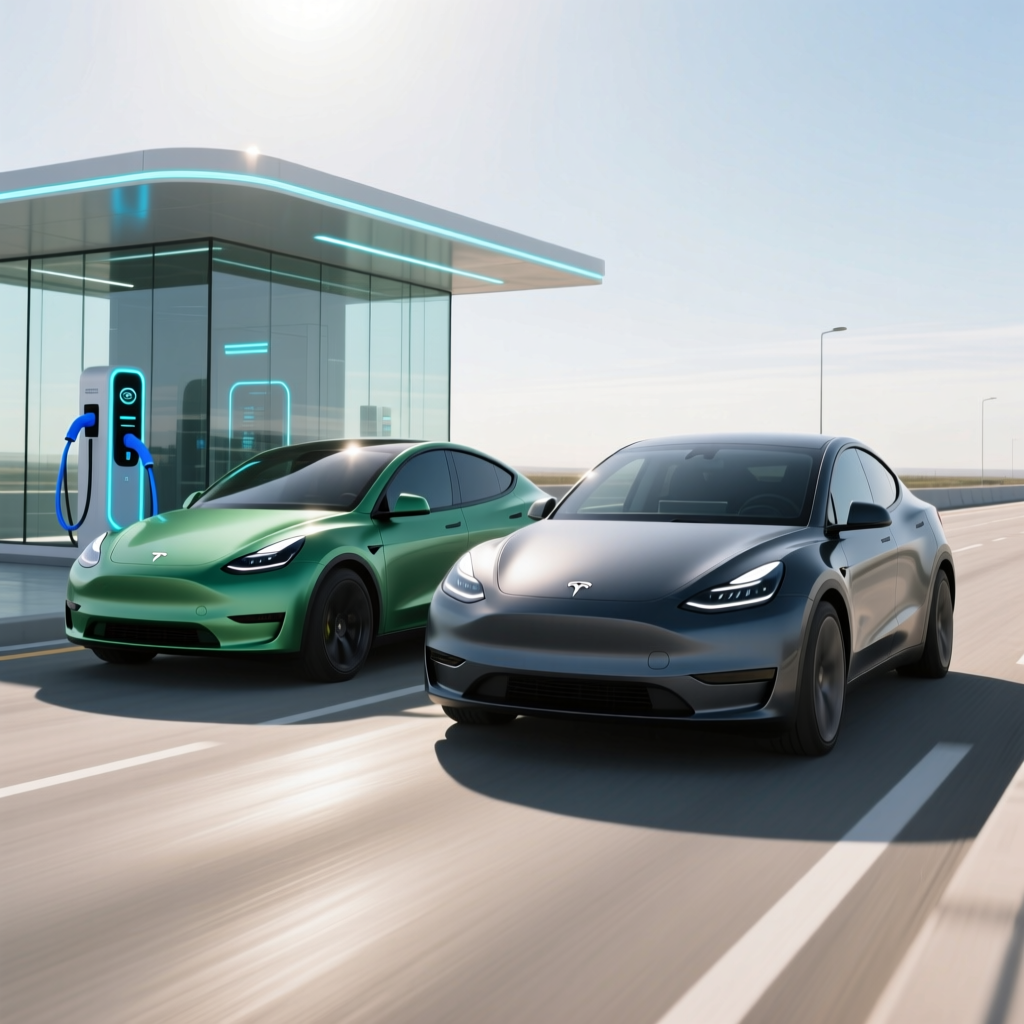
Charging infrastructure is arguably Tesla's greatest moat. The Supercharger network is renowned for its reliability, ease of use, and widespread availability. The Model Y can accept peak charging rates of up to 250 kW, allowing it to add up to 200 miles of range in just 15 minutes under optimal conditions. Furthermore, the vehicle's battery preconditioning system ensures that the pack is at the ideal temperature upon arrival, maximizing the charging curve.
Ford has made massive strides in this area. The Mach-E features a peak DC fast-charging rate of 150 kW, which is noticeably slower than the Tesla. A 10% to 80% charge takes roughly 45 minutes in the Mach-E, compared to about 30 minutes in the Model Y. However, Ford owners now have access to Tesla Superchargers via a provided adapter and the NACS (North American Charging Standard) transition. This effectively neutralizes Tesla's infrastructure advantage, though Mach-E owners must deal with the minor inconvenience of carrying and plugging in an adapter, and the charging speeds will still be bottlenecked by the Mach-E's 150 kW onboard architecture.
For home charging, both vehicles support Level 2 AC charging, though Tesla's Wall Connector and mobile app ecosystem remain slightly more seamless for scheduling off-peak charging sessions. For a complete breakdown of home setup options, read our EV charging guide.
Performance & Driving Dynamics
Electric motors provide instant torque, making both of these crossovers remarkably quick off the line. The dual-motor Tesla Model Y Long Range sprints from 0 to 60 mph in a brisk 4.8 seconds. The steering is incredibly sharp, and the low center of gravity keeps body roll in check. However, the ride quality can be firm, and the regenerative braking system (which Tesla has made non-adjustable in recent updates) forces drivers into a strict one-pedal driving style that not everyone enjoys.
The Ford Mustang Mach-E Extended Range AWD hits 60 mph in roughly 5.1 seconds, which is only a fraction slower in the real world. Where the Mach-E truly differentiates itself is in its chassis tuning. Ford's engineers prioritized driving engagement, resulting in a steering feel that is communicative and a suspension setup that beautifully balances comfort with sportiness. The Mach-E also offers customizable drive modes that alter steering weight, throttle response, and even the level of regenerative braking, allowing you to mimic the coasting feel of a traditional gas-powered car.
If you step up to the performance trims—the Model Y Performance and the Mach-E GT—the gap narrows further. The Mach-E GT, especially with the Performance Upgrade, offers a thrilling, muscle-car-inspired experience with launch control and aggressive track-oriented tuning. For driving enthusiasts, the Mach-E is the clear winner; for those who prioritize point-and-shoot efficiency and sharp handling, the Model Y excels.
Interior Space & Cargo
Stepping inside the Tesla Model Y is an exercise in extreme minimalism. There are virtually no physical buttons; every function, from adjusting the mirrors to opening the glovebox, is routed through the central 15-inch touchscreen. The cabin is airy, aided by a massive panoramic glass roof, and the synthetic leather seats are supportive. Cargo space is generous, offering 30.2 cubic feet behind the second row and a small 4.1-cubic-foot frunk for storing charging cables or groceries.
The Ford Mustang Mach-E takes a more conventional approach. The interior features a mix of physical buttons, a rotary gear dial, and a massive 15.5-inch portrait-oriented touchscreen that dominates the dash. The materials feel slightly more premium and textured than Tesla's utilitarian surfaces. The Mach-E matches the Tesla in passenger comfort, offering ample headroom and legroom for adults in both rows.
Cargo capacity is nearly identical, with the Mach-E offering 29.7 cubic feet in the rear. However, Ford wins the frunk battle with a 4.7-cubic-foot front trunk that includes a clever drain plug, making it perfect for storing wet gear, ice, or tailgating supplies. The Mach-E also features a traditional SUV hatch design that some users find easier to load than the Model Y's sloping rear glass, which can impede rearward visibility and limit the height of bulky items.
Technology & Infotainment
Tesla is a software company that builds cars, and it shows. The Model Y's infotainment system is lightning-fast, visually crisp, and packed with features like native Spotify, Netflix, YouTube, and a web browser. The navigation system is unparalleled, automatically routing you through Superchargers on road trips and preconditioning the battery accordingly. Tesla's Autopilot remains one of the most capable standard ADAS (Advanced Driver Assistance Systems) on the market, offering smooth lane centering and adaptive cruise control.
Ford's SYNC 4A system, housed in the vertical tablet-like screen, is highly intuitive and integrates wireless Apple CarPlay and Android Auto—features Tesla stubbornly refuses to adopt. This is a massive selling point for buyers who prefer their smartphone's native mapping and music interfaces. Ford's BlueCruise is the direct competitor to Tesla's Autopilot. On pre-mapped divided highways, BlueCruise allows for true hands-free driving, monitored by a driver-facing camera. Many reviewers and owners find BlueCruise to be less stressful and more predictable than Tesla's hands-on Autopilot system.
Over-the-air (OTA) updates are standard on both vehicles, but Tesla's updates frequently introduce major UI overhauls and new features, whereas Ford's updates tend to focus on bug fixes and minor software refinements.
Warranty & Ownership Costs
Both manufacturers offer competitive warranty packages that align with industry standards for electric vehicles. The Tesla Model Y includes a 4-year/50,000-mile basic limited warranty and an 8-year/120,000-mile battery and drive unit warranty. Tesla's maintenance costs are exceptionally low, as the vehicle requires no oil changes, spark plugs, or traditional smog checks. However, out-of-warranty repair costs and insurance premiums for Teslas can be notably higher than average.
The Ford Mustang Mach-E mirrors this with a 3-year/36,000-mile basic warranty and an 8-year/100,000-mile battery warranty. Ford's vast network of traditional dealerships provides a safety net for buyers who prefer face-to-face service interactions, whereas Tesla relies on a mix of mobile rangers and specialized service centers that can sometimes experience long wait times for parts and appointments.
Final Verdict: Which EV Should You Buy?
The choice between the Tesla Model Y and the Ford Mustang Mach-E ultimately comes down to your personal priorities and lifestyle.
Choose the Tesla Model Y if: You value cutting-edge software, maximum energy efficiency, and the most seamless road-trip charging experience available. It is the ultimate appliance for tech-savvy buyers who want a minimalist, highly efficient daily driver with industry-leading Supercharger integration.
Choose the Ford Mustang Mach-E if: You want an EV that feels like a traditional, engaging car. With its superior driving dynamics, physical buttons, wireless smartphone integration, and hands-free BlueCruise technology, the Mach-E is perfect for driving enthusiasts and those transitioning from gas-powered SUVs who want familiarity without sacrificing electric performance.
Frequently Asked Questions
Which vehicle has better real-world highway range?
While the Tesla Model Y boasts a higher EPA estimate, independent real-world highway testing at 70 mph often shows the two vehicles performing very similarly. The Model Y's superior aerodynamics give it an edge in efficiency, but the Mach-E's larger usable battery capacity in certain trims helps it keep pace. In cold weather, the Model Y's standard heat pump generally provides better range retention than the Mach-E.
Can the Ford Mustang Mach-E use Tesla Superchargers?
Yes. Ford has officially joined the NACS (North American Charging Standard) ecosystem. Mach-E owners can access the vast majority of Tesla Supercharger stalls using a Ford-provided adapter and by routing their navigation through the FordPass app or the vehicle's native software. This drastically improves the Mach-E's road-trip viability.
Do I need to pay for software features like Autopilot or BlueCruise?
Both vehicles come standard with basic adaptive cruise control and lane-keeping assistance. However, advanced features require a premium. Tesla charges extra for Enhanced Autopilot or Full Self-Driving capabilities. Ford offers BlueCruise, which can be purchased as a one-time upfront cost or via a monthly/annual subscription after the initial trial period expires.
Which SUV holds its resale value better?
Historically, Tesla vehicles have experienced significant depreciation fluctuations tied to the company's aggressive new-car price cuts. The Mach-E has faced similar depreciation hurdles common to all modern EVs as battery technology rapidly evolves and the used EV market saturates. To protect your investment, consider leasing or purchasing a certified pre-owned model from either brand.