The Quick Answer
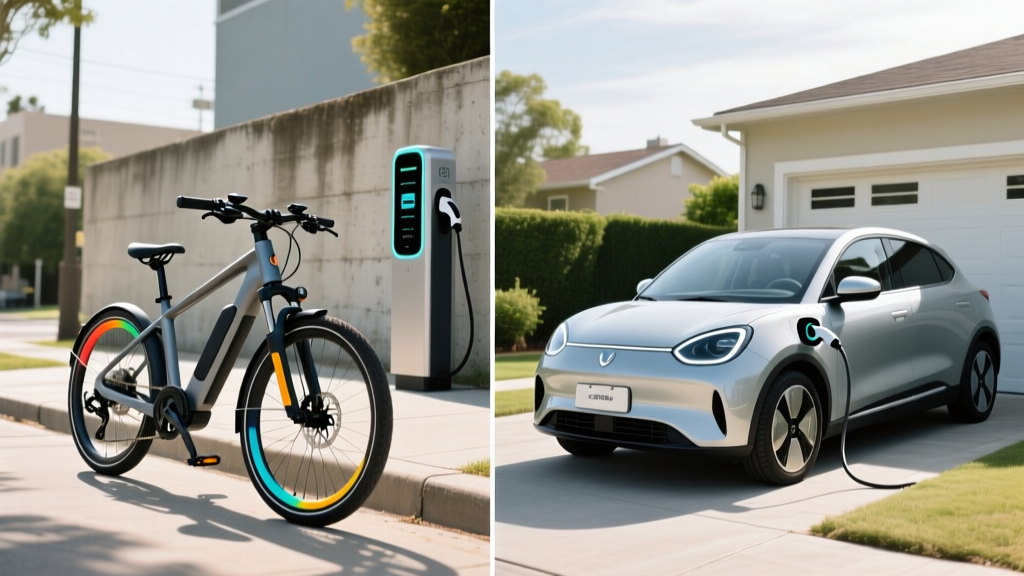
If your commute is under 15 miles round-trip and you have secure parking, an electric bike under $1000 (typically 20–40 mile range, 250–500W hub motor, $0.003/mile charging cost) can replace a car for daily commuting at a fraction of the cost. However, e-bikes cannot replace a car for highway driving, passenger transport, cargo hauling, extreme weather, or trips beyond ~30 miles. For households needing a primary vehicle, a budget EV like the 2026 Chevrolet Equinox EV (EPA 315 mi, ~$33,000 base) or a used EV under $25,000 (eligible for the $4,000 used clean vehicle credit) remains the practical choice. Many owners find the optimal setup is a budget EV plus an e-bike for last-mile commuting.
What Electric Bikes Under $1000 Actually Offer
The sub-$1000 e-bike market in 2026 is dominated by Class 1 and Class 2 models with 250W–500W rear hub motors, 36V lithium-ion battery packs (typically 360–500 Wh), and pedal-assist top speeds of 20 mph. Brands like Lectric, Ride1Up, and Aventon offer entry-level models in this range, though most hover between $799 and $999 MSRP.
Here is what you can realistically expect from a $1000 e-bike in 2026:
- Battery capacity: 360–500 Wh (watt-hours — this is the energy storage, analogous to kWh in an EV)
- Real-world range: 20–35 miles on pedal assist; 12–18 miles on throttle-only (manufacturer claims of 40+ miles assume minimal assist on flat terrain)
- Charge time: 3–5 hours on a standard 120V outlet (2A charger at ~72W)
- Motor output: 250W nominal / 500W peak
- Top assisted speed: 20 mph (Class 1/2 legal limit in most US states)
- Weight: 45–60 lbs
- Cargo capacity: 20–40 lbs on rear rack (if equipped)
These specifications are sufficient for flat-to-moderate urban commuting in fair weather. They are not sufficient for highway-adjacent roads, heavy cargo, or sustained hill climbing where a 750W+ mid-drive motor (found in $1,500+ models) performs significantly better.
E-Bike vs Budget EV: The Real Cost Breakdown
The decision between an e-bike and a budget EV isn't just about purchase price — it's about total cost of ownership across a realistic timeframe. Below is a 3-year cost comparison for a daily 12-mile round-trip commuter in a moderate climate, assuming 250 workdays per year (3,000 miles/year for the commute segment).
| Cost Category | E-Bike (~$900) | 2026 Chevy Equinox EV 2LT (~$36,000 after credit) | 2026 Toyota Prius HEV (~$28,500) |
|---|---|---|---|
| Purchase price | $900 | $36,000 (after est. $7,500 §30D credit) | $28,500 |
| Energy/fuel (3 yrs) | $27 (at $0.15/kWh) | $1,350 (at $0.15/kWh, 3.2 mi/kWh) | $2,700 (at $3.50/gal, 57 MPG combined) |
| Insurance (3 yrs) | $0–$360 (renters add-on) | $5,400 ($150/mo avg) | $4,500 ($125/mo avg) |
| Maintenance (3 yrs) | $150 (tires, brake pads, chain) | $600 (cabin filter, tire rotation, wipers) | $1,200 (oil changes, filters, brakes) |
| Registration/taxes (3 yrs) | $0 | $900 | $900 |
| Depreciation (3 yrs) | $450 | $10,800 (est. 30%) | $8,550 (est. 30%) |
| 3-Year Total | $1,527–$1,887 | $55,050 | $46,350 |
| Cost per mile | $0.06–$0.07 | $0.61 | $0.52 |
The e-bike is dramatically cheaper — but only for the commute miles it can cover. If you still need a car for weekends, groceries, and trips, you're paying for both. The real comparison is whether an e-bike can replace a second car in a two-vehicle household, or whether it simply supplements a primary vehicle you'd own regardless.
When an E-Bike Replaces a Car (and When It Can't)
Based on ownership patterns and commuting data, here is a practical decision framework:
Choose an E-Bike as Your Primary Commuter If:
- Your one-way commute is under 10 miles
- You have secure, weather-protected parking at both ends
- Your route has bike lanes or low-traffic streets
- You live in a climate with fewer than 60 rainy days/year, or you're willing to ride in rain with proper gear
- Your household already has a car for longer trips, or you can rely on car-share/transit for weekend needs
- Your workplace has shower facilities or a casual dress code
Choose a Budget EV or PHEV If:
- Your commute exceeds 15 miles one-way or includes highway segments
- You regularly carry passengers or more than 30 lbs of cargo
- You live in an area with harsh winters, extreme heat, or frequent rain
- You lack secure ground-level storage for an e-bike and battery (apartment dwellers on upper floors face theft and charging-access challenges)
- You need a single vehicle that handles all use cases — commuting, road trips, errands, emergencies
- Your area has reliable public DC fast-charging infrastructure or you can install a Level 2 home charger
EV vs Gas vs Hybrid: How Budget Cars Compare to E-Bikes
For readers weighing whether to buy an e-bike instead of a budget car for commuting, the following table contextualizes the efficiency and range gap. Data sourced from fueleconomy.gov EPA estimates.
| Vehicle | Type | EPA Range / Tank Range | Energy Cost per Mile | MSRP |
|---|---|---|---|---|
| E-Bike (500 Wh battery) | E-bike (Class 2) | 20–35 mi (real-world) | $0.005 (at $0.15/kWh) | $800–$1,000 |
| 2026 Chevy Equinox EV 2LT | BEV | 315 mi (EPA) | $0.047 (at $0.15/kWh) | $33,000 (est. after credit) |
| 2026 Hyundai Kona Electric SEL | BEV | 261 mi (EPA) | $0.043 (at $0.15/kWh) | $32,975 |
| 2026 Toyota Prius LE | HEV | 588 mi (11.3 gal × 57 MPG) | $0.061 (at $3.50/gal) | $28,345 |
| 2026 Toyota Prius Prime SE | PHEV | 44 mi electric + 470 mi gas | $0.045 (electric) / $0.061 (gas) | $32,675 |
| 2026 Honda Civic Sedan (ICE baseline) | Gas | 434 mi (12.4 gal × 35 MPG) | $0.100 (at $3.50/gal) | $24,250 |
The e-bike's energy cost per mile is roughly 1/10th that of even the most efficient EV, and 1/20th that of a gas car. But the range and utility gap is enormous: a budget EV offers 8–15× the range, climate control, crash protection, cargo space, and all-weather capability.
Common Misconceptions About Sub-$1000 E-Bikes
| Myth | Fact |
|---|---|
| "A $900 e-bike can replace my car entirely." | An e-bike can replace a car for specific commutes under 15 miles in fair weather. It cannot handle highway driving, passenger transport, heavy cargo, or extreme weather. Most successful e-bike commuters still own or have access to a car for non-commute trips. |
| "E-bikes don't need insurance or registration." | Most US states do not require registration for Class 1–3 e-bikes, but theft is a leading cost risk. A $900 e-bike left unsecured in a city can vanish in seconds. Renters or homeowners insurance riders ($5–$15/month) are strongly recommended. Dedicated e-bike insurance (e.g., Velosurance, Sundays) runs $100–$250/year. |
| "The battery will last forever." | Lithium-ion e-bike batteries degrade similarly to EV batteries. Expect 70–80% capacity after 500–800 full charge cycles (roughly 2–4 years of daily use). Replacement batteries cost $200–$400. Store the battery at 40–60% charge if not riding for extended periods, and avoid charging to 100% daily if your charger allows a limit setting. |
| "E-bikes are maintenance-free." | E-bikes require regular maintenance: tire pressure checks weekly, chain lubrication monthly, brake pad replacement every 1,000–2,000 miles, and annual spoke/torque checks. Budget $50–$75/year for consumables beyond the battery. |
| "Any e-bike under $1000 is fine." | Build quality varies enormously at this price point. Prioritize UL 2849 certification (electrical system safety), a reputable battery cell supplier (Samsung, LG, or Panasonic cells vs. generic), and availability of replacement parts. Avoid no-name Amazon brands with no US service network. |
Real-World Ownership Considerations Most Guides Skip
Charging Access
Unlike EVs, e-bikes charge on a standard 120V outlet — but you need physical access to one near where you store the bike. Apartment dwellers on upper floors face a real challenge: carrying a 50-lb bike up stairs daily is impractical, and leaving the battery plugged in unattended in a common area is a fire-code violation in many jurisdictions. If you can bring the battery (typically 5–8 lbs, removable) indoors to charge, this problem is solved. Confirm your building's policy before purchasing.
Climate and Seasonality
E-bike batteries lose 20–30% range in temperatures below 40°F due to increased internal resistance — the same electrochemical reality that affects EV batteries. In cold climates, a 30-mile rated e-bike may deliver only 20 miles in winter. Additionally, hub motors (standard on sub-$1000 bikes) lose traction on wet or icy pavement far more readily than a car's stability-controlled drivetrain. Budget for fenders ($30–$50), a waterproof pannier ($40–$80), and cold-weather riding gear ($100–$200) if you plan to ride year-round in northern states.
Safety Infrastructure
The NHTSA reports that bicyclist fatalities have risen in recent years, with e-bikes contributing to increased exposure due to higher speeds. A $900 e-bike purchase should include a $50–$100 budget for a certified helmet (CPSC or NTA 8776 standard for e-bike speeds), front and rear lights, and a high-quality U-lock ($60–$100). If your commute lacks protected bike lanes, the risk calculus changes significantly.
Tax Credits and Incentives
Unlike EVs, e-bikes do not qualify for the federal §30D clean vehicle tax credit. However, some states and municipalities offer e-bike purchase incentives — Colorado's e-bike tax rebate (up to $450 for income-qualified residents) and various city-level voucher programs are examples. Check your state energy office or local transportation authority for current programs. These incentives can bring a $900 e-bike's effective cost down to $500–$650.
The Hybrid Strategy: E-Bike + Budget EV
For many households, the highest-value configuration isn't e-bike or EV — it's both. A two-car household that sells one gas car and replaces it with an e-bike for commuting plus a budget EV for remaining trips can see dramatic savings:
- Eliminate one car payment ($400–$600/month)
- Eliminate one insurance policy ($100–$150/month)
- Reduce fuel costs by 60–80% on commute miles
- Maintain full capability for weekends, trips, and bad weather
This strategy works best when the e-bike commuter has a secure route, the household's non-commute driving stays under the EV's range, and the EV qualifies for the §30D new clean vehicle credit (up to $7,500, subject to MSRP caps of $55,000 for cars / $80,000 for SUVs, buyer income limits of $150K single / $300K joint, and battery sourcing requirements).
Frequently Asked Questions
Is an electric bike under $1000 worth it for commuting?
Yes, if your one-way commute is under 10 miles on bike-friendly routes and you have secure parking and charging access. The energy cost is under $0.01/mile, and total 3-year ownership can be under $2,000. It is not worth it if your route is highway-adjacent, hilly, or in a climate with long winters, or if you need to carry passengers or heavy cargo.
How does an e-bike compare to a gas car on cost per mile?
An e-bike costs approximately $0.005/mile in energy and $0.06–$0.07/mile total (including purchase depreciation, maintenance, and optional insurance). A 35 MPG gas car at $3.50/gallon costs $0.10/mile in fuel alone and $0.45–$0.55/mile total. The e-bike is roughly 8–10× cheaper per mile, but only for the trips it can physically handle.
Do I need a license or registration for an e-bike?
In most US states, Class 1 (pedal-assist to 20 mph) and Class 2 (throttle to 20 mph) e-bikes do not require a license, registration, or insurance. Class 3 e-bikes (pedal-assist to 28 mph) have additional restrictions in some states, including age minimums and helmet requirements. Verify your state's specific laws before purchasing.
How long does an e-bike battery last before replacement?
Expect 500–800 full charge cycles before noticeable degradation (dropping to 70–80% of original capacity). For a daily commuter charging once per day, that's roughly 2–3 years before range drops become noticeable. Replacement batteries cost $200–$400 depending on capacity and cell quality. Proper storage (40–60% charge, room temperature) extends lifespan.
Can I use an e-bike in winter?
You can, with caveats. Battery range drops 20–30% below 40°F. Traction on wet and icy surfaces is limited, especially with rear hub motors. You'll need winter riding gear, fenders, and possibly studded tires ($60–$100/pair). Many e-bike commuters in cold climates ride from April through October and switch to transit or a car in winter.
Should I buy a budget EV instead of an e-bike?
If you need a single vehicle for all use cases — commuting, road trips, groceries, passengers — yes, a budget EV like the 2026 Chevy Equinox EV or Hyundai Kona Electric offers far more utility. If you already own a car and want to eliminate fuel costs on a short commute, an e-bike is the more cost-effective supplement. The ideal solution for many households is one of each.