Quick Answer: Can You Buy an Electric Air Plane Today?
No — not as a personal vehicle. As of 2026, electric air planes (eVTOLs, or electric vertical takeoff and landing aircraft) remain in limited commercial demonstration phases through companies like Joby Aviation and Archer Aviation. They are not available for consumer purchase. The closest electrified flight option for private pilots is a certified electric trainer like the Pipistrel Velis Electro (~$120,000, 50-minute flight endurance, ~11 kWh battery). For ground-level electrified transport that you can actually buy, charge at home, and drive daily, a battery-electric vehicle (BEV) remains the practical, cost-effective choice.
What Is an Electric Air Plane, Exactly?
The term "electric air plane" covers a broad spectrum of aircraft that use battery-electric propulsion instead of jet fuel or avgas. In 2026, the category breaks down into three distinct segments:
- Electric trainer aircraft — Small, certified, fixed-wing planes like the Pipistrel Velis Electro. Available now for flight schools and private pilots. Limited to ~50 minutes of flight time on a 11 kWh battery pack.
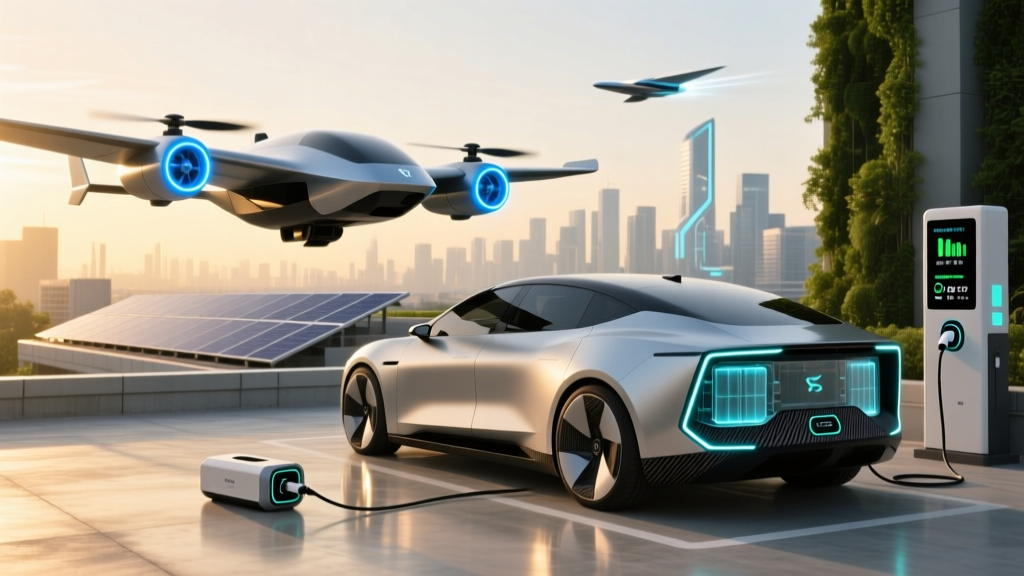
- eVTOL air taxis — Passenger-carrying electric vertical takeoff vehicles from Joby Aviation, Archer Aviation, and Volocopter. These are entering limited commercial service in select cities (Dubai, select US markets pending FAA certification) but are ride-service only — not for private ownership.
- Electric regional aircraft — Larger concepts from companies like Heart Aerospace (ES-30) and Eviation (Alice), targeting 30-passenger regional routes. These remain in prototype or early certification stages with projected ranges of 250–500 miles.
None of these segments compete directly with a personal EV for daily transportation. But the keyword searches are surging — electric air plane draws steady interest — so let's ground the hype in real numbers and compare what electrified flight costs versus electrified driving.
Electric Air Plane vs EV: A Side-by-Side Cost & Capability Comparison
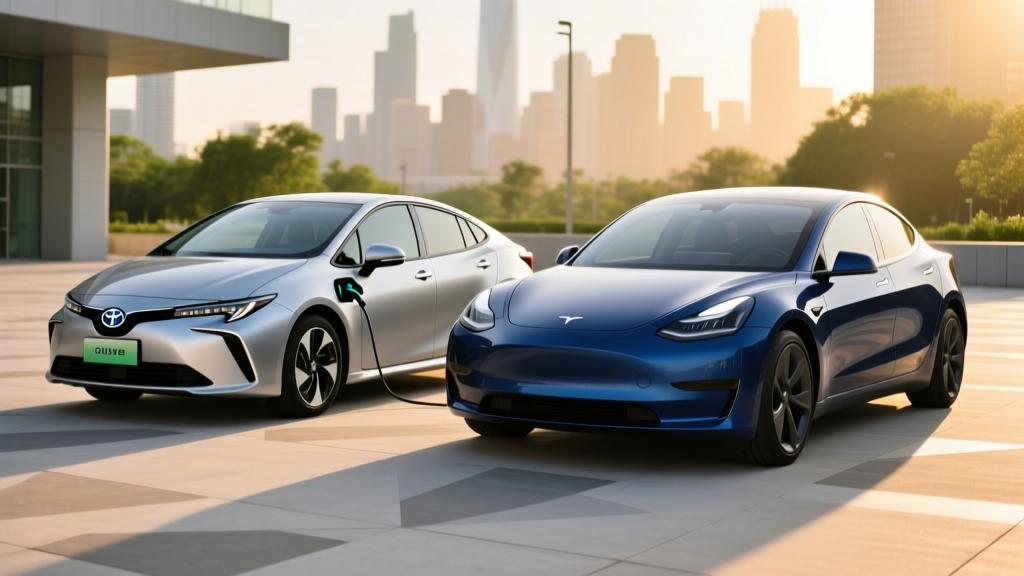
To give this comparison real structure, we're pitting the only certified, purchasable electric airplane (Pipistrel Velis Electro) against a mainstream 2026 EV (Tesla Model Y Long Range) and a comparable gas car baseline (2026 Toyota RAV4 AWD). The goal: show where electrification makes sense today and where it remains aspirational.
| Specification | Pipistrel Velis Electro (Electric Airplane) | 2026 Tesla Model Y LR (BEV) | 2026 Toyota RAV4 AWD (Gas) |
|---|---|---|---|
| Purchase Price | ~$120,000 | $44,990 MSRP | $33,500 MSRP |
| Energy Capacity | 11 kWh (lithium) | 75 kWh usable (NMC) | 14.5 gal gasoline (~480 kWh equivalent) |
| Range / Endurance | ~50 min flight (~80 mi) | 320 mi EPA (~270 mi highway real-world) | 400+ mi per tank |
| Energy Cost per Mile | ~$0.25–$0.40/mi (aviation electricity rates) | ~$0.04/mi (home charging at $0.14/kWh) | ~$0.14/mi (gas at $3.40/gal, 28 MPG combined) |
| Charging / Refuel Time | ~2 hours (full charge) | ~25 min (10–80% at 250 kW DC) | ~5 min (full tank) |
| Maintenance (Annual) | $3,000–$6,000 (mandatory inspections, battery replacement cycle) | $300–$500 (tire rotation, cabin filter, fluid top-off) | $800–$1,200 (oil, filters, brakes) |
| Insurance (Annual) | $2,500–$5,000 | $1,800–$2,800 (varies by state/driver) | $1,200–$1,800 |
| Federal Tax Credit (§30D) | Not eligible (aircraft, not a motor vehicle) | Up to $7,500 (subject to income, MSRP cap, battery sourcing rules) | None |
| Availability | Limited production; ~6-month wait | Widely available | Widely available |
Sources: Pipistrel Aircraft, fueleconomy.gov, IRS §30D guidelines.
The Real Cost to Own: 5-Year Breakdown
For buyers weighing electrification — whether in the air or on the road — total cost of ownership (TCO) is the deciding metric. Here's a 5-year projection assuming 12,000 miles/year for ground vehicles and 100 flight hours/year for the Velis Electro (a typical private-pilot usage pattern).
| 5-Year Cost Category | Pipistrel Velis Electro | Tesla Model Y LR | Toyota RAV4 AWD |
|---|---|---|---|
| Purchase Price | $120,000 | $44,990 | $33,500 |
| Federal Tax Credit | $0 | –$7,500 (if eligible) | $0 |
| Net Purchase | $120,000 | $37,490 | $33,500 |
| Energy (5 years) | $15,000–$24,000 | $2,400 | $8,400 |
| Maintenance (5 years) | $15,000–$30,000 | $2,000 | $5,000 |
| Insurance (5 years) | $15,000–$25,000 | $11,000 | $7,500 |
| Estimated Resale (Year 5) | ~$70,000–$85,000 | ~$18,000–$22,000 | ~$16,000–$19,000 |
| Net 5-Year Cost | ~$85,000–$114,000 | ~$34,890–$38,890 | ~$38,400–$41,400 |
The Tesla Model Y and Toyota RAV4 are remarkably close on 5-year TCO — especially when the §30D credit applies. The Pipistrel Velis Electro, while an impressive piece of electric aviation engineering, operates in an entirely different financial universe. It's a recreational and training tool, not a commuter replacement.
What About eVTOL Air Taxis? The Joby and Archer Reality
If you've seen headlines about "electric flying taxis," you're thinking of eVTOLs. Here's where things stand in 2026:
- Joby Aviation — Has begun limited demonstration flights in partnership with Delta Air Lines and Toyota. FAA type certification is ongoing. Projected per-seat-mile cost: $3.00–$5.00 initially, targeting $1.50–$2.00 long-term (vs. ~$0.50/mi for Uber Black).
- Archer Aviation — Completed crewed test flights of its Midnight aircraft. Targeting 2026–2027 commercial launch in cities like New York and Abu Dhabi. Backed by United Airlines and Stellantis.
- Volocopter — European-focused eVTOL developer. Conducted demonstration flights in multiple cities. EASA certification timeline remains fluid.
Key reality check: eVTOL air taxis are a ride-hailing service, not a vehicle you'll own. Think of them as aerial Ubers — you'll book a seat, not buy the aircraft. The battery technology in these vehicles (typically 60–100 kWh packs with high C-rate discharge for vertical lift) shares chemistry with EVs but operates under far more demanding thermal and power-density constraints.
Electric Airplane Battery Tech vs EV Battery Tech
One area where electric aviation and EVs genuinely intersect is battery technology. Aviation demands far higher energy density (watt-hours per kilogram) than ground vehicles, because every extra kilogram of battery directly reduces payload and range.
| Battery Metric | Current EV Standard (2026) | Aviation Requirement |
|---|---|---|
| Cell Energy Density | 250–300 Wh/kg (NMC 811 / NCA) | 400+ Wh/kg needed for viable regional electric flight |
| Battery Pack Density | 160–200 Wh/kg (pack level, including cooling/structure) | 300+ Wh/kg at pack level |
| Discharge Rate (C-rate) | 1C–2C sustained (highway driving); 4C–5C peak (DC fast charge) | 5C–10C sustained (takeoff/climb); extreme thermal load |
| Cycle Life Target | 1,500–3,000 cycles (80% retention) | 5,000+ cycles (aviation safety margins demand lower depth-of-discharge) |
| Chemistry Trend | LFP for standard range; NMC/NCA for long range | NMC variants with silicon-dominant anodes; solid-state in R&D |
The practical takeaway: EV battery tech has advanced rapidly, but aviation needs roughly a 2x improvement in energy density before electric regional aircraft (100+ passengers, 500+ miles) become viable. That timeline points to the early 2030s at the earliest, likely requiring solid-state batteries to mature beyond current lab-stage prototypes.
Common Misconceptions About Electric Air Planes
| Myth | Fact |
|---|---|
| "I can buy an electric airplane and fly it like a drone." | All certified electric aircraft require a valid pilot's license (sport pilot at minimum for light-sport aircraft like the Velis Electro). FAA regulations apply fully. |
| "Electric air planes will replace short-haul flights by 2028." | Energy density constraints limit current electric aircraft to ~50-minute flights with 2 passengers. Regional 30-seat electric aircraft (Heart Aerospace ES-30) are targeting 2028 entry-into-service at the earliest, with hybrid-electric range extenders. |
| "eVTOLs are just big drones — they'll be cheap." | eVTOL per-seat operating costs are projected at $3–5 per mile initially, comparable to helicopter charter. Mass affordability requires years of fleet scaling and infrastructure buildout. |
| "Electric flight has zero emissions." | Like EVs, electric aircraft are only as clean as their electricity source. Aviation also faces non-CO₂ emissions concerns (contrail formation at altitude) that ground-level EVs don't encounter. |
| "Battery tech from EVs transfers directly to aircraft." | Aviation demands 2x energy density, 5x discharge rates, and far stricter safety certification (DO-311A standard) than automotive (UN38.3). The overlap is chemistry, not certification. |
Decision Framework: Should You Invest in Electric Aviation or Buy an EV?
Choose a Ground-Level EV If:
- You need daily, reliable transportation for commuting, errands, and road trips.
- Your budget is under $60,000 and you want federal tax credit eligibility (§30D, up to $7,500 with income/MSRP/sourcing caveats — verify at IRS.gov).
- You have access to Level 2 home charging (a 240V/48A circuit adds ~30–35 miles of range per hour).
- You want proven technology with 8-year/100,000-mile battery warranties and a growing public DC fast-charging network (NACS/CCS).
Consider Electric Aviation If:
- You are a licensed pilot or pursuing a sport pilot certificate and want to reduce per-hour operating costs vs. avgas ($6.50+/gal in 2026).
- You're evaluating flight-school fleet electrification — the Velis Electro cuts fuel costs ~60% per training hour, though battery replacement cycles (~$15,000–$20,000 every 2,000 flight hours) offset some savings.
- You're an accredited investor evaluating eVTOL companies (Joby, Archer, Lilium) — understand these are pre-revenue or early-revenue ventures with certification and market-adoption risk.
- You recognize this is a recreational/professional aviation decision, not a car-replacement decision.
First-Time EV Buyer? Start Here Instead
If the electric air plane search brought you here but you're actually researching your first EV purchase, here's the practical starting point:
- Confirm home charging access. A Level 2 home charger (240V, 32A–48A) is the single biggest ownership advantage. Installation typically runs $800–$2,500 depending on panel capacity and conduit length. If you can't charge at home, weigh public-charging reliability in your area honestly.
- Target real-world range, not EPA stickers. A 320-mile EPA rating typically delivers 260–280 miles at sustained highway speeds (70+ mph) and 20–30% less in sub-freezing temperatures. Plan for your worst-case commute, not your best-case day.
- Understand the §30D tax credit rules. The up-to-$7,500 credit has three hurdles: buyer income caps ($150K single / $300K joint), vehicle MSRP caps ($55K cars / $80K SUVs and trucks), and battery critical-mineral and component sourcing requirements that shift annually. Check IRS.gov for current-year eligibility before committing.
- Compare total cost, not just sticker price. EVs typically cost more upfront but save $600–$1,200/year in fuel and $400–$700/year in maintenance vs. gas equivalents. The break-even point is usually 3–5 years depending on your mileage and electricity rates.
Frequently Asked Questions
How much does an electric airplane cost in 2026?
The only certified, purchasable electric airplane is the Pipistrel Velis Electro at approximately $120,000. eVTOL air taxis from Joby and Archer are not available for private purchase — they will operate as ride-hailing services with projected fares of $3–5 per passenger-mile at launch.
What is the range of an electric air plane?
The Pipistrel Velis Electro has ~50 minutes of flight endurance, covering roughly 80 miles at cruise speed. Larger electric aircraft concepts (Eviation Alice, Heart Aerospace ES-30) target 250–500 mile ranges but remain in certification or prototype stages. For comparison, a Tesla Model Y delivers 320 EPA miles on the ground — with far lower energy cost per mile.
Are eVTOL air taxis available in the US yet?
As of early 2026, no eVTOL has received full FAA Part 135 commercial operating certification for passenger service. Joby Aviation and Archer Aviation are in advanced testing and demonstration phases. Commercial service is projected for late 2026 or 2027 in select markets, pending regulatory approval.
Is an electric car a better investment than an electric airplane?
For personal transportation, unequivocally yes. A 2026 Tesla Model Y (net ~$37,490 after tax credit) delivers 320 miles of range, $0.04/mile energy cost, and $2,000 in 5-year maintenance. The Velis Electro ($120,000, no tax credit) delivers 80 miles of flight, $0.25–$0.40/mile energy cost, and $15,000–$30,000 in 5-year maintenance. These serve entirely different purposes.
Will solid-state batteries make electric air planes viable?
Solid-state batteries promise 400–500 Wh/kg energy density (vs. ~260 Wh/kg for current NMC cells), which would unlock viable 100+ passenger electric regional flights. However, solid-state technology remains in pilot production as of 2026, with automotive-scale deployment expected in 2028–2030 and aviation certification lagging further behind due to stricter safety standards.